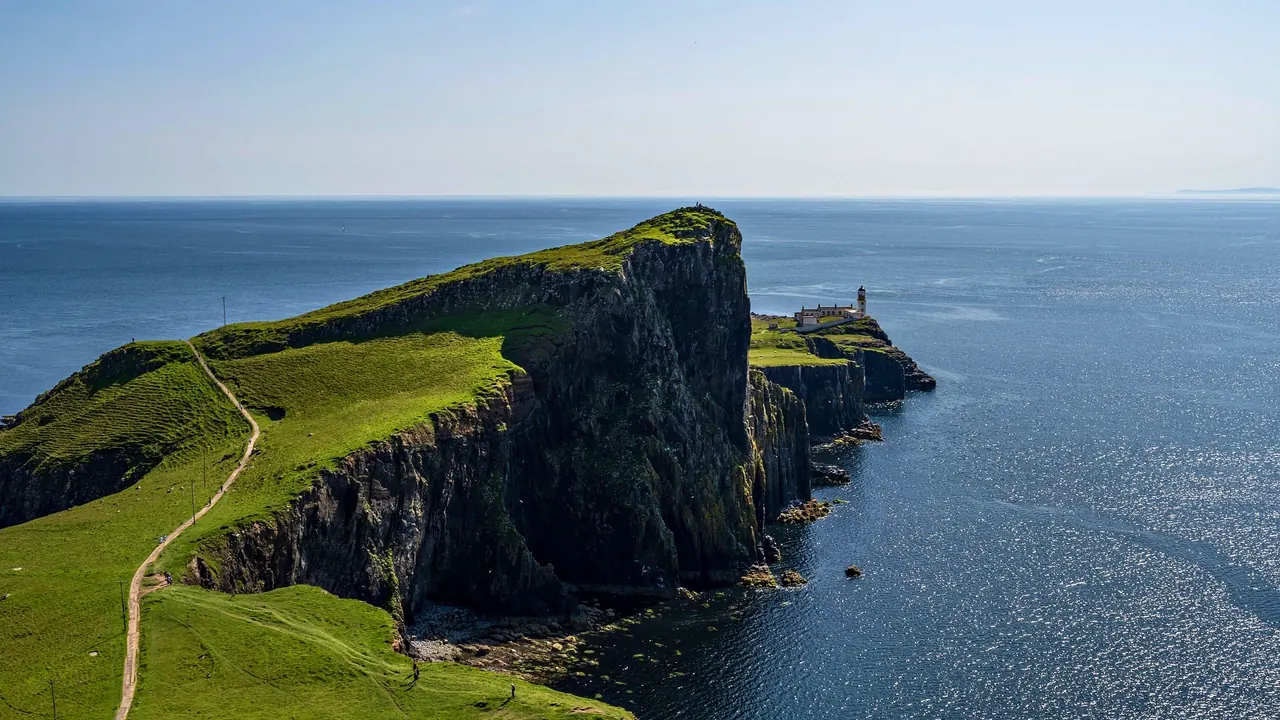
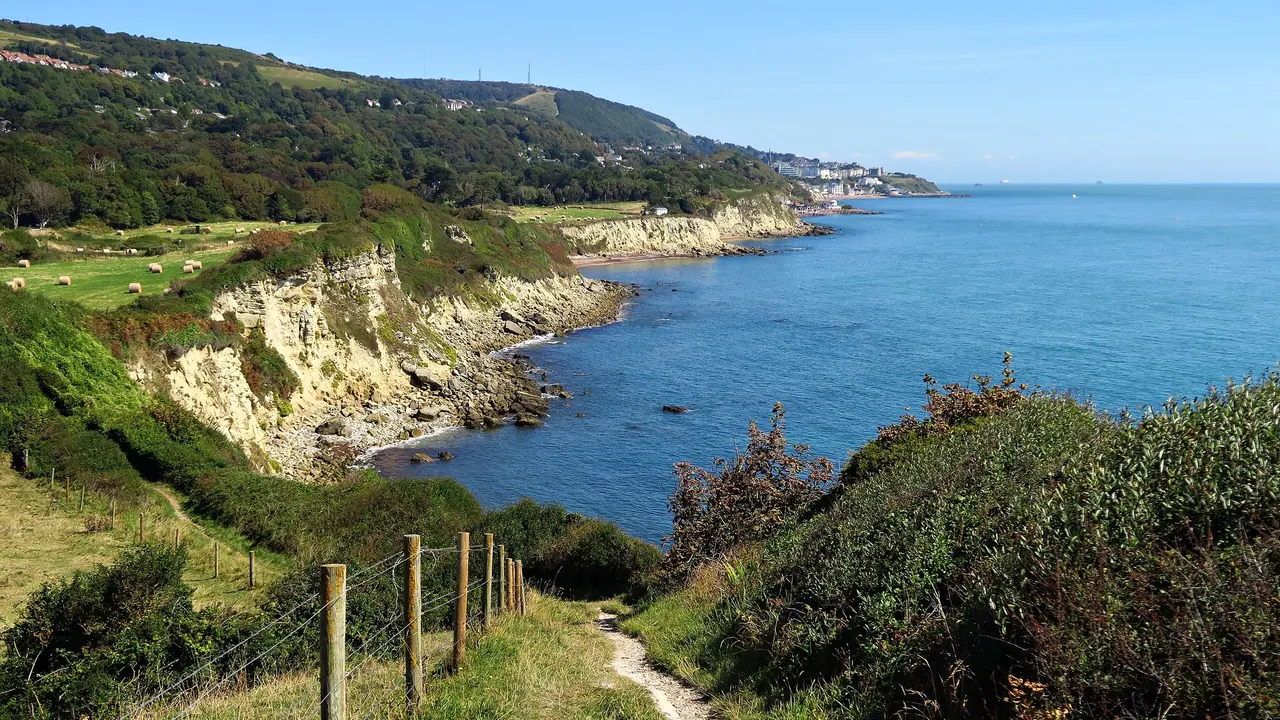
Photos: Isle of Skye by Evelin Magnus, Pexels License; Isle of Wight by Michael Coppins, CC BY-SA 4.0, cropped.
Isle of Skye or Isle of Wight?
Our verdict in twelve categories, each scored against the same fixed benchmark cities, and the climate month by month, so you can choose for your trip.
Choose Isle of Skye for
- nature and the outdoors
- food and drink
Skye is for travellers who come for the land itself: the Cuillin ridge, the pinnacles of Trotternish, the cliffs at Neist Point, otters and sea eagles from a boat out of Elgol. It suits walkers, climbers and photographers who will drive single-track roads, put up with rain and midges, and are happy to end the day with a pub and a dram.
Choose Isle of Wight for
- families
- getting around
- beaches
The Isle of Wight is the easier, gentler trip. It has sandy bays, Osborne House and Carisbrooke, attractions built for children, a good bus network and a short crossing to Portsmouth. That makes it the better choice for families, for a relaxed seaside week without a car, and for anyone who wants warmer summers and more to do on a wet day.
Scoreboard
Twelve categories on one fixed scale from 0 to 100. The shaded stretch is the gap between the two.
Your match
Pick a travel style or drag the sliders, and both match scores follow your weighting.
Wins on nature and the outdoors and food and drink with your weighting.
Wins on families and getting around with your weighting.
What matters to you?
Category by category
What the scores mean for a trip.
Beaches & swimming
Skye's shore is for looking at, not lying on. The coral sand at Claigan and the black bays at Talisker and Staffin are beautiful, and wild swimmers seek out the Fairy Pools, but the water is so cold that any swim is short.
The Isle of Wight is a real seaside resort. Sandown Bay's miles of sheltered sand and the wide flats at Ryde are made for paddling, and Compton Bay has surf under coloured cliffs. By late summer the Channel is cool but swimmable.
Food & drink
On both islands the best food comes from the sea, but each does it differently. Skye's lochs supply langoustines, scallops and Loch Harport oysters, and a few remote country restaurants around Dunvegan and Sleat are worth a long drive. Everyday choice is thin outside Portree, though, and much of it closes for winter.
The Isle of Wight is more about pub lunches and picnics. You get crab and lobster in the harbour pubs at Bembridge and Ventnor, garlic, tomatoes, cheese and local wine from farm shops, and cream teas in Godshill. Skye has its whisky from Carbost to match the island's ales.
Culture & sights
Skye's history is that of the clans and the crofters: Dunvegan Castle, the Clan Donald ruins and museum at Armadale, and the thatched cottages at Kilmuir. These places are moving, but they are spread out and you can see them all quickly.
The Isle of Wight has more to fill your days. Osborne House is a royal home of national standing, and Carisbrooke Castle is where Charles I was held prisoner. Brading's Roman mosaics, the Needles Old Battery and Tennyson's Farringford cover far more of history than Skye can.
Nightlife
Both islands go to bed early, and on both a night out means the pub. On Skye that is one of the few bars in Portree, or the inn at Sligachan after a day on the hills, full of walkers planning the next day's route.
The Isle of Wight also has a few late bars and a small club or two in Newport and Ryde, and Cowes fills with sailing crews during its August regatta week. You would not choose either island for going out.
Nature & outdoors
This is where Skye pulls far ahead. The Black Cuillin offer the most serious mountaineering in Britain, Trotternish has the Storr and the Quiraing, and the coast brings sea eagles, otters and whales in summer. The cost is rain, cloud on the tops and midges.
The Isle of Wight's outdoors is gentler and more tamed: the chalk ridge of Tennyson Down out to the Needles, the wooded Undercliff, red squirrels, and a coastal path all the way round. Its real strength is the water, with sailing on the Solent from Cowes.
Day trips
Both islands rely on ferries, but the Isle of Wight's take you to more. The fast crossing from Ryde reaches Portsmouth, with HMS Victory and the Mary Rose. Lymington is the way into the New Forest and Beaulieu, and Winchester Cathedral is within reach through Southampton.
Outings from Skye are smaller and longer. You can cross the bridge to Eilean Donan and Plockton, take the short ferry to Raasay or spend a long day on Harris. Every one depends on the weather and the ferries, and there is no sizeable town nearby.
Good for families
Skye works for an outdoorsy family who enjoy dinosaur footprints at Staffin, seal-spotting boat trips and scrambling around the Fairy Pools. But there is almost nothing built for children, and many walks are steep, muddy or along cliff edges.
The Isle of Wight has been set up for this kind of vacation for generations. Gently shelving sand at Sandown, Blackgang Chine, Robin Hill, a zoo, a steam railway and the chairlift at Alum Bay are all close together, so children never spend long in the car.
Getting around
On Skye you need a car, and the driving is slow. Many roads are single-track with passing places, buses are sparse, and in summer traffic queues on the Trotternish loop and the Fairy Pools road.
The Isle of Wight is about 37km from end to end, and its buses reach every town, with open-top buses over the downs to the Needles in summer. A short railway also runs down the east coast from Ryde Pier. You can manage a whole trip with a foot-passenger ferry and the buses, and only need a car for remote beaches and trailheads.
Shopping & style
Neither island is a place to shop. On Skye that means craft studios down farm tracks, tweed, knitwear and whisky, and galleries around Waternish and Sleat. The Isle of Wight has Newport's everyday high street, nautical clothing in Cowes, glassblowers, and jars of coloured sand from Alum Bay.
Affordability
Skye is the more expensive of the two. Rooms are few and get booked long in advance for summer, meals cost the full UK rate with little cheap food outside Portree, and a hire car and fuel are part of the bill. The landscape costs nothing, though, and hostels, campsites or a cottage shared between a group help.
The Isle of Wight's biggest extra cost is the ferry, especially if you take a car. Crossing as a foot passenger and using the buses saves a lot, and caravan parks, pub meals and farm-shop picnics keep the rest under control. On both islands, spring and autumn cost much less than high summer.
Live music & performing arts
The Isle of Wight has more going on. Its June festival, which began in the late 1960s, is a big rock and pop weekend. Shanklin's Victorian theatre, the arts centre in Newport and Ventnor's summer fringe add something beyond that.
Skye's offer is smaller but has its own character: Gaelic song, fiddle and pipe sessions in Portree pubs, ceilidhs in village halls, and summer concerts at Sabhal Mòr Ostaig in Sleat. Outside summer, whether anything is on is largely down to luck.
Wellness & relaxation
Neither island has a spa culture worth travelling for, so on both the rest comes from the place rather than from treatments. What differs is the kind of quiet. Skye offers solitude: a remote base at the end of a single-track road, few neighbours, and northern evenings when the light stays on the water long after supper. It suits people who want to be properly cut off, though the weather decides how much of that time you spend outdoors.
The Isle of Wight gives an easier, more sociable calm. Ventnor's sheltered spot on the south coast, which once drew Victorian convalescents, means mild walks and sea views without any effort, and an afternoon in the gardens at Quarr Abbey is about as demanding as the island gets. A tea room or a bus is never far away, so you can slow down without feeling isolated.
When should you go?
Pick your month. The climate figures are measured averages, not a forecast.
Isle of Skye in July
Isle of Wight in July
Daytime high, °C
Rainfall in the month, mm
Where the figures come from
Isle of Skye's temperatures are measured 90 km from the centre, at Stornoway.
Isle of Skye has no rain gauge within 25 km of the centre, so its rainfall comes from a gridded climate dataset read at the destination rather than from a gauge further away.
Isle of Wight's temperatures are measured 39 km from the centre, at Bournemouth Airport.
Isle of Wight has no rain gauge within 25 km of the centre, so its rainfall comes from a gridded climate dataset read at the destination rather than from a gauge further away.
Temperature and rainfall are climate normals, averaged over the years shown. Isle of Skye: 1991-2020 normals, Stornoway (89.7 km from centre). Isle of Wight: 1991-2020 normals, Bournemouth Airport (38.9 km from centre).
Skye is never warm. Summer highs reach only about 16°C, the sea stays cold all year, and it rains in every month. The wettest stretch runs from October to January, when monthly totals top 200mm and the days are short. May is the best month, the sunniest and one of the driest. September brings similar quiet and good light but more rain. June to August are slightly warmer but bring the midges.
The Isle of Wight is warmer and drier all year round. Highs reach 22°C in July and August, and by late August the sea is about 18°C, so July to September is the time to swim. From April the weather is pleasant for walking the downs, and late spring and summer are much sunnier than on Skye. Rain picks up from October, but even the island's winter is milder and far less wet than Skye's.
Which traveller are you?
For a beach and sun trip, choose the Isle of Wight. Sandown Bay has gentle sand, the summers are warmer and the sea is swimmable by late summer. On Skye the water stays icy and the beaches are for walking.
On an outdoors trip, Skye is in another league. The Cuillin ridge, the Quiraing and the Storr, Neist Point and boat trips into Loch Coruisk give you real mountains and wildlife. The Isle of Wight's chalk downs and coastal path are pleasant but gentle.
On a family trip with young children, the Isle of Wight is the safer bet. Blackgang Chine, the zoo at Sandown, fossil hunts and paddling are all close together. Skye has little built for children, long drives, and walks on muddy cliff edges.
Before you go
| Measure | Isle of Skye | Isle of Wight |
|---|---|---|
| Official language | English | English |
| Currency | Pound Sterling (GBP) | Pound Sterling (GBP) |
| Sockets | G230 V, 50 Hz | G230 V, 50 Hz |
| Driving side | Left | Left |
| Time zone | UTC, UTC+1 in summer | UTC, UTC+1 in summer |
| Emergency number | 112 or 999 | 112 or 999 |
| Main airport | Inverness Airport (INV)15 non-stop destinations | Southampton Airport (SOU)15 non-stop destinations |
| Public holidays this year | 10 days | 8 days |
By the numbers
| Measure | Isle of Skye | Isle of Wight |
|---|---|---|
| Population | 10,008 | 140,459 |
| People per km² | 6 | 369 |
| Swim season, months above 21 °C | None | None |
Where else could you go?
Every comparison below shares a destination with this one, so you can follow Isle of Skye or Isle of Wight somewhere new.
- Cotswoldsvs Isle of Wight
- Devonvs Isle of Wight
- Normandyvs Isle of Wight
- Cornwallvs Isle of Wight
- Peak Districtvs Isle of Wight
- Snowdoniavs Isle of Wight