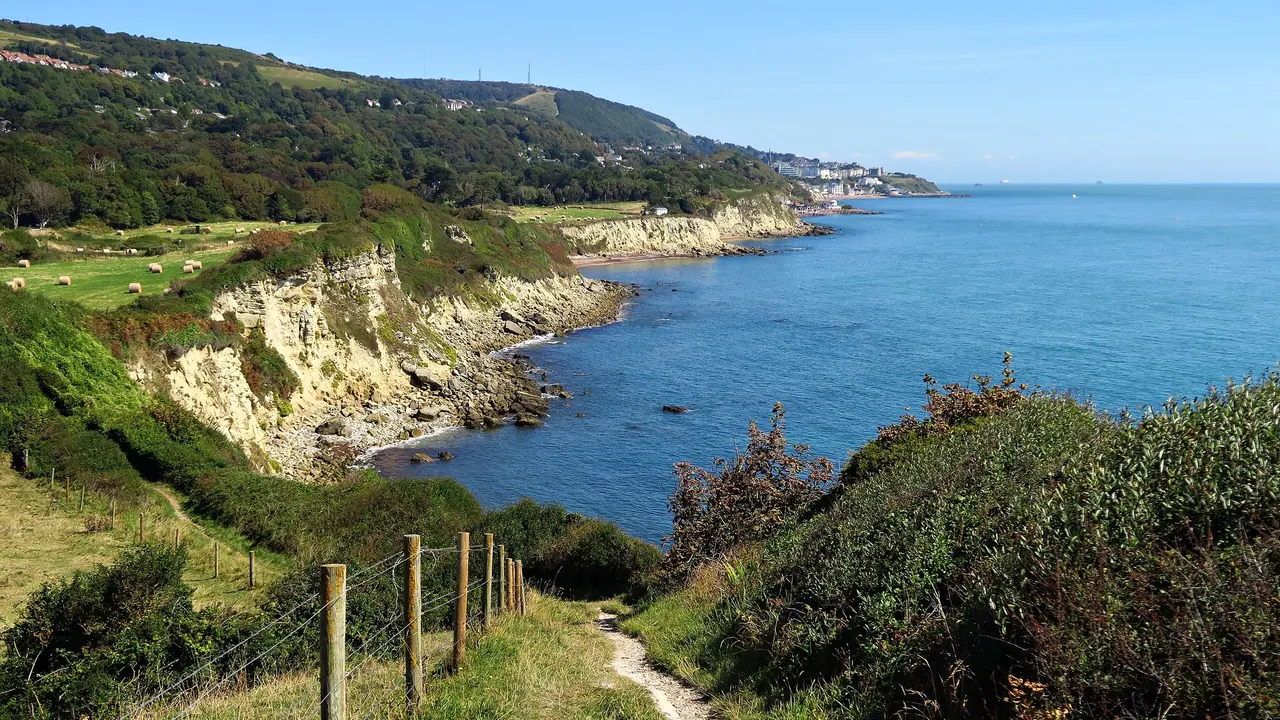
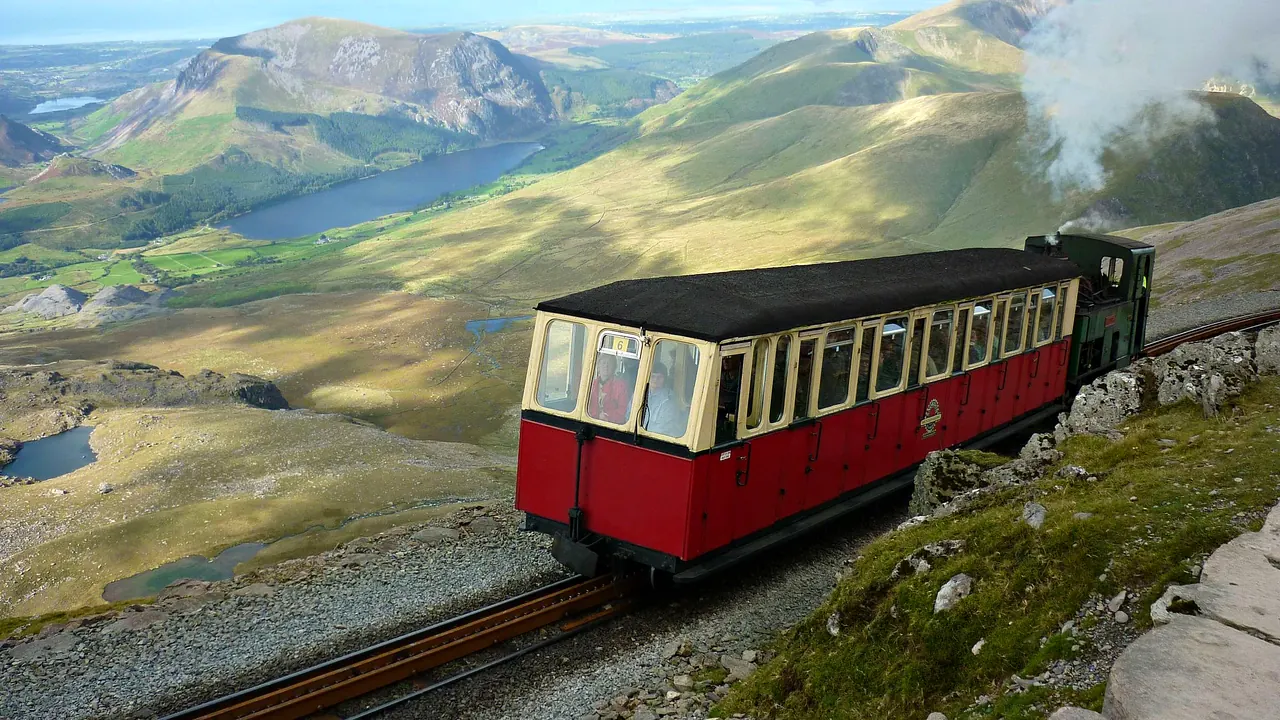
Photos: Isle of Wight by Michael Coppins, CC BY-SA 4.0, cropped; Snowdonia by Porius1, CC BY-SA 3.0, cropped.
Isle of Wight or Snowdonia?
Our verdict in twelve categories, each scored against the same fixed benchmark cities, and the climate month by month, so you can choose for your trip.
Choose Isle of Wight for
- getting around
- beaches
- families
The Isle of Wight suits a classic seaside week, above all with children. Sandown Bay's sheltered sands, Blackgang Chine and the zoo are all close together, the buses and the little east-coast railway mean you can manage without a car, and the island is a touch warmer and drier. Choose it if you want gentle walks on the downs, some sailing on the Solent and a beach day whenever the sun comes out.
Choose Snowdonia for
- nature and the outdoors
- day trips
- culture and sights
Snowdonia is the choice for a trip built around the mountains. Yr Wyddfa, the Glyderau scrambles, the climbing crags of Llanberis and the mountain-bike trails at Coed y Brenin go far beyond anything the island's gentle downs offer. Add Harlech, the slate landscape and the castles of Caernarfon and Conwy and you have more substance for a touring week, as long as you have a car and good waterproofs.
Scoreboard
Twelve categories on one fixed scale from 0 to 100. The shaded stretch is the gap between the two.
Your match
Pick a travel style or drag the sliders, and both match scores follow your weighting.
Wins on getting around and beaches with your weighting.
Wins on nature and the outdoors and day trips with your weighting.
What matters to you?
Category by category
What the scores mean for a trip.
Beaches & swimming
Beaches are central to an Isle of Wight trip in a way they are not in Snowdonia. Sandown Bay curves for miles past two resort towns, Ryde's flats run far out at low tide, and Compton Bay adds surf below coloured cliffs. The Channel is cool but bearable for a swim in late summer.
Snowdonia's coast is better than its reputation. Harlech's dunes, Black Rock Sands and the estuary beaches at Barmouth and Aberdyfi are broad and handsome. The Irish Sea is colder, though, and the wind is more persistent, so swims are short and often in a wetsuit.
Food & drink
Neither place is somewhere you travel to for the food, but the island eats a little better. You can have crab and lobster sandwiches in harbour pubs, local garlic, tomatoes and cheese, and a few serious kitchens in Cowes and Ventnor, and farm shops make picnics easy.
Snowdonia's eating is heartier and thinner on the ground: lamb and cawl in village pubs, bara brith in tea rooms and big breakfasts in walkers' cafés. Mussels from Conwy and Menai seafood are the highlights. Outside summer, kitchens in the small villages can close early.
Culture & sights
The two are fairly evenly matched, but the heritage differs in kind. The island's sights are individual set pieces: Queen Victoria's Osborne House, Carisbrooke Castle, a Roman villa and the homes of Tennyson and Julia Margaret Cameron, each good for half a day.
Snowdonia's heritage is part of the landscape itself. You have Harlech's World Heritage castle, the slate quarries and villages of the north, and narrow-gauge railways like the Ffestiniog. Add the strangeness of Portmeirion and the sound of Welsh spoken every day, and the area has a stronger sense of place, though the sights are spread more widely.
Nightlife
Neither place is for going out, but the island has slightly more to offer. Newport and Ryde have a few late bars and a small club or two, and Cowes fills with sailing crews and parties during its August regatta week.
In Snowdonia, the evening is a fireside pint in Llanberis, Capel Curig or Bala, swapping route stories with climbers. Then everyone goes to bed early for the next morning on the hills.
Nature & outdoors
This is where Snowdonia pulls well ahead. It has the highest peak in Wales and England, the Crib Goch knife-edge, Tryfan's scrambles and the classic crags of Llanberis Pass and Idwal, with Cadair Idris and the Rhinogydd for quieter, rougher days. It also offers mountain biking, rafting on the Tryweryn and sailing on Llyn Tegid.
The Isle of Wight is pleasant rather than dramatic. You can walk the chalk ridge of Tennyson Down to the Needles, explore the wooded Undercliff, cycle quiet lanes and go round the coast on its 110km path. The Solent is world-class for sailing, and you may see red squirrels, but there are no real hills.
Day trips
Snowdonia has more substantial outings within reach. The castles and town walls of Caernarfon and Conwy, Beaumaris on Anglesey, Victorian Llandudno, Bodnant Garden and the Llŷn Peninsula all make full days out, and Chester is not far beyond. A car ties them together.
From the island, the best trips are across the water. Portsmouth's dockyard, with HMS Victory and the Mary Rose, is a short foot-ferry ride from Ryde, and there are also the New Forest and Beaulieu, or Winchester via Southampton. Every one of them means planning around a ferry crossing.
Good for families
The Isle of Wight is built for a family seaside week. It has sandy bays that shelve gently, the old amusement park at Blackgang Chine, Robin Hill, a tiger and lemur zoo, fossil hunts and the Needles chairlift, and none of them is far from the others.
Snowdonia works best for active families with older children. Steam railways, slate-cavern adventures and huge zip lines are real draws. Rain and the long drives between valleys make it harder work with toddlers, and the higher walks are beyond small legs.
Getting around
The island is far easier without a car. It is small, buses link every town, open-top buses climb to the Needles in summer, and the Ryde-to-Shanklin railway serves the resorts. Foot ferries land you right in town.
In Snowdonia, most visitors end up driving. Narrow roads clog on summer weekends and trailhead car parks fill early. The Conwy Valley and Cambrian Coast lines and the Sherpa buses help, but crossing between valleys by public transport takes patience.
Shopping & style
What you can buy reflects what each place is about. The island's shopping comes from the sea and the studio: sailing chandlers and nautical clothing on Cowes High Street, glassblowers and potters, and jars of coloured Alum Bay sand on the souvenir shelves.
In Snowdonia, the shops serve the hills and Welsh crafts. Betws-y-Coed has a cluster of outdoor gear shops, and woollen mills sell tapestry blankets. You will also find slate crafts and Portmeirion pottery. Neither place is worth a trip for the shopping alone.
Affordability
Costs are broadly similar, and both charge full British summer prices for cottages in school vacations, but the money goes on different things. On the island, the ferry is the big extra, especially with a car. Crossing on foot and using the buses keeps it down.
In Snowdonia the mountains themselves are free. Campsites, bunkhouses and youth hostels are plentiful, which suits walkers on a tight budget, while family extras such as zip lines and railways add up.
Live music & performing arts
The island has more to plan around, mainly because of the Isle of Wight Festival, a big rock and pop weekend each June with roots in the late 1960s. The rest of the year brings Ventnor's summer fringe, Shanklin's Victorian theatre and the arts centre on Newport's quay.
Snowdonia's offer is smaller but distinctively Welsh. Male voice choirs welcome visitors to rehearsals, there are local eisteddfodau and folk sessions in the pubs, and for proper theatre you head out to Bangor, Caernarfon or Llandudno.
Wellness & relaxation
On the island, rest comes from the sea: clifftop benches, the sheltered air that made Ventnor a Victorian health resort, and the quiet gardens of Quarr Abbey. It is the gentler choice for slowing down.
Snowdonia's calm is the tiredness after a long day on the hills: a log burner in a stone cottage in Beddgelert, an early night, and cold-water dips in lakes and rivers for those who like them. Anyone looking for proper spas or thermal baths will find little in either place.
When should you go?
Pick your month. The climate figures are measured averages, not a forecast.
Isle of Wight in July
Snowdonia in July
Daytime high, °C
Rainfall in the month, mm
Where the figures come from
Isle of Wight's temperatures are measured 39 km from the centre, at Bournemouth Airport.
Isle of Wight has no rain gauge within 25 km of the centre, so its rainfall comes from a gridded climate dataset read at the destination rather than from a gauge further away.
Snowdonia's temperatures are measured 52 km from the centre, at Valley.
Snowdonia has no rain gauge within 25 km of the centre, so its rainfall comes from a gridded climate dataset read at the destination rather than from a gauge further away.
Temperature and rainfall are climate normals, averaged over the years shown. Isle of Wight: 1991-2020 normals, Bournemouth Airport (38.9 km from centre). Snowdonia: 1991-2020 normals, Valley (51.8 km from centre).
The Isle of Wight is drier than Snowdonia in every month and a few degrees warmer from spring to autumn. Around the main resorts, summer days reach about 22°C. June and July are the sunniest months, and by August the Channel has warmed to about 18°C, so July to September is the time to swim. The rain returns in October and stays heavy through the winter.
Snowdonia peaks at about 19°C in high summer, and its sea stays a couple of degrees colder. May is its best month, with the most sunshine and the least rain of its year and the best chance of clear summits. June comes second: it is still sunny and a little warmer. After June the rain climbs through July and August, so high summer is wetter than spring. From October the valleys turn very wet, with more than 130mm a month in November and December. Neither place ever gets too hot for walking. In midwinter both have the same chilly daytime highs, but on the Welsh peaks winter brings real mountain conditions.
Which traveller are you?
For an outdoors trip, Snowdonia wins clearly. It has proper mountains to climb and scramble, historic rock-climbing crags, mountain-bike trails, white-water rafting near Bala and wild uplands to the south. The island's coastal path and Solent sailing are lovely, but gentler.
On a family trip with young children, the Isle of Wight is the easier choice. It has gently shelving sands, Blackgang Chine, fossil hunts and a zoo, and everything sits close together with buses between the towns. Snowdonia rewards older, active children but involves more driving and more rain.
For a beach and sun trip, the Isle of Wight comes out ahead, though neither is a sure bet. Its sea is a little warmer, its summers a little drier, and its resort towns are built around beaches such as Sandown Bay. Snowdonia's Cardigan Bay sands work better as a fine-weather afternoon.
Before you go
| Measure | Isle of Wight | Snowdonia |
|---|---|---|
| Official language | English | English |
| Currency | Pound Sterling (GBP) | Pound Sterling (GBP) |
| Sockets | G230 V, 50 Hz | G230 V, 50 Hz |
| Driving side | Left | Left |
| Time zone | UTC, UTC+1 in summer | UTC, UTC+1 in summer |
| Emergency number | 112 or 999 | 112 or 999 |
| Main airport | Southampton Airport (SOU)15 non-stop destinations | Liverpool John Lennon Airport (LPL)75 non-stop destinations |
| Public holidays this year | 8 days | 8 days |
By the numbers
| Measure | Isle of Wight | Snowdonia |
|---|---|---|
| Population | 140,459 | - |
| People per km² | 369 | - |
| Swim season, months above 21 °C | None | None |
Where else could you go?
Every comparison below shares a destination with this one, so you can follow Isle of Wight or Snowdonia somewhere new.
- Cotswoldsvs Isle of Wight
- Peak Districtvs Snowdonia
- Lake Districtvs Snowdonia
- Devonvs Isle of Wight
- Yorkshire Dalesvs Snowdonia
- Normandyvs Isle of Wight