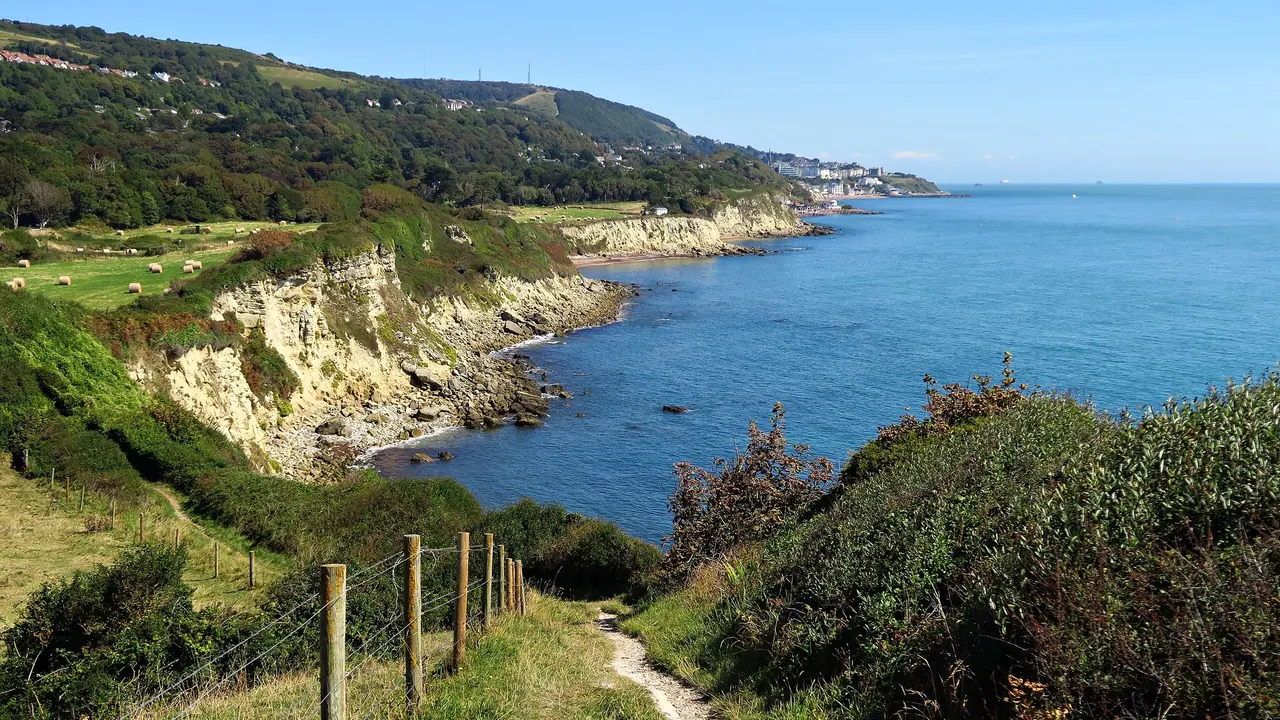
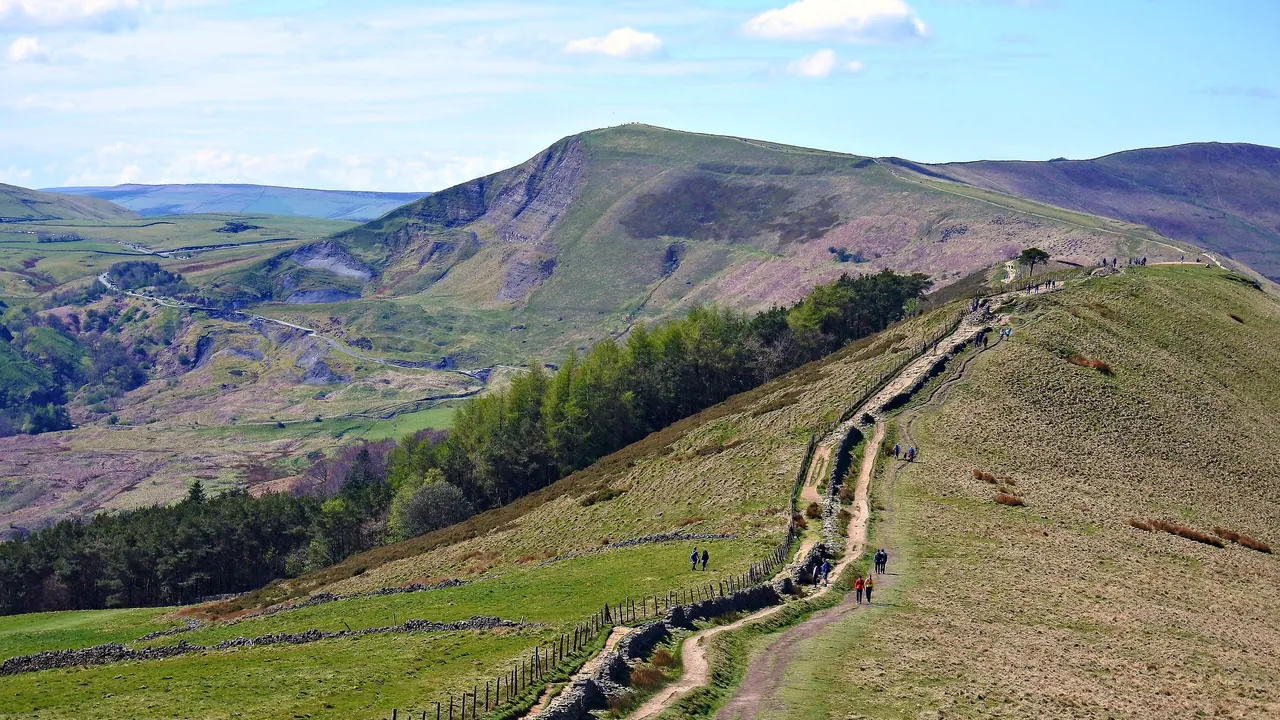
Photos: Isle of Wight by Michael Coppins, CC BY-SA 4.0, cropped; Peak District by Donnchadh H, CC BY 2.0, cropped.
Isle of Wight or Peak District?
Our verdict in twelve categories, each scored against the same fixed benchmark cities, and the climate month by month, so you can choose for your trip.
Choose Isle of Wight for
- beaches
- getting around
- nightlife
Choose the Isle of Wight for a seaside vacation in the classic British style. There are sheltered sands at Sandown and Shanklin for the children, a coast path all the way round the island, and towns that are linked by bus and by the little railway from Ryde, so you don't need a car. It suits people who want the sea in sight all day, gentle walks and a go at sailing on the Solent, and who don't mind that the sights are pleasant rather than grand.
Choose Peak District for
- wellness
- nature and the outdoors
- day trips
The Peak District is the better pick when walking is the point of the trip. Its gritstone moors and limestone dales make for much bigger days on foot, Chatsworth and Haddon Hall are finer than anything on the island, and Buxton's thermal spa gives you a real reason to slow down. You come for hills, great houses and pub fires, and you give up the beach entirely: there is no coast nearby, and most visitors need a car.
Scoreboard
Twelve categories on one fixed scale from 0 to 100. The shaded stretch is the gap between the two.
Your match
Pick a travel style or drag the sliders, and both match scores follow your weighting.
Too close to call, 2 points apart
Wins on beaches and getting around with your weighting.
Wins on wellness and nature and the outdoors with your weighting.
What matters to you?
Category by category
What the scores mean for a trip.
Beaches & swimming
This is the island's big advantage. Sandown Bay curves for miles of sheltered sand, Ryde's flats stretch far out at low tide, and Compton Bay has surf under coloured cliffs. The Channel stays cool, so for many visitors it is more a place to paddle than to swim.
The Peak District sits in the middle of England and has no beach of any kind. Its reservoirs are cold, deep and not for swimming. A summer dip there means the open-air pool at Hathersage or a cold river in the dales.
Food & drink
Both places eat simply and well, mostly in pubs, and neither is a destination for serious dining. On the island the food comes from the sea and the farms: crab and lobster in harbour pubs at Bembridge and Ventnor, local garlic and tomatoes, and cream teas at Godshill.
In the Peak the food is heartier inland fare. You get Bakewell pudding, Hartington cheese, real ale in the Hope Valley pubs, and meat and baking from the farm shops around Chatsworth. In the smaller villages you may have only one or two pubs to choose from in the evening.
Culture & sights
The Peak District has the richer heritage. Chatsworth is one of England's great country houses, Haddon Hall is a medieval manor that survives almost intact, and Buxton's Georgian Crescent and the plague village of Eyam add depth. Arkwright's mills at Cromford mark the start of the factory age.
The island has one sight of national standing, Queen Victoria's Osborne House, plus the Norman Carisbrooke Castle. After that come smaller half-day visits such as Brading's Roman mosaics and Tennyson's Farringford.
Nightlife
Neither is a place for going out. In both, the evening means a pub and an early night. The island has one exception, Cowes Week in August, when sailing crews and parties fill the waterfront.
The Peak has no clubs at all, and the bars in Buxton and Matlock close early. What it does have is Sheffield and Manchester about an hour away, so a proper night out is possible if you are willing to travel.
Nature & outdoors
The Peak District is the stronger choice for the outdoors. Kinder Scout's peat plateau, the start of the Pennine Way at Edale and climbing edges known around the world give it a wildness the island doesn't have. To the south, the White Peak's dales, stepping stones and caves add variety.
The island's countryside is softer and runs down to the sea. It has the Needles ridge on Tennyson Down, the tumbled Undercliff, red squirrels at Newtown Creek and some of the world's best sailing on the Solent. It is a lovely place to walk, but on a much gentler scale.
Day trips
From the Peak District you can reach much more without a ferry. Manchester and Sheffield are both close by train, and just outside the park are Hardwick Hall, Bolsover Castle and the mill villages of the Derwent Valley. Stoke's old ceramics works are within reach too.
The island has plenty of small towns to explore on its own shores, from Cowes to Godshill. Every trip to the mainland starts with a crossing, though. Portsmouth's Historic Dockyard, with HMS Victory and the Mary Rose, is the best of them, followed by the New Forest and Winchester.
Good for families
Both work equally well for families, but the days look different. The island is a seaside vacation: sandcastles in Sandown Bay, fossil hunts on the south-west beaches, the smugglers and dinosaurs of Blackgang Chine, and nothing more than a short drive away.
The Peak is for active children. They can go into the show caves at Castleton, ride the cable car up to the Heights of Abraham, try the vintage trams at Crich and cycle the flat railway trails, and Alton Towers is close by. The cost is more time in the car.
Getting around
The island is easier to get around. It is only about 37km end to end, buses reach every town, and the railway from Ryde Pier serves the east-coast resorts. The foot ferries land right in town, though the island's narrow lanes clog up in August.
In the Peak, the rail lines to Edale, Hathersage, Buxton and Matlock let you start a walk from the station platform. Beyond those, buses thin out and most visitors drive steep moorland roads, and car parks overflow at Castleton and Dovedale on sunny weekends.
Shopping & style
Neither is somewhere to go shopping, and what there is reflects each landscape. The island sells nautical gear from the chandlers in Cowes, glass and pottery from small studios, and the coloured Alum Bay sand on every souvenir shelf.
The Peak sells walking and climbing gear in Hathersage, Blue John jewellery that comes only from Castleton, antiques in Ashbourne and Leek, and puddings from Bakewell's market.
Affordability
Both cost about what rural England costs in summer, and neither is cheap. On the island the extra cost is the ferry, especially with a car. Crossing on foot and using the buses brings it down a lot, and spring and autumn are much cheaper than the school summer break.
In the Peak the hills themselves cost nothing, and there are youth hostels, bunkhouses and campsites across the park. The stately homes and show caves all charge entry, and that adds up for a family.
Live music & performing arts
Both are quiet for most of the year, and each has one high point of a different kind. The island has the Isle of Wight Festival, a big rock and pop weekend each June with a famous history going back to the late 1960s.
The Peak's arts are steadier and more classical. Buxton's Matcham Opera House runs drama, comedy and concerts through the year, and in July the Buxton International Festival brings opera and a large fringe.
Wellness & relaxation
For rest and recovery the Peak District has more to offer. Buxton was built around its warm mineral springs, its Crescent houses a spa using the thermal water, and St Ann's Well still gives the water away for free. Country-house hotels in the dales add more spas.
On the island, rest comes from the pace and the sea air rather than from treatments. Ventnor's mild Victorian health-resort calm, the clifftop benches and the gardens at Quarr Abbey are its quieter offerings.
When should you go?
Pick your month. The climate figures are measured averages, not a forecast.
Isle of Wight in July
Peak District in July
Daytime high, °C
Rainfall in the month, mm
Where the figures come from
Isle of Wight's temperatures are measured 39 km from the centre, at Bournemouth Airport.
Isle of Wight has no rain gauge within 25 km of the centre, so its rainfall comes from a gridded climate dataset read at the destination rather than from a gauge further away.
Peak District's temperatures are measured 43 km from the centre, at Manchester Airport.
Peak District has no rain gauge within 25 km of the centre, so its rainfall comes from a gridded climate dataset read at the destination rather than from a gauge further away.
Temperature and rainfall are climate normals, averaged over the years shown. Isle of Wight: 1991-2020 normals, Bournemouth Airport (38.9 km from centre). Peak District: 1991-2020 normals, Manchester Airport (43.1 km from centre).
The Isle of Wight is the sunnier and slightly warmer of the two. July and August reach about 22°C, and by August the sea is around 18°C, so beach days and proper swimming belong to July through September. Late spring is bright and fairly dry, which makes it good for the coast path. The rain arrives in October and is heaviest in November at about 116mm, when the island turns grey and quiet.
The Peak District runs a degree or two cooler, and its summer is no drier. August is one of its wetter months at around 81mm, so walkers should expect showers in any season. May and June are often the most settled months for the hills, and September is still good for long days out. In winter both places are cold with short days, and the Peak's high moors can be under snow.
Which traveller are you?
On a beach and sun trip, the Isle of Wight is the only real choice. Days can follow the tide, with mornings on the sand and afternoons in a seaside town, and the sea is close to almost any base. The Peak has no coast at all.
For an outdoors trip, the Peak District rewards a longer stay. You can spend full days on foot, by bike or on rock, and there is still new ground after a week. The island suits shorter, gentler outings with time left for the sea.
On a relaxing and wellness trip, the Peak District gives a slow day more shape: a morning walk, an afternoon in warm water and an evening by a fire, best of all midweek. The island offers sea air and quiet, but little beyond the rest itself.
Before you go
| Measure | Isle of Wight | Peak District |
|---|---|---|
| Official language | English | English |
| Currency | Pound Sterling (GBP) | Pound Sterling (GBP) |
| Sockets | G230 V, 50 Hz | G230 V, 50 Hz |
| Driving side | Left | Left |
| Time zone | UTC, UTC+1 in summer | UTC, UTC+1 in summer |
| Emergency number | 112 or 999 | 112 or 999 |
| Main airport | Southampton Airport (SOU)15 non-stop destinations | Manchester Airport (MAN)211 non-stop destinations |
| Public holidays this year | 8 days | 8 days |
By the numbers
| Measure | Isle of Wight | Peak District |
|---|---|---|
| Population | 140,459 | 35,901 |
| People per km² | 369 | 25 |
| Swim season, months above 21 °C | None | - |
Where else could you go?
Every comparison below shares a destination with this one, so you can follow Isle of Wight or Peak District somewhere new.
- Yorkshire Dalesvs Peak District
- Cotswoldsvs Isle of Wight
- Snowdoniavs Peak District
- Cotswoldsvs Peak District
- Lake Districtvs Peak District
- Devonvs Isle of Wight