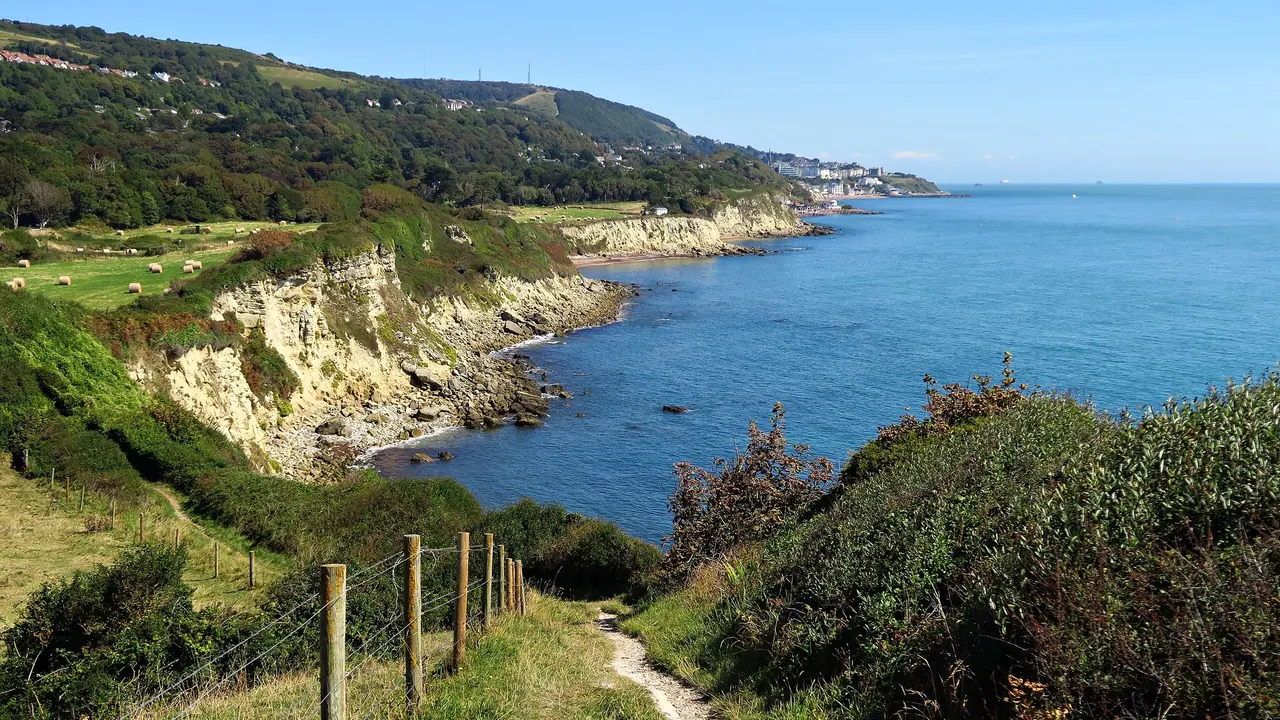
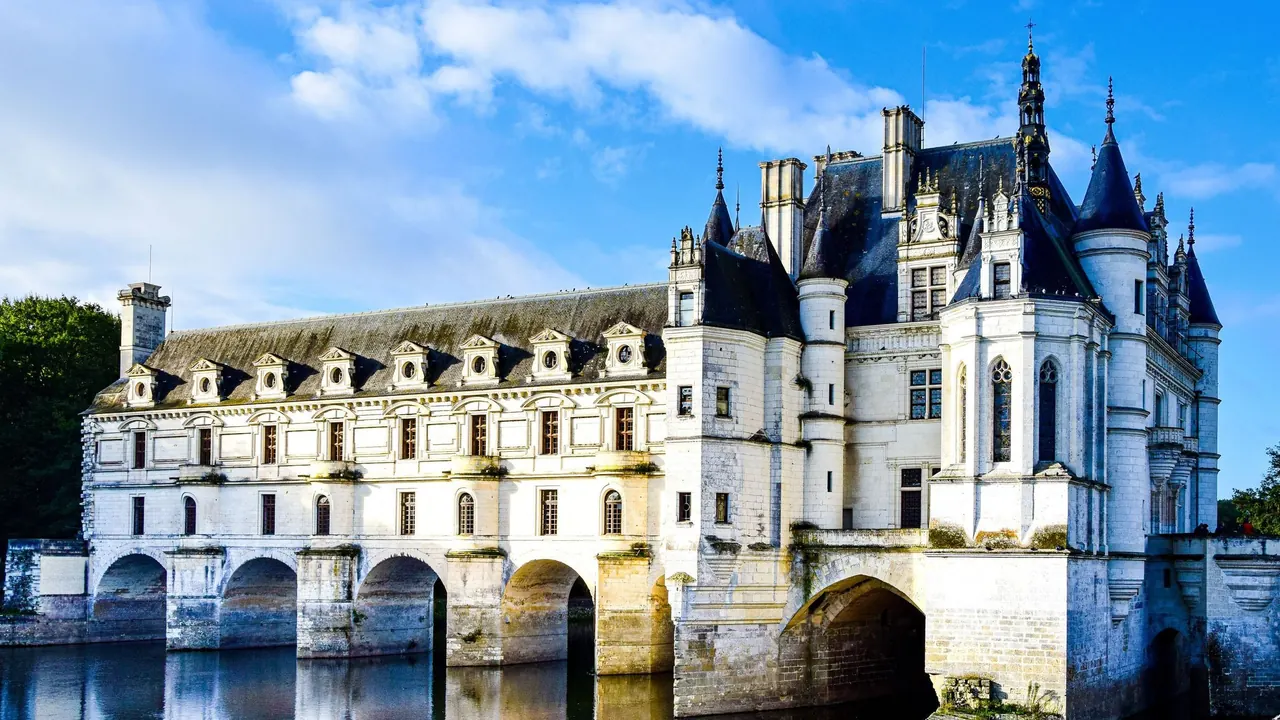
Photos: Isle of Wight by Michael Coppins, CC BY-SA 4.0, cropped; Loire Valley by AXP Photography, Pexels License.
Isle of Wight or Loire Valley?
Our verdict in twelve categories, each scored against the same fixed benchmark cities, and the climate month by month, so you can choose for your trip.
Choose Isle of Wight for
- beaches
- nature and the outdoors
- getting around
The Isle of Wight suits a seaside trip in the old British style. It has sandy bays that shelve gently for small children, chalk cliffs and the Needles to walk to, the Solent for sailing, and it is small enough that nothing is more than a short drive or bus ride away. Once you are across the water it needs little planning. The trade-off is a cool sea and quiet evenings.
Choose Loire Valley for
- culture and sights
- food and drink
- day trips
Pick the Loire Valley when the trip is about seeing and tasting rather than lying on sand. Its Renaissance châteaux, medieval abbeys and wine cellars are among the finest in Europe, and from a base near Tours you can reach a different town, vineyard or cave village each day. There is no beach worth the name, so you swim in a pool or a lake, and you will want a car or a bike.
Scoreboard
Twelve categories on one fixed scale from 0 to 100. The shaded stretch is the gap between the two.
Your match
Pick a travel style or drag the sliders, and both match scores follow your weighting.
Wins on beaches and nature and the outdoors with your weighting.
Wins on culture and sights and food and drink with your weighting.
What matters to you?
Category by category
What the scores mean for a trip.
Beaches & swimming
The Isle of Wight has a real choice of beaches. Sandown Bay on the east coast has long, sheltered sands, Ryde has wide flats at low tide, and Compton Bay in the west is wilder, with surf under the cliffs. The Channel stays cool, so outside high summer most people paddle rather than swim.
The Loire Valley has almost nothing to compare. The river is dangerous for swimming, so you bathe in a supervised lake such as the Lac de Maine at Angers or, more often, in the pool at your rental house.
Food & drink
In the Loire Valley food is one of the main reasons to come, while on the island it is just a pleasant part of the trip. The valley's wines, from Sancerre to sparkling Saumur aged in tufa caves, go with rillettes, beurre blanc and local goat cheeses. The covered markets of Tours and Saumur turn buying lunch into part of the day.
The Isle of Wight eats simply and well: crab and lobster in harbour pubs at Bembridge and Ventnor, fish and chips on the seafront, cream teas in Godshill. It is honest seaside food, but there is not much variety.
Culture & sights
The gap here is wide. The Loire has Renaissance châteaux at Chambord, Chenonceau, Blois and Amboise, Leonardo's last home at Clos Lucé, and Fontevraud Abbey with the Plantagenet tombs. That is enough for a week of sightseeing without repeating yourself.
The Isle of Wight has one sight of national importance, Queen Victoria's Osborne House. It also has Carisbrooke Castle and a few smaller places such as Brading Roman Villa and Tennyson's Farringford, each good for a pleasant half day rather than a whole trip.
Nightlife
Neither is a place for going out, but the Loire has the edge thanks to its university towns. On warm evenings students fill the terraces of Place Plumereau in Tours, and Angers has its own bar quarter. On the Isle of Wight an evening out means the pub, with a few late bars in Newport and Ryde, and outside Cowes Week in August the island is quiet by eleven.
Nature & outdoors
Both are gentle landscapes, but the island's coast gives it more variety for its size. Whether you walk along Tennyson Down to the Needles, through the landslipped woods of the Undercliff or on the 110km coastal path, the scenery changes every few miles. The Solent adds sailing and kayaking, and red squirrels live in the woods by Newtown Creek.
The Loire is flatter and softer: a wide river with willows and sandbanks, cliffs with troglodyte dwellings, and the heath and ponds of the Sologne. It is better seen by bike or canoe than on foot, and it is pleasant rather than dramatic.
Day trips
The Loire Valley is made for day trips. From Tours you can reach Amboise, Blois, Chinon, Loches, Saumur, Angers, the wine villages and the cave dwellings, and Chartres or Paris are within a couple of hours. The main risk is seeing too many châteaux in a row.
The island has fewer outings. Its own towns, from Yarmouth to Ventnor, are easy to combine, and Portsmouth's Historic Dockyard is a short foot-ferry ride from Ryde. Anything further on the mainland, such as the New Forest or Winchester, means planning a crossing first.
Good for families
Both work well with children, in different ways. The Isle of Wight is the classic bucket-and-spade trip: shallow sands at Sandown, Blackgang Chine, fossil hunts on the south-west beaches and short drives everywhere. Its attractions are small, though, and the weather is unreliable.
The Loire has bigger days out, above all the Beauval zoo, plus Leonardo's machines at Clos Lucé and the magic house at Blois, and gîte pools take the place of the beach. Formal château interiors soon tire children, and most days involve the car.
Getting around
Getting around is about as easy in both, but in different ways. The island is only about 37km across, with good buses and the railway from Ryde to Shanklin, so you can visit the resorts without a car. The catch is that you always arrive by ferry.
The Loire covers far more ground, so a car does most of the work. A rail line along the river links the main towns from Orléans to Angers, and the Loire à Vélo route makes cycling a real way to get from one to the next.
Shopping & style
What you bring home from the Isle of Wight is mostly small: garlic chutney or local cheese from a farm shop, a piece of glass or pottery from a studio in Ventnor or Yarmouth, sailing gear from the chandlers on Cowes High Street, or a bottle of coloured Alum Bay sand. Newport's high street covers everyday needs and little more.
The Loire gives you more to fill the car boot with. Wine bought at the cellar door, goat cheese and rillettes from the markets, Orléans quince paste, Gien faience and Saumur leather all travel well, and the old town of Tours has the widest range of shops. If you want fashion or design, look elsewhere in both cases.
Affordability
The Loire Valley is easier on the budget. Town hotels and gîtes cost a moderate amount and set lunches and cellar-door wine are good value. The main costs are château entrance fees and a car.
The Isle of Wight charges full English seaside prices in July and August, and the ferry adds a large extra cost, especially if you bring a car. In both places, spring and early autumn are much cheaper than the school summer break.
Live music & performing arts
The Isle of Wight Festival is the one musical event that draws people across the Solent. It is a big rock and pop weekend in the fields outside Newport each June, with roots in the late 1960s. Outside that weekend there are touring shows and pantomime at Shanklin's Victorian theatre, the arts centre on Newport's quay and folk bands in the pubs.
The Loire has more spread across the year. In summer there are sound-and-light shows at the châteaux of Blois and Amboise and chamber music in the medieval Grange de Meslay. Each September performers fill the streets of Angers, and in the colder months Tours has opera at its Grand Théâtre. It is a solid provincial programme, though not a reason to travel there in itself.
Wellness & relaxation
Neither has a spa tradition, so in both you rest by slowing down rather than through treatments. On the island that means clifftop benches, sea air and the convalescent calm of Ventnor, with Quarr Abbey's gardens for a quiet afternoon.
In the Loire it means long lunches, slow cycling and the gardens of Villandry and Chaumont. Spas in converted châteaux, often using grapes and wine in their treatments, give a little more choice if you want to be pampered.
When should you go?
Pick your month. The climate figures are measured averages, not a forecast.
Isle of Wight in July
Loire Valley in July
Daytime high, °C
Rainfall in the month, mm
Where the figures come from
Isle of Wight's temperatures are measured 39 km from the centre, at Bournemouth Airport.
Isle of Wight has no rain gauge within 25 km of the centre, so its rainfall comes from a gridded climate dataset read at the destination rather than from a gauge further away.
Temperature and rainfall are climate normals, averaged over the years shown. Isle of Wight: 1991-2020 normals, Bournemouth Airport (38.9 km from centre). Loire Valley: 1991-2020 normals, Tours (20.4 km from centre).
On the Isle of Wight the beach season is short. July and August reach about 22°C and the sea is warmest in August at around 18°C, so swimming runs from July into September. May and June are dry and sunny, which makes them good walking months. From October the rain increases sharply to over 100mm a month into December, and winter is grey and cool.
The Loire Valley warms up earlier and gets warmer, reaching about 26°C in July and August. That is warm for long days at the châteaux but rarely too hot for walking around town centres, and its summer is drier and sunnier than the island's. Late spring and September, still above 20°C, are the most comfortable months for cycling. From November to February both places are cold and damp.
Which traveller are you?
On a beach and sun trip, the Isle of Wight is the only real option of the two. Sandown Bay and Ryde have broad sands for long days by the sea. The Loire is inland, its river is unsafe for swimming and the Atlantic coast is a long drive away.
For a culture and arts trip, the Loire Valley wins easily. Chambord, Chenonceau, Fontevraud Abbey and the Apocalypse Tapestry at Angers far outweigh Osborne House and Carisbrooke on the island. In summer there are also sound-and-light shows and chamber music in old barns.
On a food and nightlife trip, choose the Loire Valley. Cellar-door tastings from Vouvray to Chinon, rillettes and goat cheese beat crab sandwiches and cream teas. The student terraces of Place Plumereau in Tours stay busier than island pubs that are quiet by eleven.
Before you go
| Measure | Isle of Wight | Loire Valley |
|---|---|---|
| Official language | English | French |
| Currency | Pound Sterling (GBP) | Euro (EUR) |
| Sockets | G230 V, 50 Hz | CE230 V, 50 Hz |
| Driving side | Left | Right |
| Time zone | UTC, UTC+1 in summer | UTC+1, UTC+2 in summer |
| Emergency number | 112 or 999 | 112 |
| Main airport | Southampton Airport (SOU)15 non-stop destinations | Tours Val de Loire Airport (TUF)5 non-stop destinations |
| Public holidays this year | 8 days | 11 days |
By the numbers
| Measure | Isle of Wight | Loire Valley |
|---|---|---|
| Population | 140,459 | - |
| People per km² | 369 | - |
| Swim season, months above 21 °C | None | - |
Where else could you go?
Every comparison below shares a destination with this one, so you can follow Isle of Wight or Loire Valley somewhere new.
- Cotswoldsvs Isle of Wight
- Devonvs Isle of Wight
- Normandyvs Isle of Wight
- Normandyvs Loire Valley
- Cornwallvs Isle of Wight
- Dordognevs Loire Valley