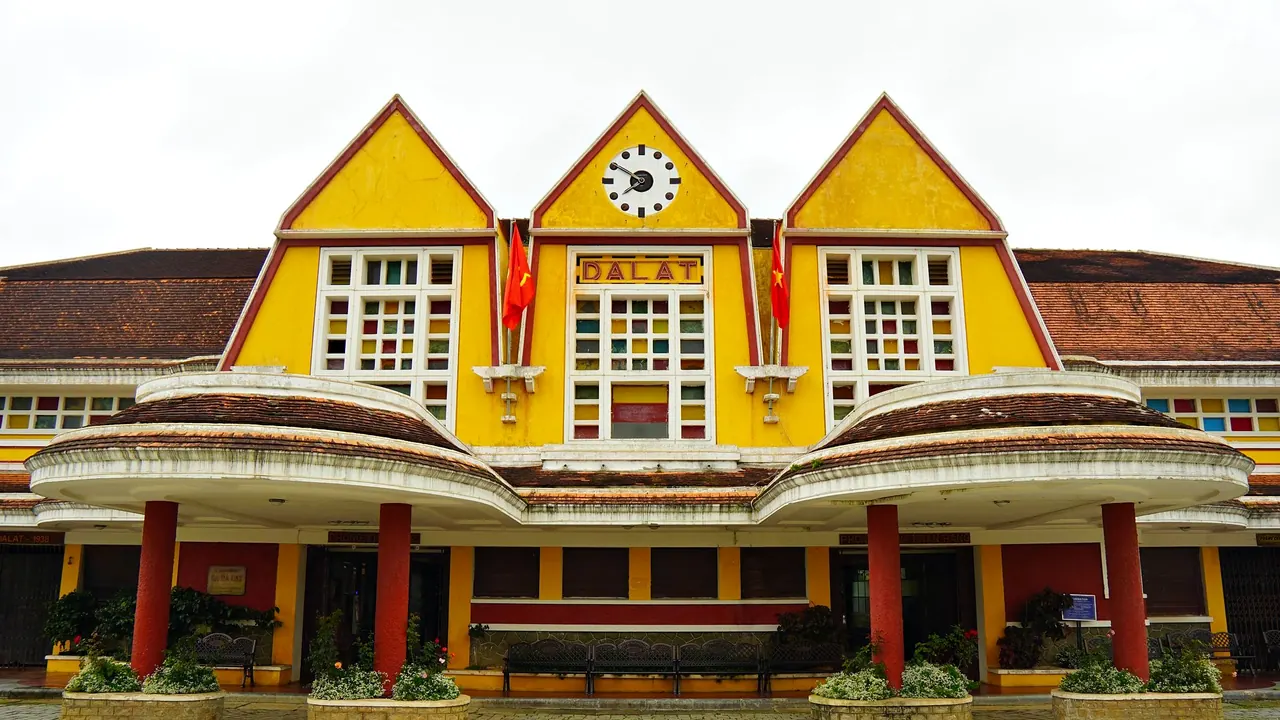
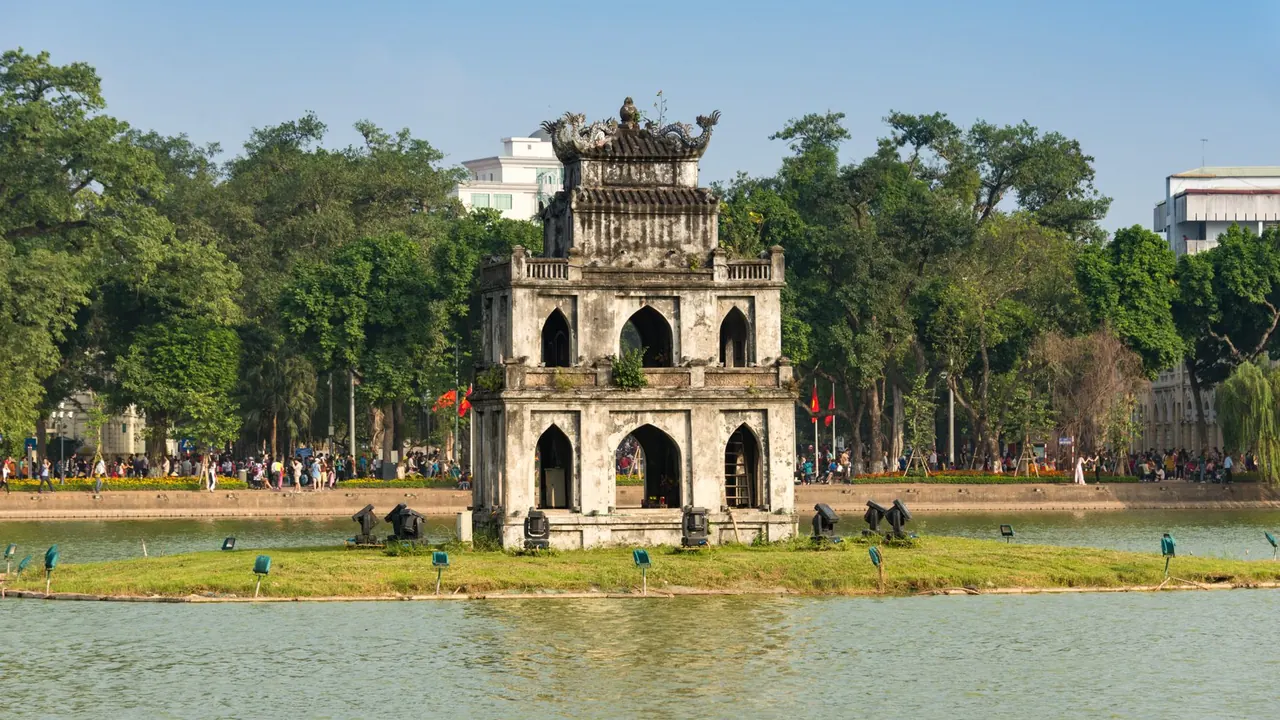
Photos: Da Lat by Pham Huynh Tuan Vy, Pexels License; Hanoi by xiquinhosilva, CC BY 2.0, cropped.
Da Lat or Hanoi?
Our verdict in twelve categories, each scored against the same fixed benchmark cities, and the climate month by month, so you can choose for your trip.
Choose Da Lat for
- nature and the outdoors
- families
- beaches
Da Lat is the pick for travellers who want cool air, pine hills and time outdoors. Its pull is the landscape around the plateau: treks on Langbiang, canyoning at Datanla, waterfalls and farm country. It also suits families who would rather pick strawberries in mild weather than steer a pushchair through lowland heat. Expect quiet evenings, a modest list of sights and few outings beyond the hills.
Choose Hanoi for
- day trips
- culture and sights
- food and drink
Hanoi rewards the curious city traveller who wants to eat, wander and learn. The Old Quarter's single-dish stalls, the temples and museums, bia hoi on the pavements and water puppets by the lake make every day full. It is also the better base for excursions, with Ninh Binh and the craft villages close by. The trade-off is noise, traffic and a summer that is heavy going.
Scoreboard
Twelve categories on one fixed scale from 0 to 100. The shaded stretch is the gap between the two.
Your match
Pick a travel style or drag the sliders, and both match scores follow your weighting.
Wins on nature and the outdoors and families with your weighting.
Wins on day trips and culture and sights with your weighting.
What matters to you?
Category by category
What the scores mean for a trip.
Beaches & swimming
Neither city is anywhere near a beach, and both need a separate stay on the coast. The difference lies in how you get there. From Da Lat the sea at Ninh Chu Bay or Nha Trang is a winding drive down the mountain passes. Hanoi is further from its coast at Ha Long, Cat Ba or Sam Son, but it does have hotel pools and the water parks by West Lake for a swim in town, whereas Da Lat's lakes are for pedal boats only.
Food & drink
Hanoi is one of the great places to eat in Asia, while Da Lat has a good local table but little more. In Hanoi, families have often cooked one dish for decades: pho as a clear broth at dawn, bun cha at noon, cha ca fried at the table, with egg coffee and fresh bia hoi in between.
Da Lat's cooking comes from its cool valleys: avocados, artichokes, strawberries and hotpot with wild greens. Its evening market is the real draw, with grilled rice paper and bánh căn. Arabica from the nearby slopes makes its café terraces a pleasure, but the range runs out in a few days.
Culture & sights
Hanoi has much more to see, and it is history with weight: the Temple of Literature, the Imperial Citadel of Thang Long, the guild streets of the Old Quarter and the Museum of Ethnology, which is excellent. It fills three or four days without repeating itself.
Da Lat's heritage is mostly the look of a French hill station: villas among the pines, the Art Deco railway station and Bao Dai's Summer Palace. Its most memorable sights are the eccentric ones, such as the Crazy House and the porcelain-covered Linh Phuoc pagoda. Two days is plenty.
Nightlife
Hanoi offers far livelier evenings. Pavements fill with bia hoi drinkers from late afternoon, the bar lanes around Ta Hien are loud by nine, and the weekend walking streets around Hoan Kiem turn into a long promenade. It still winds down around midnight.
Da Lat goes to bed much earlier. Its evenings mean the night market, a café with live music and the one labyrinthine backpacker bar most visitors try once. The cold sends almost everyone home well before midnight.
Nature & outdoors
Da Lat is built around its landscape, and Hanoi is not. From town you can climb Langbiang to 2,167m, trek the montane forest of Bidoup-Nui Ba, abseil down the falls at Datanla or ride a bike downhill through coffee farms, all in cool air.
Hanoi's own green space amounts to its lakes, with a cycling path around West Lake and tai chi at dawn by Hoan Kiem. The famous northern scenery, the limestone towers of Ninh Binh, is a day's outing away, and Ha Long Bay and Sapa need nights away.
Day trips
Hanoi is by far the better base for excursions. Ninh Binh combines Trang An's river caves with the old capital at Hoa Lu, the Perfume Pagoda is reached by rowing boat, and the craft villages of Bat Trang and Van Phuc are close to town, as is laterite-walled Duong Lam.
Da Lat's mountains cut it off. Its one real outing is the long descent to Phan Rang for the Cham towers and pottery villages. Closer to home, a half day takes in K'Ho villages, coffee farms and silk farms.
Good for families
Da Lat suits children better, largely because Vietnamese families have shaped it as a resort for their own children. Strawberry picking, the coaster down to Datanla, the cable car to Tuyen Lam Lake and the horses in the Valley of Love fill the days in mild weather, although teenagers may tire of the kitsch.
Hanoi makes children very welcome and has the water puppet theatre, but it is harder going. Crowded pavements, constant motorbikes and a humid summer mean short outings from a hotel near the lake work best.
Getting around
Hanoi is somewhat easier to get around because its sights are close together. You can walk from the Old Quarter to Hoan Kiem, the French Quarter and Ba Dinh, though you will often have to step into the road, and cheap ride-hailing covers the rest.
In Da Lat only the hilly centre around Xuan Huong Lake is walkable. The pagodas, falls and farms are spread across the hills, so every outing means a taxi, a hired scooter or a motorbike driver, on roads that turn slick after rain.
Shopping & style
Da Lat's shopping is mostly for the larder. The central market sells candied fruit, strawberry jam, artichoke tea and coffee beans, and the night market adds wool hats and a few embroidered silk pictures. None of it is worth setting an afternoon aside for.
Hanoi is the place to bring an empty bag. Whole streets of the Old Quarter still sell a single trade, and Hang Gai will make silk clothes to measure in a day or two. Bat Trang ceramics, lacquerware and textiles from the northern hills make good buys, and the weekend night market runs up to Dong Xuan.
Affordability
Both are very cheap, and a modest budget goes a long way in either city. What differs is where costs can creep up. Da Lat's rooms fill and rise in price around Lunar New Year and the long national breaks, so book ahead then. In Hanoi the extras add up instead, with international hotels, imported wine and Ha Long Bay cruises.
Live music & performing arts
Hanoi has a real stage culture. There are water puppets with live music by the lake several times a day, ca tru sung poetry in Old Quarter communal houses, a long-running jazz scene and occasional symphony and ballet at the colonial Opera House.
Da Lat has no formal season. Its musical life is the small evening café where local singers perform ballads, many of them about the city itself, with some staged gong music on the side.
Wellness & relaxation
Both make a fair place to unwind, but in different ways. In Da Lat the restfulness comes from the setting: mist on the lakes, cool mornings and slow coffee, with proper spas at the villa resorts in the pines.
In Hanoi you unwind indoors, with cheap foot massage and herbal baths after a long day on foot, because the streets themselves are noisy. Calm there means West Lake or the lakeshore at dawn.
When should you go?
Pick your month. The climate figures are measured averages, not a forecast.
Da Lat in July
Hanoi in July
Daytime high, °C
Rainfall in the month, mm
Where the figures come from
Da Lat has no weather station within reach, so its figures come from a gridded climate model rather than a measured record, and read a broad area rather than the city itself.
Hanoi's sunshine is measured 86 km from the centre, at Phu Lien.
Temperature and rainfall are climate normals, averaged over the years shown. Da Lat: 1991-2020 normals, TerraClimate 4 km grid at the town, no weather station within 90 km. Hanoi: 1991-2020 normals, Ha Noi (4.4 km from centre).
Da Lat's altitude keeps it mild all year, with daytime highs between 22°C and 25°C, warmest from February to June, so heat never gets in the way of walking. Rain decides the timing. December to March is dry and the best time for trekking and road trips. April turns showery, and from May to October afternoon storms soak the hills, peaking at about 269mm in August, before November dries out.
Hanoi has proper seasons. Winter is cool and grey, with little sunshine from January to March. Summer is hot, humid and wet, reaching 35°C in June and 311mm of rain in July, which makes a day on foot hard going. October and November are the most comfortable months, with April a warm second choice. To combine the two cities, November, December and March fit best: Da Lat is dry or drying out and Hanoi is mild, though March skies there are often overcast.
Which traveller are you?
For an outdoors trip, Da Lat is the clear choice. The walking, climbing and cycling begin at the edge of town, and the cool plateau air makes a full day of effort comfortable. From Hanoi, every good landscape means a long drive before you start.
On a food and nightlife trip, Hanoi is the far better base. You could eat at a different family stall for every meal of a week, and evenings stay sociable outdoors until midnight. Da Lat's range runs out quickly, and the cold ends its nights early.
On a family trip with young children, Da Lat makes life easier. Its sights were made with Vietnamese families in mind, and the mild air means no planning around midday heat. In Hanoi, traffic and summer humidity tire small children within hours.
Before you go
| Measure | Da Lat | Hanoi |
|---|---|---|
| Official language | Vietnamese | Vietnamese |
| Currency | Dong (VND) | Dong (VND) |
| Sockets | ACFG220 V, 50 Hz | ACFG220 V, 50 Hz |
| Driving side | Right | Right |
| Time zone | UTC+7 | UTC+7 |
| Emergency number | Police 113, ambulance 115, fire 114 | Police 113, ambulance 115, fire 114 |
| Elevation | 1,500 m | 10 m |
| Main airport | Lien Khuong Airport (DLI)22 km from centre7 non-stop destinations | Noi Bai International Airport (HAN)22 km from centre91 non-stop destinations |
By the numbers
| Measure | Da Lat | Hanoi |
|---|---|---|
| City population | 406,105 | 8,717,600 |
| People per km² | 1,032 | 2,595 |
| Museums within 10 km | 0 | 14 |
| UNESCO World Heritage sites within 50 km | 0 | 1 |
Where else could you go?
Every comparison below shares a destination with this one, so you can follow Da Lat or Hanoi somewhere new.
- Nha Trangvs Da Lat
- Ha Longvs Hanoi
- Ho Chi Minh Cityvs Da Lat
- Sapavs Hanoi
- Phnom Penhvs Da Lat
- Luang Prabangvs Hanoi