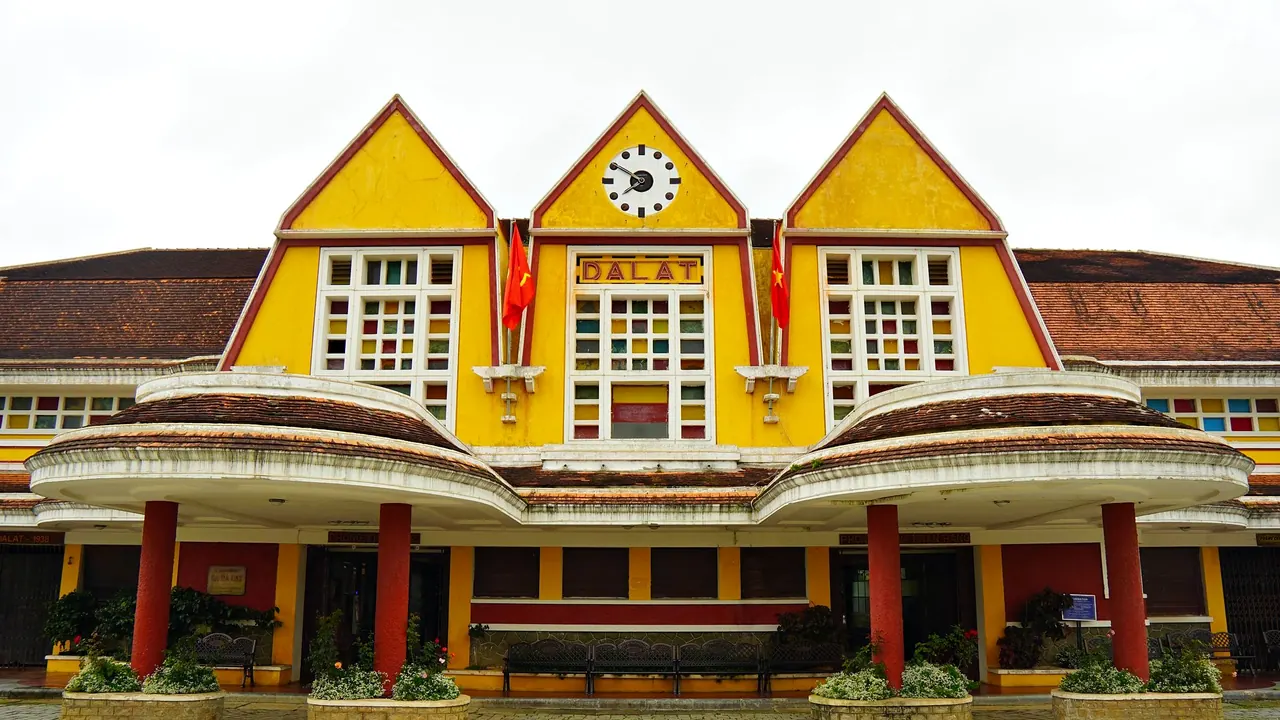
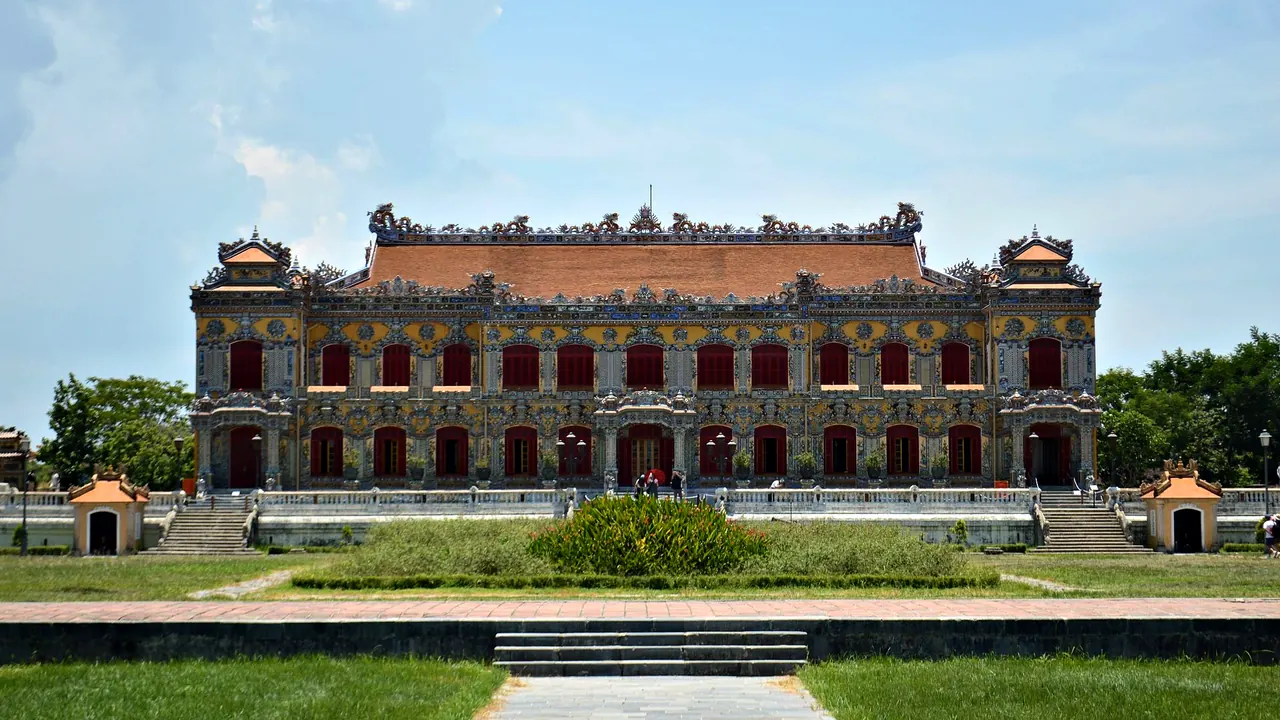
Photos: Da Lat by Pham Huynh Tuan Vy, Pexels License; Hue by Valeria Drozdova, Pexels License.
Da Lat or Hue?
Our verdict in twelve categories, each scored against the same fixed benchmark cities, and the climate month by month, so you can choose for your trip.
Choose Da Lat for
- nature and the outdoors
- families
Da Lat suits travellers who want to be outdoors in cool air. The pine hills, lakes and waterfalls around this old French hill station are the main draw, and canyoning, trekking and mountain biking are easy to arrange. It also works well for families with young children, thanks to its farms, cable car and mountain coaster, and the mild weather spares everyone the lowland heat. Choose it for fresh air and activity rather than history.
Choose Hue for
- culture and sights
- beaches
- day trips
Hue is the better pick for anyone who wants Vietnam's past and its cooking. The Nguyen emperors' citadel and the royal tombs along the Perfume River give it a depth of sightseeing Da Lat cannot match, and its spicy, intricate food is reason enough to stay a few days. It is also far better placed for excursions, with the old Demilitarised Zone to the north and the Hai Van Pass and Lang Co beach to the south.
Scoreboard
Twelve categories on one fixed scale from 0 to 100. The shaded stretch is the gap between the two.
Your match
Pick a travel style or drag the sliders, and both match scores follow your weighting.
Wins on nature and the outdoors and families with your weighting.
Wins on culture and sights and beaches with your weighting.
What matters to you?
Category by category
What the scores mean for a trip.
Beaches & swimming
Da Lat has no beach life at all. It sits on a high plateau, and the nearest swimming, at Ninh Chu Bay or Nha Trang, is hours away down winding passes. That makes the coast a next stop rather than an outing.
Hue is far better placed, though it is still not a beach city. Thuan An is a short ride away, plain but swimmable, and Lang Co's curve of sand between lagoon and sea makes a pretty day trip. The water is warm and calm from spring through summer and turns rough once the autumn rains begin.
Food & drink
Hue is the bigger reason to travel for food. Its cooking comes from the royal kitchens and is spicier and more intricate than elsewhere in Vietnam: bun bo Hue, saucer-steamed banh beo, rice with river clams, and a strong Buddhist vegetarian tradition from its pagodas.
Da Lat eats by its climate. It has farm vegetables and strawberries, grilled rice paper and hot soy milk at the night market, and hotpot against the chill. It also has the stronger coffee culture, with locally grown arabica drunk on terraces over the pines. Neither city offers much fine dining or foreign food.
Culture & sights
Here Hue is in a different league. A moated citadel encloses the Imperial City and the Forbidden Purple City, partly restored and partly left as ruins from 1968. Upriver lie the emperors' tombs, each with its own character, along with the Thien Mu pagoda and a fine antiquities museum.
Da Lat's heritage is lighter and more playful. Its strengths are colonial villas, the Art Deco railway station and Bao Dai's Summer Palace, and its most memorable sights are the eccentric Crazy House and the porcelain-mosaic Linh Phuoc pagoda. It is charming, but it lacks Hue's historical weight.
Nightlife
Both cities go to bed early, and neither has real clubs. Hue has a little more going on, with a few streets of loud backpacker bars on the south bank, street-side beer with grilled snacks, and families strolling the riverside night market. Da Lat's evenings are a market meal, a warm café and perhaps one visit to its famously maze-like bar before the cold sends everyone home.
Nature & outdoors
Da Lat is the stronger choice outdoors, and nature is why most people go there. It has pine hills and lakes at altitude, Langbiang rising above town, the montane forest of Bidoup-Nui Ba, and well-run canyoning, abseiling and village treks.
Hue's countryside is gentler and flatter: cycling past rice fields and garden houses, boating on the vast Tam Giang lagoon, and the forest and waterfalls of Bach Ma about an hour away. The lagoon and the Hai Van Pass give it a coastal side that Da Lat lacks, but the autumn floods put most of it out of reach for months.
Day trips
Hue is the much better base for excursions. A long guided day reaches the Vinh Moc tunnels and Khe Sanh in the old Demilitarised Zone. Southwards, the Hai Van Pass, Lang Co and Da Nang are an easy drive or a scenic train ride, and craft villages and the tiled Thanh Toan bridge make short rides from town.
Da Lat's mountains cut it off. Its one real outing is the long descent to Phan Rang for the Cham towers and pottery villages. Otherwise excursions stay local, to K'Ho villages, coffee farms and silk farms.
Good for families
Da Lat is clearly better with children, because much of it is built for Vietnamese families on vacation. It has the Valley of Love's paddle boats and horse rides, strawberry picking, a mountain coaster down to Datanla falls and a cable car to Tuyen Lam Lake, all in cool weather. The downsides are steep streets, scooters and sights spread out enough to need taxis.
Hue is calm and friendly to children but offers them little. Dragon boat rides and cycling through villages suit older children, while summer heat and autumn rain can tire out young ones.
Getting around
Hue is the easier city to get around. Its centre is small and flat, so the hotel streets, the riverside and the Citadel are linked on foot or by bicycle, and cyclos suit its pace. Only the tombs upriver need a taxi, a motorbike driver or a boat.
Da Lat's walkable core around Xuan Huong Lake is hilly and broken underfoot. Almost everything worth seeing is scattered across the hills, so visitors depend on taxis, ride-hailing or a rented scooter on roads that turn slippery after rain.
Shopping & style
Neither city is a shopping destination, and in both the central market is the heart of it. The difference is in what you carry home. From Da Lat it is mostly things to eat and drink, such as strawberry jam, dried fruit, artichoke tea and coffee beans, along with wool hats from the night market. Hue's souvenirs are crafts: conical hats with poems hidden in the leaves, Thuy Xuan incense, sesame candy, and tailors in the hotel streets.
Affordability
Both cities are very cheap, and a modest budget goes a long way in either. The costs fall differently. In Da Lat the danger is timing, because Lunar New Year and the long national breaks fill rooms and push up prices. In Hue the main extras are fixed: monument tickets for the Citadel and tombs, and any staged royal banquet.
Live music & performing arts
Hue has more to offer here, and what it offers is tied to its royal past. Nha nhac court music is played in the Citadel, ca Hue singers perform on lantern-lit dragon boats on the Perfume River, and the long-running Hue Festival widens the programme in its season.
Da Lat has no formal stage. Its charm lies in small cafés where local singers perform acoustic ballads, many of them about the city itself, with occasional gong music and the Flower Festival's outdoor shows.
Wellness & relaxation
Both cities are good for slowing down, and in both the rest comes from their calm rather than from spas. Da Lat's version is cool mist over the lakes, long coffee mornings and villa resorts tucked in the pines. Hue's is quieter pagodas, the Kim Long garden houses and tai chi by the river. Hue also has the Thanh Tan hot springs about an hour away for a day of soaking in pools and mud baths, which Da Lat has no equivalent of.
When should you go?
Pick your month. The climate figures are measured averages, not a forecast.
Da Lat in July
Hue in July
Daytime high, °C
Rainfall in the month, mm
Where the figures come from
Da Lat has no weather station within reach, so its figures come from a gridded climate model rather than a measured record, and read a broad area rather than the city itself.
Temperature and rainfall are climate normals, averaged over the years shown. Da Lat: 1991-2020 normals, TerraClimate 4 km grid at the town, no weather station within 90 km. Hue: 1991-2020 normals, Hue (13 km from centre).
Da Lat hardly has seasons for temperature. Daytime highs stay between 22°C and 25°C all year, so walking is comfortable in any month and evenings are always cool. What changes is the rain. December to March is dry and clear, which is the best time for trekking and canyoning. From May to October afternoon downpours are the rule, and the trails turn muddy.
Hue swings much further. February to April is the sweet spot, warm but not oppressive and fairly dry. From May to August the heat builds to around 35°C, which is hard work around the open Citadel grounds, though the days are long and sunny and the sea reaches about 28°C, good for a beach day. September to December brings the monsoon, with October alone bringing about 979mm of rain and floods that can close the countryside. Late winter is pleasant in both cities. In the wet autumn Da Lat is clearly the better choice, and in high summer Hue is the one with the beach.
Which traveller are you?
On a culture and arts trip, Hue is the clear choice. The imperial citadel, the riverside tombs of Tu Duc, Minh Mang and Khai Dinh, and court music performed inside the Citadel give it far more substance than Da Lat's colonial villas and quirky modern sights.
On a family trip with young children, Da Lat works better. There are strawberry farms where children pick their own, paddle boats, a mountain coaster and a cable car, and the mild air makes a nice change from the heat. Hue has palaces and tombs but almost nothing built for children.
For an outdoors trip, go to Da Lat. You can canyon down the Datanla waterfalls, climb Langbiang, trek through Bidoup-Nui Ba forest and ride bikes through the coffee farms. Hue's lagoon and its cycling routes through rice fields are lovely, but they are gentler, and the autumn floods wash them out.
Before you go
| Measure | Da Lat | Hue |
|---|---|---|
| Official language | Vietnamese | Vietnamese |
| Currency | Dong (VND) | Dong (VND) |
| Sockets | ACFG220 V, 50 Hz | ACFG220 V, 50 Hz |
| Driving side | Right | Right |
| Time zone | UTC+7 | UTC+7 |
| Emergency number | Police 113, ambulance 115, fire 114 | Police 113, ambulance 115, fire 114 |
| Elevation | 1,500 m | 12 m |
| Main airport | Lien Khuong Airport (DLI)22 km from centre7 non-stop destinations | Phu Bai International Airport (HUI)15 km from centre3 non-stop destinations |
By the numbers
| Measure | Da Lat | Hue |
|---|---|---|
| City population | 406,105 | 652,572 |
| People per km² | 1,032 | 2,453 |
| Museums within 10 km | 0 | 2 |
| UNESCO World Heritage sites within 50 km | 0 | 1 |
| Swim season, months above 21 °C | - | 12 months |
Where else could you go?
Every comparison below shares a destination with this one, so you can follow Da Lat or Hue somewhere new.
- Da Nangvs Hue
- Nha Trangvs Da Lat
- Hoi Anvs Hue
- Ho Chi Minh Cityvs Da Lat
- Phnom Penhvs Da Lat
- Hoi Anvs Da Lat