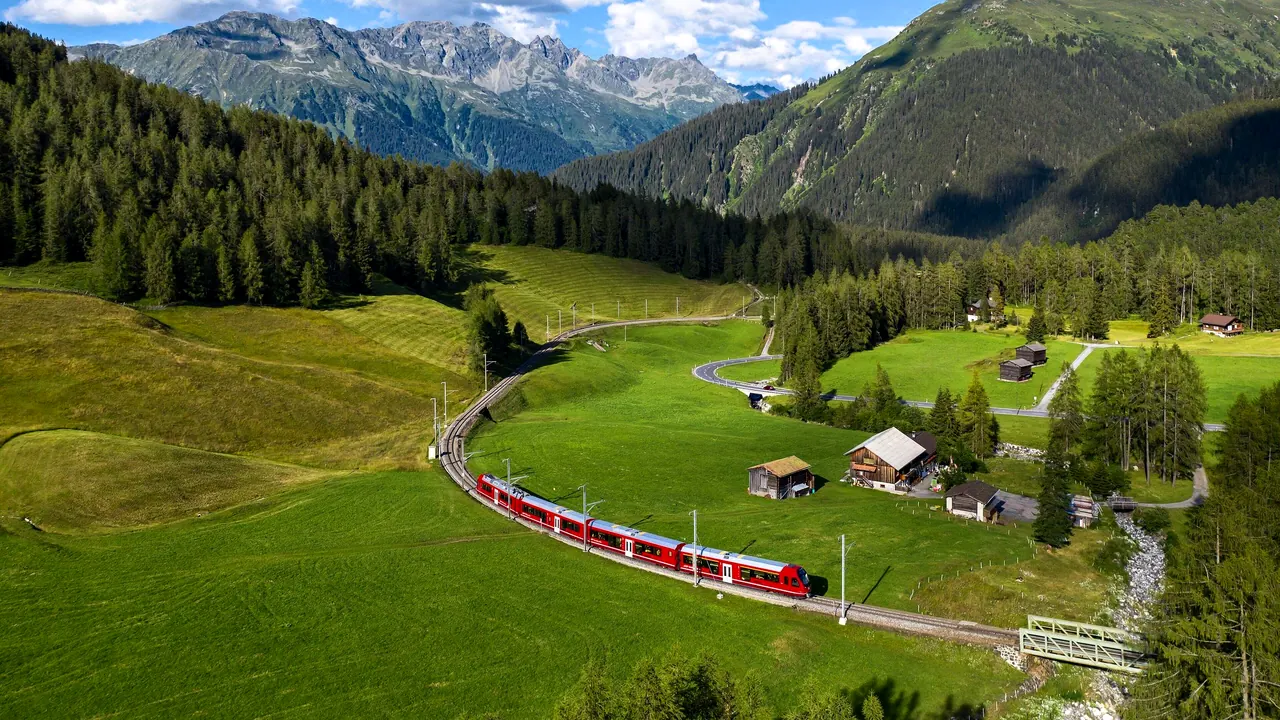
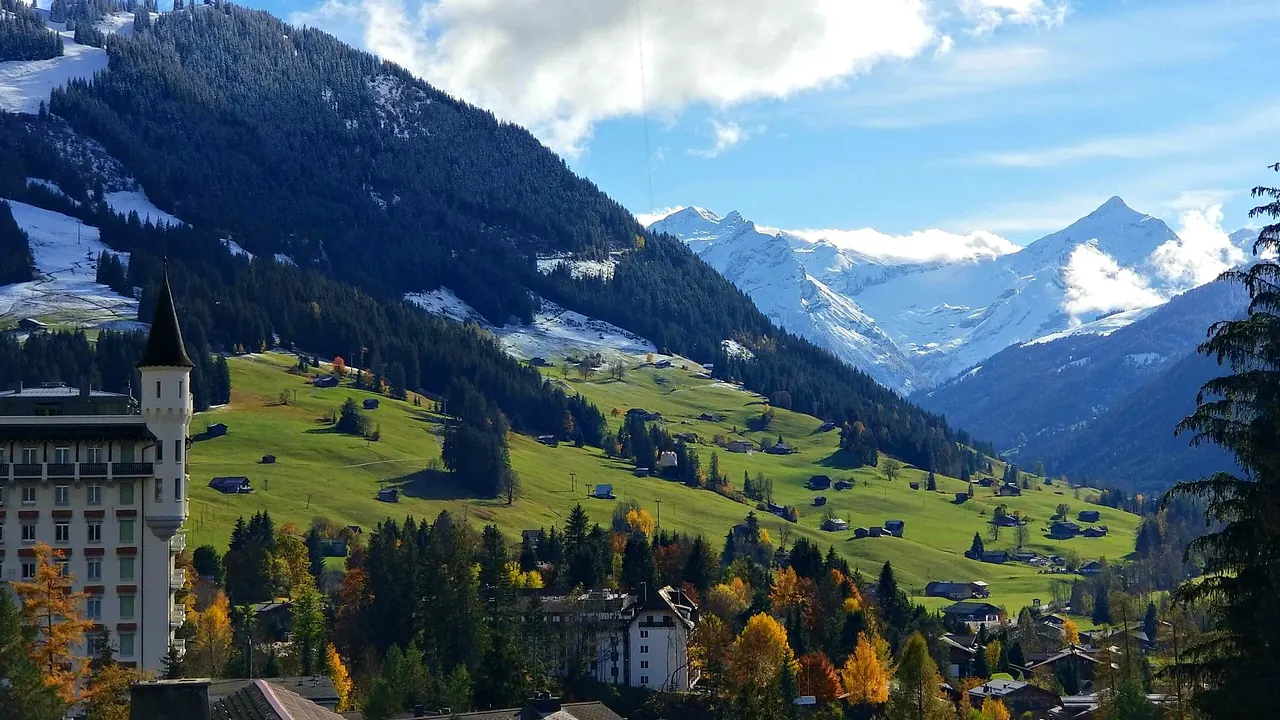
Photos: Davos by Kabelleger / David Gubler, CC BY-SA 4.0, cropped; Gstaad by Samuel Barlow, CC BY-SA 4.0, cropped.
Davos or Gstaad?
Our verdict in twelve categories, each scored against the same fixed benchmark cities, and the climate month by month, so you can choose for your trip.
Choose Davos for
- culture and sights
- families
- nature and the outdoors
Davos suits travellers who want the mountains to be the whole point. It has a big, high ski area, a long cross-country network and side valleys that end below glaciers, and you can get around town without a car. It also has more for a rainy afternoon, from the Kirchner Museum and the sanatorium history behind The Magic Mountain to a large indoor pool. That makes it the easier choice for active families.
Choose Gstaad for
- shopping
- live music and the arts
- day trips
Pick Gstaad for a polished, slower Alpine stay where the evenings matter as much as the slopes. Its grand-hotel kitchens and local cheeses, the luxury shops on the Promenade and the Menuhin Festival in summer give it a refinement Davos lacks. The GoldenPass line also takes you to Lake Geneva, Gruyères and Bern for days off the mountain. The skiing is gentler and lower, and summer is arguably its finest season.
Scoreboard
Twelve categories on one fixed scale from 0 to 100. The shaded stretch is the gap between the two.
Your match
Pick a travel style or drag the sliders, and both match scores follow your weighting.
Wins on culture and sights and families with your weighting.
Wins on shopping and live music and the arts with your weighting.
What matters to you?
Category by category
What the scores mean for a trip.
Beaches & swimming
Neither is a swimming destination, and the lakes stay cold in both even in midsummer. Davos has the lido on the Davosersee, with lawns and a jetty at the edge of town, and a large indoor leisure pool for any weather. In Gstaad a swim means a quick dip in Lauenensee or Arnensee out in the valleys, and the heated outdoor pool is the reliable option.
Food & drink
Gstaad eats better, mainly because several of its grand hotels run serious gourmet kitchens. Its cheese is the local speciality: Saanen's long-aged Hobelkäse and L'Etivaz from the summer alpine dairies, both sold straight from small cellars in the valley.
Davos's Graubünden dishes, such as capuns, pizokel and Bündnerfleisch, are worth seeking out in the mountain huts. In town, though, it relies on hotel dining, pizza and fondue. In both places the best meal is often a long lunch on a hut terrace, and many kitchens close between seasons.
Culture & sights
Davos has a real story to tell. Tuberculosis patients came here in the sanatorium era that inspired Thomas Mann's The Magic Mountain, and you can still see it at the Schatzalp. The Kirchner Museum holds the largest collection of Ernst Ludwig Kirchner's work, and with a few smaller museums the town fills a day or two.
Gstaad has no museums to speak of. What it offers is the dark-timbered Saanenland chalets and the medieval wall paintings in Saanen's church of St Mauritius, which are worth a look on a walk but not worth planning a day around.
Nightlife
In both towns nightlife belongs to winter and fades in summer, but the style differs. Davos has ordinary, sociable après-ski that starts at the foot of the Jakobshorn and Parsenn and moves on to pubs and a couple of small clubs along the Promenade. Gstaad is dressier and more private, with late clubs in the cellars of the grand hotels and much of the social life at private chalet parties.
Nature & outdoors
Both are excellent for the outdoors, but Davos is higher and wilder. Its five ski areas, more than 100km of cross-country trails and side valleys such as Sertig and Dischma, which end below glaciers, give it bigger terrain and more dependable snow. The Swiss National Park is within reach for a day.
Gstaad's home slopes are gentler and lower, and snow can be thin early in the season, although Glacier 3000 is about half an hour away. Its strength is a softer, greener summer of lake walks, waterfalls in the Geltental, paragliding and rafting on the Saane.
Day trips
Gstaad has the wider range of outings. The GoldenPass line runs down to Montreux, the Castle of Chillon and the Lavaux vineyard terraces on Lake Geneva. Gruyères is under an hour by car, and Thun and Bern lie the other way, so lakes, castles and the Swiss capital are all within a day.
From Davos the main attraction is the railway itself, over the Landwasser Viaduct and along the Albula line to St Moritz. Chur's medieval centre and the painted houses of Guarda are also within reach. These are good trips, but they keep you mostly within the mountains of Graubünden.
Good for families
Davos gives families more to do. Besides ski schools and nursery slopes, it has the long toboggan run from the Schatzalp, a big natural ice rink and playgrounds at the top stations. Most usefully, it has a large indoor pool with slides for wet days.
Gstaad is just as safe and calm, with gentle beginner slopes, sleigh rides and cows and goats on summer walks. It has nothing indoors when the weather turns, though, and it suits families who want a quiet mountain stay rather than a full programme.
Getting around
You can manage without a car in either, but the two are laid out differently. Davos is a single 4km strip with two railway stations, free buses on the guest card, and the Parsenn and Jakobshorn lifts leaving from town. Gstaad's centre is small and car-free, but the resort is spread across several valleys and lift bases, and with fewer PostBuses in the quiet months many visitors end up using hotel shuttles or a car.
Shopping & style
Gstaad's Promenade is worth the trip for luxury shoppers. Watchmakers, jewellers, international fashion labels, cashmere and interior design shops are packed into one chalet-lined street, alongside carved wood and the papercut art of the Pays-d'Enhaut.
The Promenade in Davos is practical by comparison: ski and outdoor gear, rental shops, a few watch shops and delicatessens selling Bündnerfleisch and Nusstorte. It is fine for kitting out, but not for a shopping trip.
Affordability
Both charge the top Swiss resort prices, so choosing one over the other won't save you much. In Davos, rental apartments, self-catering and free buses on the guest card help a little, but rooms get scarce during the World Economic Forum in January.
In Gstaad, mid-range rooms are rare, and the usual way round that is to stay down the valley in Saanen or Zweisimmen and come in for the day. Both are noticeably cheaper outside the winter peak.
Live music & performing arts
Gstaad is the clear choice for music. The Gstaad Menuhin Festival, founded by Yehudi Menuhin, brings leading soloists and orchestras for several weeks each summer to a festival tent and the village churches of Saanen, Rougemont and Lauenen. Winter adds chamber music and New Year concerts.
Davos has its own summer classical festival, built around young musicians playing in churches and hotels, and the occasional concert at the congress centre. Neither has a theatre or opera season, so music lovers should plan a visit around the festivals in either place.
Wellness & relaxation
In both towns relaxing mostly means hotel spas rather than a bathing culture. Gstaad's spas are unusually large and lavish for a village, with indoor and outdoor pools and treatment rooms facing the mountains, though they are built mainly for hotel guests.
Davos has a public leisure pool with a sauna area open to day visitors, and the mineral baths of Scuol are about an hour away, so there is proper thermal bathing within reach, which Gstaad lacks. The town also has the clear, dry air that first made it a place to recover.
When should you go?
Pick your month. The climate figures are measured averages, not a forecast.
Davos in July
Gstaad in July
Daytime high, °C
Rainfall in the month, mm
Where the figures come from
Davos's temperatures are measured 53 km from the centre, at S. Valentino Alla Muta.
Davos has no rain gauge within 25 km of the centre, so its rainfall comes from a gridded climate dataset read at the destination rather than from a gauge further away.
Gstaad's temperatures are measured 78 km from the centre, at Les Eplatures.
Gstaad has no rain gauge within 25 km of the centre, so its rainfall comes from a gridded climate dataset read at the destination rather than from a gauge further away.
Temperature and rainfall are climate normals, averaged over the years shown. Davos: 1991-2020 normals, S. Valentino Alla Muta (53.4 km from centre). Gstaad: 2010-2020 (rainfall 1991-2020) normals, Les Eplatures (77.5 km from centre).
Both are snow resorts from December to March, with daytime highs around 2°C in midwinter, and both are at their warmest in July and August. Davos has a clear wet season in summer, with rainfall peaking at 142mm in August, while its winters are noticeably drier. That makes late summer the time to pack waterproofs for hiking, and September a good balance of mild days and less rain.
Gstaad runs a degree or so warmer through most of the year, reaching about 21°C in high summer, and its rain is spread more evenly across the year. Its wettest month is December, at 125mm, which mostly falls as snow. Summer there is a little drier than in Davos. Late spring and November are grey and quiet in both, and neither is a good choice then.
Which traveller are you?
On a family trip with children, Davos is the easier choice. There is more to fill the days whatever the weather, and getting around without a car is simple. Gstaad is as safe, but suits families happy with a quiet stay.
For an outdoors trip, Davos has the edge, especially for keen skiers and hikers who want high terrain and reliable snow. Gstaad's mountains are lower and gentler, and suit relaxed summer walking in green, pastoral country better than big days out.
On a shopping trip, Davos offers little beyond kitting out for the slopes. Gstaad is the one to choose, because its single Promenade holds more luxury houses than you would expect in a village, though nothing for a modest budget.
Before you go
| Measure | Davos | Gstaad |
|---|---|---|
| Official language | French, German, Italian, Romansh | French, German, Italian, Romansh |
| Currency | Swiss Franc (CHF) | Swiss Franc (CHF) |
| Sockets | CJ230 V, 50 Hz | CJ230 V, 50 Hz |
| Driving side | Right | Right |
| Time zone | UTC+1, UTC+2 in summer | UTC+1, UTC+2 in summer |
| Emergency number | 112 | 112 |
| Elevation | 1,559 m | 1,050 m |
| Main airport | Zürich Airport (ZRH)122 km from centre226 non-stop destinations | Geneva International Airport (GVA)94 km from centre150 non-stop destinations |
| Public holidays this year | 9 days | 10 days |
By the numbers
| Measure | Davos | Gstaad |
|---|---|---|
| Population | 10,738 | 2,960 |
| People per km² | 38 | - |
| Museums within 10 km | 3 | 0 |
| UNESCO World Heritage sites within 50 km | 2 | 4 |
Where else could you go?
Every comparison below shares a destination with this one, so you can follow Davos or Gstaad somewhere new.
- Klostersvs Davos
- Arosavs Davos
- Adelbodenvs Gstaad
- Lenzerheidevs Davos
- Crans-Montanavs Gstaad
- Leukerbadvs Gstaad