Photos: Dijon by Dennis G. Jarvis, CC BY-SA 2.0, cropped; Geneva by Diviosen, CC BY-SA 3.0, cropped.
Dijon or Geneva?
Our verdict in twelve categories, each scored against the same fixed benchmark cities, and the climate month by month, so you can choose for your trip.
Choose Dijon for
- prices
- food and drink
- culture and sights
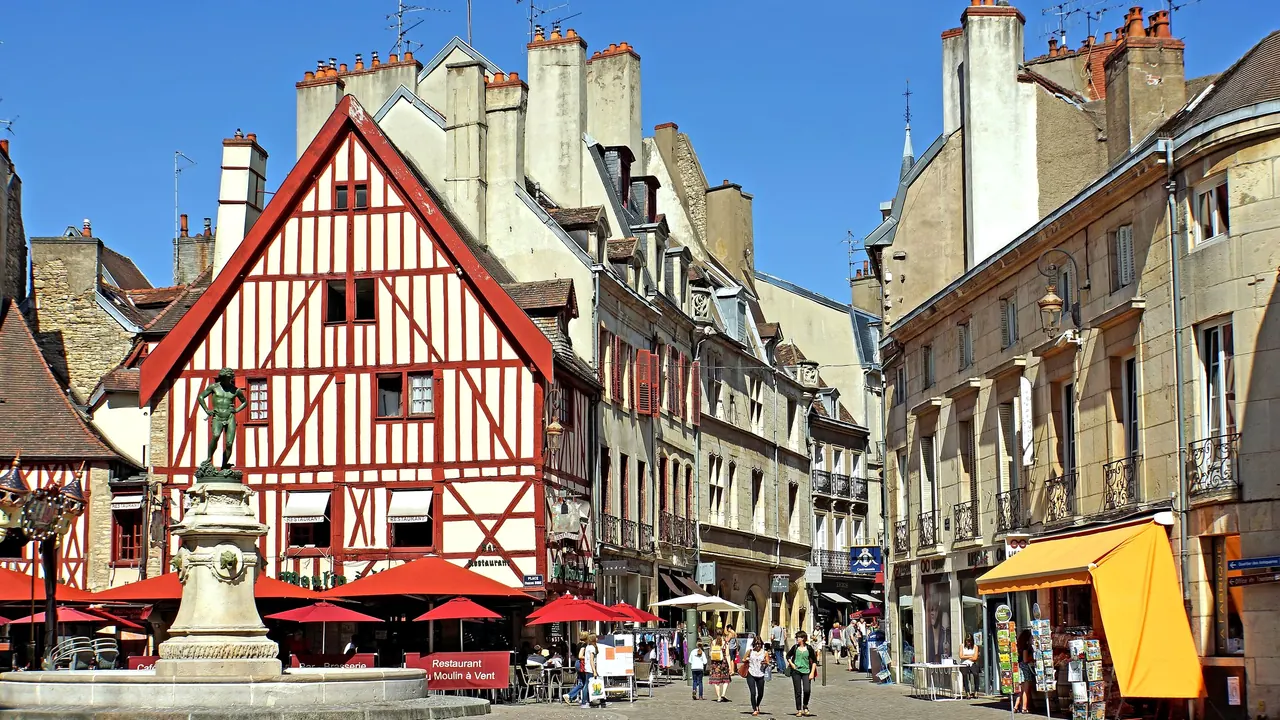
Dijon is for travellers who plan their days around the table and the vineyard. It has Burgundian cooking, the stalls of Les Halles and wine villages that start at the edge of town, so its food is more focused than Geneva's. It also costs far less, so long lunches and cellar visits are easier to afford. With the ducal palace and its half-timbered streets, it also has the richer old town of the two.
Choose Geneva for
- beaches
- nature and the outdoors
- shopping
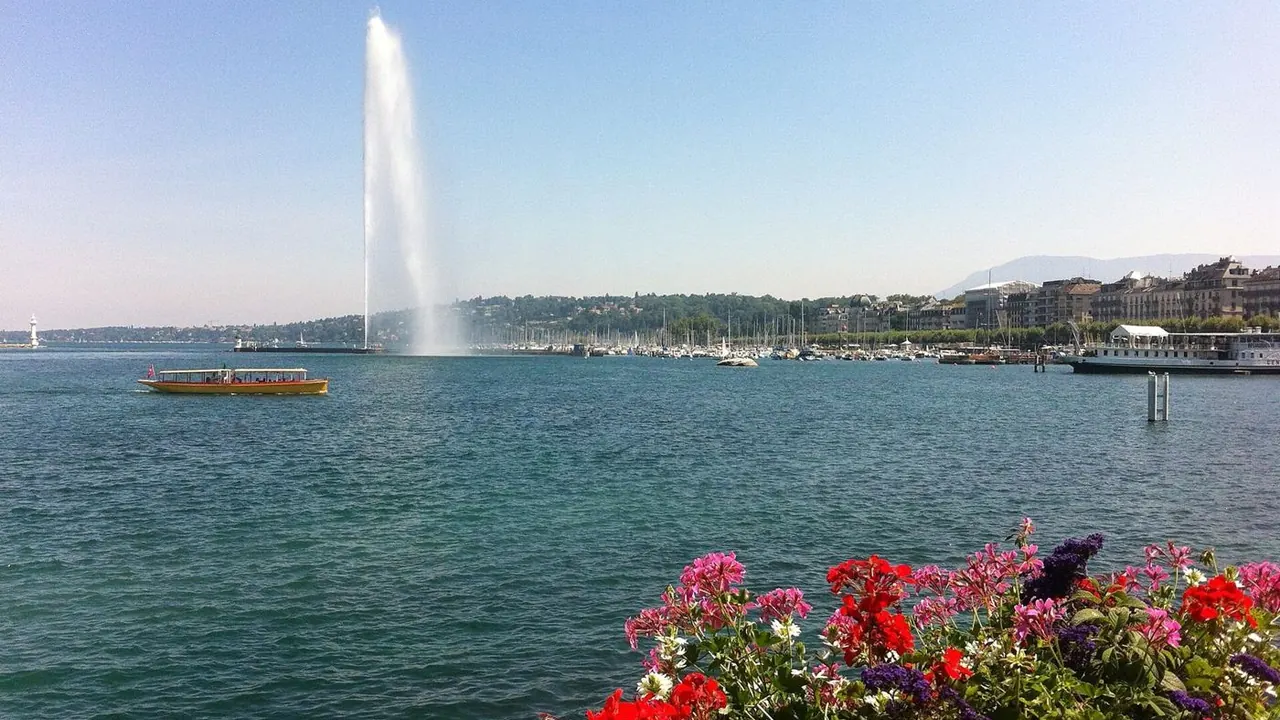
Pick Geneva if the landscape matters as much as the city. The lake, the Salève, the Jura and the Alps on the horizon make it a far better base for walking, sailing, summer swimming and winter skiing. Its transport, shopping, concert halls and spa culture are also a step up. The catch is cost: a stay here is very expensive, so it suits travellers for whom the budget is not the deciding factor.
Scoreboard
Twelve categories on one fixed scale from 0 to 100. The shaded stretch is the gap between the two.
Your match
Pick a travel style or drag the sliders, and both match scores follow your weighting.
Wins on prices and food and drink with your weighting.
Wins on beaches and nature and the outdoors with your weighting.
What matters to you?
Category by category
What the scores mean for a trip.
Beaches & swimming
Neither city has a coast, but Geneva has a real summer swimming life and Dijon does not. From June, people in Geneva swim in the clean lake. They dive off the Bains des Pâquis jetty with the Jet d'Eau in view, or spread out on the lawns and pebbles of Genève-Plage.
Dijon's only equivalent is Lac Kir, a reservoir on the western edge of town with a supervised bathing area for a hot afternoon. Beyond that there are municipal pools. Neither city works for a beach vacation, but Geneva's lido season is worth planning a few afternoons around.
Food & drink
Dijon is the stronger food destination because it sits at the head of Burgundy. Expect boeuf bourguignon, jambon persillé, Époisses from Les Halles and village wines poured by the glass from vineyards just south of town. Geneva also eats well, with lake perch, fondue and its own Chasselas. The international organisations give it the wider spread of cuisines.
The difference is focus and cost. Dijon is narrow but deep, built on one great regional tradition. Geneva is broader and more polished, and every meal there costs noticeably more.
Culture & sights
Both reward two or three days, but more of the past survives in Dijon's old centre. The Palace of the Dukes holds the Valois tombs in one of France's oldest museums. Add the gargoyles and lucky owl of Notre-Dame and the streets of half-timbered houses, and the historic townscape is more complete.
Geneva's interest is of another kind. The Reformation lives on at St Pierre Cathedral and the Reformation Wall, and the modern world at the Palais des Nations, the Red Cross museum and CERN. Dijon is the old medieval capital, while Geneva is where you see how diplomacy and science work.
Nightlife
Neither city is built for big nights, but Geneva has a little more range. The Pâquis keeps its bars busy late and Carouge has wine terraces. The alternative centres around Plainpalais and Jonction run club nights with an electronic edge.
Dijon's evenings depend on its students. There are small bars along Rue Berbisey, terraces round Place Émile Zola and long dinners with wine, but few clubs, and outside term time the streets are quiet by midnight.
Nature & outdoors
Geneva is by far the better base for the outdoors. Mont Blanc shows on the horizon, and the Salève rises just over the border with a cable car, cliffs and paragliding. The Jura ridges offer forest hikes and cross-country skiing, and the lake has sailing and paddleboarding. Chamonix is about an hour away.
Dijon's countryside is gentler. It has wooded combes west of town for walks and climbing, the flat towpath of the Burgundy Canal and the vineyard cycle route to Beaune. It is pleasant for cyclists, but there are no mountains.
Day trips
Both are excellent bases, and the difference lies in what you go out to see. Dijon's outings are about wine and Burgundian history: the Route des Grands Crus to Beaune, Fontenay Abbey, the ramparts of Semur-en-Auxois and the battlefield at Alésia. Many of the villages need a car, a bike or a tour.
Geneva's list has more varied scenery and is easier on public transport. Lake steamers run to Lausanne and the Château de Chillon past the Lavaux terraces, Yvoire and Annecy are just across the border, and Gruyères or Bern make a longer day.
Good for families
Children run out of things to do in Dijon well before they do in Geneva. Dijon's small, mostly pedestrian centre is easy with a pushchair, and it has the planetarium and natural history museum at the Jardin de l'Arquebuse, the play areas of the Parc de la Colombière and paddling at Lac Kir in summer. Beyond those, its wine tastings and fine-art museums suit parents far more than children.
Geneva fills more days. The animal dioramas at the Natural History Museum, the deer and goats at the Bois de la Bâtie, the lakeside playgrounds, rides on the yellow harbour boats and summer swimming will keep young children busy. A day in the mountains makes up for the lack of a zoo or theme park.
Getting around
Both centres are walkable, and you won't need a car in either. Geneva goes further. Its trams are frequent, the harbour boats belong to the same network and the airport is a few minutes by train from the main station. Trains and buses even reach many of the mountain outings.
Dijon's compact pedestrian core and two tram lines work well, and the TGV makes Paris an easy hop. The wine villages away from the railway, though, need a hire car, a bike or a tour.
Shopping & style
Geneva is the shopping city of the two, above all for watches and jewellery. The Rue du Rhône holds the flagship boutiques of the Swiss watch houses. Carouge's craft workshops and the Plainpalais flea market are there for something less polished.
Dijon is a place to shop for food and drink. Mustard in many flavours, pain d'épices, cassis and Burgundy from the wine merchants are the things to take home. Rue de la Liberté covers the basics but has little fashion.
Affordability
This is where the two differ most. Dijon has the prices of a French regional city: moderate hotels, good-value bistro set lunches and cheap wine by the glass. Only serious restaurants, cellar tastings and wine tours push the bill up.
Geneva is very expensive for a visitor, whether for hotels, meals or drinks. Free museums, free local transport for hotel guests and cheap lidos help, and many budget-minded visitors sleep or eat across the border in France. Even so, what a few Geneva dinners cost would cover several days in Dijon.
Live music & performing arts
Geneva has the bigger stage. The Grand Théâtre runs a full season of opera and ballet, and the Orchestre de la Suisse Romande plays in the gilded Victoria Hall. The Bâtiment des Forces Motrices, in the middle of the Rhône, adds concerts and dance.
Dijon's Opéra uses two venues, the old Grand Théâtre and the Auditorium with its fine acoustics, and gives a solid season for a city its size. Its programme follows the academic year and thins out in summer. Geneva's summer brings open-air concerts and the Fête de la Musique.
Wellness & relaxation
Geneva is the more restorative choice because it has a real bathing habit. In winter the Bains des Pâquis becomes a sauna and hammam, with plunges into the cold lake. The lakefront hotels run serious spas, and the spa towns of Évian and Divonne are close by.
Dijon has a few hotel spas and some grape-based treatments in the wine villages. Its rest comes from long lunches and quiet squares rather than any spa culture.
When should you go?
Pick your month. The climate figures are measured averages, not a forecast.
Dijon in July
Geneva in July
Daytime high, °C
Rainfall in the month, mm
Temperature and rainfall are climate normals, averaged over the years shown. Dijon: 1991-2020 normals, Dijon (7 km from centre). Geneva: 1991-2020 normals, Geneve-Cointrin (5.7 km from centre).
Dijon and Geneva have almost the same temperatures through the year. Both reach about 27°C in July and drop to around 6°C in December and January, which is cold enough that winter sightseeing means short walks between indoor stops. June to August is warm enough to swim at Lac Kir or in Geneva's lake, which stays cold until June. May, June and September are the most comfortable months for walking the streets and touring the vineyards or the lakeshore. Both cities get their longest sunshine in July and their shortest in December.
Rain is where they differ. Dijon is drier than Geneva in every month except May, when the two are level, and the gap is widest in autumn and winter: October brings around 76mm in Dijon against 94mm in Geneva. That makes Dijon the better choice for a late-season trip. In midwinter, Geneva makes up for grey days in the city with ski resorts within easy reach.
Which traveller are you?
On a trip on a tight budget, Dijon is the clear pick. Moderate hotels, bistro set lunches, inexpensive wine by the glass and a centre you can walk make each day cost a fraction of Geneva, where even a simple meal is expensive.
For an outdoors trip, choose Geneva. The Salève, the Jura ridges, sailing on the lake and the Alps around Chamonix, about an hour away, give real hiking, paragliding and skiing. Dijon offers only gentle combes, canal towpaths and vineyard cycling.
On a shopping trip, Geneva wins for anyone after watches, jewellery or luxury labels on the Rue du Rhône, with Carouge's craft workshops and the Plainpalais flea market as well. Dijon suits shoppers who mostly want mustard, cassis, cheese and Burgundy wine to carry home.
Before you go
| Measure | Dijon | Geneva |
|---|---|---|
| Official language | French | French, German, Italian, Romansh |
| Currency | Euro (EUR) | Swiss Franc (CHF) |
| Sockets | CE230 V, 50 Hz | CJ230 V, 50 Hz |
| Driving side | Right | Right |
| Time zone | UTC+1, UTC+2 in summer | UTC+1, UTC+2 in summer |
| Emergency number | 112 | 112 |
| Elevation | 220 m | 403 m |
| Main airport | Lyon Saint-Exupéry Airport (LYS)178 km from centre141 non-stop destinations | Geneva International Airport (GVA)5 km from centre150 non-stop destinations |
| Public holidays this year | 11 days | 9 days |
By the numbers
| Measure | Dijon | Geneva |
|---|---|---|
| City population | 161,830 | 211,152 |
| People per km² | 3,890 | 13,280 |
| Museums within 10 km | 8 | 34 |
| UNESCO World Heritage sites within 50 km | 1 | 2 |
Where else could you go?
Every comparison below shares a destination with this one, so you can follow Dijon or Geneva somewhere new.