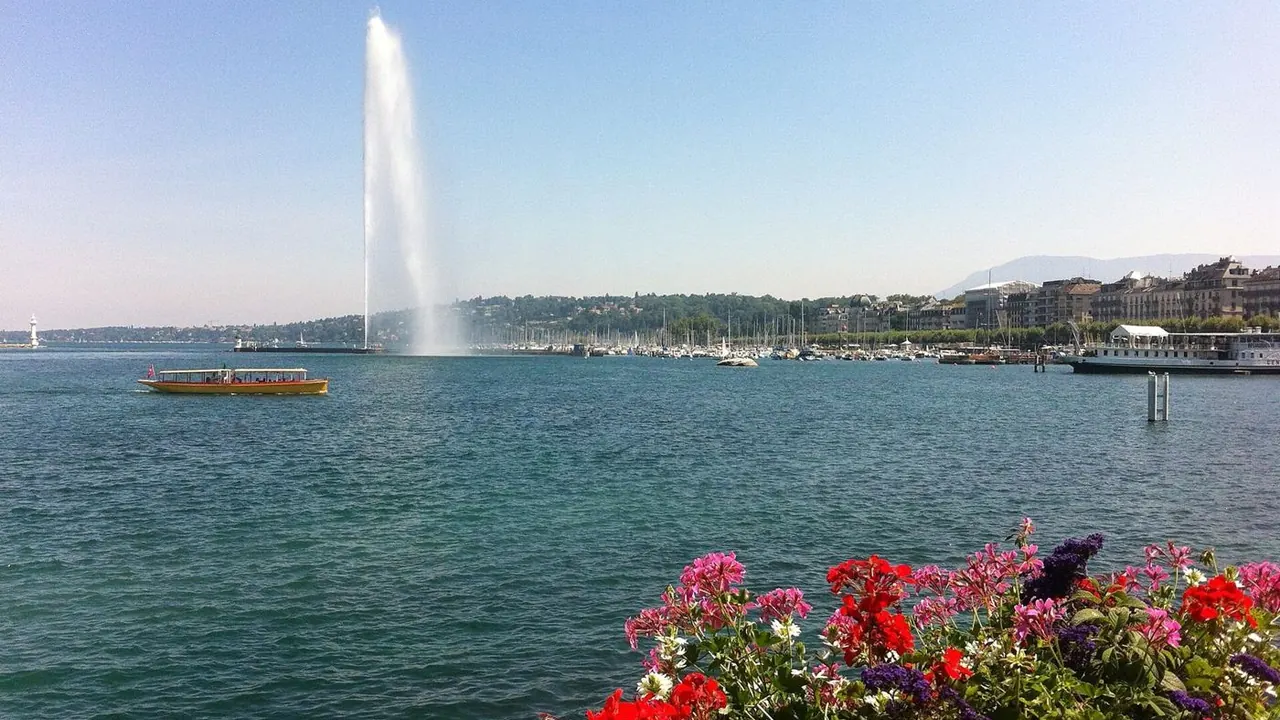
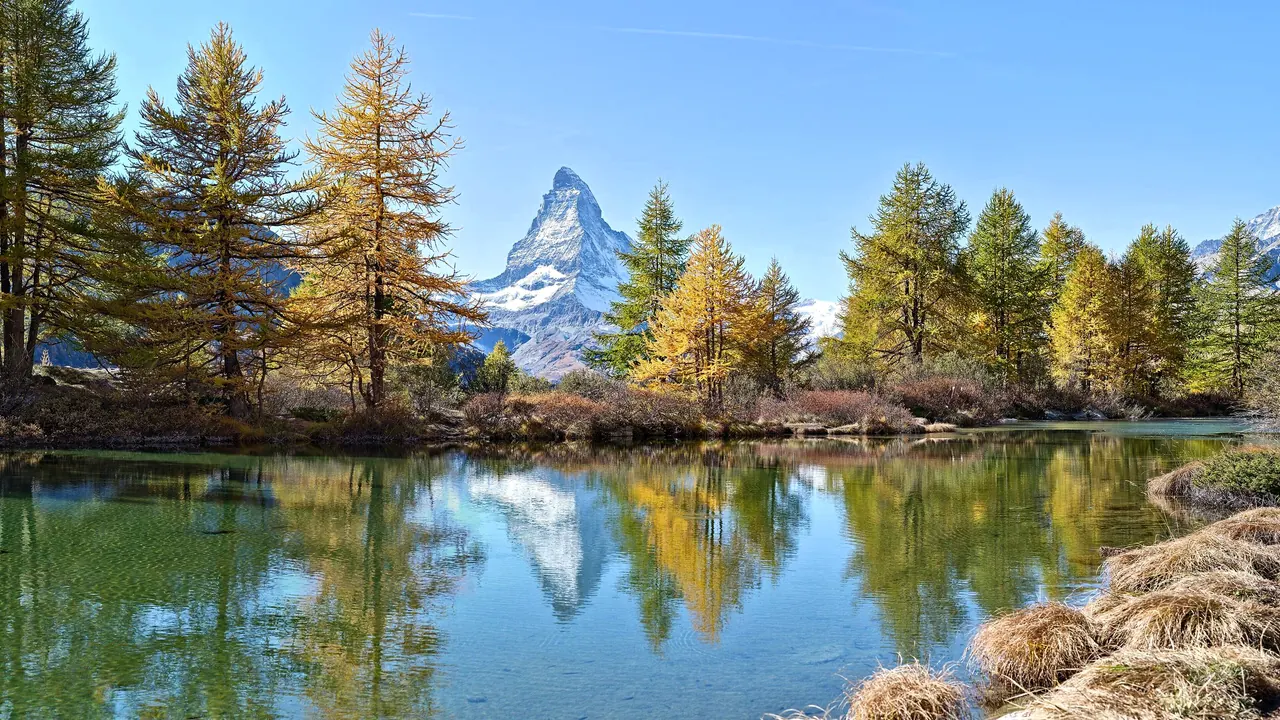
Photos: Geneva by Diviosen, CC BY-SA 3.0, cropped; Zermatt by Roy Egloff, CC BY-SA 4.0, cropped.
Geneva or Zermatt?
Our verdict in twelve categories, each scored against the same fixed benchmark cities, and the climate month by month, so you can choose for your trip.
Choose Geneva for
- day trips
- beaches
- live music and the arts
Geneva suits a traveller who wants a real city with the Alps on the horizon. It has Calvin's cathedral and the Palais des Nations, opera at the Grand Théâtre, lake lidos in summer, and steamers or trains out to Lausanne, Lavaux, Montreux and Annecy. The mountains are an easy day out rather than the whole point, which makes it the better choice for a varied few days of sightseeing, outings and evenings at the theatre.
Choose Zermatt for
- nature and the outdoors
Pick Zermatt when the mountains are the trip. Skiers, hikers and climbers get the Matterhorn straight above the village, lifts up to glacier terrain, long chalet lunches on the slopes and quiet car-free streets. Beyond that there is little: its heritage fills a morning, there is no theatre, and summer evenings end after dinner. It is a place to spend every day outdoors.
Scoreboard
Twelve categories on one fixed scale from 0 to 100. The shaded stretch is the gap between the two.
Your match
Pick a travel style or drag the sliders, and both match scores follow your weighting.
Wins on day trips and beaches with your weighting.
Wins on nature and the outdoors with your weighting.
What matters to you?
Category by category
What the scores mean for a trip.
Beaches & swimming
Geneva at least has a summer swimming culture. There is the Bains des Pâquis jetty, the lawns and pools of Genève-Plage on the Eaux-Vives shore, and a lake that turns comfortable by August. It is more lido than beach, but in summer the city really does swim.
Zermatt has nothing like it. Its mountain tarns are glacial meltwater for photographing the Matterhorn, not for swimming, so a hotel pool is the only option.
Food & drink
Geneva has the wider choice of food. You can eat lake perch, or fondue in wood-panelled brasseries, and drink Chasselas and Gamay from the canton's own vineyards. The international population brings cuisines from everywhere, and there is polished fine dining in Carouge and the Old Town.
Zermatt's best meals are up the mountain, at long lunches in chalets at Findeln or Zum See that you reach on skis or on foot. The cooking is Valais Alpine food with good local wines, but the range is narrow and many kitchens close between seasons. Neither is a place for cheap eating.
Culture & sights
This is one of the widest gaps between the two. Geneva's heritage comes from the Reformation and modern diplomacy. It has Calvin's St Pierre Cathedral with the excavations beneath it, the Reformation Wall, the Palais des Nations, the Red Cross museum and CERN, enough for two or three full days.
Zermatt has the Matterhorn Museum, the mountaineers' cemetery and the old larch barns of the Hinterdorf, about a morning's worth, almost all of it tied to the story of climbing. The historic Gornergrat railway is the other sight, and it is really a way up the mountain.
Nightlife
Neither is a place for big nights out, but Geneva gives more choice. There are late bars in the Pâquis, wine terraces in Carouge, alternative club nights in the squat-born cultural centres of Plainpalais and Jonction, and summer drinks by the lake.
In Zermatt it depends on the season. Winter après-ski in the slope-side bars is loud and cheerful, and a few clubs stay open past midnight. In summer the hikers go to bed after dinner, and between seasons the village goes dark.
Nature & outdoors
Geneva is a very good base for the outdoors. It has the Salève cable car, walks along the Jura ridge, sailing on the lake, and Chamonix about an hour away by road. Zermatt goes further and puts you inside the high Alps rather than looking at them.
The Matterhorn is right above the village. Lifts reach glacier terrain at over 3,800m, with summer skiing and pistes that link into Italy, and the trails pass ibex, marmots and the Europaweg suspension bridge. For a week of serious hiking, climbing or skiing, Zermatt is the stronger choice. Geneva suits travellers who want the mountains as one part of a wider trip.
Day trips
Geneva is by far the better base for day trips. Lake steamers and fast trains reach Nyon, Lausanne, the terraced vineyards of Lavaux and the Château de Chillon. Yvoire and Annecy are just across the French border, and Gruyères and Bern make longer days out.
From Zermatt, every outing starts with over an hour on the valley train. Sion's castle hills and Brig's Stockalper Palace are worth seeing, but most visitors sensibly spend their spare days in the mountains instead.
Good for families
Geneva has a little more to fill the days with children. There are the animal dioramas at the Natural History Museum, the small animal enclosures at the Bois de la Bâtie, lakeside playgrounds and rides on the yellow harbour boats, with CERN for older children. Neither place has a zoo or a theme park.
Zermatt's strengths are its car-free streets and the nursery slopes at Sunnegga, which suit families who ski or hike together. Rainy days are hard to fill, though, and the thin air at the highest viewpoints can be too much for small children.
Getting around
In Geneva, trams, buses and the harbour boats run as one network, and the airport is a few minutes from the main station by train. The centre is easy to walk apart from the Old Town hill. It is about as simple as a city gets.
Zermatt is easy once you are there. There are no cars, the village is a compact strip you can walk from end to end, and the cog railway, funicular and gondolas are all a short walk away. The catch is arriving by train via Täsch, the hour-plus ride out of the valley, and steep walks with luggage to the hotels at the edges.
Shopping & style
Both places have streets lined with Swiss watch and jewellery boutiques. Geneva's Rue du Rhône holds the flagship houses, though, and the city adds the Old Town chocolatiers, the craft workshops of Carouge and the Plainpalais flea market.
Zermatt's one street from the station to the church is worth it for ski and mountaineering gear. Otherwise it offers cowbells, chocolate and Matterhorn souvenirs.
Affordability
Neither offers any relief, as both are among the most expensive places in Europe for a visitor. The difference is in how you can soften the cost. In Geneva, the free city museums, free local transport for hotel guests and the option of sleeping or eating across the border in France all help a little.
In Zermatt, the lifts and cog railways add a heavy daily cost on top of rooms and meals. The savings come from self-catering, supermarket picnics and staying down the valley in Täsch.
Live music & performing arts
Geneva has a full formal season. There is opera and ballet at the Grand Théâtre, the Orchestre de la Suisse Romande in Victoria Hall, French-language theatre at the Comédie and concerts in the Bâtiment des Forces Motrices in the middle of the Rhône.
Zermatt has no theatre or concert hall. Its live performance comes down to two festivals: Zermatt Unplugged in spring and chamber music in the village church in late summer. Outside those weeks, evenings are about dinner.
Wellness & relaxation
The two are close, and neither has thermal springs. Geneva's version is public and local: in winter the Bains des Pâquis turns into a sauna and hammam, with plunges into the cold lake. The spa towns of Évian and Divonne are also close by.
Zermatt's version is its hotel spas, many with mountain views and some open to day visitors, along with clear air and quiet car-free streets. In peak weeks its mood is active rather than slow, while Geneva's lakeside promenades and still Sundays are calmer.
When should you go?
Pick your month. The climate figures are measured averages, not a forecast.
Geneva in July
Zermatt in July
Daytime high, °C
Rainfall in the month, mm
Where the figures come from
Zermatt has no weather station within reach, so its figures come from a gridded climate model rather than a measured record, and read a broad area rather than the city itself.
Temperature and rainfall are climate normals, averaged over the years shown. Geneva: 1991-2020 normals, Geneve-Cointrin (5.7 km from centre). Zermatt: 1991-2020 normals, TerraClimate 4 km grid at the town, no weather station within 90 km.
Geneva is a lowland city with four distinct seasons. July and August reach about 27°C and get the most sunshine, warm enough to swim from the lake lidos, while May, June and September are the most comfortable months for walking the Old Town and the lakeside. Rain is spread fairly evenly through the year and is slightly heavier in autumn. From November to February the days are short, grey and cold, with highs around 5°C in January.
Zermatt follows a different calendar. Even in July and August the daytime high only reaches about 14°C, which is ideal for hiking but never swimming weather, and from December to February the village stays below freezing and works as a ski resort. November is the wettest month at about 130mm, and the cold, wet shoulder months of spring and late autumn are the weakest time to go. Geneva is at its best in late spring and early autumn, Zermatt in high summer or deep winter.
Which traveller are you?
On a culture and arts trip, Geneva wins easily. St Pierre Cathedral, the Red Cross museum, CERN and the art museum fill several days, with opera at the Grand Théâtre or concerts in Victoria Hall at night. Zermatt's mountaineering heritage fills a morning.
For an outdoors trip, Zermatt is the place. The Matterhorn stands over the village, lifts climb to glacier skiing that stays open in summer, and trails lead to the Five Lakes and the Hörnli hut. Geneva has the Salève and the Jura, but as day outings.
On a shopping trip, Geneva has far more to offer. The Rue du Rhône holds the flagship watch and jewellery houses, Carouge has craft workshops and Plainpalais its flea market. Zermatt's single main street is good for mountain gear and little else.
Before you go
| Measure | Geneva | Zermatt |
|---|---|---|
| Official language | French, German, Italian, Romansh | French, German, Italian, Romansh |
| Currency | Swiss Franc (CHF) | Swiss Franc (CHF) |
| Sockets | CJ230 V, 50 Hz | CJ230 V, 50 Hz |
| Driving side | Right | Right |
| Time zone | UTC+1, UTC+2 in summer | UTC+1, UTC+2 in summer |
| Emergency number | 112 | 112 |
| Elevation | 403 m | 1,624 m |
| Main airport | Geneva International Airport (GVA)5 km from centre150 non-stop destinations | Geneva International Airport (GVA)128 km from centre150 non-stop destinations |
| Public holidays this year | 9 days | 9 days |
By the numbers
| Measure | Geneva | Zermatt |
|---|---|---|
| City population | 211,152 | 6,023 |
| People per km² | 13,280 | 25 |
| Museums within 10 km | 34 | 2 |
| UNESCO World Heritage sites within 50 km | 2 | 2 |
Where else could you go?
Every comparison below shares a destination with this one, so you can follow Geneva or Zermatt somewhere new.
- Annecyvs Geneva
- Lausannevs Geneva
- Chamonixvs Geneva
- Chamonixvs Zermatt
- Interlakenvs Zermatt
- Luganovs Zermatt