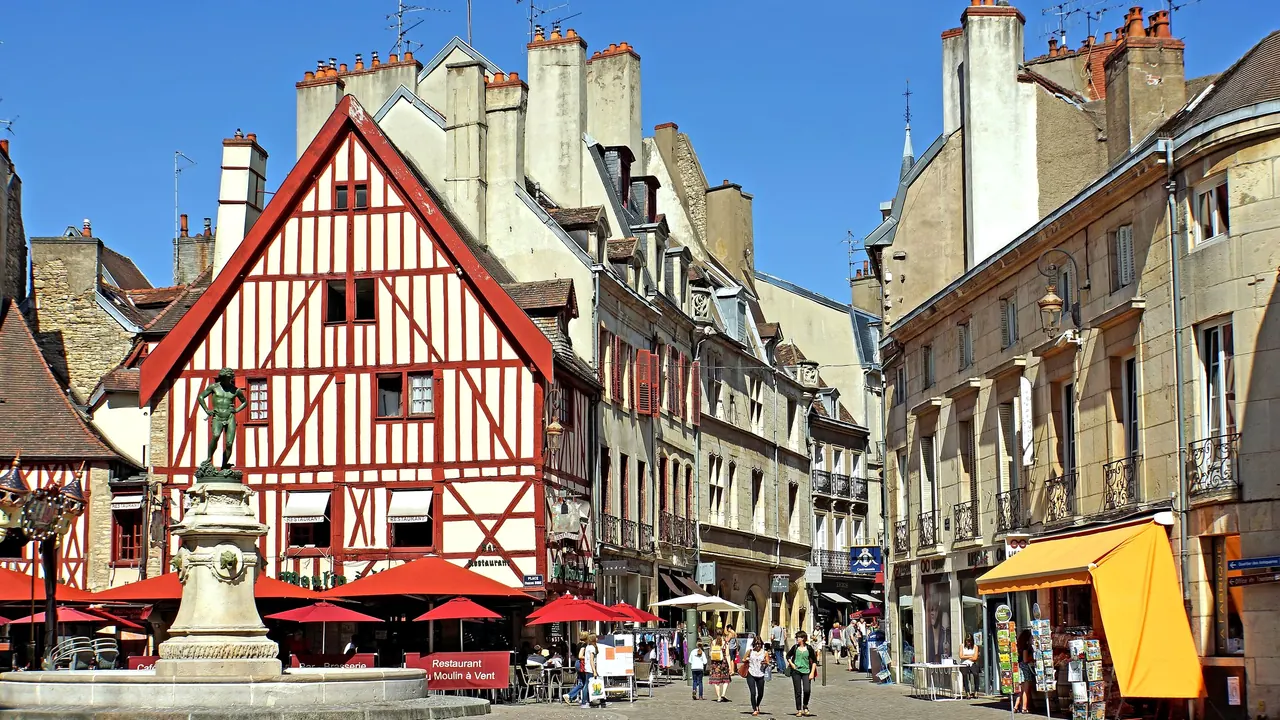
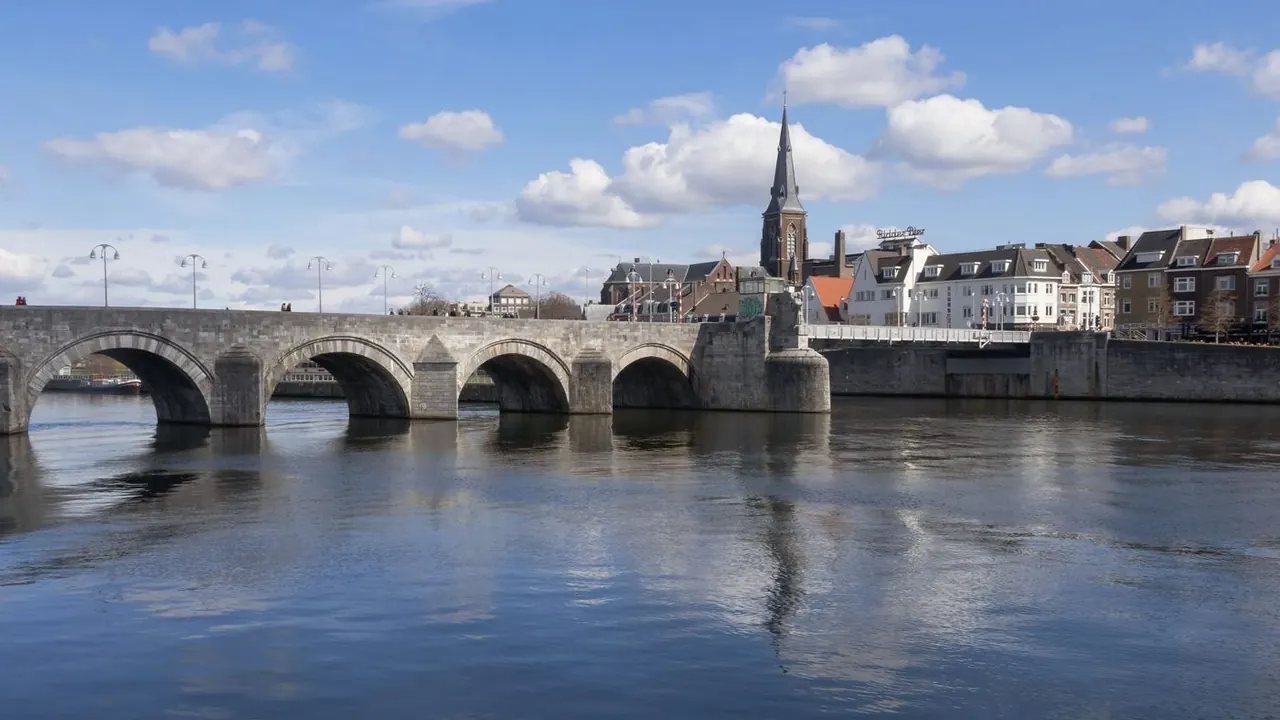
Photos: Dijon by Dennis G. Jarvis, CC BY-SA 2.0, cropped; Maastricht by Michielverbeek, CC BY-SA 4.0, cropped.
Dijon or Maastricht?
Our verdict in twelve categories, each scored against the same fixed benchmark cities, and the climate month by month, so you can choose for your trip.
Choose Dijon for
- prices
- food and drink
- live music and the arts
Dijon is the pick for travellers who come to eat and drink. It stands at the head of the Burgundy wine country, with the vineyards starting at the edge of town, Les Halles as its kitchen and a fine-dining tier built on regional cooking. Your money also goes a little further here than across the Dutch border. It suits couples and food lovers who will happily spend their days among the Grands Crus villages and their evenings over a long dinner, and who don't need much nightlife, shopping or pampering.
Choose Maastricht for
- wellness
- shopping
- families
Maastricht is the better all-rounder for a short break. It has more to browse in the Stokstraat boutiques, more going on in its cafés after dark, and thermal baths within easy reach in Valkenburg and Aachen. Families will find more to do here, with the caves and parks at Valkenburg close by. It also puts three countries within a short train ride. Choose it for a relaxed weekend that mixes shopping, terraces and a spa, though expect Northern European prices.
Scoreboard
Twelve categories on one fixed scale from 0 to 100. The shaded stretch is the gap between the two.
Your match
Pick a travel style or drag the sliders, and both match scores follow your weighting.
Wins on prices and food and drink with your weighting.
Wins on wellness and shopping with your weighting.
What matters to you?
Category by category
What the scores mean for a trip.
Beaches & swimming
Neither city is a beach destination, and both are a long way from the sea. Dijon has Lac Kir, a reservoir on the western edge of town with a supervised lawn-and-sand area in summer. Maastricht's locals swim instead in old gravel-pit lakes along the Maas on both sides of the border. Either way, it is an afternoon's dip on a hot day rather than a reason to come.
Food & drink
Dijon has the stronger table. Classic Burgundian dishes such as boeuf bourguignon, jambon persillé and snails come with village Burgundies poured by the glass. Les Halles is stocked with Bresse poultry and Époisses cheese, and the Cité de la Gastronomie in the old hospital is devoted to tastings and cookery.
Maastricht eats well for a Dutch city, but its Limburg cooking is plainer: zuurvlees with fries, vlaai from the bakery and seasonal asparagus. Belgian beer plays the part that wine plays in Dijon. Neither city offers much international range or street food.
Culture & sights
The two are well matched, and each is worth two or three days, but their history differs. Dijon was the seat of the Dukes of Burgundy. Its centrepiece is the ducal palace with the Musée des Beaux-Arts and the carved Valois tombs, set among half-timbered houses, Notre-Dame's gargoyles and Sluter's Well of Moses.
Maastricht's past goes back further and is more Roman and Romanesque. Its highlights are the basilicas of Saint Servatius and Our Lady, the Helpoort gate, the guided tunnels inside the Sint-Pietersberg and the Bonnefanten's mix of old masters and contemporary art.
Nightlife
Maastricht has the livelier evenings, though neither city has much of a club scene. Its brown cafés around the Markt and the Vrijthof stay busy late at weekends in term time. Carnival turns the whole city into a street party for several days.
In Dijon a night out usually means a late dinner and then wine or beer on Rue Berbisey or around Place Émile Zola. Outside term time the streets are often quiet by midnight.
Nature & outdoors
Maastricht has a slight edge, mostly because its countryside starts right at the edge of town. The marl cliffs of the Sint-Pietersberg and the green Jeker valley are walkable from the centre. The Heuvelland's steep lanes draw road cyclists, and the Hoge Kempen heathland is about half an hour away.
Dijon's outdoors is about the combes west of town, with trails and climbing cliffs, the flat Burgundy Canal towpath and the cycle route through the vineyards. Neither has dramatic scenery.
Day trips
Both make excellent bases, but the trips are very different. From Dijon almost everything revolves around wine and Burgundy itself: the Grands Crus villages, walled Beaune twenty minutes away by train, Fontenay Abbey and the ramparts of Semur-en-Auxois.
From Maastricht you cross borders instead. Aachen's cathedral and Liège are each about half an hour away, Cologne and Brussels can be done in a day, and Tongeren and Valkenburg are close by. This gives you a wider mix of countries, though for vineyard country Dijon is the better base.
Good for families
Maastricht works better with children. The city's own big outing is the lantern-lit tunnel tour of the Sint-Pietersberg. Valkenburg, about twenty minutes away, adds show caves, a cable car and a fairy-tale park, and there is a large zoo in Kerkrade.
Dijon is safe and easy to walk with a buggy, and it has the planetarium at the Jardin de l'Arquebuse and paddling at Lac Kir. Beyond that, its tastings and fine-art museums are really for the parents.
Getting around
Both centres are compact and largely pedestrianised, so walking will cover nearly everything in either city. Dijon adds two tram lines, and a fast TGV puts Paris less than two hours away. Maastricht is a cycling city, with flat riverside paths and the station a short walk over the bridge in Wyck. In both places, the countryside is easiest to explore by car or bike.
Shopping & style
Maastricht is the better place to shop, and Dutch, Belgian and German visitors come for weekends just to browse. The restored Stokstraat quarter has fashion and designer boutiques, the Grote Staat has the main brands, and Wyck adds interiors and vintage shops.
In Dijon, shopping mostly means things to take home and eat or drink: mustards, pain d'épices, cassis and Burgundy from the cellars. Rue de la Liberté offers little beyond a department store and chains.
Affordability
Dijon is noticeably cheaper. It has French regional prices, moderate rooms, good-value bistro lunches and inexpensive wine by the glass, although tastings and good bottles can add up quickly.
Maastricht charges Northern European prices, and rooms are in demand at weekends because so many people come for short breaks. Visiting from Sunday to Thursday helps, as do bakery lunches and beer in a brown café.
Live music & performing arts
The two are about level, and both have solid provincial programmes. Dijon is stronger on opera and concert halls, with the Opéra de Dijon spread between the old Grand Théâtre and the acoustically fine Auditorium. Its season follows the academic year. Maastricht's indoor offering centres on the theatre on the Vrijthof, plus organ and choral concerts in the churches. Its summer, though, is busier, when the square hosts large open-air concerts.
Wellness & relaxation
Maastricht is far ahead here, not because of anything in the city itself but because of what lies around it. There are warm mineral pools above Valkenburg, Aachen's thermal baths half an hour away and the original town of Spa within an hour.
Dijon has no bathing culture and only a few hotel spas, some offering grape-based treatments. Its kind of rest comes from long lunches and slow afternoons in the vineyards.
When should you go?
Pick your month. The climate figures are measured averages, not a forecast.
Dijon in July
Maastricht in July
Daytime high, °C
Rainfall in the month, mm
Temperature and rainfall are climate normals, averaged over the years shown. Dijon: 1991-2020 normals, Dijon (7 km from centre). Maastricht: 1991-2020 normals, Maastricht Airport Zuid Limburg (10 km from centre).
Both cities have inland, four-season climates. Late spring to early autumn is the time to go, and winters are grey and cold, with highs around 6°C in both. Dijon has the warmer, sunnier summer: July reaches about 27°C against Maastricht's 24°C, and the long bright days suit cycling the vineyard route and an afternoon at Lac Kir. September is still warm in Dijon and is the most pleasant month for walking the wine villages.
The rain falls in different months. Dijon's wettest spells are May and October to November, at around 77mm a month. Maastricht is wettest in high summer, peaking at about 84mm in August, and its dry, mild April and May are a good time for walks on the Sint-Pietersberg and in the Heuvelland. Neither city is ever really too hot for exploring the streets on foot.
Which traveller are you?
On a tight budget, Dijon makes the money go further. Rooms are moderate, the bistro set lunches are good value and wine by the glass is cheap for France. Maastricht charges Dutch prices, and weekend rooms are in high demand.
For a relaxing and wellness trip, Maastricht is the clear choice. The thermal pools above Valkenburg, Aachen's historic baths and the town of Spa are all close by. Dijon is restful, but its spa options stop at a few hotels.
On a shopping trip, Maastricht has much more to offer. You get designer boutiques in the old Stokstraat houses, high-street brands on the Grote Staat and independents in Wyck. Dijon's shopping is mostly mustard, cassis and wine, with little fashion.
Before you go
| Measure | Dijon | Maastricht |
|---|---|---|
| Official language | French | Dutch |
| Currency | Euro (EUR) | Euro (EUR) |
| Sockets | CE230 V, 50 Hz | CF230 V, 50 Hz |
| Driving side | Right | Right |
| Time zone | UTC+1, UTC+2 in summer | UTC+1, UTC+2 in summer |
| Emergency number | 112 | 112 |
| Elevation | 220 m | 49 m |
| Main airport | Lyon Saint-Exupéry Airport (LYS)178 km from centre141 non-stop destinations | Maastricht Aachen Airport (MST)9 km from centre5 non-stop destinations |
| Public holidays this year | 11 days | 11 days |
By the numbers
| Measure | Dijon | Maastricht |
|---|---|---|
| City population | 161,830 | 120,227 |
| People per km² | 3,890 | 2,000 |
| Museums within 10 km | 8 | 21 |
| UNESCO World Heritage sites within 50 km | 1 | 5 |
Where else could you go?
Every comparison below shares a destination with this one, so you can follow Dijon or Maastricht somewhere new.