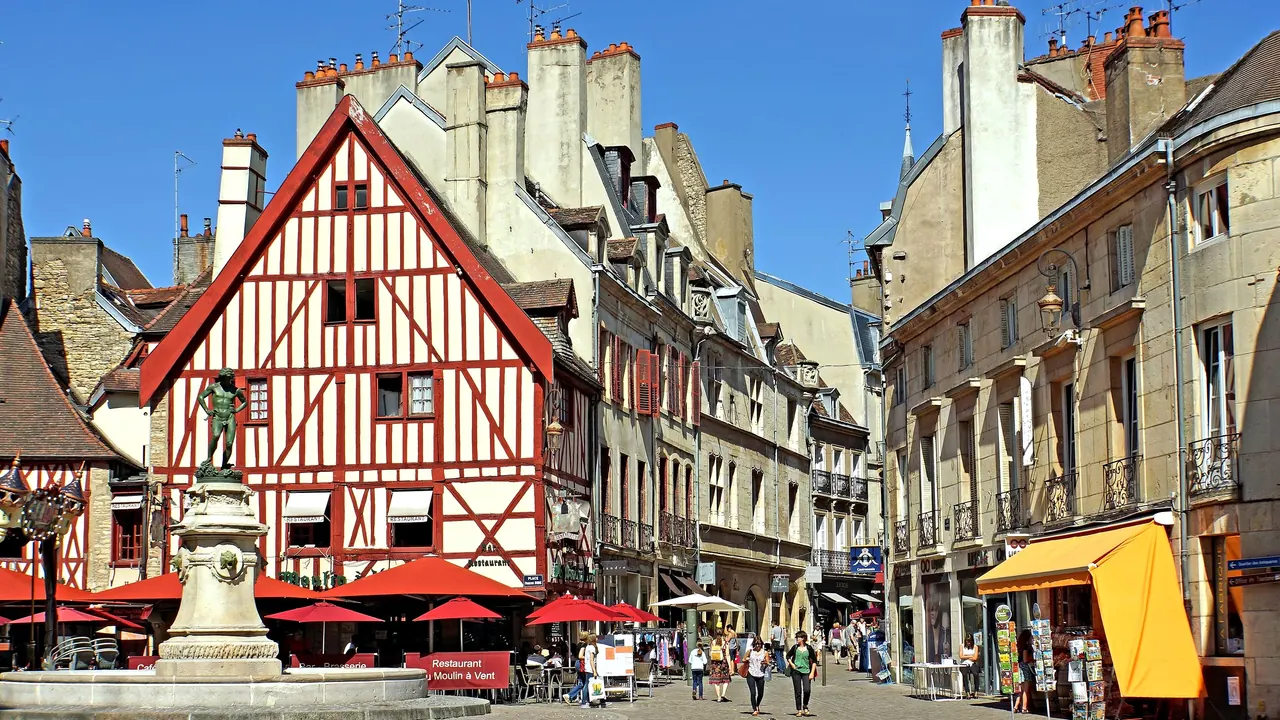
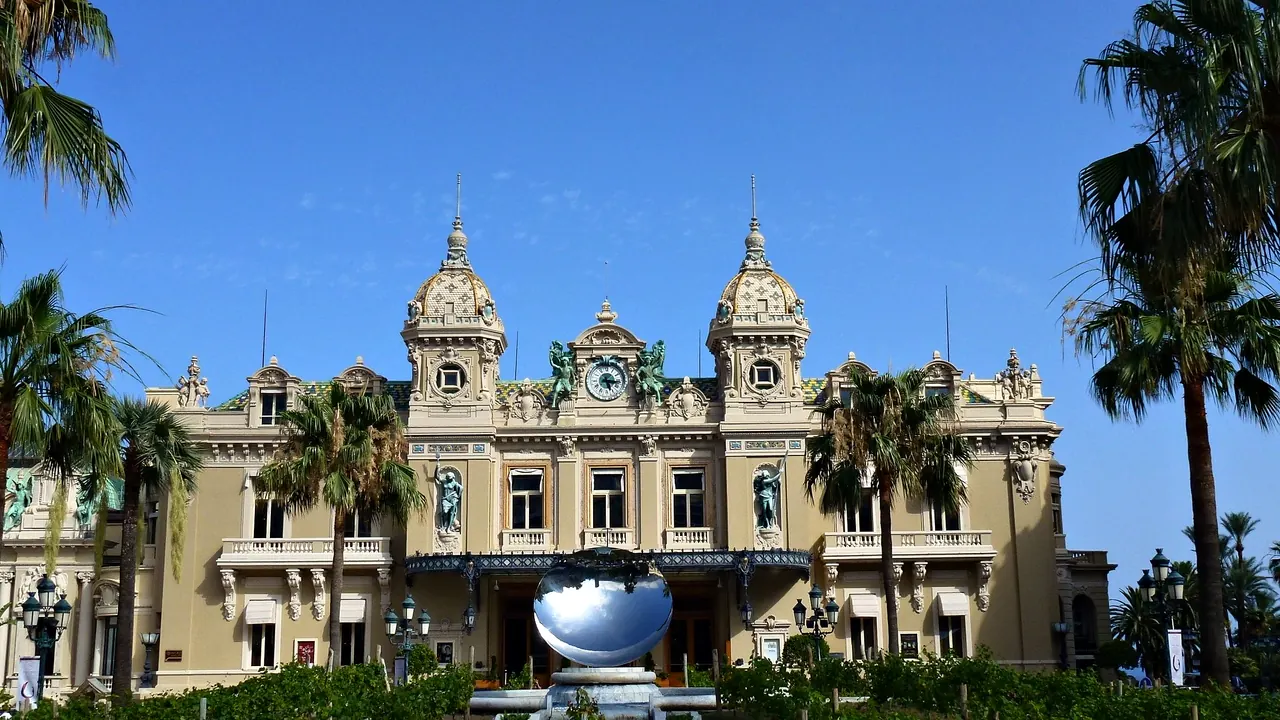
Photos: Dijon by Dennis G. Jarvis, CC BY-SA 2.0, cropped; Monaco by otterboris, CC BY 3.0, cropped.
Dijon or Monaco?
Our verdict in twelve categories, each scored against the same fixed benchmark cities, and the climate month by month, so you can choose for your trip.
Choose Dijon for
- prices
- nature and the outdoors
- food and drink
Dijon is the better choice for travellers who build a trip around the table and the vineyard: Burgundian cooking at Les Halles, village wines by the glass and cycle rides down the Route des Grands Crus. Its ducal palace and half-timbered old town reward a few slow days. It costs far less than the Riviera, and the limestone combes at the edge of town give walkers and cyclists real country to explore.
Choose Monaco for
- beaches
- wellness
- shopping
Pick Monaco for sun, sea and polish. It has the mild winters and dry summers that Burgundy lacks, along with a calm beach at Larvotto, seawater spas, an opera house of international standing and luxury boutiques around the casino. It is extremely expensive and almost entirely built up, so it works best as a short, indulgent stay or as a base for the Riviera coast by train. It is not the place for a long trip on a careful budget.
Scoreboard
Twelve categories on one fixed scale from 0 to 100. The shaded stretch is the gap between the two.
Your match
Pick a travel style or drag the sliders, and both match scores follow your weighting.
Wins on prices and nature and the outdoors with your weighting.
Wins on beaches and wellness with your weighting.
What matters to you?
Category by category
What the scores mean for a trip.
Beaches & swimming
Dijon has no coast at all. The only bathing is the supervised lawn-and-sand area at Lac Kir and the municipal pools, which are fine for a hot afternoon and no more.
Monaco at least has the Mediterranean. Larvotto's landscaped beach has clear, calm water warm enough to swim in from June into October, and there are also rocky platforms and a summer seawater pool on the port. The beach is short and crowded on summer weekends, but it gives you a real sea swim, which Dijon cannot.
Food & drink
Dijon is the stronger food destination by some way. It sits at the head of the Burgundy vineyards, so classic dishes such as boeuf bourguignon and jambon persillé come with village wines by the glass. Les Halles is a working market full of Bresse poultry and Époisses, and the mustard, cassis and pain d'épices are local products rather than souvenirs.
Eating in Monaco leans towards costly hotel dining rooms and polished Italian restaurants along the port. The local Ligurian-Provençal dishes, such as barbajuans and stocafi, are best eaten at the counters of the Condamine market, but there are few casual places to eat. Neither city offers much variety, but Dijon's cooking runs deeper and is easier to enjoy without a large budget.
Culture & sights
Dijon gives you more to see over a few days. The Palace of the Dukes, which holds the Musée des Beaux-Arts and the carved tombs of the Valois dukes, sits at the centre of an old town of half-timbered houses and Renaissance mansions. Add Notre-Dame with its gargoyles and Sluter's Well of Moses, and you have the legacy of a medieval state.
Monaco's sights are fewer and more theatrical: the Prince's Palace and its changing of the guard, the Grimaldi tombs in the cathedral, the Oceanographic Museum on its cliff and the Belle Époque casino square. They fill a day or two well, but there is less old town to wander between them.
Nightlife
Dijon's evenings depend on its students. They centre on the small bars of Rue Berbisey and the wine bars around the market, with few clubs, and outside term the streets are quiet by midnight.
Monaco has more going on after dark, though only of one kind. The evening starts in the hotel bars and gaming rooms around the casino square and moves on to the famous clubs and seafront lounges of Avenue Princesse Grace, which run until dawn in summer. Expect strict doors, very expensive drinks and no alternative scene.
Nature & outdoors
Dijon has far more open country on its doorstep. The wooded combes just west of town have trails and cliffs for climbing, and the Burgundy Canal towpath gives flat, easy cycling. The vineyard route towards Beaune makes a fine ride, and the granite hills and lakes of the Morvan are within reach for a day.
Monaco is almost entirely built over, so nature there means designed gardens such as the Exotic Garden on its cliff. The sea makes up for some of this, with diving and snorkelling in the protected area off Larvotto, but for real walking you have to cross into the hills of France.
Day trips
Both cities are excellent bases, but the outings differ in character. From Dijon the trips are about wine and abbeys: the Grand Cru villages down to walled Beaune, Fontenay Abbey, the ramparts of Semur-en-Auxois and the battlefield at Alésia. Much of the wine country is easiest by car or bike.
From Monaco the coastal railway does most of the work. Nice, Menton and Villefranche are minutes away, Èze sits above the sea, and Cannes, Antibes and the Italian towns of Sanremo and Dolceacqua are within easy reach. Choose Dijon for countryside and cellars, and Monaco for seaside towns across two countries.
Good for families
Neither city is built around children, but Monaco keeps them busier. Dijon is safe and relaxed, with a pedestrian centre. The natural history museum and planetarium at the Jardin de l'Arquebuse, the lawns of the Colombière park and paddling at Lac Kir fill some hours, but the wine and fine-art itinerary is really for the parents.
Monaco's aquarium, with its sharks and touch pool, is a real highlight for children. The zoo on the Rock, the Fontvieille playgrounds and the shallow water at Larvotto add more. Cost is the drawback, which is why many families visit for a day or two from elsewhere on the Riviera.
Getting around
Dijon's compact, mostly pedestrian centre puts the station, the market and the palace a few minutes' walk apart. Two tram lines and the buses serve the outskirts, and a bus takes you out to Lac Kir. Regional trains reach Beaune easily and the TGV gets to Paris in well under two hours, but the wine villages away from the railway need a car, a bike or a tour.
Monaco is easier still, despite its slopes. It is tiny, and free public lifts, escalators and tunnels link its tiers, so the climb from the port to the Rock takes less effort than it looks. Buses reach every district and a little electric boat crosses the port, so a car only gets in the way.
Shopping & style
Shopping in Dijon is mostly about food and drink: mustards in many flavours, cassis, pain d'épices, Burgundy from the wine merchants and cheese from Les Halles. Rue de la Liberté adds a department store, French chains and a few antiques shops in the side lanes.
Monaco is the place if fashion and jewellery are the point. The big fashion houses, watchmakers and high jewellers are packed into a short loop of streets and arcades around the casino. Outside that circuit the choice drops off quickly, and there are few markets or independent designers.
Affordability
Dijon is a mid-range French regional city, with moderately priced hotels, good-value set lunches in the bistros and cheap wine by the glass. The bill climbs mainly if you book serious restaurants and cellar tours.
Monaco is among the most expensive places anywhere. Hotel rooms are priced for the wealthy, and even a casual café meal costs well above the Riviera norm. The free lifts and cheap buses help a little, but budget travellers usually sleep in neighbouring French towns. The same money buys a much longer stay in Dijon.
Live music & performing arts
Dijon has a solid season for its size. The Opéra de Dijon stages opera, concerts and dance at the Grand Théâtre and the Auditorium, known for its fine acoustics, and there is a national drama centre, though the programme thins out in summer.
Monaco's classical scene carries real international weight. The Opéra de Monte-Carlo performs in the gilded Salle Garnier, where Diaghilev's Ballets Russes once worked, and the Philharmonic and Les Ballets de Monte-Carlo are both well known. Opera is mainly a winter affair, followed by the Printemps des Arts in spring and open-air shows in summer.
Wellness & relaxation
Dijon has no spa culture of its own. There are a few hotel spas and some grape-based treatments in the wine villages, and its restful side comes from long lunches and slow afternoons in the vineyards.
Monaco has proper facilities. A large thalassotherapy centre beside the casino offers heated seawater pools and hammams, and the grand hotels add their own spas. All of it is costly, and the principality itself is dense and busy, so calm is found inside the spa or in the gardens on the Rock rather than in the streets.
When should you go?
Pick your month. The climate figures are measured averages, not a forecast.
Dijon in July
Monaco in July
Daytime high, °C
Rainfall in the month, mm
Temperature and rainfall are climate normals, averaged over the years shown. Dijon: 1991-2020 normals, Dijon (7 km from centre). Monaco: 1991-2020 normals, Nice (19.9 km from centre).
Dijon has a continental climate. Winters are cold, with highs of around 6°C in December and January and very little sun, so the city is at its best from May to September. July highs reach about 27°C, and the long, bright days suit walking the old town and cycling through the vineyards. Rain falls throughout the year, a little heavier in May and again in October and November, and with no coast there is no beach season to plan around.
Monaco is milder all year, with winters several degrees warmer than Dijon's and a good deal of sunshine even in December. Summer is its beach season. July is almost dry at 13mm, and the sea warms to about 25°C in August and stays swimmable into October. Autumn then turns wet, peaking at 138mm in November, so late spring and September give the best balance of warmth for the beach and comfortable weather for walking.
Which traveller are you?
On a beach and sun trip, Monaco is the obvious pick. Dijon lies far inland, and the only place to bathe is a lake, while Monaco has dry, sunny summers, a calm Mediterranean beach at Larvotto and sea warm enough for swimming from June into October.
For an outdoors trip, Dijon wins clearly. The combes west of town have trails and climbing cliffs, the canal towpath and the vineyard routes suit cyclists, and the Morvan hills are close. Monaco offers gardens and the sea, but nowhere to hike inside its borders.
On a trip on a tight budget, choose Dijon. Bistro set lunches, inexpensive wine by the glass and moderately priced hotels keep costs in check. Monaco is one of the most expensive places in the world, and budget visitors usually end up sleeping in neighbouring towns.
Before you go
| Measure | Dijon | Monaco |
|---|---|---|
| Official language | French | French |
| Currency | Euro (EUR) | Euro (EUR) |
| Sockets | CE230 V, 50 Hz | CEF230 V, 50 Hz |
| Driving side | Right | Right |
| Time zone | UTC+1, UTC+2 in summer | UTC+1, UTC+2 in summer |
| Emergency number | 112 | 112 |
| Elevation | 220 m | 68 m |
| Main airport | Lyon Saint-Exupéry Airport (LYS)178 km from centre141 non-stop destinations | Nice-Côte d'Azur Airport (NCE)18 km from centre130 non-stop destinations |
| Public holidays this year | 11 days | 12 days |
By the numbers
| Measure | Dijon | Monaco |
|---|---|---|
| Population | 161,830 | 38,857 |
| People per km² | 3,890 | 18,503 |
| Museums within 10 km | 8 | 14 |
| UNESCO World Heritage sites within 50 km | 1 | 2 |
| Swim season, months above 21 °C | - | 4 months |
Where else could you go?
Every comparison below shares a destination with this one, so you can follow Dijon or Monaco somewhere new.