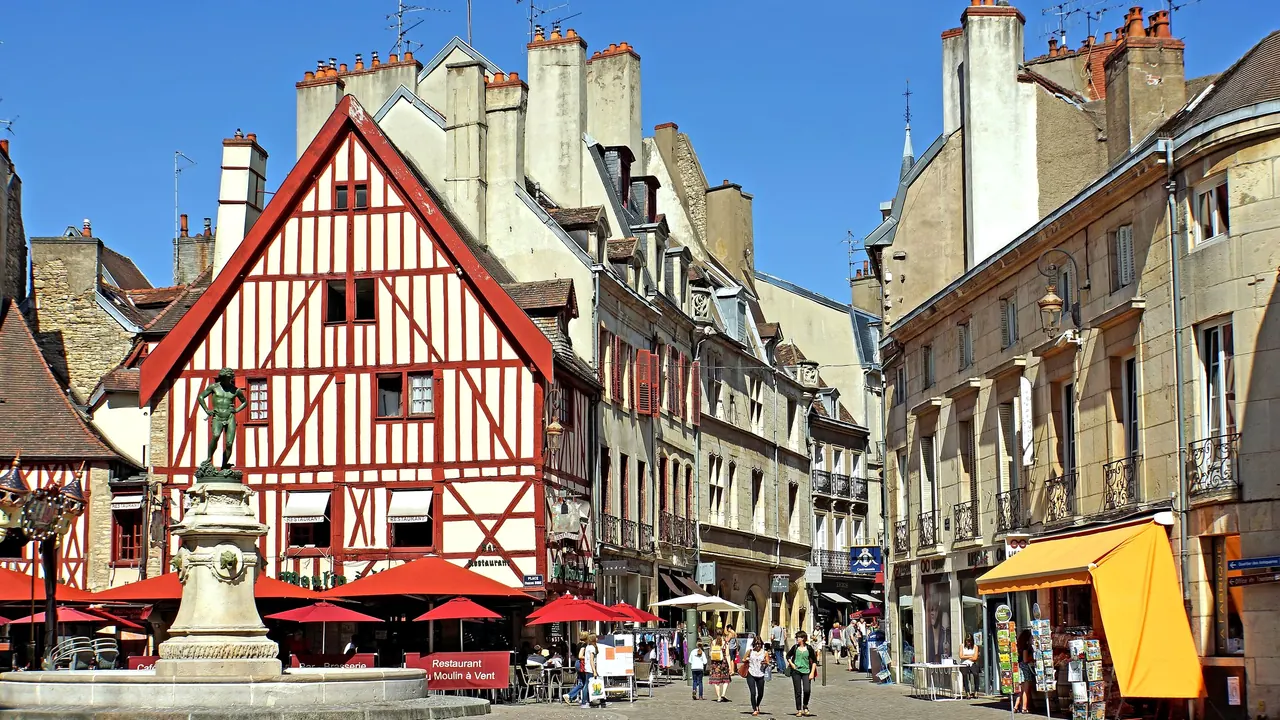
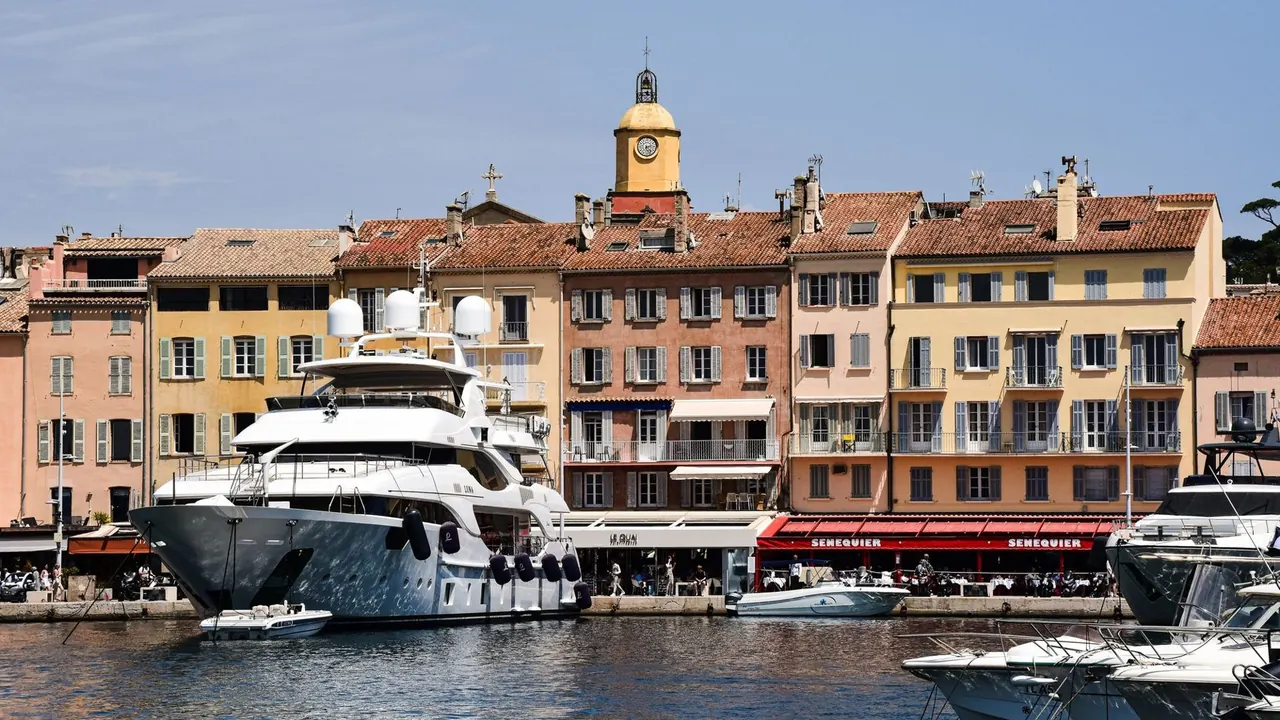
Photos: Dijon by Dennis G. Jarvis, CC BY-SA 2.0, cropped; Saint-Tropez by AXP Photography, Pexels License.
Dijon or Saint-Tropez?
Our verdict in twelve categories, each scored against the same fixed benchmark cities, and the climate month by month, so you can choose for your trip.
Choose Dijon for
- prices
- getting around
- culture and sights
Dijon suits travellers who want to eat, drink and look at things. It offers Burgundian cooking, village wines by the glass, the palace of the dukes and a ring of wine villages and abbeys within easy reach. It is also the easier and cheaper base, with trains to Beaune and Paris and a centre you can cross on foot in minutes, and it does not depend on the summer for its appeal.
Choose Saint-Tropez for
- beaches
- nightlife
- shopping
Choose Saint-Tropez for a summer by the sea. Its strengths are Pampelonne's long beach of sand, the coast path round the capes, sailing on the gulf and a glamorous night scene around the harbour, and its boutiques go far beyond anything Dijon has. It is expensive and the roads jam in high season. It suits those who can pay for the peak, or those who come in the quieter months either side of it.
Scoreboard
Twelve categories on one fixed scale from 0 to 100. The shaded stretch is the gap between the two.
Your match
Pick a travel style or drag the sliders, and both match scores follow your weighting.
Too close to call, 2 points apart
Wins on prices and getting around with your weighting.
Wins on beaches and nightlife with your weighting.
What matters to you?
Category by category
What the scores mean for a trip.
Beaches & swimming
There is no contest here. Dijon is hours from any coast. Swimming there means the supervised lawn-and-sand area at Lac Kir or the town pools, fine for a hot afternoon but not something to plan a trip around.
Saint-Tropez has Pampelonne, about 5km of pale sand with beach clubs and public stretches between them, and quieter coves at Escalet, Cap Taillat and Gigaro along the coast path. The beaches in town are small, and the swimming season runs from June to September.
Food & drink
Dijon is the better trip for anyone who travels to eat. The slow-cooked Burgundian classics, beef braised in red wine, parsley-set ham and snails, come with a larder the city makes itself: mustard, blackcurrant liqueur and spiced bread. Les Halles shows the region's poultry and cheeses at their best. Because the vineyards begin just south of town, village wines that are rarely sold by the glass elsewhere are an everyday order here. If you want spice, other cuisines or street stalls, you will have to look elsewhere.
Saint-Tropez cooks lighter food from the sea and the sun. Grilled fish, bouillabaisse and aïoli are served with pale rosé from the estates on the peninsula, where Dijon would pour red Burgundy. The local treats are the plane-shaded market on the Place des Lices and the cream-filled tarte tropézienne. Dijon rewards an ordinary bistro meal, but on Saint-Tropez's port you often pay more for the view than for the cooking. The memorable meals tend to be the expensive ones, and in winter many kitchens close.
Culture & sights
Dijon was the capital of the Valois dukes of Burgundy, and it shows. The palace, the Musée des Beaux-Arts with its tombs ringed by mourners, the gargoyles of Notre-Dame and the Chartreuse de Champmol add up to two or three full days.
Saint-Tropez can be seen in a day. The pointillist and Fauvist paintings in the Annonciade are the highlight, followed by the maritime museum in the citadel and the lanes of La Ponche. People come for the setting rather than the sights.
Nightlife
In summer, Saint-Tropez goes out much harder. Afternoons at the beach clubs lead to champagne on the harbour terraces and then to famous clubs that stay open until dawn, all with table service and a dress code. Out of season it falls almost silent.
Dijon's evenings are smaller and cheaper, and they run on students rather than yachts: pubs on Rue Berbisey, terraces around Place Émile Zola and plenty of wine bars. Outside term time the streets are quiet by midnight. It suits a relaxed drink better than a big night.
Nature & outdoors
Saint-Tropez has the more striking outdoors. The Sentier du Littoral runs past pine-backed coves to the capes of Camarat and Taillat, and inland lie the cork-oak forests of the Massif des Maures. There is sailing and snorkelling in the gulf, and the national park islands of Port-Cros and Porquerolles are within reach. Summer heat and the risk of forest fire can close trails.
Dijon's countryside is gentler. There are climbing and walking trails in the combes west of town, flat cycling along the Burgundy Canal towpath and the vineyard route towards Beaune. The granite hills of the Morvan are the wildest country nearby.
Day trips
Dijon makes the better base for excursions. The Route des Grands Crus starts at the city's edge and runs through Gevrey-Chambertin and Vougeot to Beaune, which is a short train ride away. Fontenay Abbey, Semur-en-Auxois, Alésia and Besançon by train add history of real weight.
Saint-Tropez's outings are pretty but smaller in scale. There are the hilltop villages of Ramatuelle and Gassin, Grimaud's ruined castle, Port Grimaud by boat, and a longer day on Porquerolles. Most of them depend on roads that jam in July and August.
Good for families
Neither city is built around children, and the difference is in kind. Dijon has an easy, pedestrian centre, a planetarium and natural history museum at the Jardin de l'Arquebuse, and parks with play areas, but most of the sights lean towards wine and fine art.
Saint-Tropez has the gently shelving sand at Pampelonne and Gigaro, which suits small children. Against that come high prices, summer traffic and a scene aimed at adults, so many families stay across the gulf and come over by boat.
Getting around
Dijon is far simpler to get around. You can walk from the station into the centre, trams run out to the suburbs and Lac Kir, regional trains go to Beaune, and the TGV reaches Paris in under two hours. You need a car only for the wine villages away from the railway.
Saint-Tropez is easy on foot within the town, but it has no railway, the buses are slow and the beaches are several kilometres out. Most visitors drive, ride a scooter or take taxis. In summer the passenger boats from Sainte-Maxime and Port Grimaud beat the jams on the gulf road.
Shopping & style
Saint-Tropez offers far more shopping than its size suggests. Fashion houses keep summer shops in the lanes behind the port, alongside resort wear, jewellery and hand-made Tropézienne sandals, and the market on the Place des Lices adds linen, baskets and pottery.
Dijon's shopping is mostly for the table: mustard, cassis, pain d'épices, cheese from Les Halles and Burgundy from the wine merchants. Rue de la Liberté has chains and a department store. It is the place for edible souvenirs, not for clothes.
Affordability
Dijon costs what a French regional city costs. Rooms are moderate, the set lunches are good and wine by the glass is inexpensive. The bill climbs mainly with tastings, wine tours and serious restaurants.
Saint-Tropez is in another bracket altogether. In high summer, rooms, harbour meals, loungers and taxis are priced for the yachting crowd, and even a coffee on the port is dear. Staying across the gulf, picnicking from the market or coming in late spring or autumn all help, but the town never becomes cheap.
Live music & performing arts
Dijon has a proper cultural season. The Opéra de Dijon performs in the old Grand Théâtre and in the Auditorium, known for its acoustics, and the city also has a national drama centre and a venue for touring bands. The programme follows the academic year.
Saint-Tropez has summer concerts in gardens and at the citadel, and the Bravade each May, a costumed procession with muskets for the town's patron saint. For opera or theatre, though, it is a long drive to Toulon or Nice.
Wellness & relaxation
Neither town has thermal baths, but Saint-Tropez has the edge. Its luxury hotels and villas keep polished spas. In May, June and September the town slows to long lunches and games of pétanque under the plane trees, though high summer is loud.
In Dijon, spas are limited to a few hotels, some offering grape-based treatments. Its calm comes instead from quiet squares, long lunches and slow afternoons in the vineyards.
When should you go?
Pick your month. The climate figures are measured averages, not a forecast.
Dijon in July
Saint-Tropez in July
Daytime high, °C
Rainfall in the month, mm
Where the figures come from
Saint-Tropez has no rain gauge within 25 km of the centre, so its rainfall comes from a gridded climate dataset read at the city rather than from a gauge further away.
Saint-Tropez's sunshine is measured 62 km from the centre, at Nice.
Temperature and rainfall are climate normals, averaged over the years shown. Dijon: 1991-2020 normals, Dijon (7 km from centre). Saint-Tropez: 1999-2020 (sunshine 1991-2020, rainfall 1991-2020) normals, Le Luc (24.2 km from centre).
Dijon has an inland climate. Summer highs reach about 27°C in July, and winter days stay around 6°C in December and January. Rain is spread through the year with no dry season, and May, October and November are slightly wetter. May, June and September are the best months for walking the old town and cycling through the vineyards: warm without being hot, with plenty of sunshine. From late October the days turn grey and short.
Saint-Tropez is warmer and much sunnier in every month. The sea is warm enough for most swimmers from June to September and peaks at 24°C in August. July and August afternoons reach about 32°C, though, which is too hot for long walks. July is almost dry, but the rain arrives in autumn, and November brings around 155mm, far more than Dijon gets in any month. Spring and late September are the comfortable times for the coast path, and winters are mild but cool.
Which traveller are you?
On a beach and sun trip, Saint-Tropez wins outright. Pampelonne has kilometres of fine sand and clear water, the coves further south are quieter, and the summer sea is warm. Dijon can offer only a lake bathing area and town pools.
For a culture and arts trip, Dijon is the better choice. The palace of the dukes and its fine-arts museum, the Valois tombs, a Romanesque crypt and Sluter's Well of Moses fill several days, and two opera halls fill the evenings in a way Saint-Tropez cannot.
On a trip on a tight budget, Dijon is the realistic option. Set lunches in bistros, inexpensive wine by the glass, moderate hotels and a walkable centre keep costs down. In Saint-Tropez, rooms, loungers and taxis are all priced for the yachting crowd.
Before you go
| Measure | Dijon | Saint-Tropez |
|---|---|---|
| Official language | French | French |
| Currency | Euro (EUR) | Euro (EUR) |
| Sockets | CE230 V, 50 Hz | CE230 V, 50 Hz |
| Driving side | Right | Right |
| Time zone | UTC+1, UTC+2 in summer | UTC+1, UTC+2 in summer |
| Emergency number | 112 | 112 |
| Elevation | 220 m | 0 m |
| Main airport | Lyon Saint-Exupéry Airport (LYS)178 km from centre141 non-stop destinations | Nice-Côte d'Azur Airport (NCE)64 km from centre130 non-stop destinations |
| Public holidays this year | 11 days | 11 days |
By the numbers
| Measure | Dijon | Saint-Tropez |
|---|---|---|
| City population | 161,830 | 3,582 |
| People per km² | 3,890 | 320 |
| Museums within 10 km | 8 | 4 |
| UNESCO World Heritage sites within 50 km | 1 | 0 |
| Swim season, months above 21 °C | - | 3 months |
Where else could you go?
Every comparison below shares a destination with this one, so you can follow Dijon or Saint-Tropez somewhere new.