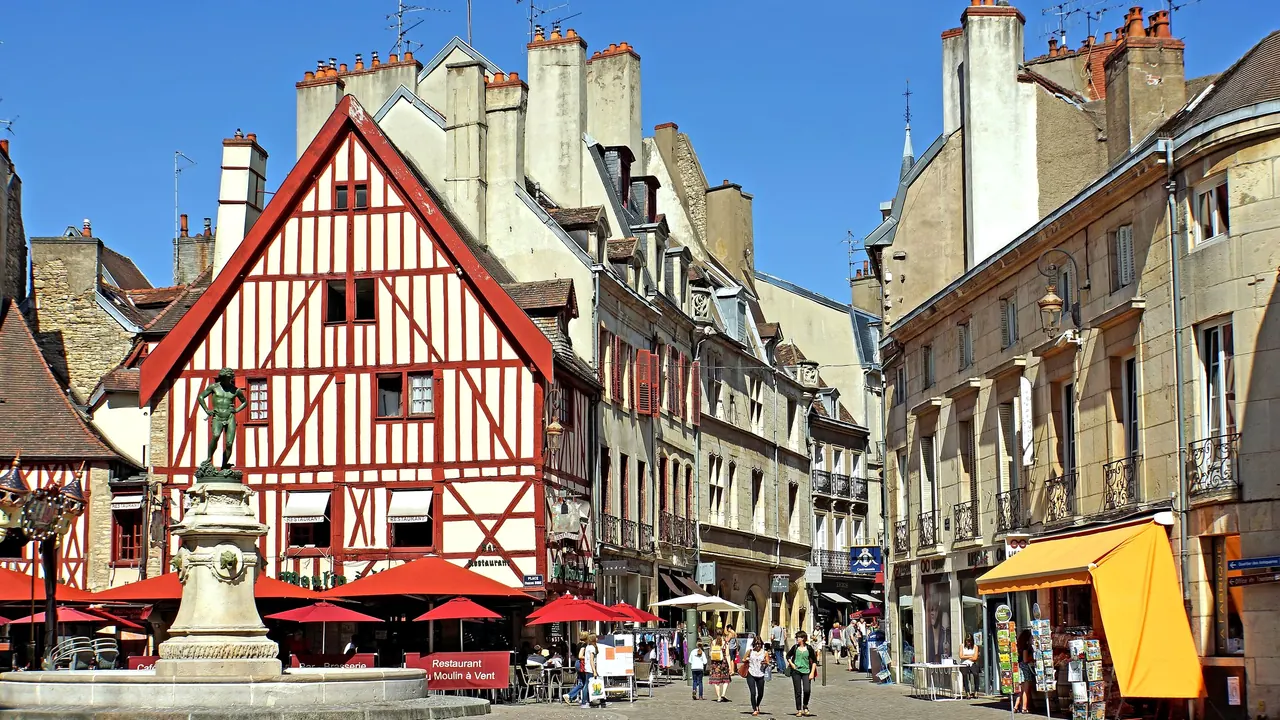
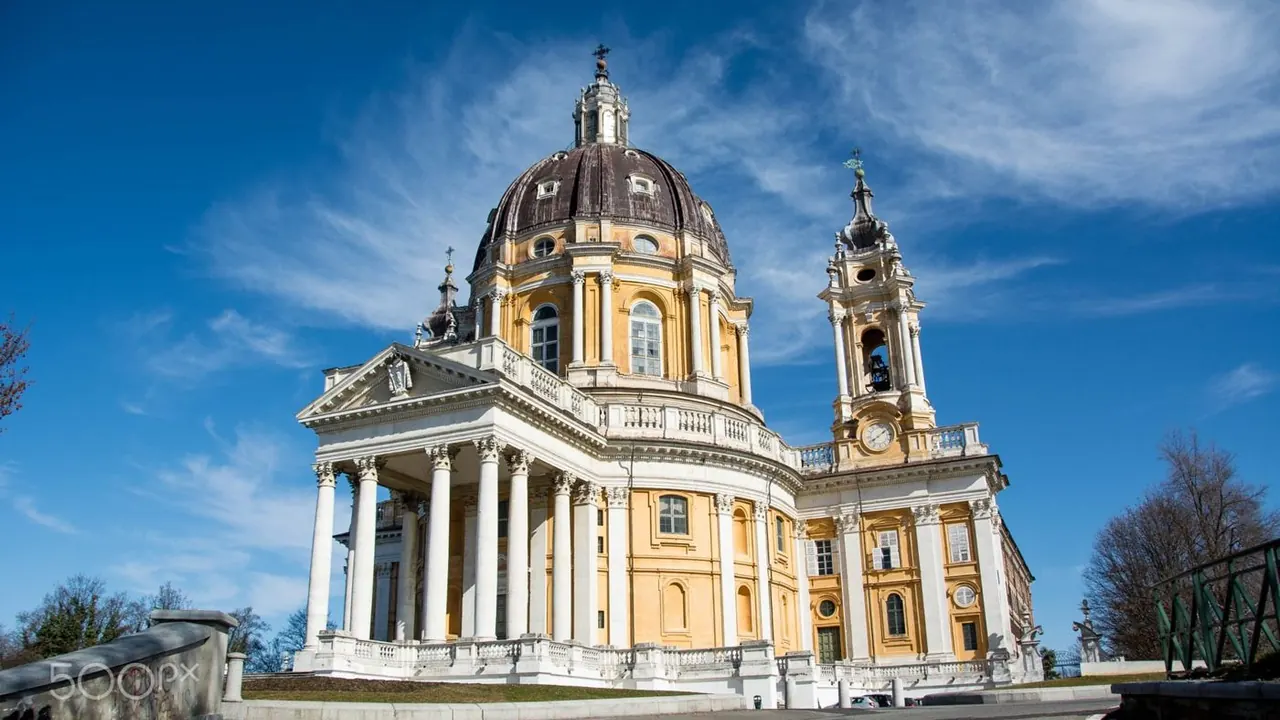
Photos: Dijon by Dennis G. Jarvis, CC BY-SA 2.0, cropped; Turin by Konstantin Dacosta, CC BY 3.0, cropped.
Dijon or Turin?
Our verdict in twelve categories, each scored against the same fixed benchmark cities, and the climate month by month, so you can choose for your trip.
Choose Dijon for
- getting around
Dijon suits a shorter, more focused trip: a few days of Burgundy cooking and wine in a small town you can cross on foot, with the Grands Crus vineyards starting at the city's edge and Beaune a short train ride away. It also works as an easy add-on to a stay in Paris, and as a calm base for wine lovers who would rather cycle between cellars than work through a long list of museums.
Choose Turin for
- nature and the outdoors
- live music and the arts
- nightlife
For a longer stay with more variety, Turin is the stronger choice. It has the bigger museums, led by the Egyptian collection, a richer food culture built around the aperitivo, fuller evenings and concert seasons, and the Alps close enough for hiking or skiing. Families and travellers who want the outdoors will find much more to do here.
Scoreboard
Twelve categories on one fixed scale from 0 to 100. The shaded stretch is the gap between the two.
Your match
Pick a travel style or drag the sliders, and both match scores follow your weighting.
Wins on getting around with your weighting.
Wins on nature and the outdoors and live music and the arts with your weighting.
What matters to you?
Category by category
What the scores mean for a trip.
Beaches & swimming
Neither city is a place for sea swimming, and they deal with summer heat in different ways. Dijon has Lac Kir, a supervised reservoir with a lawn-and-sand bathing area on the edge of town. Turin has nothing in the city itself, but locals go to lakes such as Avigliana or Lago Maggiore, and the Ligurian Riviera is a long day out by train.
Food & drink
Both are serious regional food cities with wine country on the doorstep, and both offer little street food or international cooking. Turin goes further. Piedmontese cooking has the deeper repertoire, from agnolotti del plin to autumn white truffles, and the city adds things Dijon has no equivalent for: vermouth, the aperitivo, gianduja, and bicerin in the cafés under the arcades.
Dijon's strength is focus. Boeuf bourguignon, snails, mustard and cassis, Les Halles on market days and village Burgundies poured by the glass make it a rewarding stop for a wine lover, though it is less of a city to eat your way through over a week.
Culture & sights
Turin has much more to see. The Museo Egizio alone draws visitors from abroad. Around it are the Savoy royal palaces, the Mole with its cinema museum, the Reggia di Venaria and strong contemporary art at Rivoli, enough to fill several days.
Dijon is smaller and concentrates on one story, that of the medieval dukes. Its sights are the ducal palace with the Valois tombs, Notre-Dame with its gargoyles and lucky owl, half-timbered streets and Sluter's Well of Moses. They make a satisfying two or three days, but nothing here pulls visitors from abroad the way Turin's Egyptian collection does.
Nightlife
Turin's evenings follow a routine Dijon lacks. The aperitivo starts around seven, and then people move on to the cocktail bars of the Quadrilatero Romano, the crowded pavements of San Salvario, Vanchiglia and, in summer, the riverside Murazzi, with clubs in old industrial buildings.
In Dijon, a night out means a wine bar on Rue Berbisey or a terrace on Place Émile Zola and a late dinner. Outside term time and summer weekends it is usually over by midnight.
Nature & outdoors
This is where the two cities differ most. From Turin the Alps are about an hour away, with ibex and high trails in Gran Paradiso, skiing around Sestriere, and climbing and mountain biking in summer. Closer in, the Superga hills and the cycle paths along the Po are good for shorter outings.
Dijon's countryside is gentle. There is walking and rock climbing in the combes west of town, cycling on the flat Burgundy Canal towpath, and the signed vineyard route to Beaune. It is lovely on a bike, but the Morvan is as wild as it gets.
Day trips
Dijon's days out stay within one landscape of vineyards and abbeys, while Turin's range from wine hills to Alpine valleys and other major cities. From Dijon, the Route des Grands Crus runs south from the edge of town through Gevrey-Chambertin and Vougeot, Beaune is twenty minutes away by train, and Fontenay Abbey and Semur-en-Auxois are about an hour off.
Turin gives you more choice. The Langhe hills offer Barolo and Alba's truffles, and the Sacra di San Michele stands on its rock above the Susa valley. Milan is an hour away by fast train, and Genoa and Aosta are within reach on a long day.
Good for families
Turin gives children more to do. The glass lift up the Mole, the car museum, the Egyptian mummies and the rack railway to Superga all appeal to older children, and the arcades shelter pushchairs from sun and rain. Zoom Torino makes a full zoo day out by car, though Turin's summers can be sticky.
Dijon is safe and relaxed, with a small pedestrian centre, a planetarium at the Jardin de l'Arquebuse and paddling at Lac Kir. Its vineyards and fine-art museums, however, are mostly for the parents.
Getting around
Dijon's centre is so small that the station, Les Halles and the ducal palace are a few minutes' walk apart. Two tram lines run out to the suburbs, and the bus network reaches Lac Kir. Turin's arcaded grid covers more ground, so the walk from Porta Nuova to the Mole and the river is longer, though it is flat and much of it is under cover. One driverless metro line, trams and buses fill in the rest, and the trams and buses take some working out.
The trains also take you to different places. From Dijon you can reach Paris by TGV or follow the wine route to Beaune, while Turin's main stations connect across Italy. Away from the railway you will need a car in both: for the outlying wine villages around Dijon, and for the Langhe and the mountains around Turin.
Shopping & style
Turin has the broader range of shops. There are luxury and big-name labels under the arcades of Via Roma, mainstream shops on Via Garibaldi, antique dealers on Via Maria Vittoria and the Balon flea market every Saturday.
Dijon's shopping is mostly things to eat and drink: mustard, pain d'épices, cassis and Burgundy from the cellars, with chain stores along Rue de la Liberté. In both cities, food is the best thing to take home, and neither suits a trip built around designer clothes.
Affordability
Turin stretches a budget a little further. A generous aperitivo can replace dinner, Porta Palazzo sells cheap snacks and public transport costs little, although hotels fill up and cost more during big trade fairs.
In Dijon, the savings come from bistro set lunches, wine by the glass that is cheaper than in most of France, and a centre small enough to walk everywhere. In each city, the bill climbs with the main reason for going: cellar tastings and wine tours in Burgundy, white truffles and fine dining in Piedmont.
Live music & performing arts
Turin's programme is bigger and runs all year. It includes opera and ballet at the Teatro Regio, the RAI National Symphony Orchestra, concerts in Renzo Piano's Lingotto auditorium, jazz clubs and long-running music festivals.
Dijon's Opéra, split between the old Grand Théâtre and the Auditorium with its fine acoustics, gives a solid season for a city of its size. It follows the academic year, though, and thins out in summer. Spoken theatre in either city is in the local language.
Wellness & relaxation
Neither city has a bathing culture, and in both the spas are mostly in hotels. Turin offers a bit more for unwinding: long breaks in its historic cafés, walks along the Po and in Valentino park, and real thermal waters at Acqui Terme or in the Aosta valley, each close to two hours away.
Dijon's restfulness comes from long lunches and slow afternoons in the vineyards, with a few grape-based treatments in the wine villages.
When should you go?
Pick your month. The climate figures are measured averages, not a forecast.
Dijon in July
Turin in July
Daytime high, °C
Rainfall in the month, mm
Where the figures come from
Turin has no rain gauge within 25 km of the centre, so its rainfall comes from a gridded climate dataset read at the city rather than from a gauge further away.
Temperature and rainfall are climate normals, averaged over the years shown. Dijon: 1991-2020 normals, Dijon (7 km from centre). Turin: 1991-2020 normals, Torino / Caselle (15.4 km from centre).
Both cities have cold winters and warm summers, and Turin is a degree or two warmer all year. Dijon is at its best from June to September, when July reaches about 27°C and has around 250 hours of sunshine. Its rain is spread fairly evenly through the year, with the wettest spells in May and again in October and November. September is still mild at about 22°C and is a good month for the vineyards.
In Turin, July climbs to about 29°C and can feel sticky, so June and the period from September to October are better for walking the streets. Spring is its wet season, with May the rainiest month at about 115mm. Winters are cold but noticeably drier than Dijon's. From December to February both cities are chilly for long days out of doors.
Which traveller are you?
On an outdoors trip, Turin is the clear pick. Gran Paradiso's high trails, hut-to-hut hiking and the ski slopes around Sestriere are all about an hour or so away. Dijon offers gentle combes, canal towpaths and vineyard cycling, but no mountains.
For a food and nightlife trip, choose Turin. Agnolotti, Barolo and autumn truffles lead into an aperitivo that can replace dinner, and then a night in the bars of San Salvario or the Quadrilatero. Dijon eats well, but its evenings end early.
For a short city break, Dijon is the neater fit. The ducal palace, Les Halles and Notre-Dame are minutes apart in a tiny pedestrian centre, Paris is under two hours away by TGV, and two or three days cover the city well.
Before you go
| Measure | Dijon | Turin |
|---|---|---|
| Official language | French | Italian |
| Currency | Euro (EUR) | Euro (EUR) |
| Sockets | CE230 V, 50 Hz | CFL230 V, 50 Hz |
| Driving side | Right | Right |
| Time zone | UTC+1, UTC+2 in summer | UTC+1, UTC+2 in summer |
| Emergency number | 112 | 112 |
| Elevation | 220 m | 239 m |
| Main airport | Lyon Saint-Exupéry Airport (LYS)178 km from centre141 non-stop destinations | Turin Airport (TRN)14 km from centre65 non-stop destinations |
| Public holidays this year | 11 days | 13 days |
By the numbers
| Measure | Dijon | Turin |
|---|---|---|
| City population | 161,830 | 841,600 |
| People per km² | 3,890 | 6,474 |
| Museums within 10 km | 8 | 72 |
| UNESCO World Heritage sites within 50 km | 1 | 4 |
Where else could you go?
Every comparison below shares a destination with this one, so you can follow Dijon or Turin somewhere new.