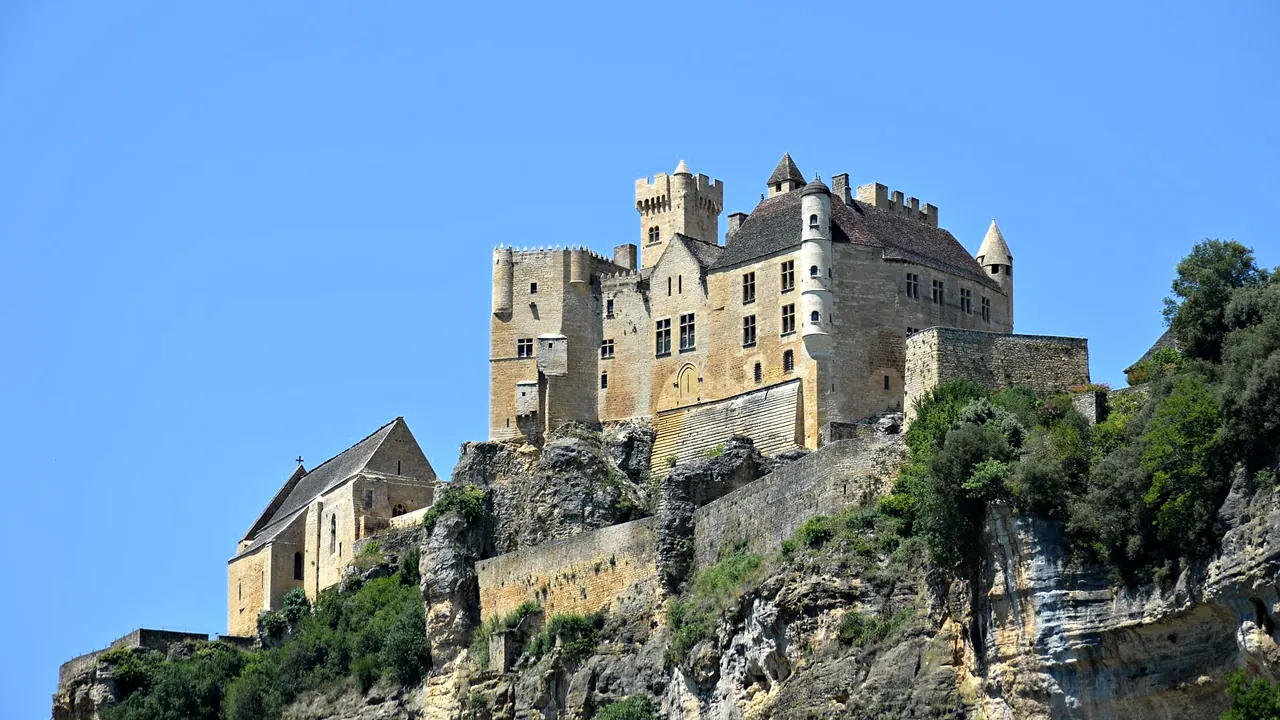
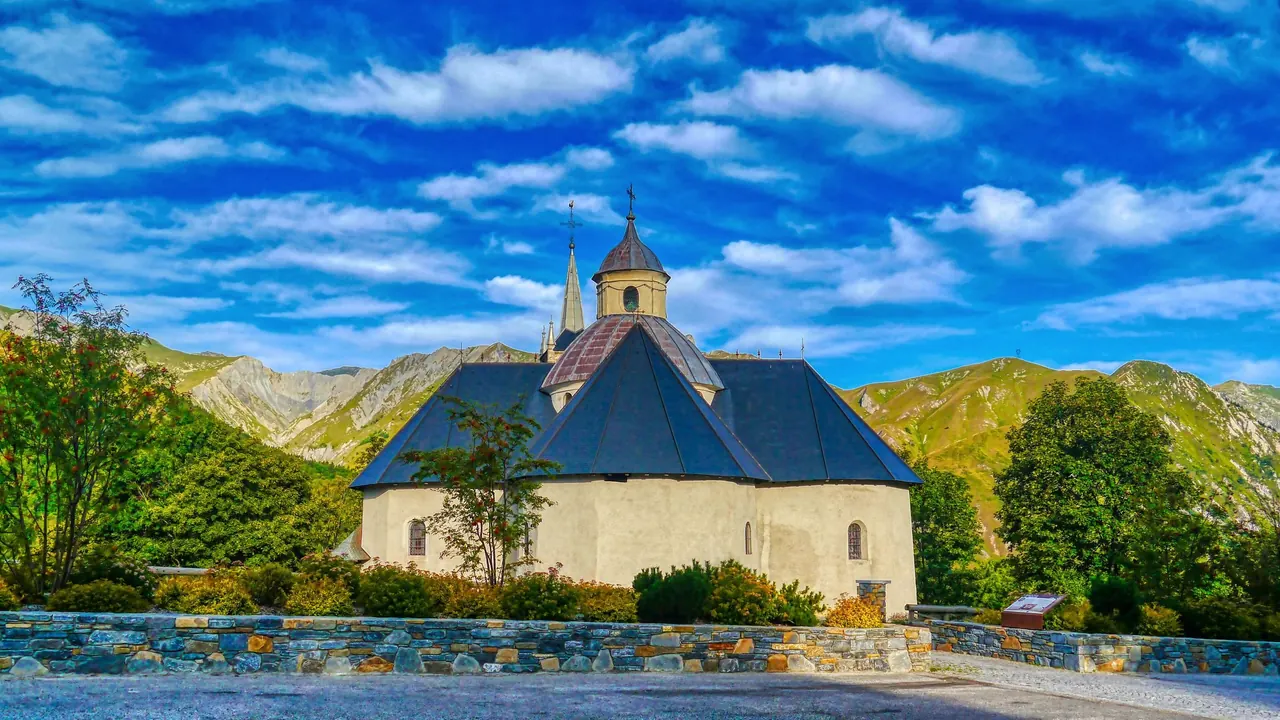
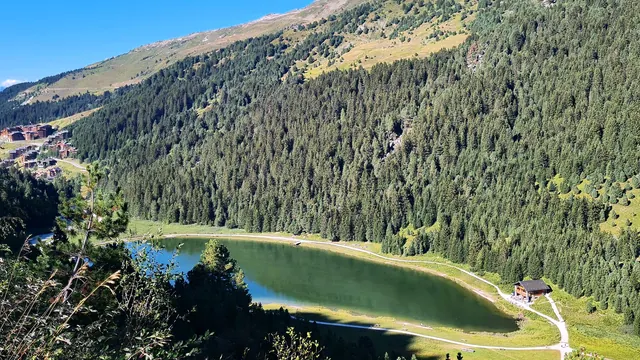
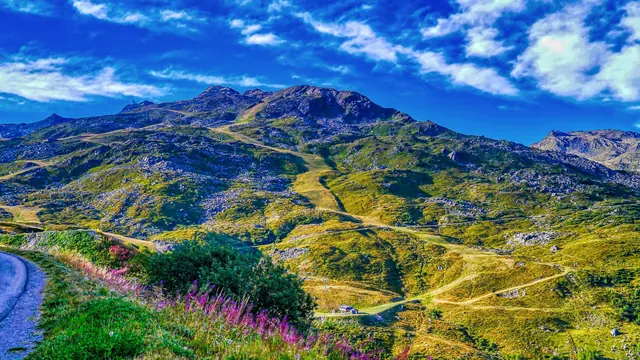
Photos: Dordogne by Edouard CHASSAIGNE, Pexels License; Les 3 Vallées by Zairon, CC BY-SA 4.0, cropped.
Dordogne or Les 3 Vallées?
Our verdict in twelve categories, each scored against the same fixed benchmark cities, and the climate month by month, so you can choose for your trip.
Choose Dordogne for
- culture and sights
- day trips
- prices
The Dordogne suits a slow summer touring vacation by car. Its strengths are the painted caves of the Vézère valley, Sarlat's golden-stone old town, castles facing each other across the river, weekly markets and long lunches, with another fine village always within half an hour. Day-to-day costs are those of rural France. It is a good choice for couples and for families with school-age children who want history and countryside rather than late nights.
Choose Les 3 Vallées for
- nightlife
- nature and the outdoors
- getting around
Les 3 Vallées is a winter mountain trip first and last. Go for skiing across one huge linked lift network, from family-friendly Les Menuires to the high bowls of Val Thorens, with après-ski that runs into the small hours and Savoyard or starred cooking at the end of the day. It costs a lot, and it is not the place for sights or excursions. Most visitors never leave the slopes.
Scoreboard
Twelve categories on one fixed scale from 0 to 100. The shaded stretch is the gap between the two.
Your match
Pick a travel style or drag the sliders, and both match scores follow your weighting.
Wins on culture and sights and day trips with your weighting.
Wins on nightlife and nature and the outdoors with your weighting.
What matters to you?
Category by category
What the scores mean for a trip.
Beaches & swimming
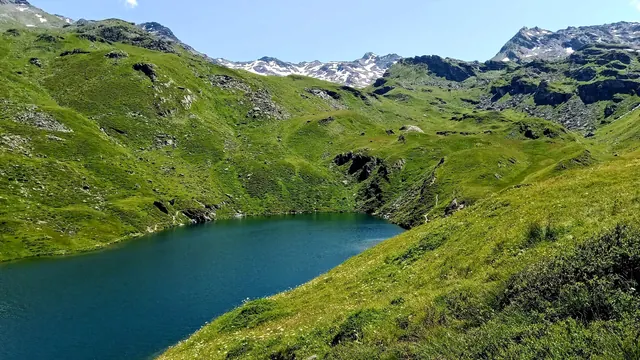
Neither has a coast, but the Dordogne at least has summer swimming. There are gravel banks on the Dordogne and the Vézère below Beynac and La Roque-Gageac, and sandy-shored lakes such as Rouffiac with supervised bathing. In Les 3 Vallées, swimming means a hotel pool or a resort aquatic centre, and a mountain lake like the Lac de Tueda is for sitting beside rather than swimming in.
Food & drink
Both regions eat very well, and both have a narrow repertoire. The Dordogne's table is built on duck and goose, walnuts, cèpes and winter truffles. You buy them at Sarlat's Saturday market and drink them with Bergerac and Monbazillac wines tasted at the estates.
Les 3 Vallées runs on melted cheese: fondue, raclette and tartiflette, eaten on a terrace halfway down the piste. At the top end, Courchevel 1850's starred hotel kitchens form a denser cluster than the Dordogne's handful of serious tables. Markets and wine estates favour the Dordogne. A long mountain lunch or a grand dinner favours the Alps.
Culture & sights
This is one of the widest gaps between the two. The Dordogne has the painted caves and rock shelters of the Vézère valley, Font-de-Gaume, the Lascaux replica and the museum of prehistory at Les Eyzies. On top of that comes a medieval layer: Sarlat, the castles of Beynac and Castelnaud, and the bastide of Monpazier.
Les 3 Vallées is mostly resorts built for skiing in the twentieth century, and their history is the 1992 Olympic venues. The older Belleville valley, with Saint-Martin's baroque church and the painted sanctuary of Notre-Dame de la Vie, fills an afternoon, not a week.
Nightlife
Nights out belong to Les 3 Vallées between December and April. Val Thorens has table-dancing après-ski and late clubs, Courchevel 1850 has champagne bars, and Méribel has a British bar scene. In the Dordogne, an evening means dinner on a terrace or a village night market with a dance floor in the square, and the villages are quiet by eleven. In summer the gap narrows, because the ski resorts go quiet too.
Nature & outdoors
Les 3 Vallées is by far the bigger outdoor destination. It has some 600km of linked pistes, reliable snow above Val Thorens, couloirs off the Saulire and guided off-piste. In summer the same area offers the edge of the Vanoise with its ibex and marmots, via ferratas and lift-served bike trails.
The Dordogne's countryside is gentler. You canoe past La Roque-Gageac and the castles, cycle the greenway near Sarlat and walk among oak woods and walnut orchards. It is lovely country, but it has no mountains and nothing for a serious hiker.
Day trips
In the Dordogne, the outings are much of the trip. There is Domme on its cliff and Brantôme on its river island, Rocamadour is about an hour from Sarlat, and Saint-Émilion is within easy reach of Bergerac.
From Les 3 Vallées, every excursion starts with the long, winding descent to Moûtiers. The shortlist is Conflans, Beaufort and Chambéry, plus Annecy two hours away, and most skiers never go.
Good for families
Both work well for families, but for different children and different seasons. Les 3 Vallées has the edge for a ski family. Ski schools take children from about three, there are fenced snow gardens and ski-in lodging in Les Menuires and Méribel-Mottaret, and pools and ice rinks fill the days off. Children who don't ski, and toddlers, find the cold and altitude harder.
The Dordogne is a summer trip best suited to eight-to-fourteen-year-olds, with canoes, Castelnaud's siege engines and the prehistoric sites. Against that are long drives, July heat and cliff paths that are hard work with a pushchair.
Getting around
Once you have arrived, Les 3 Vallées is the easier of the two. One lift network links every valley, shuttles cover each resort and a car is only a nuisance. The awkward part is getting there: a climb up switchback roads from the railhead at Moûtiers.
In the Dordogne a car is essential, because buses barely reach the villages. In July and August the riverside road through Beynac backs up and parking in Sarlat fills on market day. The rest of the year the roads are quiet, and the sights are rarely more than an hour apart.
Shopping & style
Nobody would plan a shopping trip around either region, but the Alpine resorts have the wider range. In the Dordogne, shopping mostly means food. You fill the car with foie gras, walnut oil and wine from the estates, bought at the markets of Sarlat, Issigeac and Ribérac. In summer there are brocantes and potters' workshops to browse as well.
Les 3 Vallées has what the Dordogne lacks. In Courchevel's highest village, a short street of luxury fashion and jewellery boutiques opens for the winter season. Every resort also has well-stocked ski and outdoor shops for technical gear, and Savoyard delicatessens selling Beaufort cheese.
Affordability
The Dordogne costs what rural France costs. Set lunches, market food, wine bought from the grower and plenty of campsites keep a week reasonable, though houses with pools are expensive in July and August and entry fees add up for a family.
Les 3 Vallées in winter is expensive throughout, and Courchevel 1850 is among the costliest resorts anywhere. Lift passes, equipment rental and ski school come on top of lodging. A self-catered flat in Les Menuires or Brides-les-Bains brings the cost down, but only a little.
Live music & performing arts
Neither has much of a concert season, but the Dordogne has a summer programme worth timing a trip around. Sarlat's theatre festival fills the squares in late July, Périgueux has its mime and street-theatre festival, and classical concerts are held in Romanesque churches. Les 3 Vallées has cover bands, DJs and the odd seasonal event in the resorts, and nothing to plan a stay around.
Wellness & relaxation
Les 3 Vallées has more in the way of actual spas. There are hotel spas in Courchevel, Méribel and Val Thorens, hammams and hot tubs at the public aquatic centres, and the old spa town of Brides-les-Bains with its warm springs. A ski week itself, though, is busy rather than restful.
The Dordogne has no thermal baths and few spas, so it relaxes you through its pace instead: long lunches, a farmhouse pool, or a quiet Périgord Vert village in September.
When should you go?
Pick your month. The climate figures are measured averages, not a forecast.
Dordogne in July
Les 3 Vallées in July
Daytime high, °C
Rainfall in the month, mm
Where the figures come from
Les 3 Vallées has no weather station within reach, so its figures come from a gridded climate model rather than a measured record, and read a broad area rather than one spot.
Temperature and rainfall are climate normals, averaged over the years shown. Dordogne: 1991-2020 normals, Gourdon (21.2 km from centre). Les 3 Vallées: 1991-2020 normals, TerraClimate 4 km grid at the town, no weather station within 90 km.
The Dordogne is at its best from late May to September. July and August reach about 28°C and are the sunniest months. The rivers are warm enough for swimming from late June to early September, but that heat makes castle steps and cliff paths hard going in the middle of the day. Late spring and September are better for walking and touring. Rain is spread fairly evenly through the year, so no month is truly wet, and winters are cool and grey.
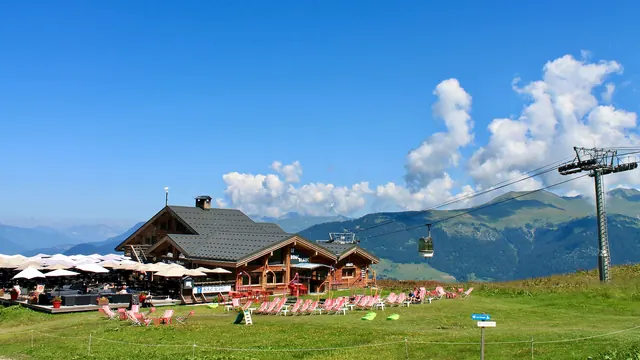
Les 3 Vallées turns that calendar upside down. Around the resorts, winter highs sit near freezing, about 1°C in January. Precipitation peaks in late autumn and early winter at 153mm in November, much of it falling as snow on the high slopes, and that keeps the lift season running from December into April. Summer is mild, about 20°C in August. That is good weather for hiking and biking, but never warm enough to make the place a swimming destination. Choose the Dordogne for summer and the Alps for winter.
Which traveller are you?
On a culture and arts trip, choose the Dordogne. The painted caves of the Vézère valley, Sarlat's old town and the castles along the river fill a whole stay, and summer brings theatre festivals. The ski resorts fill an afternoon.
For a food and nightlife trip, go to Les 3 Vallées in winter. Lunch is fondue on a terrace beside the piste, and dinner can be at Courchevel's starred tables. Then Val Thorens and Méribel dance into the small hours. The Dordogne eats as well, but its villages are asleep by eleven.
On an outdoors trip, the Dordogne suits a slower pace, with canoeing past castles and gentle cycling. The Alps are far stronger, though. The vast linked ski area has reliable snow all winter, and summer brings high trails, via ferratas and mountain biking by the Vanoise.
Before you go
| Measure | Dordogne | Les 3 Vallées |
|---|---|---|
| Official language | French | French |
| Currency | Euro (EUR) | Euro (EUR) |
| Sockets | CE230 V, 50 Hz | CE230 V, 50 Hz |
| Driving side | Right | Right |
| Time zone | UTC+1, UTC+2 in summer | UTC+1, UTC+2 in summer |
| Emergency number | 112 | 112 |
| Main airport | Bergerac Dordogne-Périgord airport (EGC)9 non-stop destinations | Geneva International Airport (GVA)150 non-stop destinations |
| Public holidays this year | 11 days | 11 days |
By the numbers
| Measure | Dordogne | Les 3 Vallées |
|---|---|---|
| Population | 417,614 | - |
| People per km² | 46 | - |
Where else could you go?
Every comparison below shares a destination with this one, so you can follow Dordogne or Les 3 Vallées somewhere new.
- Piedmontvs Les 3 Vallées
- Lake Maggiorevs Les 3 Vallées
- Swiss Alpsvs Les 3 Vallées
- Provencevs Les 3 Vallées
- French Rivieravs Les 3 Vallées
- Lake Comovs Les 3 Vallées