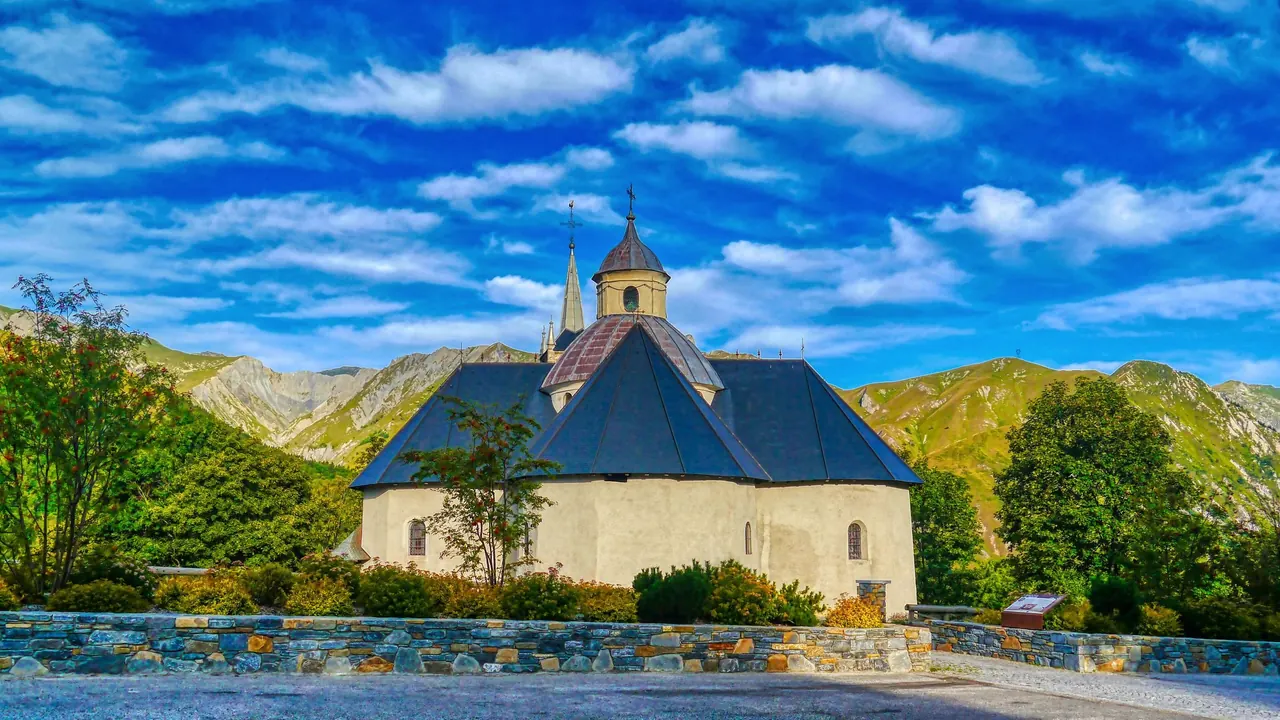
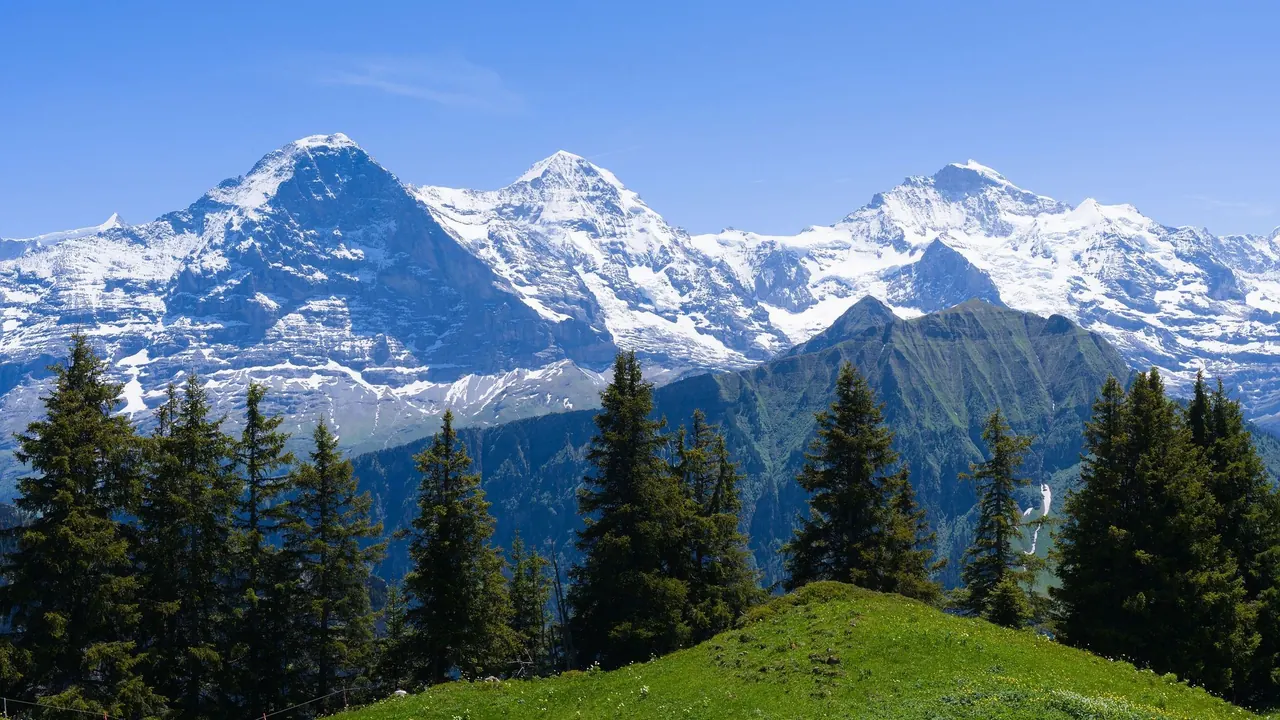
Photos: Les 3 Vallées by Zairon, CC BY-SA 4.0, cropped; Swiss Alps by Jean-Paul Wettstein, Pexels License.
Les 3 Vallées or Swiss Alps?
Our verdict in twelve categories, each scored against the same fixed benchmark cities, and the climate month by month, so you can choose for your trip.
Choose Les 3 Vallées for
- nightlife
- food and drink
- prices
Les 3 Vallées is the pick for a winter week given over entirely to skiing and the evenings that follow it. One lift network ties eight resorts together, so you can cover huge distances on skis without a bus or a car. Your base then decides the night: table-dancing après in Val Thorens, champagne in Courchevel 1850 or British bars in Méribel. The food is a real reason to come, from long Savoyard lunches beside the piste to the starred hotel kitchens of Courchevel. What you give up is most of what lies off the snow: few sights, few outings and not much to do in summer.
Choose Swiss Alps for
- day trips
- wellness
- live music and the arts
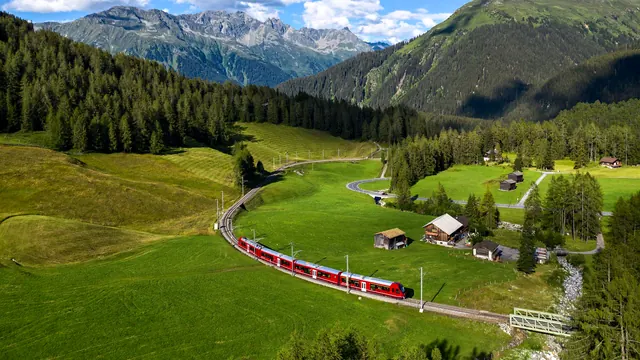
For a mountain vacation that goes beyond the pistes, in summer as much as winter, the Swiss Alps are the better choice. Trains, postbuses and lake steamers link the Bernese Oberland, Zermatt under the Matterhorn and the Engadine, and hiking trails start from the cable-car stations. Thermal baths at Leukerbad and Vals, summer music festivals in Verbier and Gstaad, and easy outings to Bern or Lucerne fill the days off. Après-ski is quieter and the ski areas are separate rather than linked, so the region suits travellers who want rest and variety more than a party.
Scoreboard
Twelve categories on one fixed scale from 0 to 100. The shaded stretch is the gap between the two.
Your match
Pick a travel style or drag the sliders, and both match scores follow your weighting.
Wins on nightlife and food and drink with your weighting.
Wins on day trips and wellness with your weighting.
What matters to you?
Category by category
What the scores mean for a trip.
Beaches & swimming
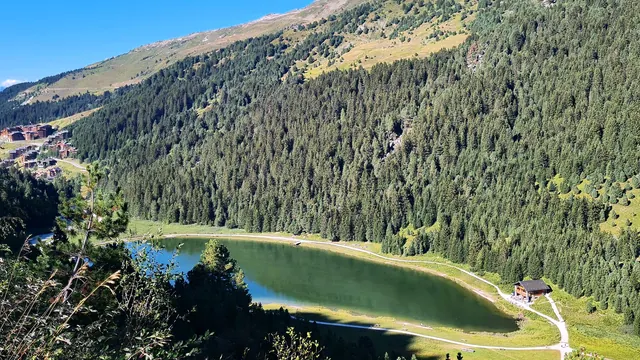
In Les 3 Vallées, a swim means a hotel pool or one of the resort aquatic centres. Small summer lakes such as the Lac de Tueda above Méribel are for sitting beside, not for a proper swim.
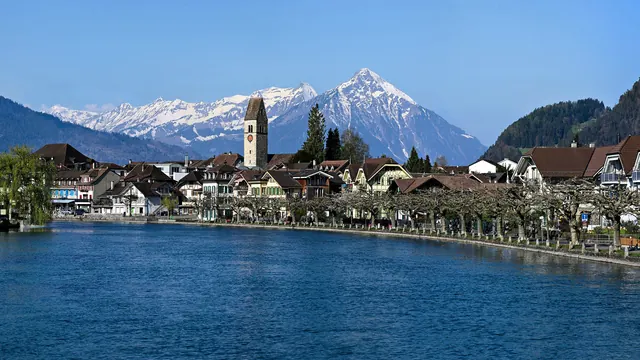
The Swiss Alps have real lake bathing. There are lidos with jetties and diving boards on Lake Thun and Lake Brienz, the Caumasee near Flims, and Lake Lugano and Lake Maggiore in Ticino, which are the warmest. It is still a summer extra to fit between hikes, not a reason to come.
Food & drink
Both kitchens are built on melted cheese, but Les 3 Vallées takes eating more seriously. The long slope-side lunch is a fixed part of the ski day. Courchevel 1850 has a dense cluster of starred hotel restaurants, and Saint-Martin-de-Belleville has its family-run starred chalet kitchen as a quieter alternative.
The Swiss Alps are stronger on drink than on cooking. Valais wines such as Petite Arvine and Cornalin are rarely found abroad, and Graubünden adds air-dried beef while Ticino has its grotti. Away from Zermatt, St Moritz and Gstaad, though, a village dinner often means one of a few hotel stuben.
Culture & sights
The Swiss Alps are clearly ahead here, though neither region is a museum destination. Les 3 Vallées is mostly twentieth-century ski architecture and venues from the 1992 Olympics. The older Savoy survives in Saint-Martin-de-Belleville, the painted sanctuary of Notre-Dame de la Vie and the cathedral at Moûtiers.
The Swiss heritage is spread across the landscape: sgraffito houses in Guarda, the castles of Sion and Bellinzona, Carolingian frescoes at Müstair, the Albula and Bernina railway lines and the rebuilt farmhouses of Ballenberg. That is enough for several days of sightseeing, which the French valleys cannot match.
Nightlife
Les 3 Vallées goes out harder, and in more places. Each big resort has its own scene: afternoon DJs and late clubs in Val Thorens, champagne bars in Courchevel 1850 and British pubs in Méribel. The whole linked area parties for the length of the lift season.
In the Swiss Alps, nights out are limited to a few resorts. Verbier is the loudest, Zermatt has its bars at the foot of the pistes, and St Moritz and Gstaad have more polished hotel bars. Out of the ski season both regions go to bed early.
Nature & outdoors
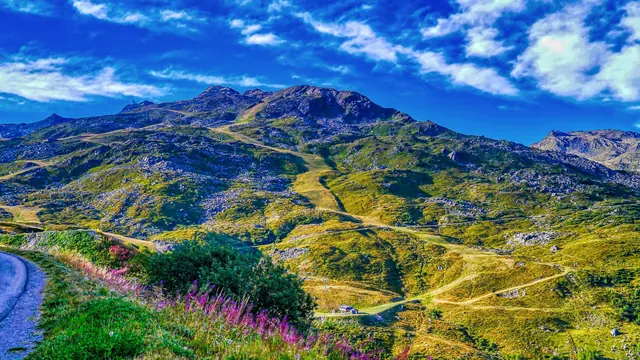
Both are first-rank mountain country, and the difference is in kind. Les 3 Vallées is one enormous linked ski area, with around 600km of pistes running from valley to valley. There are high glacial bowls above Val Thorens, steep couloirs off Courchevel's Saulire and long cruising runs above Méribel. Summer on the edge of the Vanoise comes a clear second.
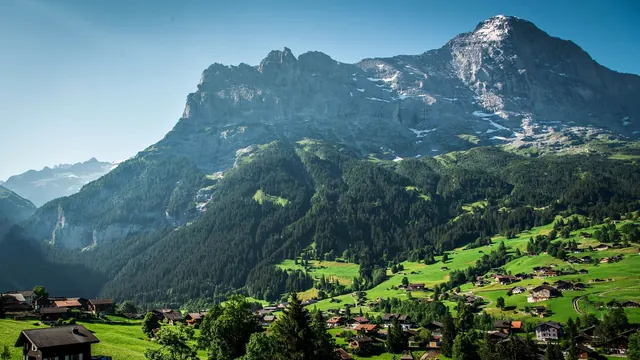
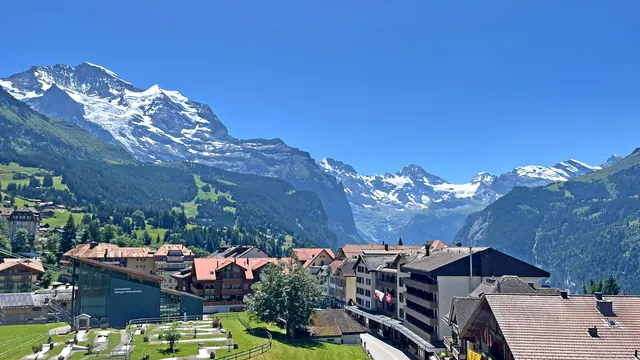
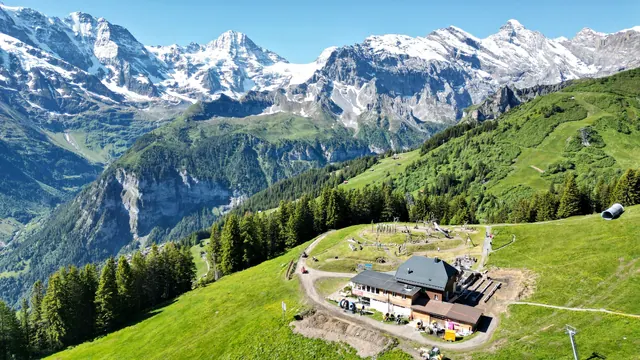
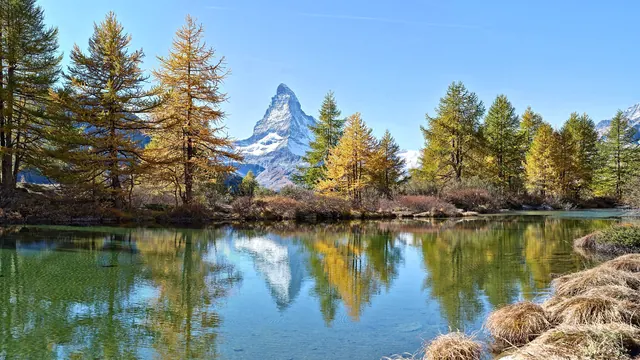
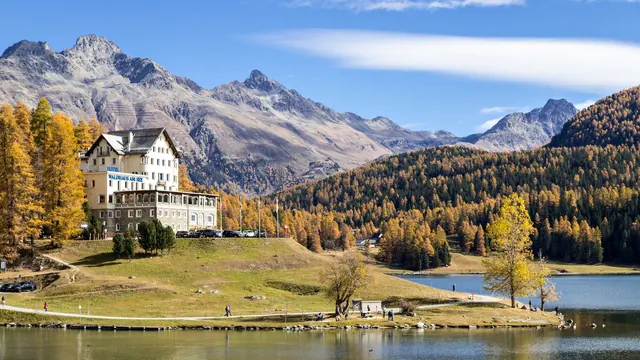
The Swiss Alps are a landscape for every season: the Eiger and Jungfrau above Lauterbrunnen, the Matterhorn, the Aletsch Glacier and the Engadine lakes, with trails between huts that start from the cable cars. The ski areas are excellent but separate, so skiers travel between resorts rather than skiing from one to the next.
Day trips
Every outing from Les 3 Vallées starts with the winding drive down to Moûtiers, and the choice is small: Conflans, Beaufort, Chambéry, or Annecy about two hours away as the one real highlight. Most visitors on a ski week never leave the slopes.
From the Swiss Alps, days out are easy and there are many to choose from. A base in the Bernese Oberland puts Bern less than an hour away by train, with Thun, Lucerne, Gruyères, Chillon and the Lavaux vineyards all within reach. From the southern side, Lugano and Bellinzona are easy outings too.
Good for families
Both regions work well with children, but in different ways. Les 3 Vallées is made for the family ski week: lodging right on the snow in Les Menuires, Méribel-Mottaret and the lower Courchevel villages, ski schools from about age three, and pools and rinks for days off. Children who do not ski will find little else.
The Swiss Alps suit families in summer as well as winter. There are toboggan runs, theme trails, lakes to paddle in, cogwheel trains, steamers and the animals at Ballenberg, and children can walk freely in car-free villages such as Wengen. In both regions, altitude needs some care with toddlers.
Getting around
Up on the mountain, Les 3 Vallées is very easy. One lift network lets you ski from Courchevel to Val Thorens and back, and free shuttles cover each resort. The weak point is arriving: a bus or taxi climbs the switchback roads from the railhead at Moûtiers, and it is slow on changeover weekends.
The Swiss Alps work better as a whole. Trains, postbuses, steamers and lifts run on connected timetables and reach almost every village without a car. Moving between regions, from Zermatt to St Moritz for example, takes most of a day, so it is best to pick one or two bases.
Shopping & style
Neither region is worth a shopping trip, and the two look alike: one short luxury street for wealthy winter guests, in Courchevel 1850 on the French side and in St Moritz and Gstaad in Switzerland, plus plenty of serious outdoor shops. The difference is in what you take home. Les 3 Vallées has Savoyard delicatessens selling Beaufort and local spirits, while the Swiss Alps add watch shops in Zermatt and Interlaken, Valais wine, Graubünden dried meat and Brienz woodcarving.
Affordability
Neither is a cheap vacation, but Les 3 Vallées gives you a little more room to save. Self-catered apartments in Les Menuires, the Belleville valley or Brides-les-Bains bring down the cost of a ski week, even though Courchevel 1850 is among the most expensive resorts anywhere. Summer is cheaper too.
The Swiss Alps cost more. Hotels, mountain meals and the railways and cable cars all come at a high price, and a few excursions can cost more than the room. Hostels around Interlaken, travel passes and the Ticino side help only so much.
Live music & performing arts
Les 3 Vallées has nothing to plan a trip around: cover bands and DJs in the après bars, and the occasional resort festival or film screening. The Swiss Alps have a real summer season, with the Verbier Festival in July, the Menuhin Festival in the churches of the Saanenland, and smaller classical festivals in Davos, the Engadine and Zermatt. Outside summer, in both regions you have to go to a city for a serious concert or a play.
Wellness & relaxation
In Les 3 Vallées, wellness mostly means recovering after skiing. There are hotel spas in Courchevel, Méribel and Val Thorens, hammams in the public aquatic centres, and the old spa town of Brides-les-Bains at the foot of the Méribel valley. The winter routine of early lifts and loud evenings works against real rest.
In the Swiss Alps, bathing is a reason to go in itself. Leukerbad's open-air hot pools under the cliffs, the stone baths at Vals, the gorge springs of Bad Ragaz and the mineral waters at Scuol sit alongside grand hotel spas, in car-free villages that are quiet at night.
When should you go?
Pick your month. The climate figures are measured averages, not a forecast.
Les 3 Vallées in July
Swiss Alps in July
Daytime high, °C
Rainfall in the month, mm
Where the figures come from
Les 3 Vallées has no weather station within reach, so its figures come from a gridded climate model rather than a measured record, and read a broad area rather than one spot.
Swiss Alps has no rain gauge within 25 km of the centre, so its rainfall comes from a gridded climate dataset read at the destination rather than from a gauge further away.
Swiss Alps's sunshine is measured 66 km from the centre, at Sion.
Temperature and rainfall are climate normals, averaged over the years shown. Les 3 Vallées: 1991-2020 normals, TerraClimate 4 km grid at the town, no weather station within 90 km. Swiss Alps: 2005-2020 (sunshine 1961-1990, rainfall 1991-2020) normals, Meiringen / Unterbach (19.5 km from centre).
Les 3 Vallées is a winter destination first of all. Around the resorts, daytime highs stay close to freezing from December to February. November and December are the wettest months, at about 150mm, and at this height much of it falls as snow, which builds the base for a season that runs from December into April. March and April are still cold on the mountain and belong to the skiers. Summer is short and cool, peaking at about 20°C in August. That is good for hiking and biking, but never warm.
The Swiss Alps figures are measured lower down, in the valleys where many visitors stay. They are milder all year and reach 24°C in July. The wet season also comes at a different time. June to August are the rainiest months, at around 125mm, while winter is drier but dark, and December is the dullest month for sunshine. July is the sunniest month, and June to September is the season for hiking and the lakes. At valley level, April and October are mild enough for walking around the villages, but high resorts such as Zermatt and St Moritz are much colder in those months.
Which traveller are you?
For a food and nightlife trip, Les 3 Vallées is the stronger choice. Slow Savoyard lunches on piste-side terraces and Courchevel's starred kitchens lead into après-ski in every resort, from Val Thorens table-dancing to late clubs. Swiss nights out are mostly limited to Verbier and Zermatt.
On a relaxing and wellness trip, the Swiss Alps win easily. Leukerbad's open-air hot pools, the stone baths at Vals and car-free villages with quiet nights make rest the whole point. A winter week in the French valleys runs on early lifts and loud evenings.
For a culture and arts trip, the Swiss Alps offer far more. Painted Engadine villages, the castles of Sion and Bellinzona, the frescoes at Müstair and the summer festivals in Verbier and Gstaad outweigh one baroque church and the Olympic venues of Les 3 Vallées.
Before you go
| Measure | Les 3 Vallées | Swiss Alps |
|---|---|---|
| Official language | French | French, German, Italian, Romansh |
| Currency | Euro (EUR) | Swiss Franc (CHF) |
| Sockets | CE230 V, 50 Hz | CJ230 V, 50 Hz |
| Driving side | Right | Right |
| Time zone | UTC+1, UTC+2 in summer | UTC+1, UTC+2 in summer |
| Emergency number | 112 | 112 |
| Main airport | Geneva International Airport (GVA)150 non-stop destinations | Zürich Airport (ZRH)226 non-stop destinations |
| Public holidays this year | 11 days | 10 days |
Where else could you go?
Every comparison below shares a destination with this one, so you can follow Les 3 Vallées or Swiss Alps somewhere new.
- Lake Maggiorevs Swiss Alps
- French Alpsvs Swiss Alps
- Lake Comovs Swiss Alps
- Piedmontvs Les 3 Vallées
- Black Forestvs Swiss Alps
- Alsacevs Swiss Alps