France
Les 3 Vallées
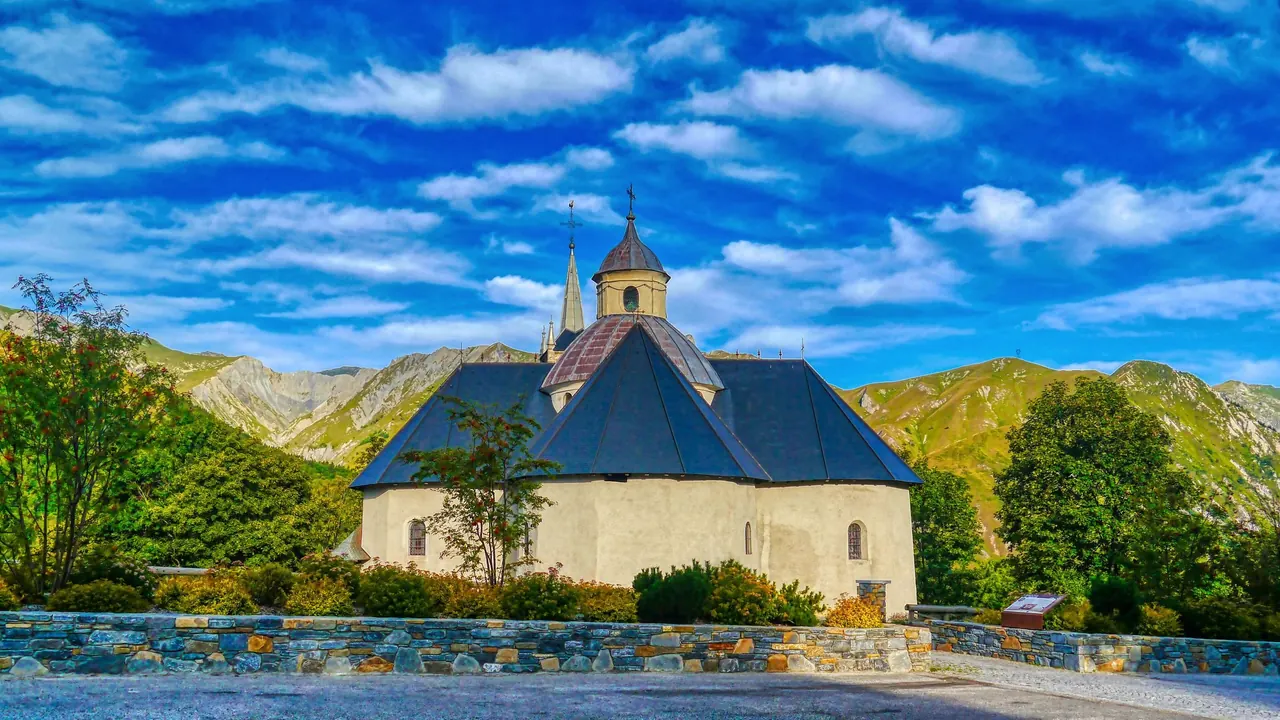
The sanctuary of Notre-Dame-de-la-Vie among green summer slopes
- Nature & outdoors94
- Food & drink70
- Nightlife70
Photo: Zairon, CC BY-SA 4.0, cropped
Les 3 Vallées lies in French Alps, which has its own page.
Match
44
Every category weighted equally
- Beach & sun43
- Culture & arts40
- Food & nightlife45
- Family trip45
- Outdoors47
- Relax & unwind44
- Shopping & style46
- On a budget41
Les 3 Vallées in twelve categories
Our verdict on each, scored 0 to 100 against the same fixed benchmark cities, so a score means the same thing on every page.
Beaches & swimming. Scores 5 out of 100.
Food & drink. Scores 70 out of 100.
Culture & sights. Scores 18 out of 100.
Nightlife. Scores 70 out of 100.
Nature & outdoors. Scores 94 out of 100.
Day trips. Scores 30 out of 100.
Good for families. Scores 68 out of 100.
Getting around. Scores 64 out of 100.
Shopping & style. Scores 42 out of 100.
Affordability. Scores 12 out of 100.
Live music & performing arts. Scores 8 out of 100.
Wellness & relaxation. Scores 50 out of 100.
Les 3 Vallées category by category
Beaches & swimming
5This is high mountain country, several hours from the nearest sea. There is nothing to swim in during the winter season, which is when nearly everyone comes. In summer a few small mountain lakes, such as the Lac de Tueda above Méribel, are pleasant to sit beside. Otherwise swimming means a hotel pool or one of the resort aquatic centres.
Food & drink
70Eating is one of the real pleasures of a stay here, and it comes at two levels. The everyday level is Savoyard: fondue, raclette, tartiflette, croziflette and plates of Beaufort and Reblochon from the surrounding valleys, eaten in wooden chalets or on sunny terraces halfway down a piste. A long lunch on the mountain is part of the ski day, and the best slope-side huts take it seriously.
The second level is haute cuisine. Courchevel 1850 has one of the densest clusters of Michelin-starred tables in the Alps, mostly inside its luxury hotels, and the old village of Saint-Martin-de-Belleville has long been known for a starred chalet kitchen run by one family. What the region lacks is variety: away from the top end, menus repeat from resort to resort.
Culture & sights
18Most of the resorts, from Courchevel to Val Thorens and Les Menuires, were built for skiing in the twentieth century. Their interest lies in the architecture of the snow era and in the venues of the 1992 Winter Olympics, more than in history. The older layer lives on in the Belleville valley. Saint-Martin-de-Belleville keeps stone-and-timber houses and a baroque church, and just outside it stands the sanctuary of Notre-Dame de la Vie, with a richly painted Savoyard interior. Down in the valley, Moûtiers has its cathedral. That is about the extent of it, and visitors who come for museums will soon run out.
Nightlife
70In winter the region goes out hard, and where you stay decides what kind of night you get. Val Thorens is the party resort. Its young crowd starts on slope-side terraces where DJs play from mid-afternoon and dancing on the tables is expected. It moves on to bars and late clubs that keep going into the small hours. Courchevel 1850 is the opposite in style: champagne bars and expensive clubs for a wealthy international crowd. Méribel sits in between, with lively après-ski at the foot of the pistes and a strong British bar scene.
It all follows the lift season, roughly December to April. In summer the resorts are quiet by late evening.
Nature & outdoors
94This is one of the largest linked ski areas in the world. Around 600km of pistes run across three main valleys, Courchevel, Méribel and the Belleville valley, and on to Orelle on the Maurienne side, with eight resorts strung along them. Lifts and runs climb past 3,000m above Val Thorens, so snow is reliable from December into April. The terrain is wide-ranging: long cruising blues above Méribel, steep couloirs off Courchevel's Saulire, high glacial bowls around Val Thorens, and plenty of off-piste for those who ski with a guide. On days away from the pistes there is ski touring, snowshoeing, cross-country skiing and paragliding.
In summer the same slopes become alpine meadows. The edge of the Vanoise national park is close by, with ibex, chamois and marmots, and there are high-mountain hiking trails, lift-served mountain-bike routes and via ferratas. The valley roads are good for road cycling too, but the main draw here is plainly the winter mountain.
Day trips
30Every trip out begins with the winding drive down to Moûtiers, so day trips here take real effort, and most visitors on a ski week never leave the slopes. Those who do can reach the medieval hilltop quarter of Conflans above Albertville, or the cheese-making village of Beaufort in its own valley. Chambéry, the old capital of the Dukes of Savoy, is a little over an hour from the valley floor. Annecy, with its canals and lakefront old town, is about two hours away and makes the best single outing. In summer the high passes open as well, but the list stays short.
Good for families
68For a family ski trip, the region is set up well. Every resort has large ski schools that take children from about three years old, fenced snow gardens and wide, easy runs near the villages. Les Menuires, Méribel-Mottaret and the lower Courchevel villages are especially practical for families, with lodging right on the snow, so there are no long walks in ski boots. Sledging runs, ice rinks and large indoor pools in Courchevel and Méribel give children something to do on days off the skis.
There is not much here for children who do not ski. Cold, early starts and the altitude, which is felt most at Val Thorens, can be tiring for toddlers.
Getting around
64Once you are up on the mountain, getting around is simple. A single lift network connects all the valleys, so you can ski from Courchevel to Val Thorens and back in a day without taking off your skis. Within each resort, free shuttle buses and short walks cover the distances, and many places to stay are right on the pistes. Getting there is the harder part. The railhead is at Moûtiers in the valley, and from there buses and taxis climb steep switchback roads for anything from half an hour to an hour. On weekend changeover days, traffic on those roads can be heavy. A car is not needed during a stay and is a nuisance in the car-free resort centres.
Shopping & style
42Courchevel 1850 has an unusual thing for a ski village: a short street of luxury fashion and jewellery boutiques that open for the winter season to serve its wealthy guests. Elsewhere, shopping means well-stocked ski and outdoor shops for rental and technical gear in every resort, along with Savoyard delicatessens selling Beaufort cheese, sausages and local spirits. Apart from that luxury pocket, the range is narrow, and nobody comes to these valleys to shop.
Affordability
12In the winter season this is an expensive place to go, and Courchevel 1850 is among the costliest resorts in the world for hotels, meals and drinks. Across the region, the lift pass, equipment rental, ski school and lunches on the mountain add up quickly. The cheapest way to do it is a self-catered apartment in Les Menuires or the Belleville valley, or in Brides-les-Bains down in the valley, linked to the slopes by gondola. Even there, a ski week costs far more than a city break. Summer is noticeably cheaper.
Live music & performing arts
8There is very little formal performing arts life here. Evenings bring cover bands and DJs in the après-ski bars, plus occasional concerts, film screenings and seasonal festival events in the resorts. There is no theatre, concert hall or regular programme to plan a stay around. Visitors who want an evening of serious music or theatre will have to wait until they are home.
Wellness & relaxation
50Wellness here mostly means recovering after a day on the slopes. The luxury hotels in Courchevel, Méribel and Val Thorens have well-equipped spas with pools, saunas and treatment rooms. The large public aquatic centres in Courchevel and Méribel add hammams and hot tubs for anyone staying in an apartment. The one place with a real bathing tradition is Brides-les-Bains, a small spa town at the foot of the Méribel valley built around its warm springs and linked to the pistes by gondola. It is a quiet, old-fashioned resort more than a destination in itself.
In winter the pace is lively rather than restful, with early lifts, long ski days and busy après-ski. For calm, stay in a chalet in Saint-Martin-de-Belleville or come in summer.
Where to stay in Les 3 Vallées
A single lift network joins all three valleys, so one base is enough for a week. The choice depends on what you want from your evenings and how much you want to spend. Val Thorens is the highest resort, with snow you can count on from December. It suits a young crowd who want the loudest après-ski, though the altitude can tire small children. Courchevel spreads over several villages. 1850 is the place for luxury hotels, starred dining and expensive nights out, while the lower villages are calmer and practical for families, with lodging right on the snow.
Méribel lies at the centre of the area and makes an easy first choice. It has gentle cruising runs, a lively British bar scene and a large aquatic centre for days off the skis, and Méribel-Mottaret, higher up, puts families straight onto the pistes. Les Menuires is the practical, lower-cost base, with self-catered apartments on the slopes and ski schools close by.
For a quiet stay, take a chalet in Saint-Martin-de-Belleville, an old stone-and-timber village with a good table and lift access to the Belleville valley. Brides-les-Bains, down by the Méribel valley and linked to the slopes by gondola, is the cheapest option and suits a spa stay, but every ski day starts with a longer ride up. A car is not needed at any of these bases.
When should you go?
Pick a month to see what it is like. The climate figures are measured averages, not a forecast.
Les 3 Vallées in July
Daytime high, °C
Rainfall in the month, mm
The whole year
Shaded against this destination’s own year: the deepest cell is its best month for that figure and the palest its weakest.
Where the figures come from
Les 3 Vallées has no weather station within reach, so its figures come from a gridded climate model rather than a measured record, and read a broad area rather than one spot.
Temperature and rainfall are climate normals, averaged over the years shown. Les 3 Vallées: 1991-2020 normals, TerraClimate 4 km grid at the town, no weather station within 90 km.
Before you go
| Measure | Les 3 Vallées |
|---|---|
| Official language | French |
| Currency | Euro (EUR) |
| Sockets | CE230 V, 50 Hz |
| Driving side | Right |
| Time zone | UTC+1, UTC+2 in summer |
| Emergency number | 112 |
| Main airport | Geneva International Airport (GVA)150 non-stop destinations |
| Public holidays this year | 11 days |
Compare Les 3 Vallées with
Every comparison with a written verdict behind it.
- Alsace
- Austrian Alps
- Bavaria
- Black Forest
- Brittany
- Burgundy
- Cinque Terre
- Corsica
- Dolomites
- Dordogne
- Elba
- French Riviera
- Lake Como
- Lake Garda
- Lake Maggiore
- Loire Valley
- Normandy
- Piedmont
- Provence
- Swiss Alps
- Tuscany