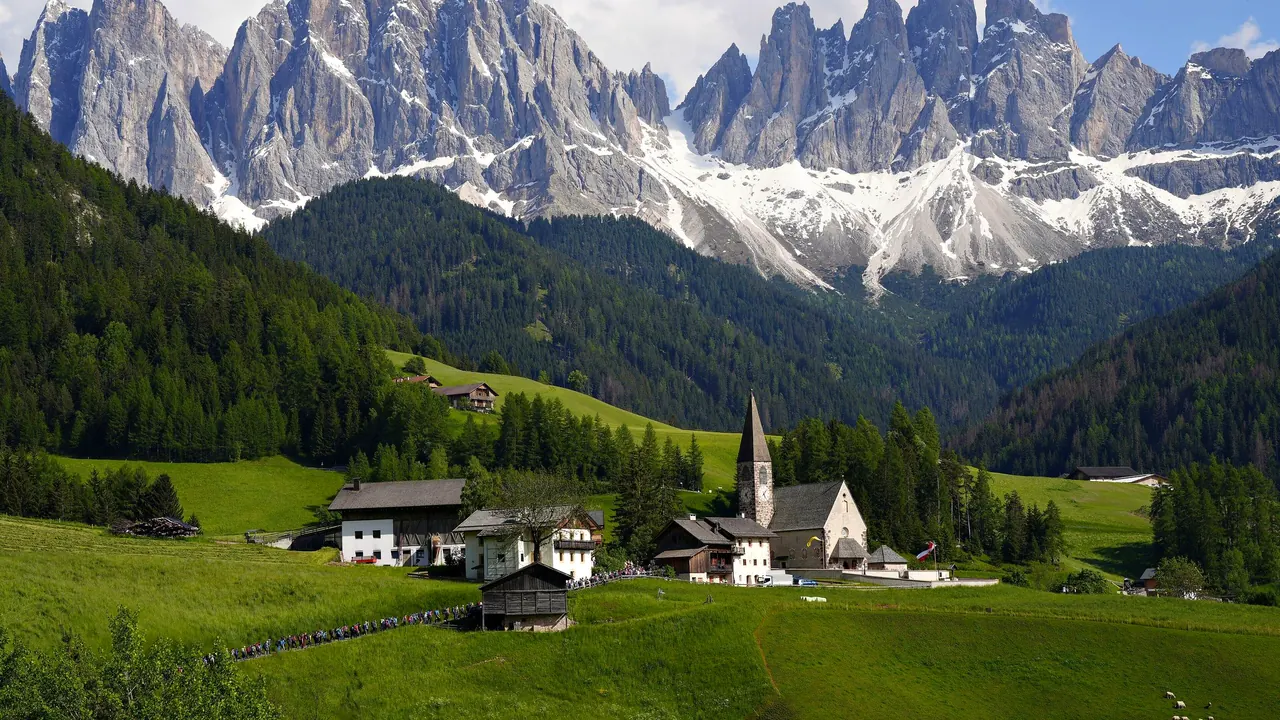
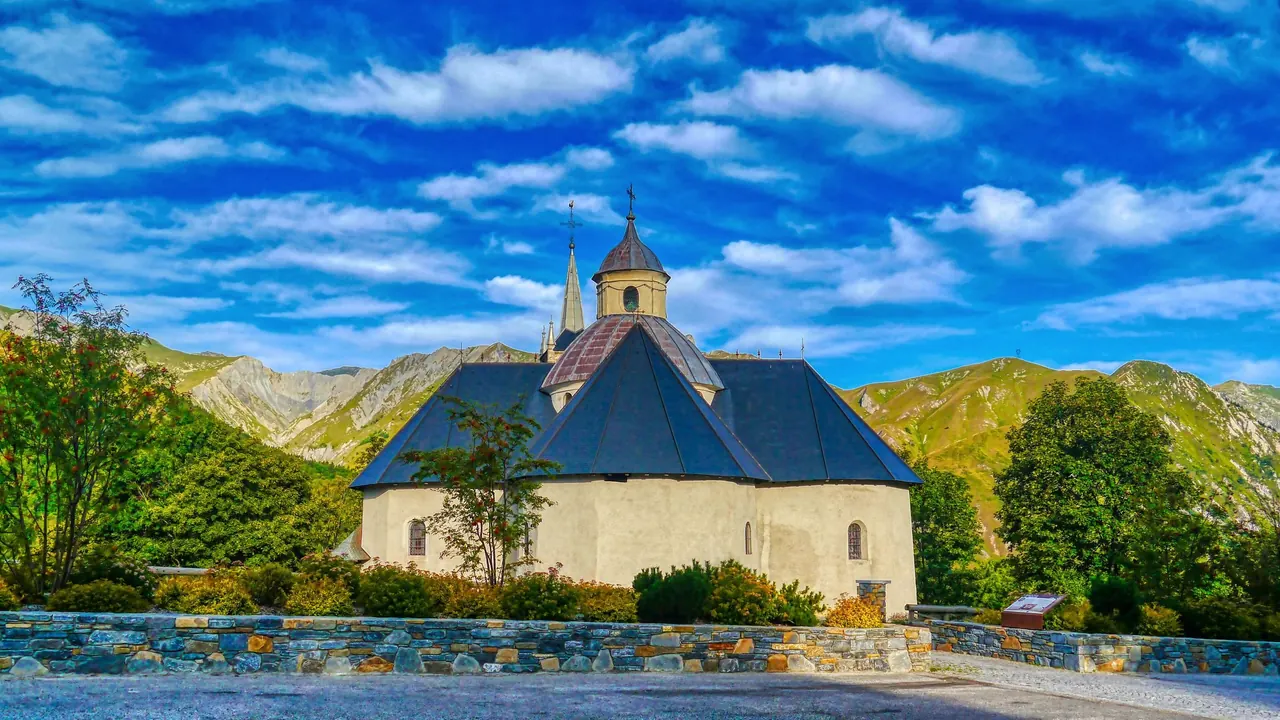
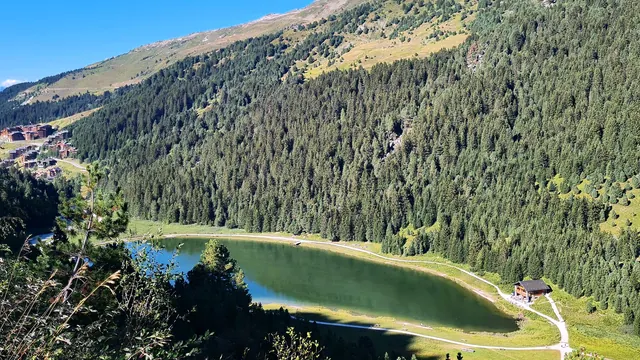
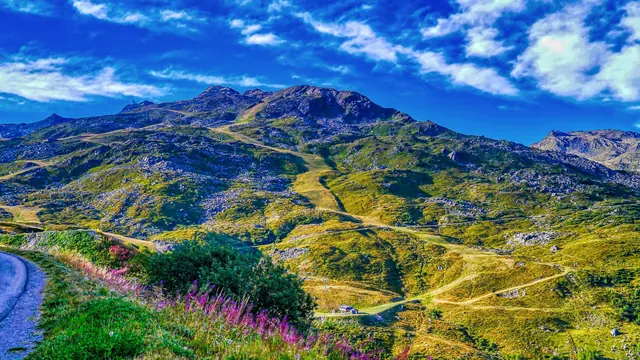
Photos: Dolomites by Chensiyuan, CC BY-SA 4.0, cropped; Les 3 Vallées by Zairon, CC BY-SA 4.0, cropped.
Dolomites or Les 3 Vallées?
Our verdict in twelve categories, each scored against the same fixed benchmark cities, and the climate month by month, so you can choose for your trip.
Choose Dolomites for
- day trips
- culture and sights
- live music and the arts
The Dolomites suit travellers who want the mountains as scenery and as a summer playground as much as a ski area. Pale rock towers above green meadows, hut lunches with South Tyrolean wine, and valley towns like Bolzano, Trento and Merano give the trip far more to it than the pistes alone. It is also the calmer and more restful choice, with hotel spas built for long evenings and easy outings to Verona or Lake Garda.
Choose Les 3 Vallées for
- nightlife
- getting around
- food and drink
Les 3 Vallées is the place for a dedicated winter ski week. One lift network joins eight resorts, you ski from the door and leave the car behind, and the nights have real energy, from the table-dancing terraces of Val Thorens to the champagne bars of Courchevel. Expect to pay heavily for it, and don't expect much to do beyond the snow.
Scoreboard
Twelve categories on one fixed scale from 0 to 100. The shaded stretch is the gap between the two.
Your match
Pick a travel style or drag the sliders, and both match scores follow your weighting.
Wins on day trips and culture and sights with your weighting.
Wins on nightlife and getting around with your weighting.
What matters to you?
Category by category
What the scores mean for a trip.
Beaches & swimming
Neither is a swimming destination, but the Dolomites at least give you warm water in summer. Lake Caldaro on the wine route warms to about 24°C, with lidos and lawns, and the north tip of Lake Garda is an easy drive from Trento. The high lakes such as Braies are for looking at, not bathing in.
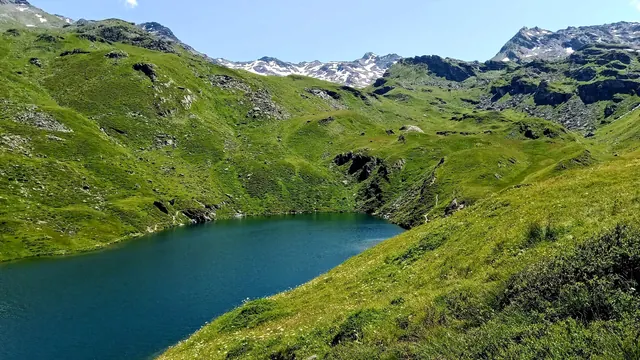
Les 3 Vallées has almost nothing to offer here. A small lake like the Lac de Tueda is a pleasant place to sit, but swimming means a hotel pool or one of the resort aquatic centres.
Food & drink
Both regions eat well, and in both the long lunch on a mountain terrace is part of the day. What differs is the cooking. The Dolomites mix Alpine and Italian food: speck, canederli and strudel followed by a proper espresso, with Ladin dishes in Gardena and Badia and local Lagrein and Gewürztraminer to drink, at their best during the autumn Törggelen evenings.
Les 3 Vallées is Savoyard, built on melted Beaufort and Reblochon in fondue, raclette and tartiflette. Its top end is more concentrated, with a cluster of starred kitchens in Courchevel 1850's hotels to rival the fine dining of Alta Badia. Outside the top tier, menus repeat from one resort to the next.
Culture & sights
The Dolomites give you far more to see off the mountain. Bolzano has its medieval arcades and the museum built around Ötzi. Trento has its Romanesque cathedral and the Castello del Buonconsiglio, and Bressanone and Novacella Abbey are nearby. Add Runkelstein's secular frescoes and the First World War tunnels on the passes, and wet days are easy to fill.
In Les 3 Vallées, most of what you see is twentieth-century ski architecture and the venues of the 1992 Olympics. The older Savoy survives in Saint-Martin-de-Belleville and the painted sanctuary of Notre-Dame de la Vie, but those take an afternoon at most.
Nightlife
For going out, Les 3 Vallées is the clear choice, and each resort has its own style. Val Thorens is the young party resort, with DJs on slope-side terraces and clubs open into the small hours. Courchevel 1850 runs to champagne bars and expensive clubs, and Méribel's après-ski falls in between, with a strong British bar scene.
In the Dolomites, après-ski in Selva, Ortisei, Canazei and Cortina mostly ends in the early evening, and Bolzano and Trento offer wine bars rather than late nights. On the French side, though, the nightlife lasts only as long as the lift season.
Nature & outdoors
Both are among the great mountain areas of the Alps, but they excel in different seasons. The Dolomites are the stronger summer landscape: the Tre Cime, the Sassolungo and Seceda, the easy high-pasture walking of the Alpe di Siusi, the Alta Via 1 and the First World War via ferrate. In winter, Dolomiti Superski links a dozen valleys around the Sella Ronda.
Les 3 Vallées is built around the winter mountain. Its 600km of pistes form one continuous area, from the cruising blues above Méribel to the couloirs off the Saulire, and the lifts climb past 3,000m above Val Thorens, so the snow reliably lasts into April. In summer the edge of the Vanoise offers ibex and marmots, but it doesn't match the Dolomites' rock scenery.
Day trips
The Dolomites have far more within reach, especially from the Adige valley. From Bolzano you can easily get to Merano, Bressanone, Trento and the wine route. Verona is a short train ride away, Lake Garda and Innsbruck make good days out, and from Cortina you can reach Venice on a long day.
From Les 3 Vallées, every outing begins with the switchback road down to Moûtiers. The best of the short list is Annecy, about two hours away, with Chambéry, the hilltop quarter of Conflans and the cheese village of Beaufort closer by. Most ski-week visitors never go.
Good for families
Both regions work well with children, but in different seasons. The Dolomites are at their best for families in summer, with flat paths across the Alpe di Siusi and the Armentara meadows, huts with playgrounds and farm animals, and summer toboggan runs. Children who don't ski will still find plenty to do.
Les 3 Vallées is designed around the family ski week. Ski schools take children from about three, and Les Menuires and Méribel-Mottaret let you stay right on the snow. The altitude at Val Thorens can be hard on toddlers, though, and children who don't ski will soon run out of things to do.
Getting around
Once you have arrived, Les 3 Vallées is the easier place to get around. One lift network connects every valley, free shuttles run within each resort, and a car is more of a nuisance than a help. The difficult part is the climb from the railhead at Moûtiers.
The Dolomites have better public transport in the valleys, with trains along the Adige and Puster valleys and buses over the passes on one South Tyrolean pass. Getting from one valley to another, though, means slow hairpin roads, and Cortina has no station, so most people who want to see several areas end up hiring a car.
Shopping & style
Shopping is a minor part of the trip in both, and in both the luxury shops sit in a single resort: Cortina's main street and Courchevel 1850's short row of fashion and jewellery boutiques. The Dolomites have more character beyond that, with centuries of woodcarving in Ortisei, the old shops under Bolzano's arcades and some of the best-known Advent markets in the Alps. In Les 3 Vallées, the rest is technical ski gear and Savoyard delicatessens, and Beaufort cheese is what most people take home.
Affordability
Neither is cheap, but the Dolomites cost noticeably less. You can stay in Val di Fassa, Val di Fiemme or the towns of Bolzano and Trento, and June and September bring lower rates for the same mountains. Half board also helps keep costs down.
Les 3 Vallées in winter is among the most expensive ski trips there is. Courchevel 1850 is at the very top end, and the lift pass, ski school and mountain lunches add up everywhere. The most affordable option is self-catering in Les Menuires or Brides-les-Bains, or coming in summer.
Live music & performing arts
The Dolomites have a modest but real music calendar. Bolzano has a regional orchestra, a long-running piano competition and a municipal theatre, and Trento has its own programmes. In summer, concerts move onto meadows, castles and hut terraces, and Merano holds an autumn festival in its old spa halls.
Les 3 Vallées has no theatre, no concert hall and no regular programme. An evening's entertainment there means a cover band or a DJ in an après-ski bar.
Wellness & relaxation
The Dolomites are the more restful choice. South Tyrol's mountain hotels give unusual care to their spas, with saunas facing the rock walls, heated outdoor pools and the traditional hay bath around Völs am Schlern. Merano adds public thermal baths beside its river promenade, and in June or September the valleys are very quiet.
In Les 3 Vallées, wellness means recovering after a day on the slopes: hotel spas and hot tubs in the aquatic centres of Courchevel and Méribel. Brides-les-Bains is the only place with a real spa tradition, and in winter the pace is lively rather than restful.
When should you go?
Pick your month. The climate figures are measured averages, not a forecast.
Dolomites in July
Les 3 Vallées in July
Daytime high, °C
Rainfall in the month, mm
Where the figures come from
Les 3 Vallées has no weather station within reach, so its figures come from a gridded climate model rather than a measured record, and read a broad area rather than one spot.
Temperature and rainfall are climate normals, averaged over the years shown. Dolomites: 1991-2020 normals, Dobbiaco (22.3 km from centre). Les 3 Vallées: 1991-2020 normals, TerraClimate 4 km grid at the town, no weather station within 90 km.
At the station where the Dolomites figures are measured, summer is the warmer of the two, with highs around 22°C in July and August. That is warm enough for swimming in the valley lakes, but it is also the wettest time of year, peaking at about 130mm in July. June and September are the most comfortable months for long walks. Winters are cold, close to 0°C in January, and notably dry.
Les 3 Vallées is cooler and wetter through most of the year. Summer highs only reach about 20°C in August, and precipitation is heavy in every month. The wettest stretch runs from November to January, up to about 153mm, and up high it falls as the snow the ski season relies on. For a ski trip, both are at their best from midwinter into March. For a summer trip the Dolomites are warmer and give you more to do.
Which traveller are you?
For a culture and arts trip, choose the Dolomites. Bolzano has the Iceman museum and arcaded streets, Trento has its frescoed castle, and there are summer concerts on alpine meadows. The French resorts were built for skiing and have little history or stage life to offer.
On a food and nightlife trip, Les 3 Vallées wins in winter. Savoyard fondue and Courchevel's starred tables are a match for South Tyrolean cooking, and Val Thorens and Courchevel keep going into the small hours, while the Dolomite villages are quiet after dinner.
For a relaxing and wellness trip, go to the Dolomites. South Tyrol's hotels build whole stays around saunas, heated outdoor pools and hay baths, and Merano has thermal baths in the town centre. The French valleys run on early lifts and loud après-ski.
Before you go
| Measure | Dolomites | Les 3 Vallées |
|---|---|---|
| Official language | Italian | French |
| Currency | Euro (EUR) | Euro (EUR) |
| Sockets | CFL230 V, 50 Hz | CE230 V, 50 Hz |
| Driving side | Right | Right |
| Time zone | UTC+1, UTC+2 in summer | UTC+1, UTC+2 in summer |
| Emergency number | 112 | 112 |
| Main airport | Venice Marco Polo Airport (VCE)103 non-stop destinations | Geneva International Airport (GVA)150 non-stop destinations |
| Public holidays this year | 13 days | 11 days |
Where else could you go?
Every comparison below shares a destination with this one, so you can follow Dolomites or Les 3 Vallées somewhere new.
- Austrian Alpsvs Dolomites
- Piedmontvs Les 3 Vallées
- Lake Maggiorevs Les 3 Vallées
- Lake Gardavs Dolomites
- Swiss Alpsvs Les 3 Vallées
- Bavariavs Dolomites