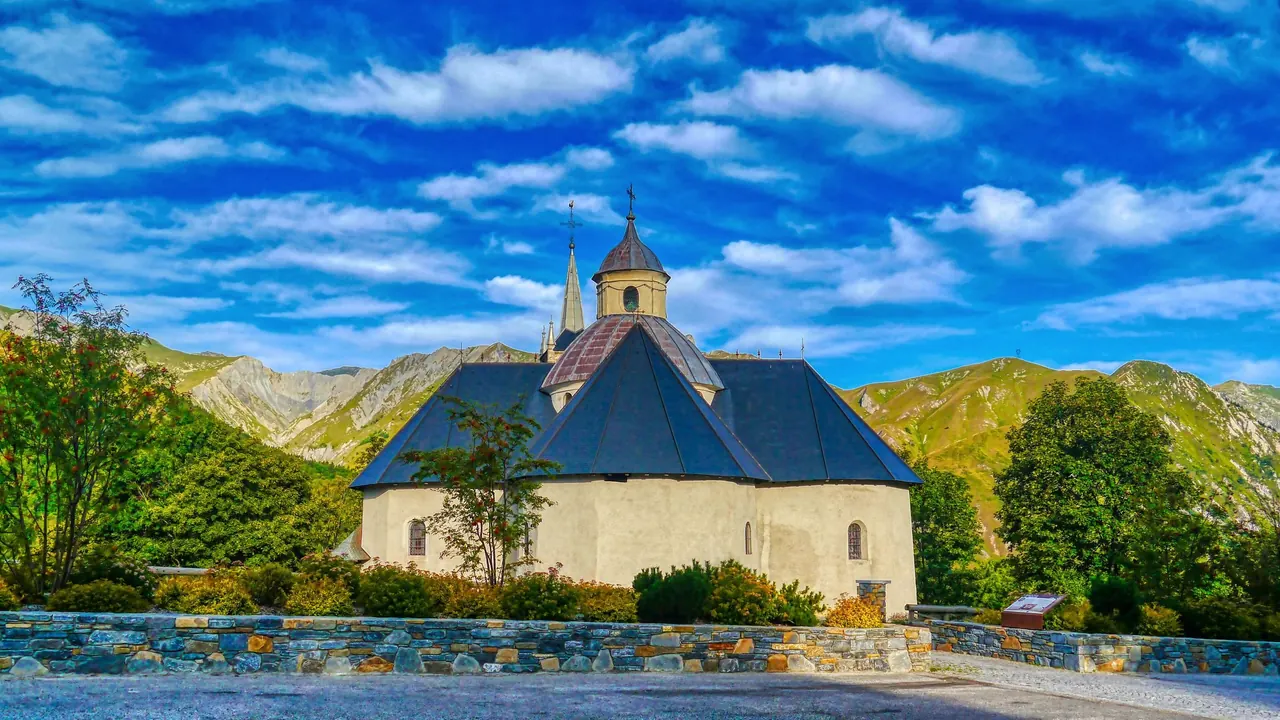
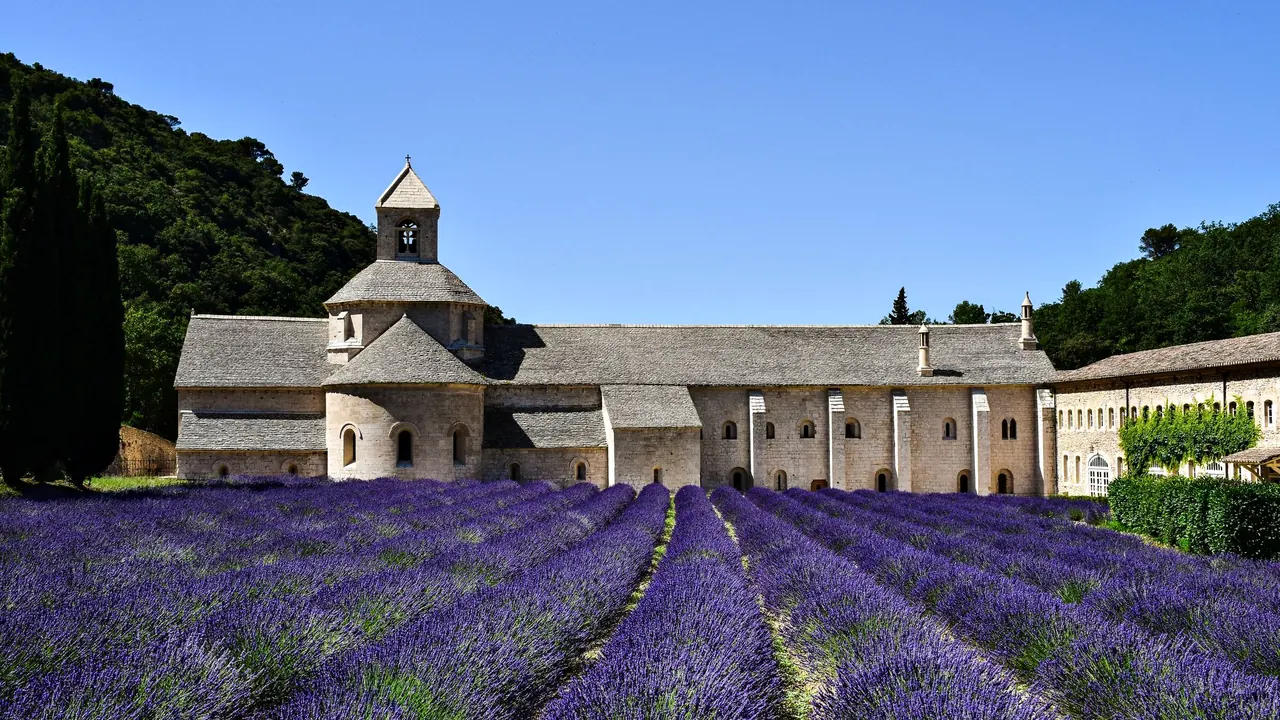
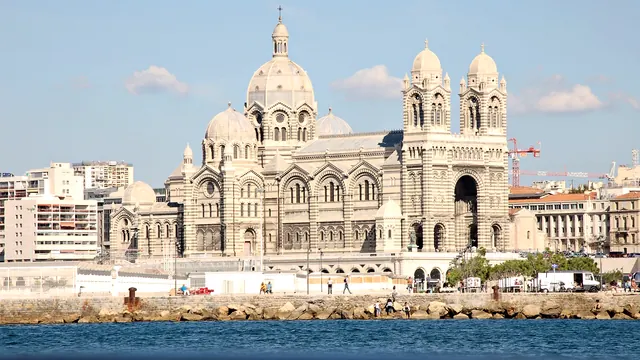
Photos: Les 3 Vallées by Zairon, CC BY-SA 4.0, cropped; Provence by AXP Photography, Pexels License.
Les 3 Vallées or Provence?
Our verdict in twelve categories, each scored against the same fixed benchmark cities, and the climate month by month, so you can choose for your trip.
Choose Les 3 Vallées for
- getting around
- nightlife
- nature and the outdoors
Les 3 Vallées is the choice for a winter week built around skiing. Its single lift network joins Courchevel, Méribel and the Belleville valley into one huge area, with lodging on the snow, ski schools that take small children, and après-ski ranging from table-dancing in Val Thorens to champagne bars in Courchevel. In return you get almost no history, no sea and no theatre, at a high cost.
Choose Provence for
- beaches
- culture and sights
- day trips
Provence suits travellers who want to see a lot and move about. It has Roman theatres in Arles and Orange, the papal palace in Avignon, market mornings in Aix and the Luberon, and the calanques and Porquerolles for swimming. It works best in summer or the shoulder seasons for a trip that combines sights, food and the sea, as long as you are happy to drive between towns.
Scoreboard
Twelve categories on one fixed scale from 0 to 100. The shaded stretch is the gap between the two.
Your match
Pick a travel style or drag the sliders, and both match scores follow your weighting.
Wins on getting around and nightlife with your weighting.
Wins on beaches and culture and sights with your weighting.
What matters to you?
Category by category
What the scores mean for a trip.
Beaches & swimming
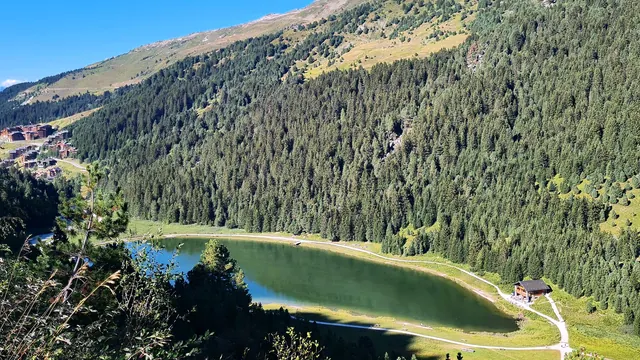
Swimming in Les 3 Vallées means a hotel pool, a resort aquatic centre or, in summer, a seat beside a small mountain lake such as the Lac de Tueda above Méribel. Nobody chooses it for the water.
Provence has one of France's most varied coasts. There is long sand with beach clubs at Pampelonne, pale shallow water on the Hyères peninsula and Porquerolles, rocky turquoise inlets between Marseille and Cassis, and pine-backed coves along the Corniche des Maures. If the sea matters, base yourself on the coast, because the Luberon is a long drive inland.
Food & drink
Eating well is part of the day in both places, but Provence has more range. In Les 3 Vallées it means Savoyard cheese cooking, fondue, tartiflette and Beaufort, eaten over long lunches on piste-side terraces. Courchevel's cluster of starred hotel kitchens sits on top of that. Below the top end, though, menus repeat from one resort to the next.
Provence cooks with the seasons and the sea. You get bouillabaisse in Marseille, along with its North African cooking, daube and aïoli inland, truffles around Carpentras and weekly markets in nearly every town. It also has its own wine, from rosé and Bandol reds to Châteauneuf-du-Pape, which the Alps cannot match.
Culture & sights
The ski resorts are twentieth-century creations, and their interest lies in snow-era architecture and the 1992 Olympic venues. The older Savoy survives in Saint-Martin-de-Belleville's baroque church and the painted sanctuary of Notre-Dame de la Vie, and a day or two covers it.
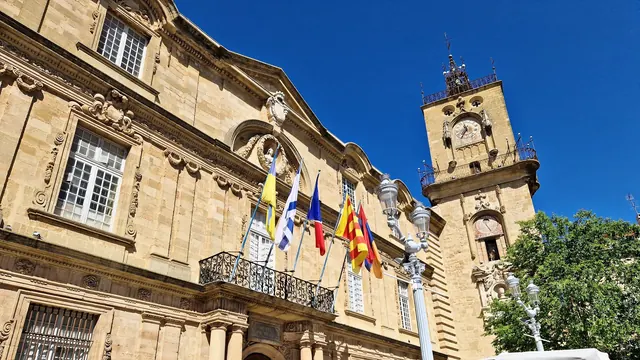
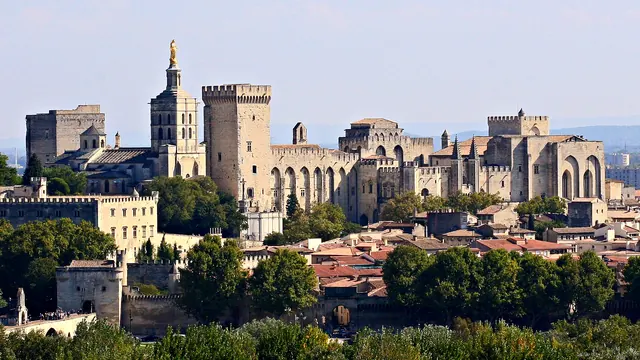
Provence could fill a whole trip with sightseeing. It has the Gothic papal palace and walls of Avignon, the Roman amphitheatre in Arles, the theatre at Orange, Cézanne's studio in Aix and the MuCEM in Marseille. The Cistercian abbeys of Sénanque and Le Thoronet stand out in the countryside, and the sights are spread across several towns rather than gathered in one.
Nightlife
In winter, Les 3 Vallées goes out harder. Val Thorens has DJs on slope-side terraces from mid-afternoon and clubs until the small hours, Courchevel 1850 has its expensive champagne bars, and Méribel's British bars fall in between. All of it stops when the lifts close for the season.
Provence keeps the opposite calendar, and its evenings are mostly long terrace dinners and a drink in a village square. For more than that, go to Marseille's bars and clubs around Cours Julien and La Plaine, or to Saint-Tropez's beach clubs in high summer.
Nature & outdoors
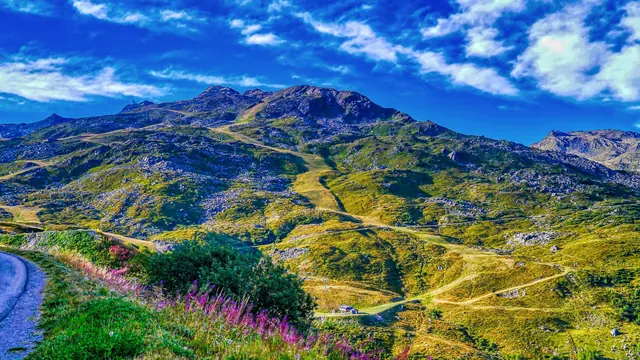
Les 3 Vallées is ahead because its mountain terrain is on another scale. About 600km of pistes cross three valleys, snow is reliable above Val Thorens from December into April, and guided off-piste, ski touring and snowshoeing fill the gaps. In summer, ibex and marmots on the edge of the Vanoise take over.
Provence spreads its landscapes wider and lower. It has the canyon of the Gorges du Verdon, the white cliffs of the calanques, the bare climb of Mont Ventoux, Camargue flamingos and lavender on Valensole. Spring and autumn suit it best, as summer heat closes some massifs on days of high fire risk.
Day trips
From the ski valleys, every outing starts with the winding drive down to Moûtiers, so most people never leave the slopes. Annecy, about two hours away, is the outing worth the effort, and Conflans and Beaufort are closer.
Provence is built for day trips, with a dozen within an hour of almost any base. They include Gordes and the ochre cliffs of Roussillon, the canals of L'Isle-sur-la-Sorgue, Les Baux, the Pont du Gard just over the Rhône, and the ferry to Porquerolles. Most of them need a car.
Good for families
For a family that skis, Les 3 Vallées is the better fit. It has ski schools from about three years old, fenced snow gardens and lodging right on the snow in Les Menuires and Méribel-Mottaret. Pools, rinks and sledging cover the days off, but children who do not ski will be bored, and the altitude at Val Thorens tires toddlers.
A family trip to Provence is usually a rented house with a pool, with gentle sandy beaches around Hyères and canoeing or Camargue horses for older children. July heat, long drives and perched villages that are hard with a pushchair are the drawbacks.
Getting around
Once you are up in Les 3 Vallées, the lifts do the work: you can ski from Courchevel to Val Thorens and back in a day, and free shuttles cover each resort. The awkward part is the climb from the railhead at Moûtiers, which takes up to an hour on switchback roads.
Provence is the other way round. Trains link Marseille, Aix, Avignon and Arles easily, but the villages, abbeys and gorges need a car, with narrow lanes and scarce parking. In summer, the gulf ferries beat the jammed road into Saint-Tropez.
Shopping & style
Both have a pocket of seasonal luxury boutiques, Courchevel 1850 in winter and Saint-Tropez in summer. Beyond those, the Alps offer ski shops and Savoyard delicatessens selling Beaufort and sausages.
Provence gives you much more to take home. There are printed fabrics and olive-wood bowls at the markets, the antique dealers of L'Isle-sur-la-Sorgue, Marseille soap, Moustiers faience and santons, and real town-centre browsing in Aix's old streets.
Affordability
Neither is cheap, but a ski week in Les 3 Vallées costs more. The lift pass, equipment hire, ski school and mountain lunches add up even before Courchevel's hotel prices. A self-catered flat in Les Menuires, the Belleville valley or Brides-les-Bains is the way to soften it.
In Provence, the high prices are concentrated in Saint-Tropez and the Luberon villas. Marseille, Arles, Avignon and the quieter Var villages cost less, and market picnics, set lunches and local wine keep each day reasonable, especially in spring and autumn.
Live music & performing arts
Evenings in the ski resorts mean cover bands and DJs in the après-ski bars, with the odd concert or film screening, and there is no theatre or concert hall to plan around.
Provence holds two festivals of world rank: theatre in Avignon, with its huge fringe, and opera in the courtyard of the Archbishop's Palace in Aix. Add opera in the Roman theatre at Orange and piano at La Roque-d'Anthéron. Outside summer, the Marseille opera house and the Criée theatre keep a regular programme going.
Wellness & relaxation
The two are broadly level, but the rest is of a different kind. In Les 3 Vallées, wellness means recovering after skiing: hotel spas, hammams at the public aquatic centres, and the old warm springs of Brides-les-Bains, all set within lively, early-starting ski days.
In Provence the calm comes from the pace of the day. There are market mornings, pool afternoons and lavender treatments in farmhouse hotels, plus the thermal spa on Aix's Roman baths and the spa towns of Gréoux and Digne. The coast in high summer is the exception.
When should you go?
Pick your month. The climate figures are measured averages, not a forecast.
Les 3 Vallées in July
Provence in July
Daytime high, °C
Rainfall in the month, mm
Where the figures come from
Les 3 Vallées has no weather station within reach, so its figures come from a gridded climate model rather than a measured record, and read a broad area rather than one spot.
Provence has no rain gauge within 25 km of the centre, so its rainfall comes from a gridded climate dataset read at the destination rather than from a gauge further away.
Provence's sunshine is measured 53 km from the centre, at Nimes / Courbessac.
Temperature and rainfall are climate normals, averaged over the years shown. Les 3 Vallées: 1991-2020 normals, TerraClimate 4 km grid at the town, no weather station within 90 km. Provence: 2005-2020 (sunshine 1981-2010, rainfall 1991-2020) normals, Avignon / Morières-lès-Avignon (11.9 km from centre).
The Les 3 Vallées figures are measured at resort level, where highs stay around 1°C through the depths of winter. It is colder still on the high slopes above Val Thorens, which is why the snow lasts through the lift season into April. Rain and snow fall steadily all year and are heaviest in November and December, when the early-season snow arrives. Summer in the resorts is mild rather than warm, with August highs near 20°C. That is good weather for hiking and biking in the meadows, but never for the beach.
The Provence figures describe the inland lowlands, and there the year runs the opposite way. July reaches about 32°C and is the sunniest month, so June to September is the season for swimming and sun. The coast is a little fresher in high summer, but in the lowlands midsummer is tiring for walking around towns and villages, and spring and early autumn are better for that. The rain comes in autumn, peaking in October at about 102mm. Winter in the lowlands is cool rather than cold, at around 11°C, which is fine for quiet sightseeing in the towns but too cool for the beach. The Haute-Provence uplands are much colder.
Which traveller are you?
On a beach and sun trip, Provence is the only real choice. Pampelonne has fine sand, Porquerolles has clear shallow water and the calanques near Cassis are deep turquoise inlets, all with long, hot, sunny summers. The Alpine valleys are hours from any sea.
For a culture and arts trip, Provence wins easily. It has the Palais des Papes, Roman Arles and Orange, Cézanne's Aix and the July festivals in Avignon and Aix. The ski resorts offer Olympic venues and one old village, which you soon get through.
For skiers and snowboarders, Les 3 Vallées is the place to go. A single lift network joins three valleys into one of the world's largest ski areas, from Méribel's long blues to the Saulire couloirs and the high glacial bowls above Val Thorens. Provence has nothing like it.
Before you go
| Measure | Les 3 Vallées | Provence |
|---|---|---|
| Official language | French | French |
| Currency | Euro (EUR) | Euro (EUR) |
| Sockets | CE230 V, 50 Hz | CE230 V, 50 Hz |
| Driving side | Right | Right |
| Time zone | UTC+1, UTC+2 in summer | UTC+1, UTC+2 in summer |
| Emergency number | 112 | 112 |
| Main airport | Geneva International Airport (GVA)150 non-stop destinations | Marseille Provence Airport (MRS)126 non-stop destinations |
| Public holidays this year | 11 days | 11 days |
Where else could you go?
Every comparison below shares a destination with this one, so you can follow Les 3 Vallées or Provence somewhere new.
- Piedmontvs Les 3 Vallées
- Lake Maggiorevs Les 3 Vallées
- French Rivieravs Provence
- Swiss Alpsvs Les 3 Vallées
- French Rivieravs Les 3 Vallées
- Lake Comovs Les 3 Vallées