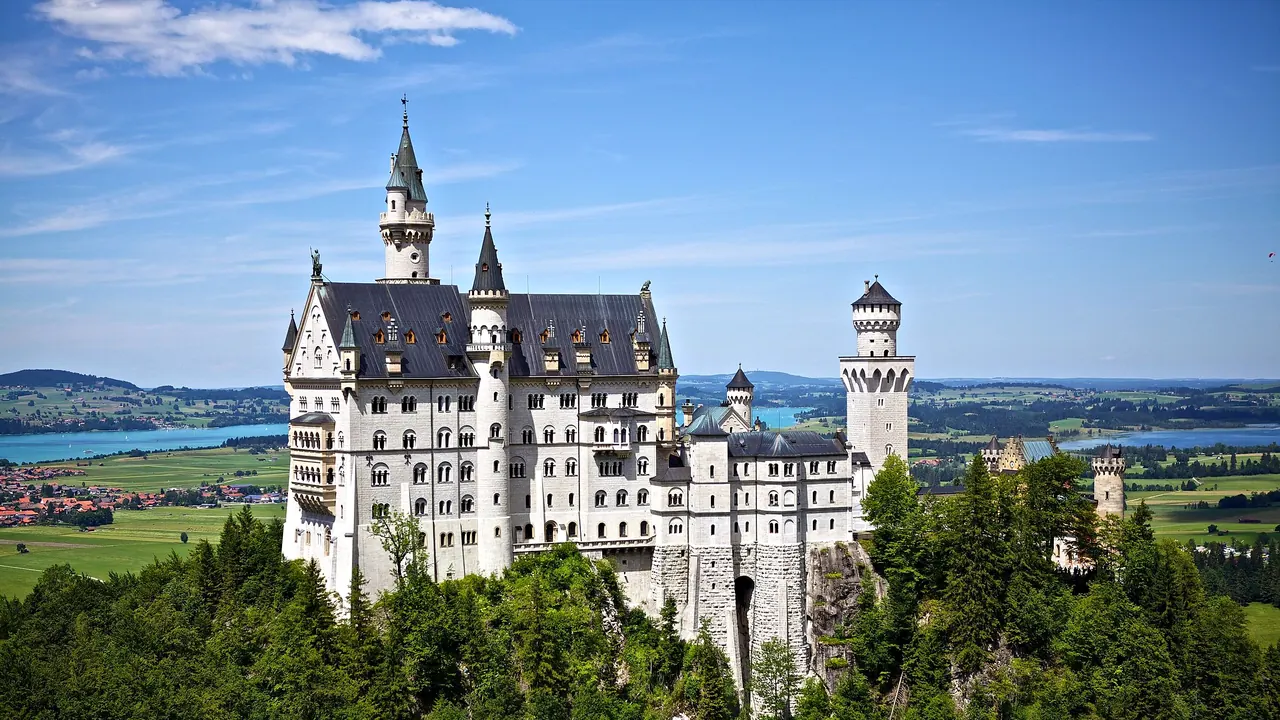
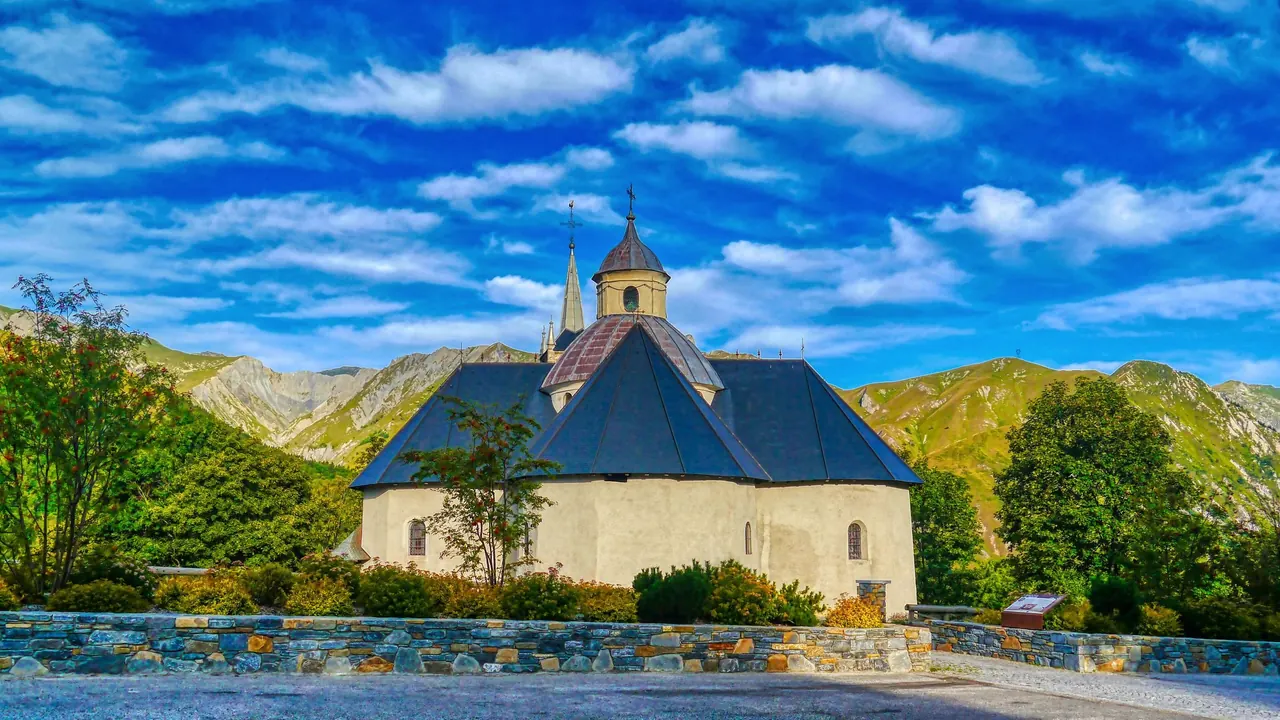
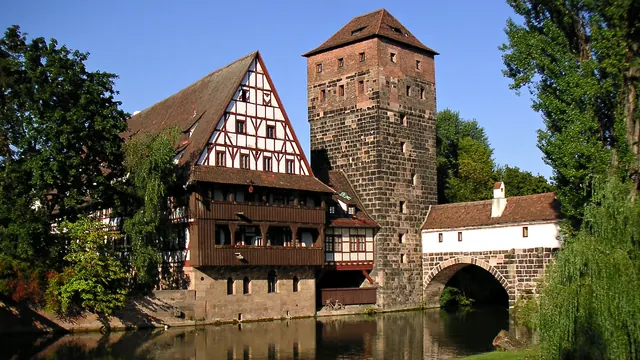
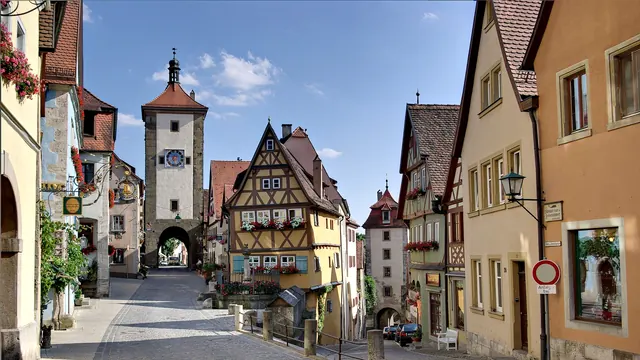
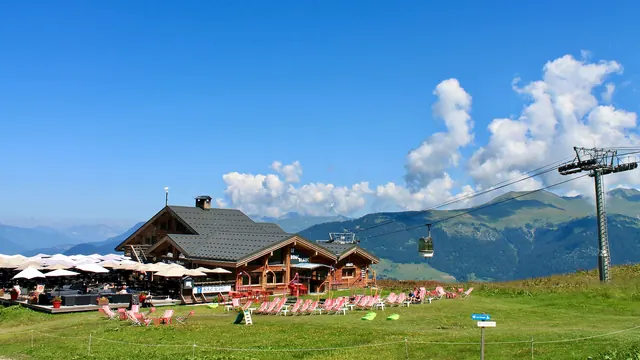
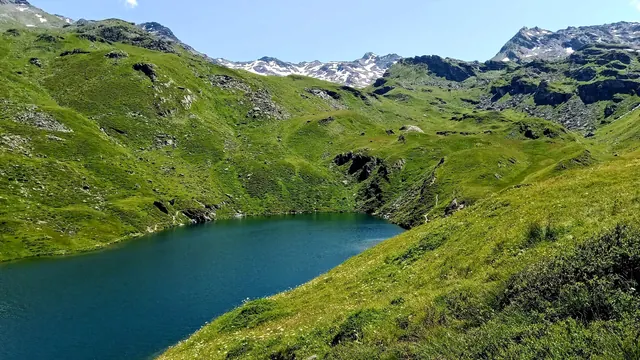
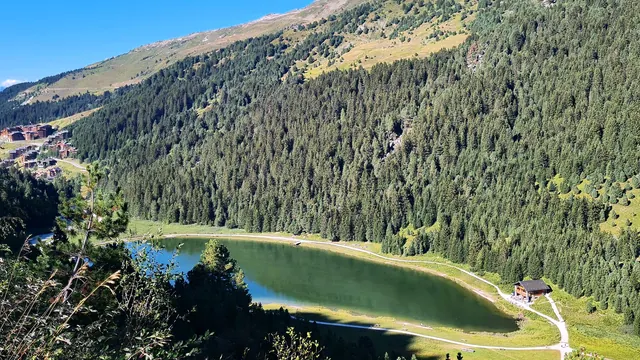
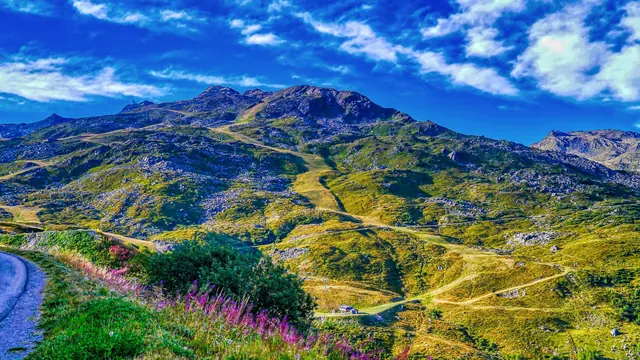
Photos: Bavaria by cameralends, CC0; Les 3 Vallées by Zairon, CC BY-SA 4.0, cropped.
Bavaria or Les 3 Vallées?
Our verdict in twelve categories, each scored against the same fixed benchmark cities, and the climate month by month, so you can choose for your trip.
Choose Bavaria for
- live music and the arts
- culture and sights
- day trips
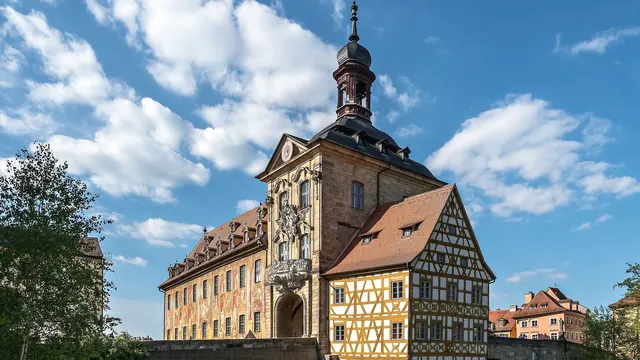
Bavaria suits a trip that mixes towns, art and landscape. You might spend a few days among Munich's galleries and opera, then move on to the medieval streets of Bamberg or Regensburg, Ludwig II's castles and the lakes and trails along the Alpine edge. It works best moved through by train from two or three bases. It is easy with children, good in summer and autumn, and noticeably cheaper once you leave Munich.
Choose Les 3 Vallées for
- nightlife
- nature and the outdoors
- food and drink
Les 3 Vallées is a place for one thing, and it does that one thing superbly: a winter week on one of the largest linked ski areas in the world. Long lunches on the mountain come with it, and so does après-ski, which is rowdy or glossy depending on the resort. It is expensive, light on history and awkward to leave, so it is best for skiers and snowboarders who want to step out onto the snow and stay there.
Scoreboard
Twelve categories on one fixed scale from 0 to 100. The shaded stretch is the gap between the two.
Your match
Pick a travel style or drag the sliders, and both match scores follow your weighting.
Wins on live music and the arts and culture and sights with your weighting.
Wins on nightlife and nature and the outdoors with your weighting.
What matters to you?
Category by category
What the scores mean for a trip.
Beaches & swimming
Neither has a sea, but Bavaria at least has a real summer bathing habit. Jetties and grassy shores line the Starnberger See, Chiemsee and Tegernsee, the shallow Staffelsee warms up nicely, and in Munich people take dips from the gravel banks of the Isar.
In Les 3 Vallées, swimming means a hotel pool or a resort aquatic centre. Small mountain lakes such as the Lac de Tueda are places to sit beside rather than swim in.
Food & drink
These two are about level, but you eat and drink very differently. In Bavaria, drink sets the tone: beer gardens under chestnut trees, Bamberg's smoked beer, the village breweries of Upper Franconia and Silvaner in Würzburg's wine taverns, alongside roast pork, white sausage and the Viktualienmarkt.
Les 3 Vallées runs on cheese, with fondue, raclette and tartiflette made with Beaufort and Reblochon and eaten on terraces partway down the piste. At the top end, Courchevel 1850 has an exceptional cluster of starred hotel restaurants. In both, everyday menus repeat from one inn or resort to the next.
Culture & sights
Bavaria is far ahead for sightseeing and could fill a whole trip on its own. Munich has the Old Masters at the Alte Pinakothek and the Deutsches Museum, Nuremberg has its imperial castle, Würzburg's Residenz has Tiepolo's ceiling fresco and Rothenburg keeps its full ring of walls. Further south stands Neuschwanstein.
The resorts of Les 3 Vallées were built for skiing in the twentieth century, so their interest lies in snow-era architecture and the venues of the 1992 Olympics. Saint-Martin-de-Belleville, with its baroque church and the painted sanctuary of Notre-Dame de la Vie just outside it, makes a pleasant afternoon. After that, museum-goers will soon run out of things to see.
Nightlife
In winter, Les 3 Vallées goes out harder. Val Thorens has dancing on the tables from mid-afternoon and clubs until the small hours, Courchevel 1850 has champagne bars for a wealthy crowd, and Méribel has après-ski at the foot of the pistes and a strong British bar scene. All of it stops when the lifts close for the season.
Bavaria's nights are friendlier and more orderly, centred on Munich's cocktail bars in Glockenbachviertel, its student bars in Schwabing and its loud beer halls, and on the pub streets of the university towns. They run all year, and Oktoberfest is the great exception to the calm.
Nature & outdoors
For sheer mountain scale, Les 3 Vallées comes out ahead. It has around 600km of linked pistes, glacial bowls above Val Thorens, couloirs off the Saulire and off-piste for skiers with a guide. In summer the edge of the Vanoise brings ibex, marmots and high trails.
Bavaria's outdoors is wider in range and good in more seasons, though less dramatic. It has the Zugspitze and Partnach gorge, the Königssee in Berchtesgaden National Park, hut-to-hut hiking in the Allgäu, the wild woodland of the Bavarian Forest, climbing in Franconian Switzerland and long riverside cycle paths.
Day trips
Bavaria is built for outings. From Munich, Augsburg, Regensburg, the Chiemsee and Salzburg are all easy by train, and from Nuremberg or Würzburg you can reach Bamberg, the Main wine villages and the Romantic Road towns.
In Les 3 Vallées, every outing starts with the winding road down to Moûtiers, so most ski weeks never leave the valleys. Annecy, about two hours away, is the outing worth making, with Conflans, Beaufort and Chambéry closer.
Good for families
Bavaria is the easier choice for most families, because it works whether or not the children ski. Beer gardens have playgrounds, and there are the Hellabrunn zoo, the children's section of the Deutsches Museum, Legoland at Günzburg, summer toboggan runs and grassy lake shores.
Les 3 Vallées is excellent for a family ski week, with ski schools from about three years old, snow gardens and slope-side lodging in Les Menuires and Méribel-Mottaret. Children who do not ski have little to do beyond pools and ice rinks, and the altitude at Val Thorens can wear out toddlers.
Getting around
Bavaria is easier to move around, at least along the rail lines. From Munich's U-Bahn and S-Bahn, regional trains reach Nuremberg, Garmisch, Berchtesgaden and the lakes on a single day ticket. Remote valleys and Franconian villages are better reached by car.
Les 3 Vallées is simple once you arrive, since one lift network lets you ski from Courchevel to Val Thorens and back. Arriving is the hard part: the climb from the Moûtiers railhead takes up to an hour on switchback roads that clog on changeover weekends.
Shopping & style
Bavaria has proper city shopping in Munich, from the luxury houses on Maximilianstrasse to the department stores near Marienplatz, as well as crafts across the region: Oberammergau woodcarving, Bavarian Forest glass and Nuremberg gingerbread. In December, the Christmas markets are a reason to come in their own right.
In Les 3 Vallées, apart from Courchevel 1850's short winter street of luxury boutiques, shopping means ski gear and Savoyard cheese and sausage.
Affordability
Neither is cheap, but Bavaria is far kinder to a budget. Munich is expensive, especially during Oktoberfest and the trade fairs. Bamberg, Würzburg, the Bavarian Forest and Alpine guesthouses are moderate, though, and you can bring your own food to beer gardens.
In Les 3 Vallées, the lift pass, rental, ski school and mountain lunches add up fast, and Courchevel 1850 ranks among the costliest resorts anywhere. A self-catered flat in Les Menuires or Brides-les-Bains softens the cost, and summer is cheaper.
Live music & performing arts
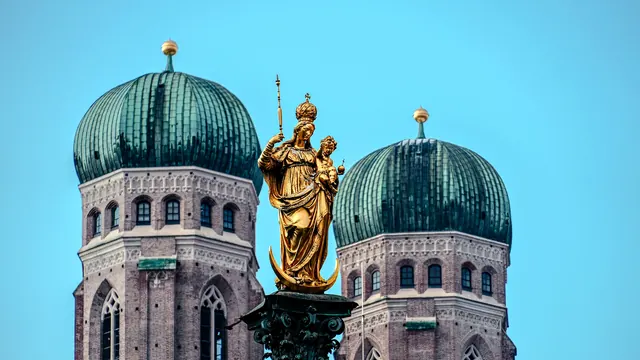
Bavaria is a serious destination for music. In Munich, the Bavarian State Opera performs most nights in season, there are two orchestras of international rank and there is the rococo Cuvilliés Theatre. Bayreuth's Wagner festival and Würzburg's Mozart festival draw devotees each summer.
In Les 3 Vallées, evening entertainment means cover bands and DJs in the après-ski bars and the odd resort festival, with no theatre or concert hall to plan around.
Wellness & relaxation
Bavaria has a long tradition of taking the cure. There are the colonnades of Bad Kissingen, the brine baths of Bad Reichenhall, the thermal waters of Bad Füssing and Kneipp's own Bad Wörishofen, as well as Erding's vast sauna complex and Munich's Art Nouveau Volksbad.
In Les 3 Vallées, wellness is mostly about recovering after skiing, in hotel spas and the aquatic centres of Courchevel and Méribel. Brides-les-Bains is the one old spa town. For real calm, Saint-Martin-de-Belleville or a summer visit works better than the lively winter resorts.
When should you go?
Pick your month. The climate figures are measured averages, not a forecast.
Bavaria in July
Les 3 Vallées in July
Daytime high, °C
Rainfall in the month, mm
Where the figures come from
Les 3 Vallées has no weather station within reach, so its figures come from a gridded climate model rather than a measured record, and read a broad area rather than one spot.
Temperature and rainfall are climate normals, averaged over the years shown. Bavaria: 1991-2020 normals, München (1.9 km from centre). Les 3 Vallées: 1991-2020 normals, TerraClimate 4 km grid at the town, no weather station within 90 km.
Bavaria is at its best from late May to September, when daytime highs reach about 25°C in July and August and the long, sunny days suit lake swimming and hiking. Summer is also the wettest part of the year, with around 120mm a month, much of it in showers and storms, so plan for some lost afternoons. September and early October are milder and drier, which is good for walking the old towns. Winter is cold and grey, and its main appeal is the Christmas markets and the Alpine snow.
In the resorts of Les 3 Vallées the calendar runs the other way. Daytime highs hover around 1°C from December to February, and the heavy precipitation of late autumn, up to 153mm in November, builds the snow cover for a season that lasts into April. Summer is short and cool, with highs near 20°C in August, which is pleasant for hiking but nothing like a beach summer. Spring and late autumn fall between the two seasons, when the resorts are largely closed.
Which traveller are you?
On a culture and arts trip, Bavaria is the clear choice. Munich's Pinakotheks, Residenz and State Opera, Bayreuth's Wagner festival and the UNESCO-listed old towns of Bamberg and Regensburg give weeks of material, while the ski resorts offer a baroque chapel or two.
For a relaxing and wellness trip, choose Bavaria. Its old spa towns, from Bad Kissingen to Bad Reichenhall and Bad Füssing, the thermal complex at Erding and quiet lakeside villages make rest the point of a trip. In the Alpine resorts, spas mostly ease legs between long ski days.
For a ski or snowboard week, Les 3 Vallées is in another league. Around 600km of linked pistes reach above 3,000m, with snow you can rely on from December into April and slope-side lodging in every resort. Bavaria's slopes are solid, but they belong on a broader winter trip.
Before you go
| Measure | Bavaria | Les 3 Vallées |
|---|---|---|
| Official language | German | French |
| Currency | Euro (EUR) | Euro (EUR) |
| Sockets | CF230 V, 50 Hz | CE230 V, 50 Hz |
| Driving side | Right | Right |
| Time zone | UTC+1, UTC+2 in summer | UTC+1, UTC+2 in summer |
| Emergency number | 112 | 112 |
| Main airport | Munich Airport (MUC)211 non-stop destinations | Geneva International Airport (GVA)150 non-stop destinations |
| Public holidays this year | 12 days | 11 days |
By the numbers
| Measure | Bavaria | Les 3 Vallées |
|---|---|---|
| Population | 13,038,724 | - |
Where else could you go?
Every comparison below shares a destination with this one, so you can follow Bavaria or Les 3 Vallées somewhere new.
- Austrian Alpsvs Bavaria
- Piedmontvs Les 3 Vallées
- Lake Maggiorevs Les 3 Vallées
- Swiss Alpsvs Les 3 Vallées
- Dolomitesvs Bavaria
- Provencevs Les 3 Vallées