Photos: Brittany by Pline, CC BY-SA 3.0, cropped; Les 3 Vallées by Zairon, CC BY-SA 4.0, cropped.
Brittany or Les 3 Vallées?
Our verdict in twelve categories, each scored against the same fixed benchmark cities, and the climate month by month, so you can choose for your trip.
Choose Brittany for
- beaches
- culture and sights
- day trips
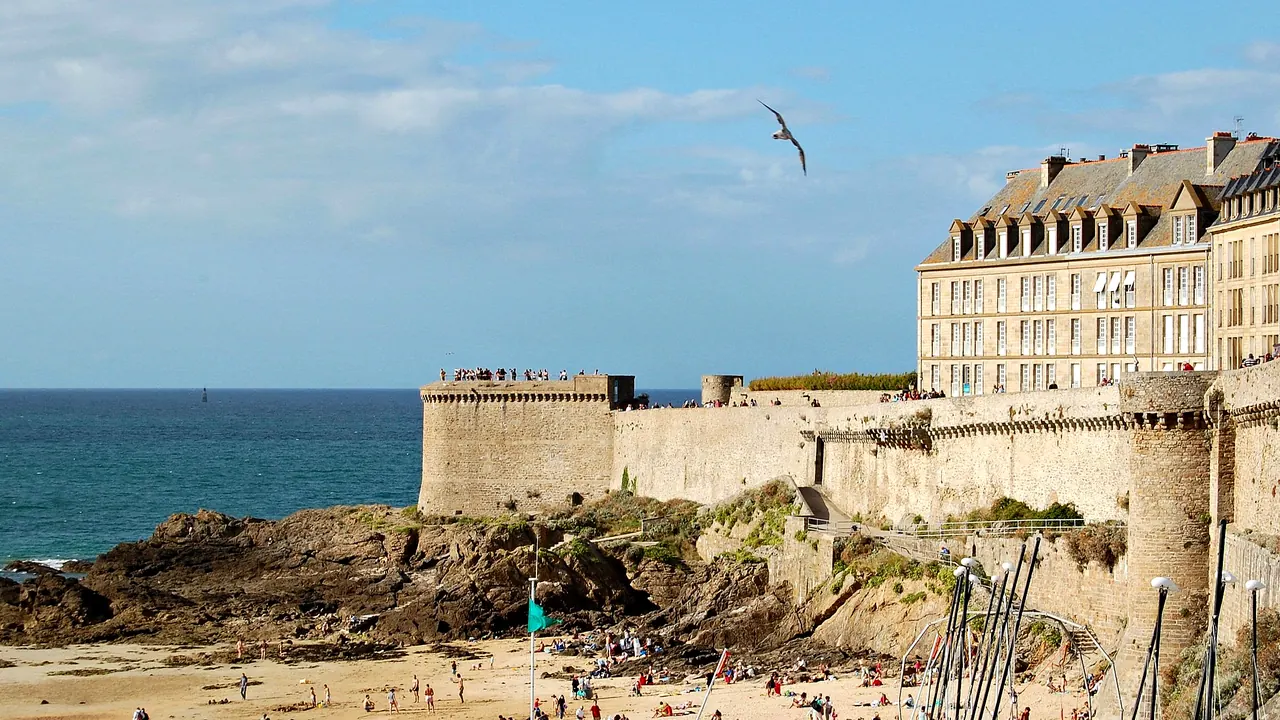
Brittany suits a summer by the sea or a slow tour of old towns. It has sandy bays and granite coves, the standing stones of Carnac, walled ports such as Saint-Malo and Concarneau, and a season of Celtic music festivals. It is also the easier choice on a budget and the better one if you want to move between towns and islands, and it is as good in spring and early autumn as in August.
Choose Les 3 Vallées for
- nightlife
- nature and the outdoors
- getting around
Les 3 Vallées is a winter mountain trip first and last. Choose it for a week on one of the largest linked ski areas anywhere, with long fondue lunches on the pistes and après-ski that runs late in Val Thorens or Courchevel. You give up the sea, the history and the value for money. In return you get snow from December into April and a stay that never needs a car.
Scoreboard
Twelve categories on one fixed scale from 0 to 100. The shaded stretch is the gap between the two.
Your match
Pick a travel style or drag the sliders, and both match scores follow your weighting.
Wins on beaches and culture and sights with your weighting.
Wins on nightlife and nature and the outdoors with your weighting.
What matters to you?
Category by category
What the scores mean for a trip.
Beaches & swimming
Brittany is the only one of the two with beaches, and it has a long list of them: the sandy south-coast bays around Carnac and Quiberon, the pink granite coves at Ploumanac'h and the wide tidal flats off Saint-Malo. The Atlantic stays cool even in August and the tides are large, so expect bracing swims rather than warm ones.
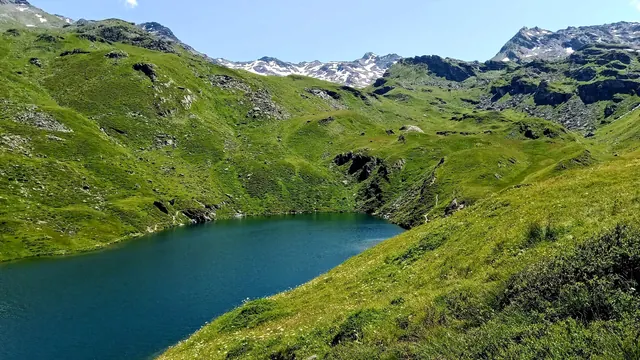
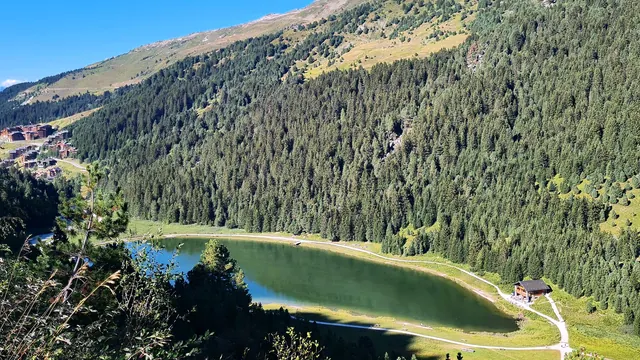
Les 3 Vallées is hours from the coast. In summer you can sit beside a mountain lake such as Lac de Tueda. Otherwise swimming means a hotel pool or a resort aquatic centre.
Food & drink
Both are good places to eat, but the food comes from very different sources. Brittany cooks with seafood and dairy: oysters from Cancale, scallops, buckwheat galettes with bowls of cider, and salted butter in everything. It eats best in Rennes and the harbour towns.
In Les 3 Vallées the food is melted cheese, such as fondue, raclette and tartiflette, eaten on terraces halfway down the piste. For a grander night there is a dense cluster of starred hotel restaurants in Courchevel 1850. Both have little range beyond their own regional cooking, but the mountain packs far more top-end dining into one place.
Culture & sights
Here Brittany is much richer. The rows of menhirs at Carnac, the ramparts of Saint-Malo and Dinan, the parish closes of Finistère and Quimper's old town give you weeks of sightseeing, spread across many small towns rather than one city.
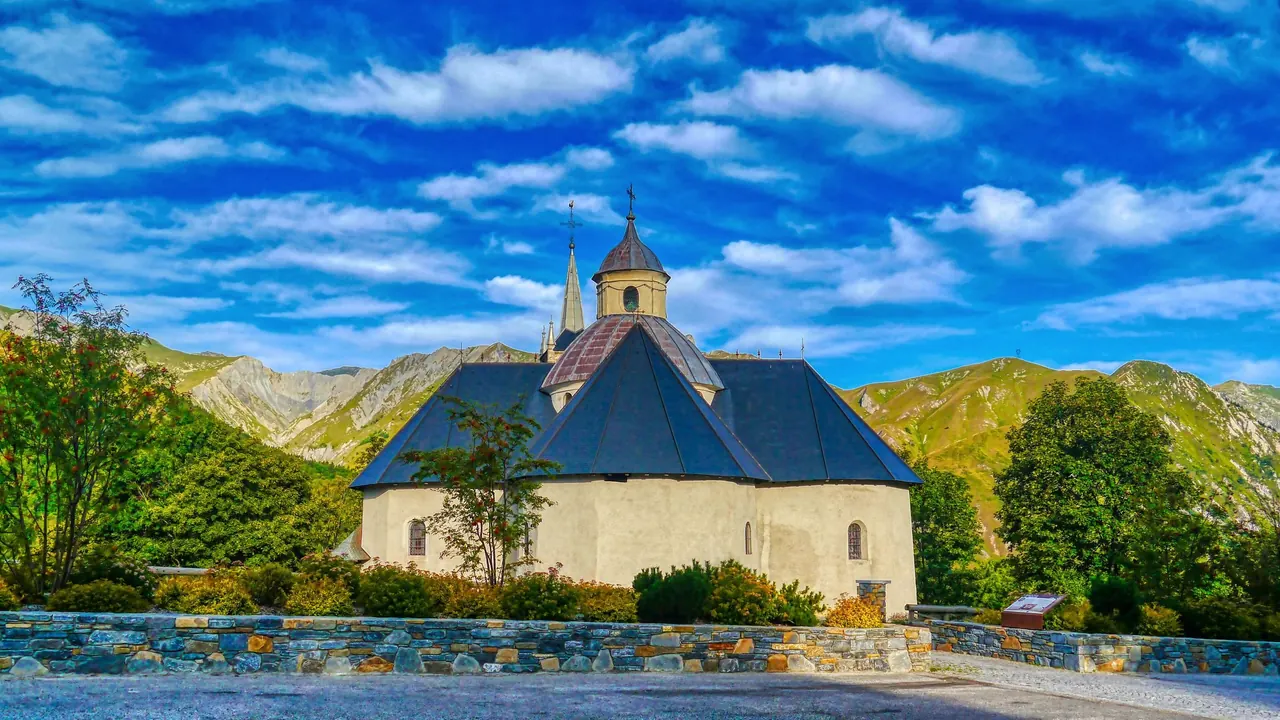
The ski resorts of Les 3 Vallées were built in the twentieth century. Apart from the 1992 Olympic venues, their history is in the Belleville valley, at the baroque church of Saint-Martin and the painted sanctuary of Notre-Dame de la Vie. An afternoon covers it.
Nightlife
Brittany's nights are gentle. There are student bars around Rue Saint-Michel in Rennes and harbour bars in Brest, and the evening people remember is often a fest-noz in a village square.
In winter Les 3 Vallées goes out much harder. Val Thorens has table-dancing on slope-side terraces from mid-afternoon and clubs that run into the small hours. Courchevel 1850 has champagne bars, and Méribel falls in between with a busy British après-ski scene. Once the lifts close for the summer, though, the resorts go quiet early.
Nature & outdoors
Brittany's outdoors is its coast. A waymarked coastal path follows almost the whole shoreline, past the pink granite of the Côte de Granit Rose and the cliffs of Cap Fréhel to the wild headland of Pointe du Raz. There are puffins and gannets on the Sept-Îles, island-hopping kayak routes in the Gulf of Morbihan and steady surf on the Finistère beaches. It is fine walking and paddling country, but low and gentle.
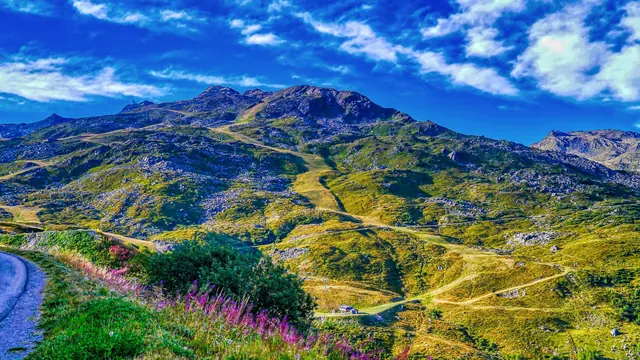
Les 3 Vallées is on another scale. Its linked pistes run across three valleys, with lifts reaching well above the treeline over Val Thorens, steep couloirs off the Saulire and guided off-piste for strong skiers. In summer, the edge of the Vanoise national park brings ibex, marmots, high trails and via ferratas.
Day trips
Brittany is made for outings. Mont-Saint-Michel is about an hour from Saint-Malo, and boats cross to Belle-Île, car-free Bréhat and the islands of the Gulf of Morbihan. Quimper, Locronan and Concarneau make an easy loop in the west.
From Les 3 Vallées every outing starts with the winding road down to Moûtiers, and most skiers never make the trip. Annecy, about two hours away, is the one outing that really repays the drive. Chambéry and the cheese village of Beaufort are closer.
Good for families
Both work well for families, but in different seasons and in different ways. Brittany is a bucket-and-spade trip, with rock pools at low tide, sailing schools, crêpes and easy gîtes and campsites, and Océanopolis in Brest for wet days. The tides and cool water mean young swimmers need watching.
Les 3 Vallées is a ski-school trip, with lessons from about age three, fenced snow gardens and lodging on the snow at Les Menuires and Méribel-Mottaret. Children who do not ski have little to do, and the cold early starts and the altitude tire toddlers.
Getting around
Brittany is best done by car. Fast trains reach Rennes, Saint-Malo, Quimper and Brest, but you need a car for the coast, the villages and the megalith sites, and coastal roads clog in midsummer.
Les 3 Vallées is easier once you have arrived. One lift network links every valley, free shuttles run within the resorts and you never need a car. The hard part is the climb up switchback roads from the railhead at Moûtiers.
Shopping & style
Neither is a place to go for shopping, and what each sells reflects its setting. In Brittany it is Quimper faience, striped sailor tops, salted caramels and the Saturday market at Place des Lices in Rennes. Les 3 Vallées has technical ski gear, Beaufort cheese and Savoyard sausages, plus a short street of luxury boutiques in Courchevel 1850 that opens for the winter season.
Affordability
Brittany costs far less. Campsites, gîtes, crêperies and toll-free roads keep a stay moderately priced, and June and September bring the bills down further.
A winter week in Les 3 Vallées means lift passes, rental, ski school and lunches on the mountain, on top of lodging at some of the costliest resorts anywhere, Courchevel 1850 above all. Self-catering in Les Menuires or Brides-les-Bains softens the cost, and summer is noticeably cheaper.
Live music & performing arts
Brittany has a living music tradition. There are bagad pipe bands and fest-noz dance nights, a summer of festivals including the Festival Interceltique in Lorient and Les Vieilles Charrues at Carhaix, and an opera house and national theatre in Rennes all year.
Les 3 Vallées has no theatre or concert hall. Evenings mean cover bands and DJs in the après-ski bars.
Wellness & relaxation
Brittany is more restful and has a real spa tradition. Thalassotherapy began in Roscoff, and seawater spas line the seafronts at Quiberon, Carnac and Dinard. They are calmest in spring and autumn.
In Les 3 Vallées wellness mostly means recovering after a day's skiing, in hotel spas and the aquatic centres of Courchevel and Méribel, with the old spa town of Brides-les-Bains at the foot of the valley. Ski days and après-ski keep the winter pace brisk, so for quiet choose Saint-Martin-de-Belleville or come in summer.
When should you go?
Pick your month. The climate figures are measured averages, not a forecast.
Brittany in July
Les 3 Vallées in July
Daytime high, °C
Rainfall in the month, mm
Where the figures come from
Brittany has no rain gauge within 25 km of the centre, so its rainfall comes from a gridded climate dataset read at the destination rather than from a gauge further away.
Brittany's sunshine is measured 89 km from the centre, at Rennes.
Les 3 Vallées has no weather station within reach, so its figures come from a gridded climate model rather than a measured record, and read a broad area rather than one spot.
Temperature and rainfall are climate normals, averaged over the years shown. Brittany: 2004-2020 (sunshine 1991-2020, rainfall 1991-2020) normals, Vannes-Meucon (8.1 km from centre). Les 3 Vallées: 1991-2020 normals, TerraClimate 4 km grid at the town, no weather station within 90 km.
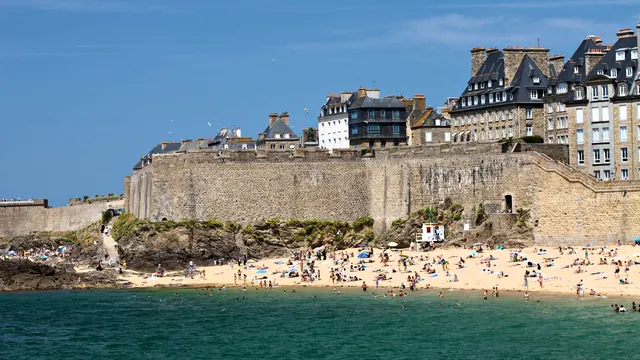
On the Brittany coast the beach season is short. July is the warmest and sunniest month, at about 24°C, with June and August close behind, but the sea only warms to 18°C, so swimming is bracing. June and July are also the driest months. May and September are mild and only a little wetter, so they still suit the coastal path and the old towns. From October the rain jumps to more than 100mm a month through to December, and winter is grey and cool, though rarely cold.
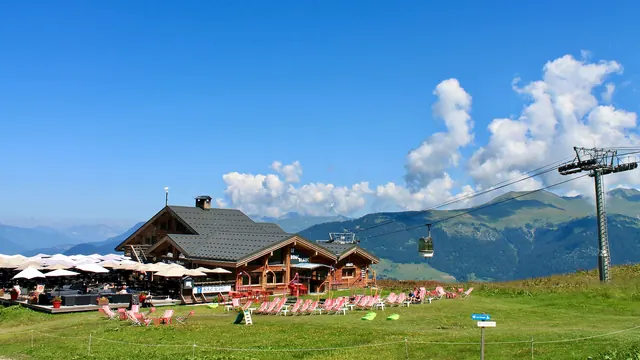
Les 3 Vallées works the other way round. In the resorts the daytime high is around 1°C in January and February, and the steady precipitation of the colder months is what builds the snow, so December to April is the time to come. Summer is short and fresh, with highs near 20°C in July and August. That is good for hiking but never beach weather. May, October and November are wet and suit neither skiing nor walking.
Which traveller are you?
For a culture and arts trip, Brittany is the clear choice. Carnac's standing stones, walled Saint-Malo, half-timbered Dinan and Quimper's old town fill the days, and summer brings Celtic festivals and bagad bands. The ski resorts offer an afternoon of churches at most.
On a food and nightlife trip in winter, Les 3 Vallées is livelier, with fondue lunches on the slopes, starred hotel tables in Courchevel and après-ski at Val Thorens running into the small hours. Most Breton evenings end by midnight.
For skiers and snowboarders, only Les 3 Vallées makes sense. It is one of the largest linked ski areas in the world, with reliable snow from December into April, big ski schools and lodging on the pistes. Brittany has surf and coastal paths, but no mountains.
Before you go
| Measure | Brittany | Les 3 Vallées |
|---|---|---|
| Official language | French | French |
| Currency | Euro (EUR) | Euro (EUR) |
| Sockets | CE230 V, 50 Hz | CE230 V, 50 Hz |
| Driving side | Right | Right |
| Time zone | UTC+1, UTC+2 in summer | UTC+1, UTC+2 in summer |
| Emergency number | 112 | 112 |
| Main airport | Nantes Atlantique Airport (NTE)97 non-stop destinations | Geneva International Airport (GVA)150 non-stop destinations |
| Public holidays this year | 11 days | 11 days |
By the numbers
| Measure | Brittany | Les 3 Vallées |
|---|---|---|
| Population | 4,687,381 | - |
| Swim season, months above 21 °C | None | - |
Where else could you go?
Every comparison below shares a destination with this one, so you can follow Brittany or Les 3 Vallées somewhere new.
- Piedmontvs Les 3 Vallées
- Lake Maggiorevs Les 3 Vallées
- Swiss Alpsvs Les 3 Vallées
- Provencevs Les 3 Vallées
- French Rivieravs Les 3 Vallées
- Lake Comovs Les 3 Vallées