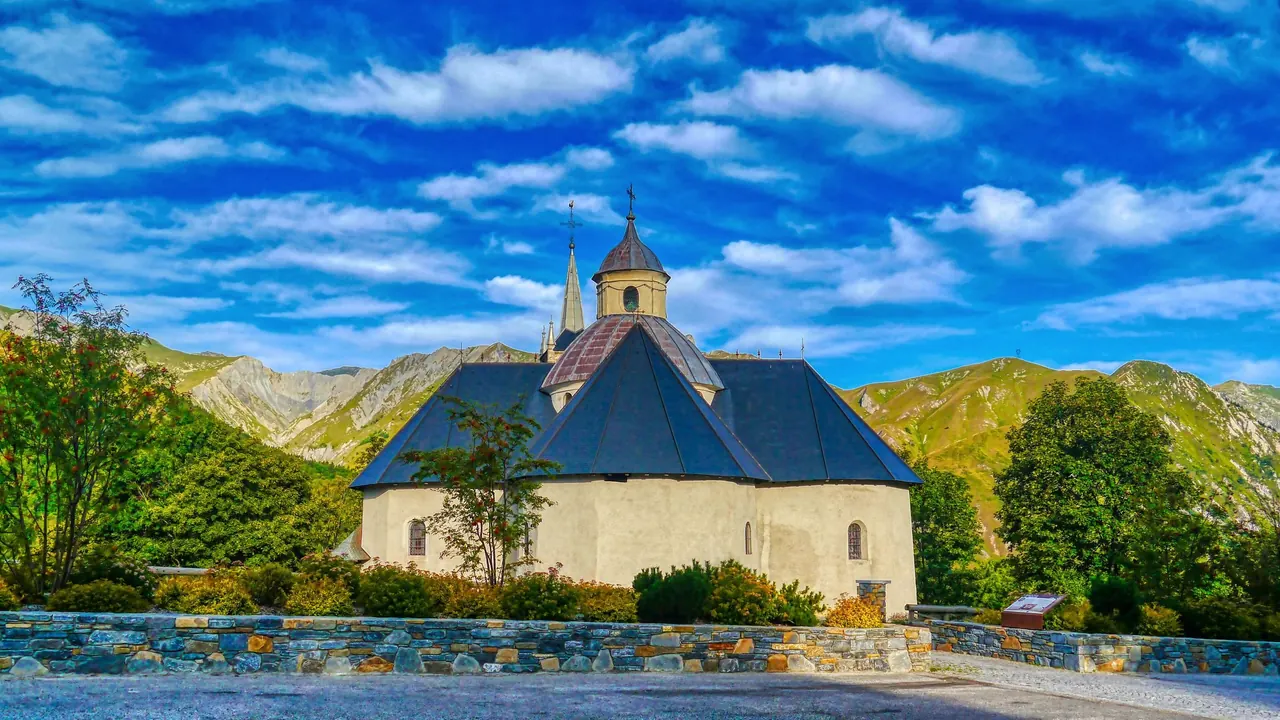
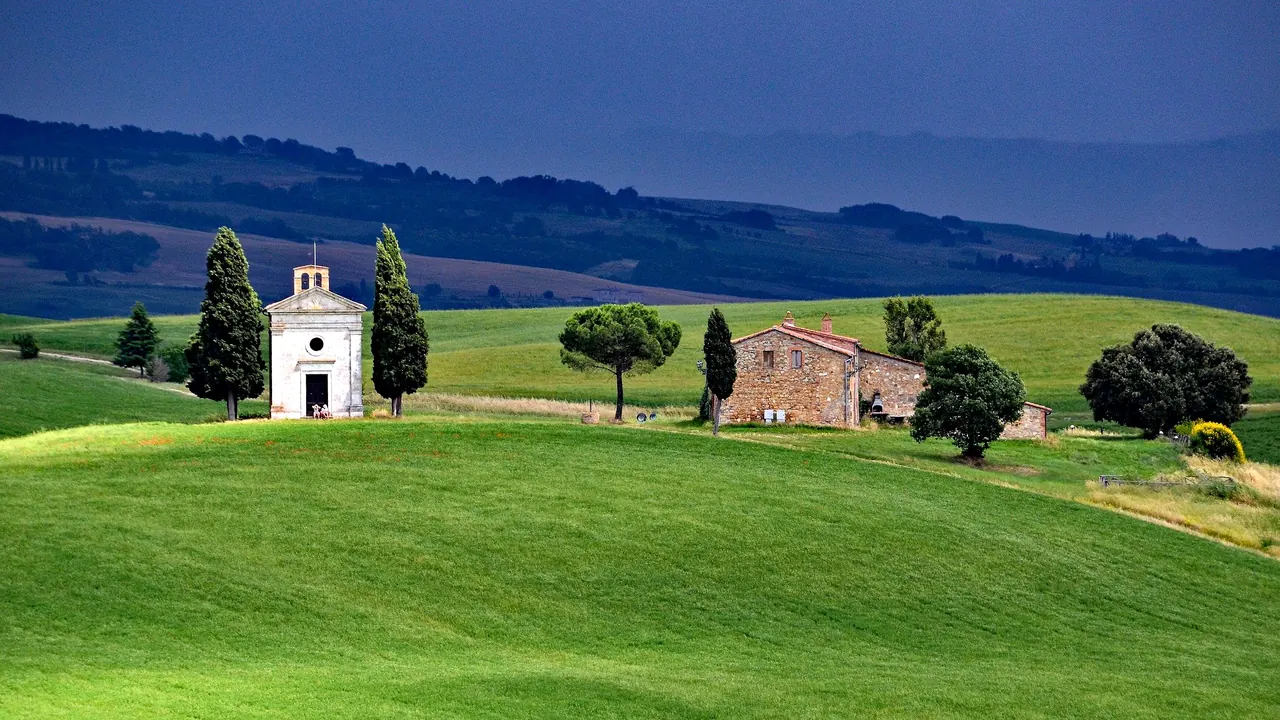
Photos: Les 3 Vallées by Zairon, CC BY-SA 4.0, cropped; Tuscany by Hervé Simon, CC BY-SA 2.0, cropped.
Les 3 Vallées or Tuscany?
Our verdict in twelve categories, each scored against the same fixed benchmark cities, and the climate month by month, so you can choose for your trip.
Choose Les 3 Vallées for
- nightlife
- nature and the outdoors
- families
Les 3 Vallées is for a winter week built around skiing. Its linked lift network across Courchevel, Méribel and the Belleville valley holds more terrain than most skiers can cover in one stay. The evenings match the days, from table-dancing après-ski in Val Thorens to the champagne bars of Courchevel 1850. Come for the mountain and the long lunches on it. There is little else to fill a day, and the bill is steep.
Choose Tuscany for
- culture and sights
- beaches
- day trips
Tuscany suits nearly every other kind of trip, and it works best when you move between places. Florence, Siena and the hill towns hold the art and buildings of the Renaissance. The countryside adds wine estates, farmhouse stays and warm springs, and in summer Elba and the Maremma give you a proper beach. What it cannot offer is the high, snow-sure skiing that defines the Alpine valleys.
Scoreboard
Twelve categories on one fixed scale from 0 to 100. The shaded stretch is the gap between the two.
Your match
Pick a travel style or drag the sliders, and both match scores follow your weighting.
Wins on nightlife and nature and the outdoors with your weighting.
Wins on culture and sights and beaches with your weighting.
What matters to you?
Category by category
What the scores mean for a trip.
Beaches & swimming
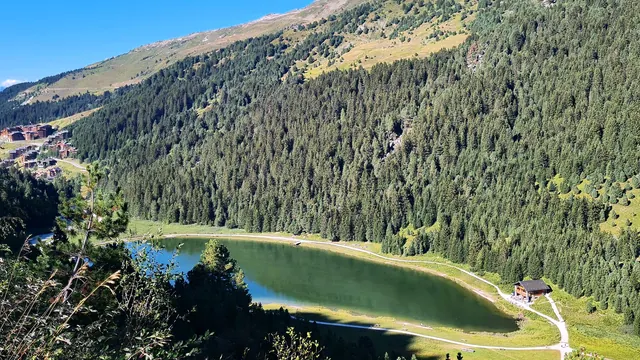
For beaches there is no contest. Les 3 Vallées is high mountain country hours from the sea. Swimming there means a hotel pool or an aquatic centre, or in summer sitting beside a small lake such as the Lac de Tueda.
Tuscany has a real summer coast: the clear water and sandy bays of Elba, the pine-backed strands of the Maremma and Feniglia, and the long, ordered rows of beach clubs along Versilia. The coast is a long drive from Florence or the hill towns, so choose a coastal base if swimming matters.
Food & drink
Both are good places to eat, and the difference is in range. The Alpine valleys serve hearty Savoyard cheese cooking such as fondue, raclette and tartiflette in slope-side chalets. At the top end, Courchevel 1850 has a cluster of starred hotel kitchens. Away from those, menus repeat from one resort to the next.
Tuscany gives you more to explore. There is Florentine steak, ribollita, lampredotto from street carts and the market halls of San Lorenzo and Sant'Ambrogio. Whole wine routes run through Chianti, Montalcino and Montepulciano, with cellars to visit along the way. Neither is the place for food from outside its own tradition.
Culture & sights
Les 3 Vallées was largely built for skiing in the twentieth century. Its interest lies in snow-era architecture and the venues of the 1992 Olympics. The Belleville valley keeps an older layer, with the stone houses of Saint-Martin and the painted sanctuary of Notre-Dame de la Vie, but that fills an afternoon rather than a trip.
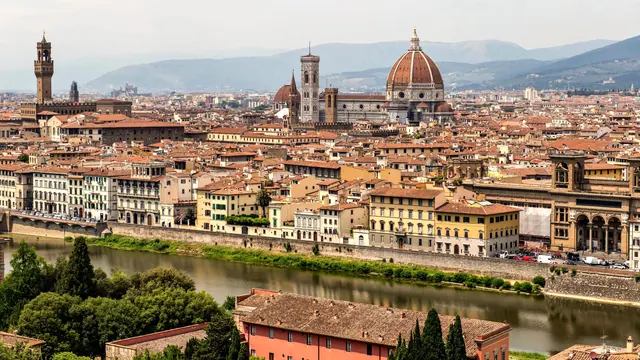
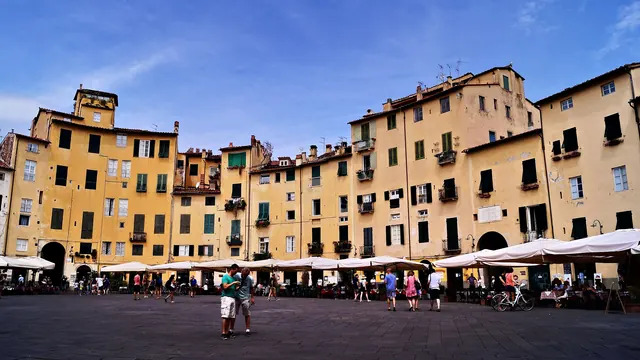
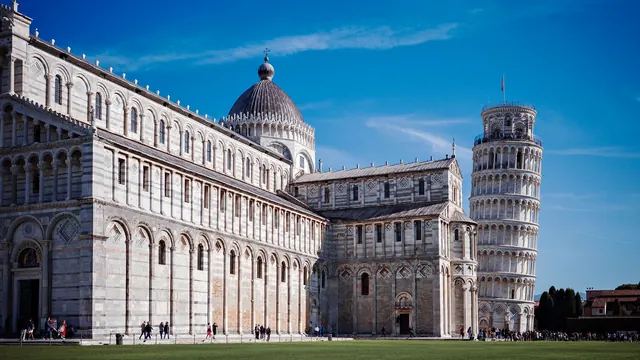
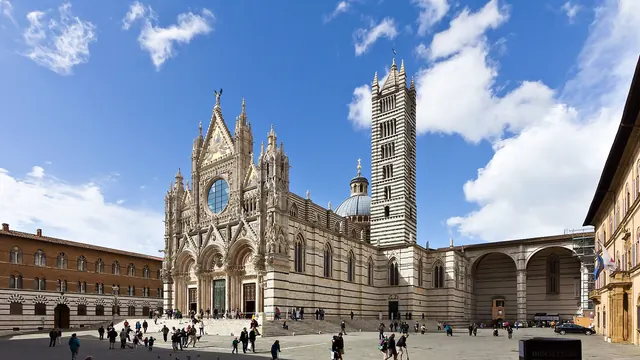
Tuscany is where the Renaissance began. Florence has Brunelleschi's dome, the Uffizi and Michelangelo's David, Siena has its Campo and striped cathedral, and Pisa has its marble square. San Gimignano, Lucca, Pienza and Volterra are further out. A culture lover could spend weeks here without running short.
Nightlife
In winter the Alpine valleys go out harder. In Val Thorens a young crowd dances on terrace tables from mid-afternoon and moves on to clubs that run into the small hours. Courchevel 1850 goes for champagne and expensive clubs, and Méribel's après-ski has a British bar flavour. All of it stops when the lifts close in spring.
Tuscan evenings are slower: a long dinner, then a drink in the piazza or on the steps of Santo Spirito in Florence. The exception is summer in Versilia, where beach clubs and dance halls run until dawn, in exactly the months the ski resorts are asleep.
Nature & outdoors
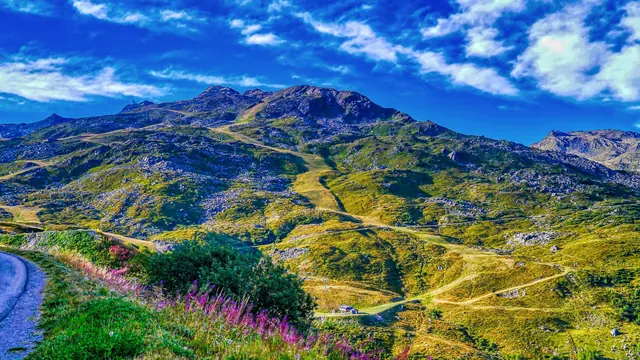
Les 3 Vallées is built around one of the world's largest linked ski areas. Runs climb above 3,000m at Val Thorens, couloirs drop off the Saulire and there are high glacial bowls. In summer the slopes turn to Vanoise meadows with ibex and via ferratas. For mountain sport it is clearly the stronger of the two.
The Tuscan outdoors is gentler and more varied. You can walk or cycle between hill towns through the Val d'Orcia and Chianti, hike the ridges of the Apuan Alps, follow the Maremma's cliff paths or dive off Elba. This is country to travel through slowly rather than to test yourself on.
Day trips
Leaving the Alpine valleys starts with the winding drive down to Moûtiers, so most skiers never go. Those who make the effort can reach Conflans, Beaufort and Chambéry, and Annecy is about two hours away.
Tuscany is the opposite. Siena, Lucca, Pisa, San Gimignano and the wine loop through Montalcino and Pienza are all easy from a base in Florence or Chianti. Bologna, Umbria and the Cinque Terre are also in reach just over the border.
Good for families
Both work for families, but for different trips. Les 3 Vallées is made for a family ski week, with ski schools from about three years old, snow gardens, and lodging right on the snow at Les Menuires, Méribel-Mottaret and the lower Courchevel villages. Children who do not ski have less to do, and the altitude at Val Thorens tires toddlers.
Tuscany combines farmhouse stays, with their pools and animals, with shallow, lifeguarded beaches in Versilia and the Maremma. On top of that come the Pinocchio park at Collodi and cycling on Lucca's walls. The galleries test young patience, and the heat of July and August is hard on small children.
Getting around
Getting around is about as easy in both, but in opposite ways. In Les 3 Vallées one lift network links every valley, and free shuttles cover the villages, so a car is a nuisance. The slow part is the climb by bus or taxi from the railhead at Moûtiers.
In Tuscany, Florence is walkable and trains run well to Pisa, Lucca and Arezzo. Chianti, the Val d'Orcia and the Maremma, though, need a car, with parking outside the walls of the old towns and ferries to plan for Elba.
Shopping & style
Courchevel 1850 has a short street of luxury boutiques that open for the winter season. Beyond that, the Alpine resorts sell ski gear, Beaufort cheese, sausages and local spirits.
Tuscany gives you far more reason to shop. Leather workshops cluster around Santa Croce, goldsmiths line the Ponte Vecchio, Oltrarno has marbled paper and the luxury houses sit on Via de' Tornabuoni. Each town has its own craft as well, such as alabaster in Volterra and marble in Pietrasanta.
Affordability
Neither is a budget trip, but a winter week in the Alps costs more. The lift pass, equipment rental, ski school and mountain lunches add up everywhere, and Courchevel 1850 is among the costliest resorts in the world. To save money, take a self-catered flat in Les Menuires or Brides-les-Bains, or come in summer.
Tuscany is expensive in central Florence, in the Chianti villas and at Forte dei Marmi. Trattoria meals and wine bought at the cellar door stay reasonable, though, and towns such as Lucca, Arezzo and those of the Maremma cost noticeably less.
Live music & performing arts
An evening of serious music or theatre is simply not part of an Alpine ski week. The resorts offer cover bands, DJs and the odd festival event.
Tuscany has a real calendar, mostly classical. Florence has the Maggio Musicale Fiorentino and the Teatro della Pergola, and Lucca holds Puccini recitals. In summer his operas are staged by the lake at Torre del Lago, Siena's Accademia Chigiana gives concerts in palaces and churches, and Lucca's squares host big pop concerts.
Wellness & relaxation
In Les 3 Vallées, wellness mostly means recovering from the slopes in hotel spas or in the public aquatic centres of Courchevel and Méribel. Brides-les-Bains is the one old spa town. The winter pace is brisk, so for calm, stay in a chalet in Saint-Martin-de-Belleville or come in summer.
Tuscany is built on hot springs. They range from the nineteenth-century pump rooms of Montecatini Terme to the open terraced pools at Saturnia and the white limestone pools of Bagni San Filippo. A farmhouse in the Val d'Orcia adds quiet days between soaks.
When should you go?
Pick your month. The climate figures are measured averages, not a forecast.
Les 3 Vallées in July
Tuscany in July
Daytime high, °C
Rainfall in the month, mm
Where the figures come from
Les 3 Vallées has no weather station within reach, so its figures come from a gridded climate model rather than a measured record, and read a broad area rather than one spot.
Tuscany has no rain gauge within 25 km of the centre, so its rainfall comes from a gridded climate dataset read at the destination rather than from a gauge further away.
Tuscany's sunshine is measured 71 km from the centre, at Pisa / S. Giusto.
Temperature and rainfall are climate normals, averaged over the years shown. Les 3 Vallées: 1991-2020 normals, TerraClimate 4 km grid at the town, no weather station within 90 km. Tuscany: 1995-2020 (sunshine 1991-2020, rainfall 1991-2020) normals, Firenze / Peretola (5.6 km from centre).
The two are at their best at opposite ends of the year. Les 3 Vallées is a winter destination. Daytime highs stay around 1°C in January and February, and snow carries the ski season from December into April. Precipitation is heavy through the colder months and peaks at about 150mm in November, which up here builds the snowpack. Summer is mild, with highs near 20°C in August. That is cool enough for long hikes but never beach weather.
Tuscany is most comfortable in May and June and again in September. Those months are warm and dry enough for both the hill towns and the coast. July and August reach 33°C and have the most sunshine, which is good for the beach but hard work in the streets of Florence. The rain sets in during October and November. Winter is mild but grey, fine for museums, though it has nothing to offer anyone who wants snow.
Which traveller are you?
On an outdoors trip, Les 3 Vallées is the stronger pick, above all in winter. One lift pass opens one of the world's largest linked ski areas, plus guided off-piste and ski touring. Summer brings Vanoise wildlife, via ferratas and lift-served mountain biking.
For a culture and arts trip, Tuscany is far ahead. The Uffizi, the Accademia and the Duomo in Florence, Siena's Campo and the frescoes in Arezzo fill the days, with opera in the evenings. The Alpine resorts offer little beyond Saint-Martin's baroque church.
On a relaxing and wellness trip, Tuscany wins with warm springs that run from grand spa towns to free open-air pools, and with slow farmhouse stays in the Val d'Orcia. The ski valleys have good hotel spas, but winter there means early lifts and loud après-ski.
Before you go
| Measure | Les 3 Vallées | Tuscany |
|---|---|---|
| Official language | French | Italian |
| Currency | Euro (EUR) | Euro (EUR) |
| Sockets | CE230 V, 50 Hz | CFL230 V, 50 Hz |
| Driving side | Right | Right |
| Time zone | UTC+1, UTC+2 in summer | UTC+1, UTC+2 in summer |
| Emergency number | 112 | 112 |
| Main airport | Geneva International Airport (GVA)150 non-stop destinations | Florence Airport, Peretola (FLR)46 non-stop destinations |
| Public holidays this year | 11 days | 13 days |
By the numbers
| Measure | Les 3 Vallées | Tuscany |
|---|---|---|
| Population | - | 3,729,641 |
Where else could you go?
Every comparison below shares a destination with this one, so you can follow Les 3 Vallées or Tuscany somewhere new.
- Umbriavs Tuscany
- Elbavs Tuscany
- Cinque Terrevs Tuscany
- Piedmontvs Les 3 Vallées
- Lake Maggiorevs Les 3 Vallées
- Swiss Alpsvs Les 3 Vallées