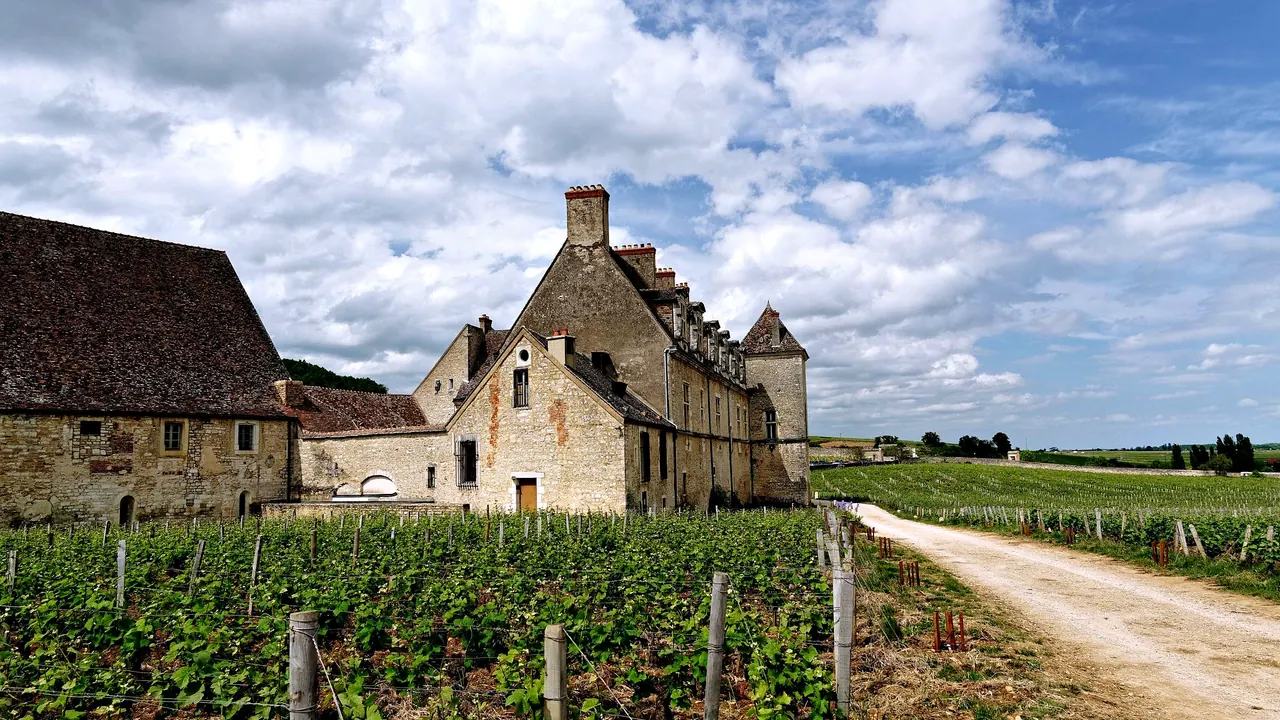
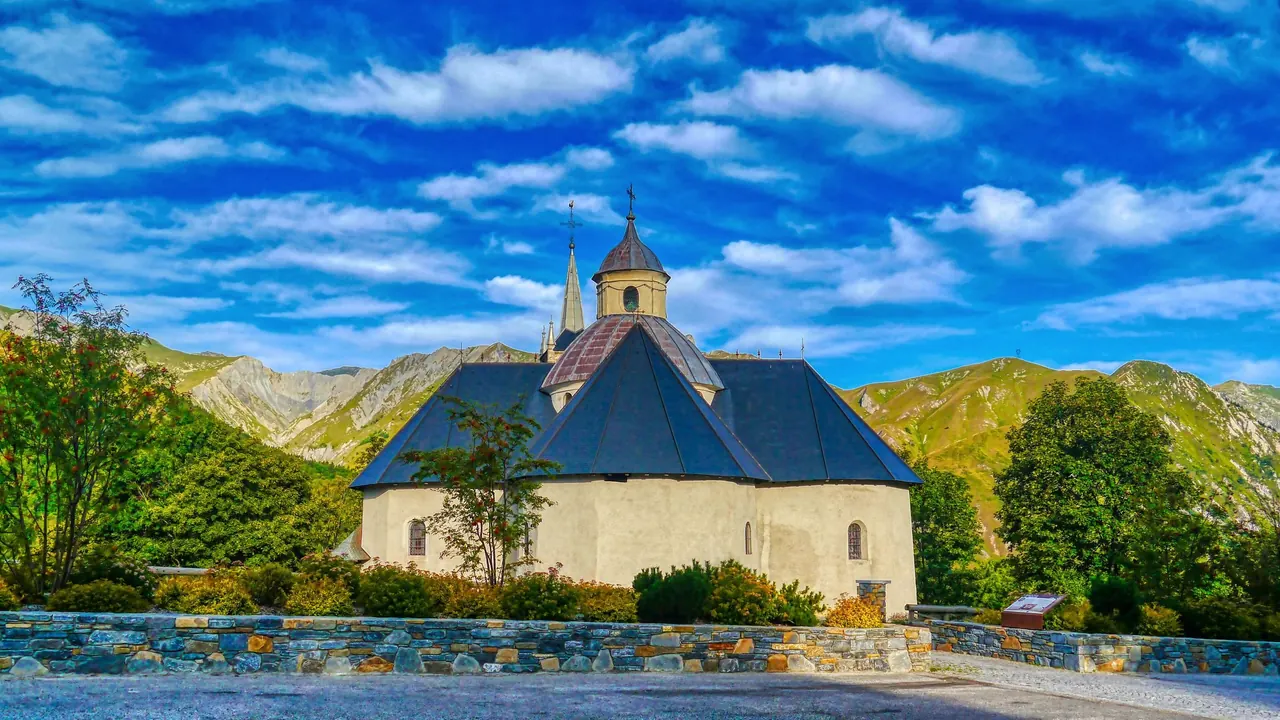
Photos: Burgundy by Gu Bra, Pexels License; Les 3 Vallées by Zairon, CC BY-SA 4.0, cropped.
Burgundy or Les 3 Vallées?
Our verdict in twelve categories, each scored against the same fixed benchmark cities, and the climate month by month, so you can choose for your trip.
Choose Burgundy for
- culture and sights
- day trips
- prices
Burgundy is the choice for a slow, rich trip built around the table. You taste in cellars along the Côte, take long lunches in village inns and spend afternoons among Romanesque abbeys, ducal Dijon and the tiled roofs of Beaune. It suits couples and friends who care about wine, history and quiet countryside, who don't mind driving between scattered sites, and who want their money to go further than it would in an Alpine resort.
Choose Les 3 Vallées for
- nightlife
- nature and the outdoors
- families
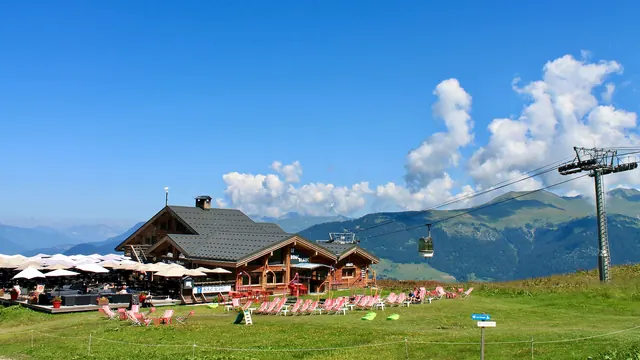
For a winter mountain week, Les 3 Vallées wins outright. Skiers can cover several valleys in a day on one linked lift network. Families get ski schools and lodging right on the snow. Evenings range from table-dancing après-ski in Val Thorens to champagne bars in Courchevel. It costs far more, though, and anyone hoping for museums or outings will find little beyond the slopes.
Scoreboard
Twelve categories on one fixed scale from 0 to 100. The shaded stretch is the gap between the two.
Your match
Pick a travel style or drag the sliders, and both match scores follow your weighting.
Wins on culture and sights and day trips with your weighting.
Wins on nightlife and nature and the outdoors with your weighting.
What matters to you?
Category by category
What the scores mean for a trip.
Beaches & swimming
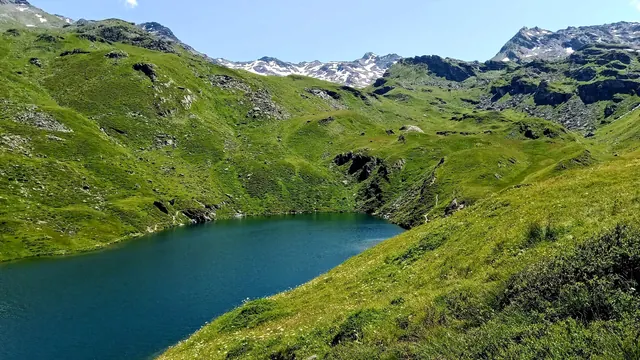
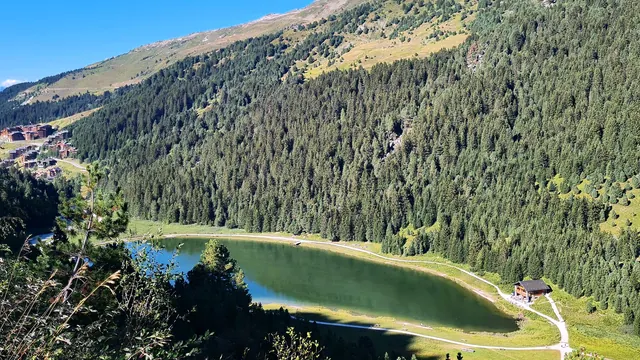
Neither is a place to swim, but Burgundy does at least offer a summer cool-off. The Morvan reservoirs, Lac des Settons above all, have supervised beaches, and Dijon has Lac Kir on its western edge. In Les 3 Vallées there is nothing to swim in during the ski season, and summer brings only small mountain lakes such as Lac de Tueda to sit beside, so the resort pools and aquatic centres do the work.
Food & drink
Both take eating seriously, but in Burgundy food and wine are the whole point of the trip. Along the Côte de Nuits and Côte de Beaune you can taste anywhere from grand domaines to small family cellars, and Chablis and the Mâconnais add bottles at gentler prices. The cooking runs from boeuf bourguignon and eggs in red wine to Époisses, with starred country inns in Saulieu and Chagny.
Les 3 Vallées eats well within a narrower range: fondue, tartiflette and Beaufort on sunny mountain terraces at lunch, and a dense cluster of starred hotel kitchens in Courchevel 1850. Away from the top end, though, the Savoyard menus repeat from resort to resort, while Burgundy's wine country rewards a week of exploring.
Culture & sights
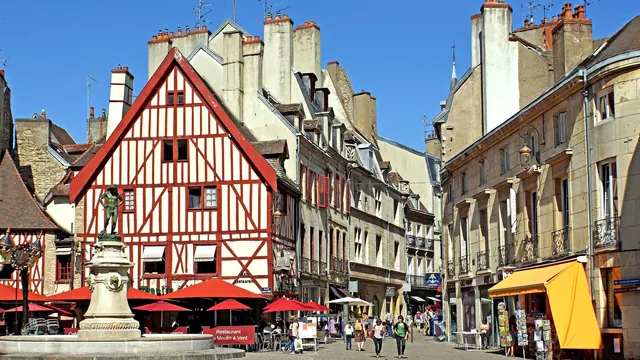
The gap here is wide. Burgundy has a ducal capital with one of France's oldest fine art museums, the tiled Hospices of Beaune and a UNESCO-listed vineyard slope. It also has some of Europe's finest Romanesque and Cistercian buildings at Vézelay, Fontenay, Cluny and Autun, though they are spread out and each needs a car and a day.
Most of the ski resorts in Les 3 Vallées were built in the twentieth century, so sightseeing comes down to the 1992 Olympic venues, the cathedral in Moûtiers and the stone village of Saint-Martin-de-Belleville, where the sanctuary of Notre-Dame de la Vie has a painted Savoyard interior. A morning covers most of it.
Nightlife
Nights out belong to Les 3 Vallées, at least in winter. In Val Thorens DJs play on the slope-side terraces from mid-afternoon and the clubs run into the small hours. Courchevel 1850 goes in for champagne and expensive clubs, and Méribel's après-ski falls in between. All of it ends with the lift season.
In Burgundy an evening means a long dinner and a good bottle. Dijon's student streets and Beaune's wine bars keep some late life going in summer, but the villages go quiet early.
Nature & outdoors
Burgundy is gentle country of vine slopes, limestone escarpments and Charolais pastures. Its wildest corner is the Morvan, where granite hills, beech and oak forest and reservoirs suit walkers, canoeists and mountain bikers. The Roche de Solutré makes a short climb above the Mâconnais, and a balloon flight over the vines in summer is about as much excitement as the region has.
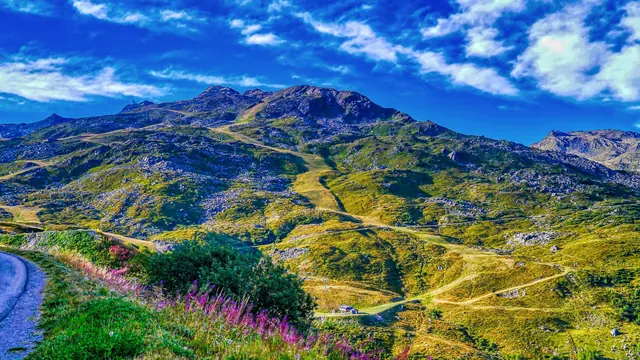
Les 3 Vallées is mountain country on a far grander scale. Around 600km of linked pistes cross three valleys, and the lifts climb to high glacial bowls above Val Thorens, so the snow holds from December into April. Skiers can choose between long cruising blues above Méribel and the steep couloirs off the Saulire. In summer the meadows on the edge of the Vanoise have ibex, chamois and marmots.
Day trips
From a base in Beaune or Dijon, outings are close and plentiful, provided you have a car. Wine villages such as Meursault and Pommard are minutes apart. Within reach are walled Noyers, Semur-en-Auxois on its rocky spur, Chablis and Cluny, with Lyon a manageable run to the south.
In Les 3 Vallées every outing starts with the winding drive down to Moûtiers, and most skiers never make it. Annecy's lakefront old town, about two hours away, is the best of a short list that also includes Conflans, Beaufort and Chambéry.
Good for families
Les 3 Vallées is the easier choice for families, provided the children ski. Ski schools take them from about three years old, lodging in Les Menuires or Méribel-Mottaret is right on the snow, and ice rinks, sledging and indoor pools fill the rest days. Toddlers and children who don't ski may tire of the cold and the altitude.
Burgundy's family highlights are fewer and more specific. Children can watch a castle being built by medieval methods at Guédelon, see the Alésia siege museum, take pedalos out on the Morvan lakes and, best of all, spend a week on a canal boat working the locks. Long days of cellars and abbeys by car will test most children.
Getting around
Once you are up in the resorts, Les 3 Vallées is simpler. One lift network links every valley, free shuttles and short walks cover each village, and a car is more of a nuisance than a help. The hard part is getting up there: a bus or taxi from the railhead at Moûtiers climbs switchback roads that are slow on changeover weekends.
Burgundy is easy to reach by fast train to Dijon, and the centres of Dijon and Beaune are walkable. The villages and abbeys, however, need a hire car, which sits awkwardly with wine tasting. Cycling the gentle paths of the Côte is the pleasant answer.
Shopping & style
Neither is a shopping destination, and the real difference is what you take home. From Burgundy it is mostly edible: wine from the cellar door, Dijon mustard, cassis, gingerbread and cheese from Dijon's covered market hall or Beaune's Saturday market, plus antiques from dealers in the countryside. Les 3 Vallées offers technical ski gear in every resort, Beaufort and Savoyard sausage from the delicatessens, and a short street of luxury fashion and jewellery boutiques in Courchevel 1850 that opens for the winter.
Affordability
Burgundy is much the cheaper of the two. Guesthouses and cottages in the Morvan or the Yonne are fairly priced, and so are set lunches in village restaurants. Costs rise in Beaune, along the Côte at harvest time, at the starred tables and with the great wines, and a hire car adds to the bill.
A winter week in Les 3 Vallées is expensive however you do it, as lift passes, rental, ski school and mountain lunches soon add up, and Courchevel 1850 is among the costliest resorts anywhere. Self-catering in Les Menuires, the Belleville valley or Brides-les-Bains softens the bill, and summer is cheaper.
Live music & performing arts
Burgundy has a real performing arts calendar, though most of it falls in summer. Dijon's Grand Théâtre stages opera, concerts and dance, Beaune holds a long-established baroque opera festival in July, Chalon-sur-Saône fills its streets with theatre, Cluny has jazz and Vézelay has concerts in its basilica. Les 3 Vallées has no theatre or concert hall, and live music there means cover bands and DJs in the après-ski bars, with the occasional seasonal concert.
Wellness & relaxation
Both are good places to unwind, but in opposite ways. In Burgundy rest comes from the pace: long lunches, quiet villages and canal barges drifting through locks. There are modest thermal springs at Bourbon-Lancy and Saint-Honoré-les-Bains, and some country hotels near Beaune offer wine-based treatments.
In Les 3 Vallées wellness means recovering after skiing. The luxury hotels have well-equipped spas, the Courchevel and Méribel aquatic centres have hammams and hot tubs, and the old spring town of Brides-les-Bains sits below Méribel. The winter routine is brisk, so for real calm choose a chalet in Saint-Martin-de-Belleville.
When should you go?
Pick your month. The climate figures are measured averages, not a forecast.
Burgundy in July
Les 3 Vallées in July
Daytime high, °C
Rainfall in the month, mm
Where the figures come from
Burgundy's temperatures are measured 33 km from the centre, at Dijon.
Burgundy has no rain gauge within 25 km of the centre, so its rainfall comes from a gridded climate dataset read at the destination rather than from a gauge further away.
Les 3 Vallées has no weather station within reach, so its figures come from a gridded climate model rather than a measured record, and read a broad area rather than one spot.
Temperature and rainfall are climate normals, averaged over the years shown. Burgundy: 1991-2020 normals, Dijon (32.7 km from centre). Les 3 Vallées: 1991-2020 normals, TerraClimate 4 km grid at the town, no weather station within 90 km.
Burgundy is at its best in the warm months. Where most visitors stay, highs climb from the mid-teens in spring to around 27°C in July, with about 253 hours of sunshine that month. July and August are when the Morvan lakes are warm enough to swim. May to September suits cellar visits, cycling and walking the old towns best. Rain falls fairly evenly through the year but is heaviest in late autumn, and winter days are short, grey and cold.
Les 3 Vallées works the other way round. In the resorts, daytime highs sit around 1°C in January and February. November and December are wet, with up to 153mm a month, and at altitude most of that falls as snow, building the cover for a season that runs from December into April. Summer is mild rather than hot, about 20°C in August. That is ideal for hiking the high trails but cool for anyone hoping to laze beside a lake.
Which traveller are you?
On a culture and arts trip, Burgundy is the clear pick. The Palace of the Dukes in Dijon, the Hospices in Beaune, Vézelay, Fontenay and Cluny, plus baroque opera in Beaune each July, fill days that the purpose-built ski resorts cannot.
For an outdoors trip, Les 3 Vallées is in another league. Its huge linked ski area, high glacial bowls and guided off-piste fill a winter week, and summer brings Vanoise trails and via ferratas. Burgundy offers gentler vineyard cycling and canal towpaths instead.
On a trip on a tight budget, Burgundy makes money go much further. Guesthouses, cottages and village set lunches in the Morvan or the Yonne are fairly priced. A ski week, even self-catered in Les Menuires, soon adds up through lift passes, rental and lunches on the mountain.
Before you go
| Measure | Burgundy | Les 3 Vallées |
|---|---|---|
| Official language | French | French |
| Currency | Euro (EUR) | Euro (EUR) |
| Sockets | CE230 V, 50 Hz | CE230 V, 50 Hz |
| Driving side | Right | Right |
| Time zone | UTC+1, UTC+2 in summer | UTC+1, UTC+2 in summer |
| Emergency number | 112 | 112 |
| Main airport | Lyon Saint-Exupéry Airport (LYS)141 non-stop destinations | Geneva International Airport (GVA)150 non-stop destinations |
| Public holidays this year | 11 days | 11 days |
By the numbers
| Measure | Burgundy | Les 3 Vallées |
|---|---|---|
| Population | 1,642,687 | - |
Where else could you go?
Every comparison below shares a destination with this one, so you can follow Burgundy or Les 3 Vallées somewhere new.
- Piedmontvs Les 3 Vallées
- Lake Maggiorevs Les 3 Vallées
- Swiss Alpsvs Les 3 Vallées
- French Alpsvs Burgundy
- Provencevs Les 3 Vallées
- French Rivieravs Les 3 Vallées