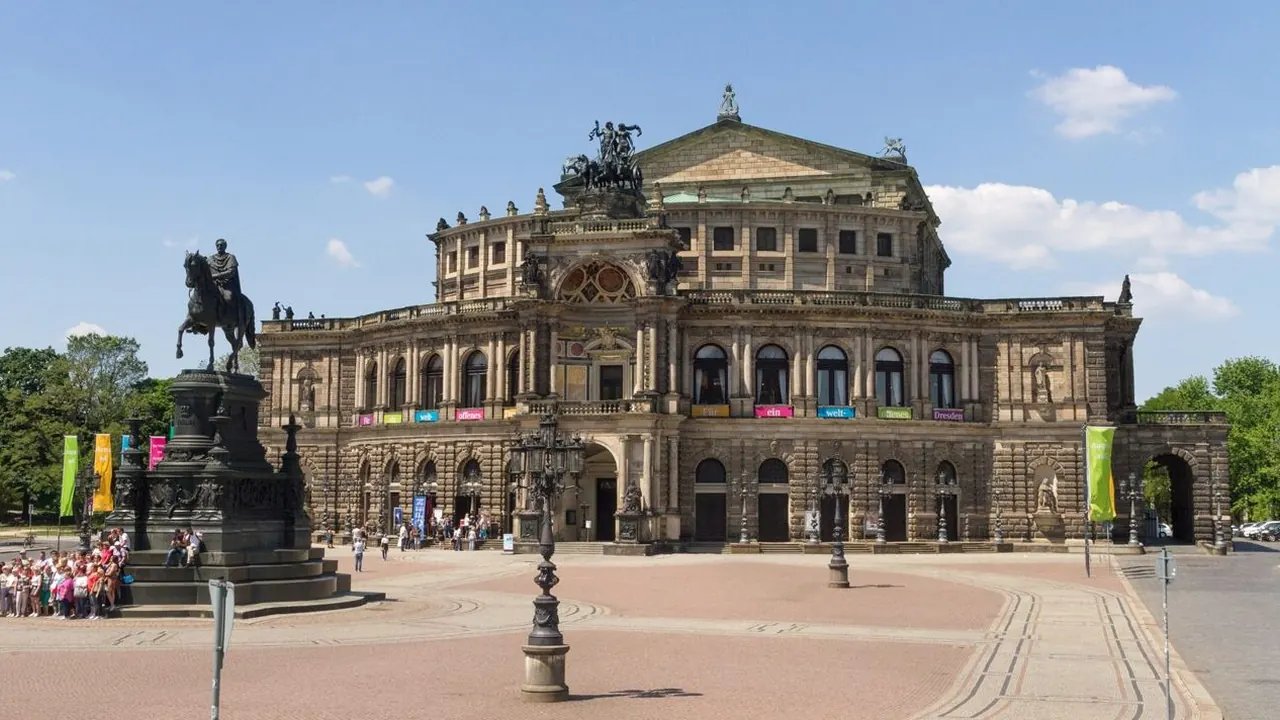
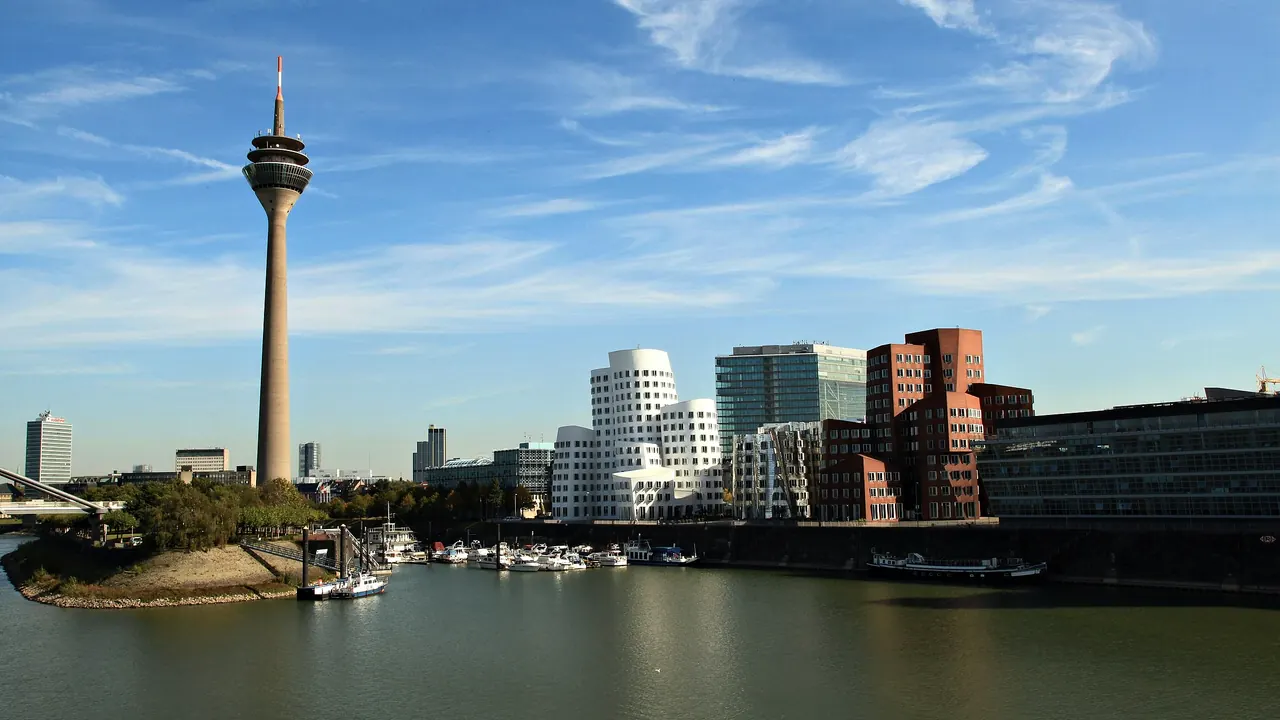
Photos: Dresden by Maksym Kozlenko, CC BY-SA 4.0, cropped; Dusseldorf by Frank Vincentz, CC BY-SA 3.0, cropped.
Dresden or Dusseldorf?
Our verdict in twelve categories, each scored against the same fixed benchmark cities, and the climate month by month, so you can choose for your trip.
Choose Dresden for
- nature and the outdoors
- culture and sights
- live music and the arts
Dresden suits the traveller who wants a few days of great art, baroque architecture and music, and then wants to get out into real landscape. The Old Masters in the Zwinger, the Green Vault and an evening at the Semperoper are the core of a stay, and the sandstone towers of Saxon Switzerland lie a short train ride upriver. It is also the gentler city on the wallet.
Choose Dusseldorf for
- shopping
- food and drink
- nightlife
Düsseldorf is the better pick for a trip built around eating, drinking and shopping. The Altstadt brewhouses, the ramen counters of the Japanese quarter and the boutiques of the Königsallee give it a livelier, more worldly feel, and its place in the dense Rhine-Ruhr region puts Cologne, Bonn and Aachen within easy reach by train.
Scoreboard
Twelve categories on one fixed scale from 0 to 100. The shaded stretch is the gap between the two.
Your match
Pick a travel style or drag the sliders, and both match scores follow your weighting.
Too close to call, 1 point apart
Wins on nature and the outdoors and culture and sights with your weighting.
Wins on shopping and food and drink with your weighting.
What matters to you?
Category by category
What the scores mean for a trip.
Beaches & swimming
Neither city is a beach destination, and both rivers, the Elbe and the Rhine, have sandy banks that look tempting but carry shipping and strong currents. The sea is a long journey from either, the Baltic from Dresden and the cool Dutch North Sea from Düsseldorf.
The difference is in where you cool off. Dresden has gravel-pit lakes and the ponds around Moritzburg, and Düsseldorf has Unterbacher See, a proper bathing lake with lawns on the city's edge.
Food & drink
Both cities serve hearty German food, sauerbraten included, but Düsseldorf gives a visitor more to look forward to at the table. Its Altstadt brewhouses pour Altbier until you cover the glass, and the Japanese quarter around Immermannstrasse adds ramen, izakaya and bakeries of a quality rare in Germany, with Carlsplatz market and a layer of fine dining on top.
Dresden's strengths are narrower: Saxon cooking, Stollen and Eierschecke at afternoon coffee, and dry wines from the Elbe valley vineyards around Radebeul and Meissen. The Neustadt has the most varied eating, while the area around the Frauenkirche tends towards tourist menus.
Culture & sights
Dresden is the stronger sightseeing city by some distance. The Zwinger's Old Masters, the Green Vault in the Residenzschloss, the Albertinum's Romantic painting and the stone-by-stone rebuilt Frauenkirche make up a baroque ensemble along the Elbe that fills three or four days.
Düsseldorf was also heavily bombed, but rebuilt with less ceremony, and its draw is modern art rather than grand historic fabric. K20's Klee collection, the net under K21's dome and the Kunstpalast are the highlights, with Benrath Palace and the Gehry buildings of the Medienhafen as the main things to look at outdoors.
Nightlife
Düsseldorf is the livelier city after dark. Its Altstadt is a few hundred pubs and brewhouses packed into a handful of streets, where weekend crowds drink standing outside well past midnight, and Carnival turns the whole city out in costume for days.
Dresden's going-out life is concentrated in the Äußere Neustadt, a student quarter of small bars, beer kiosks and courtyard pubs that is friendly and informal. It is pleasant for a few evenings, but the old town goes quiet after dinner and there is less to choose from.
Nature & outdoors
Here Dresden has a real advantage. Saxon Switzerland, with its sandstone towers, gorges and table mountains, is a national park reachable by suburban train, offering the Bastei viewpoint, the multi-day Malerweg and some of the oldest traditional rock climbing in Europe, with the Ore Mountains beyond.
Düsseldorf's outdoors is flat and gentle: cycle paths along the Rhine meadows to Kaiserswerth, the Grafenberg forest and the Neandertal valley. The Bergisches Land and Siebengebirge are good for a day's walking, but nothing compares with Dresden's rock landscape.
Day trips
Both make excellent bases, but the kind of trip differs. From Dresden the outings are to smaller historic places: porcelain-making Meissen, Moritzburg's lake palace, the Königstein fortress, Görlitz and Bautzen, with Leipzig an hour away and Prague possible at a stretch.
Düsseldorf sits in a dense urban region, so its day trips lean towards big cities and varied heritage: Cologne cathedral in under half an hour, Bonn, the Brühl palaces, the Ruhr's industrial sites, Aachen and Dutch Maastricht.
Good for families
The two are about equally easy with children, but what fills the days differs. Dresden offers the Transport Museum, the Großer Garten with its zoo and child-run miniature railway, and paddle steamer trips up the Elbe, though it has no aquarium or theme park.
Düsseldorf fills those gaps with the Aquazoo Löbbecke and with Phantasialand and Movie Park Germany within about an hour, and its free game park in Grafenberg brings boar and deer up close.
Getting around
Both are compact enough to see largely on foot, with trams for the rest and no need for a car. Dresden's suburban trains and paddle steamers along the Elbe double as the way to reach Meissen, Pillnitz and Saxon Switzerland.
Düsseldorf adds an underground light rail, a quick rail link from the airport and a regional network that runs on to Cologne and the Ruhr, at the cost of fare zones that confuse newcomers.
Shopping & style
Düsseldorf is much the better place to shop. The Königsallee, with luxury flagships and upscale arcades along its canal, is backed by big department stores, while Flingern's boutiques and the Japanese quarter's stationery and homeware shops add character.
Dresden's mainstream shopping on Prager Straße is mostly chains, so its interest lies in local crafts: Meissen porcelain, Ore Mountain wooden toys, the courtyards of the Kunsthofpassage and, in Advent, the Striezelmarkt.
Affordability
Dresden is the easier city on a budget, with reasonable hotels for most of the year and good-value eating in the Neustadt, though separate museum entries add up and rooms climb at Christmas market time.
Düsseldorf's hotels are pricey for its size, and during big trade fairs they become very expensive and scarce, so check the fair calendar before booking. Brewhouse meals and Japanese noodle bars keep daily spending manageable.
Live music & performing arts
Classical music is where Dresden pulls ahead. The Semperoper, home to the centuries-old Staatskapelle and the scene of Wagner and Strauss premieres, is among Europe's great opera houses, and the Kreuzchor, the Philharmonic in the Kulturpalast and Bach at the Frauenkirche add depth.
Düsseldorf has a solid programme of its own, with the Deutsche Oper am Rhein, the Tonhalle and the Schauspielhaus, plus political cabaret. Its distinctive note is modern, as the birthplace of Kraftwerk and early German electronic music.
Wellness & relaxation
Neither city has its own thermal springs, and both rely on public baths with sauna areas. Düsseldorf has more spa choice within an hour, including large thermal complexes and Aachen's hot springs, while Dresden's nearest thermal pool is at Bad Schandau.
Otherwise the calm is found outdoors. In Dresden that means the Elbe meadows and quiet evenings in the old town. In Düsseldorf it means the Hofgarten and Nordpark's Japanese garden, as long as you avoid the Altstadt on weekend nights.
When should you go?
Pick your month. The climate figures are measured averages, not a forecast.
Dresden in July
Dusseldorf in July
Daytime high, °C
Rainfall in the month, mm
Temperature and rainfall are climate normals, averaged over the years shown. Dresden: 1991-2020 normals, Dresden-Strehlen (3.8 km from centre). Dusseldorf: 1991-2020 normals, Düsseldorf (8.3 km from centre).
Both cities are at their best from May to September, when afternoons are warm enough for river walks, beer gardens and a swim in a lake or outdoor pool. Dresden runs slightly warmer and noticeably sunnier at the height of summer, reaching 26°C in July and August, though those are also its wettest months, with around 83mm in August. Düsseldorf is a degree or so cooler and a little less sunny through the summer. Neither has a sea nearby.
Winter separates them more clearly. Dresden is the colder of the two, with January highs of about 4°C, but its late winter and spring are dry and April already brings plenty of sun, which makes spring a fine time for walking. Düsseldorf stays a couple of degrees milder but greyer, with rain spread evenly through the year and close to 70mm in December, so winter there is more damp than cold.
Which traveller are you?
For a culture and arts trip, Dresden is the clear choice. Raphael's Sistine Madonna in the Zwinger, the treasures of the Green Vault and the rebuilt Frauenkirche sit within a short walk, and evenings can go to the Semperoper or the Kreuzchor.
On an outdoors trip, Dresden again comes out ahead. Saxon Switzerland's sandstone gorges, the Bastei and the Malerweg trail start under an hour away by suburban train, while Düsseldorf offers flat Rhine meadows and gentle wooded hills rather than anything dramatic.
On a shopping trip, Düsseldorf is the stronger city. The Königsallee brings luxury flagships and big department stores, Flingern and the Japanese quarter add independent shops, whereas Dresden's appeal is mostly Meissen porcelain, Ore Mountain wooden toys and its Advent market.
Before you go
| Measure | Dresden | Dusseldorf |
|---|---|---|
| Official language | German | German |
| Currency | Euro (EUR) | Euro (EUR) |
| Sockets | CF230 V, 50 Hz | CF230 V, 50 Hz |
| Driving side | Right | Right |
| Time zone | UTC+1, UTC+2 in summer | UTC+1, UTC+2 in summer |
| Emergency number | 112 | 112 |
| Elevation | 126 m | 38 m |
| Main airport | Dresden Airport (DRS)10 km from centre13 non-stop destinations | Düsseldorf Airport (DUS)7 km from centre182 non-stop destinations |
| Public holidays this year | 11 days | 11 days |
By the numbers
| Measure | Dresden | Dusseldorf |
|---|---|---|
| City population | 562,764 | 619,444 |
| People per km² | 1,713 | 2,849 |
| Museums within 10 km | 70 | 25 |
| UNESCO World Heritage sites within 50 km | 1 | 4 |
Where else could you go?
Every comparison below shares a destination with this one, so you can follow Dresden or Dusseldorf somewhere new.