Photos: Dresden by Maksym Kozlenko, CC BY-SA 4.0, cropped; Frankfurt by Thomas Wolf, CC BY-SA 3.0 DE, cropped.
Dresden or Frankfurt?
Our verdict in twelve categories, each scored against the same fixed benchmark cities, and the climate month by month, so you can choose for your trip.
Choose Dresden for
- culture and sights
- prices
- nature and the outdoors
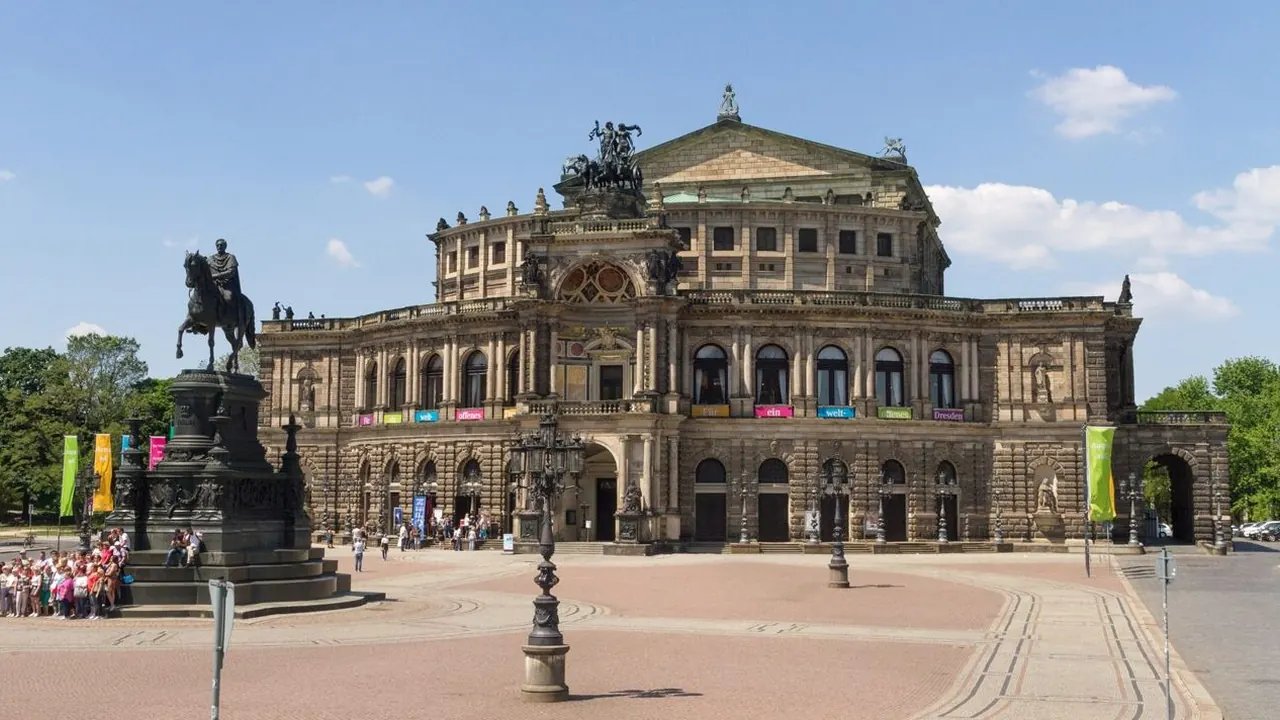
Dresden suits travellers who want a city of art and music with real countryside close by. The baroque riverfront, the Old Masters and the Green Vault, an evening at the Semperoper and a train out to the sandstone towers of Saxon Switzerland make three or four days that feel complete. Hotels cost less than in Frankfurt, and the city moves at a slower pace.
Choose Frankfurt for
- shopping
- day trips
- wellness
For someone who wants to keep moving, Frankfurt makes the better base. High-speed trains put Heidelberg, the Rhine Gorge and Cologne within easy reach for a day, and the airport is a short train ride from the centre. It also has more varied food, more shopping and the old spa towns of Wiesbaden and Bad Homburg on its doorstep. Check the trade-fair calendar before you book and avoid those dates, because that is when hotel rooms become scarce and expensive.
Scoreboard
Twelve categories on one fixed scale from 0 to 100. The shaded stretch is the gap between the two.
Your match
Pick a travel style or drag the sliders, and both match scores follow your weighting.
Too close to call, 1 point apart
Wins on culture and sights and prices with your weighting.
Wins on shopping and day trips with your weighting.
What matters to you?
Category by category
What the scores mean for a trip.
Beaches & swimming
Neither city is a beach destination, and both send swimmers to the same kind of place: outdoor pools and flooded gravel pits on the edge of town. Dresden adds the ponds around Moritzburg, which you can combine with a visit to the hunting lodge, while Frankfurt's Langener Waldsee in the southern forest has proper sandy shores. In both cities the river through the centre is for sitting beside, not for swimming in.
Food & drink
Frankfurt eats a little better, mainly because it is more international and has one memorable local experience. An evening in a Sachsenhausen apple-wine tavern, with Grüne Soße and Handkäs at long shared tables, is a meal worth travelling for. The Kleinmarkthalle is a good stop for regional produce, and Turkish, Italian and Asian kitchens add range.
Dresden is stronger at the coffee table than at dinner: Eierschecke in the afternoon, Stollen at Christmas, and dry wines from the Elbe valley vineyards around Radebeul and Meissen. The Neustadt is the place for casual, varied eating, while the streets around the Frauenkirche lean towards menus aimed at visitors.
Culture & sights
Dresden is the stronger art city by a wide margin. Its baroque core holds several collections of world rank close together: Raphael's Sistine Madonna in the Zwinger, the treasures of the Green Vault in the Residenzschloss and Caspar David Friedrich in the Albertinum, with the rebuilt Frauenkirche at the centre. That is enough for three or four days.
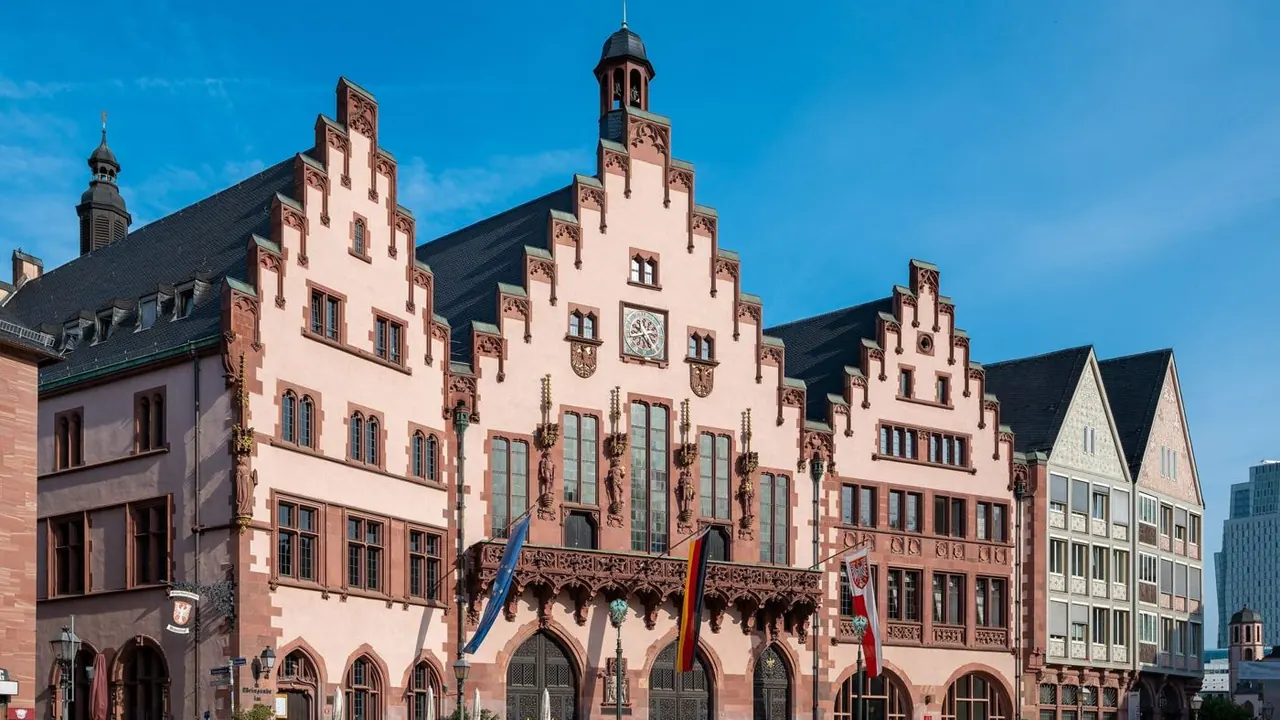
Frankfurt has one museum of that standing, the Städel, among the many smaller institutions of the Museumsufer, along with the Senckenberg and the Schirn's major exhibitions. The Römer, the Paulskirche and Goethe's birthplace are close together, but its most distinctive sight is a skyline of towers that Dresden has nothing like. Both old towns are largely rebuilt after wartime bombing.
Nightlife
The two are close, but they go out in different ways. In Dresden, evenings gather in one district, the Äußere Neustadt. Students fill small bars and courtyard pubs there and drink on the pavements in summer, and a few clubs sit in old industrial buildings.
Frankfurt's nights are spread across several areas, each with its own character: the rough-edged Bahnhofsviertel for cocktail bars, Alt-Sachsenhausen for cider taverns and Berger Straße for neighbourhood bars. What sets it apart is a small but serious techno and house club scene, rooted in the electronic music history it shares with Offenbach. It is quiet early in the week.
Nature & outdoors
Dresden has the more dramatic countryside. Saxon Switzerland begins under an hour upriver by suburban train, with sandstone towers, gorges and the Bastei view over the Elbe. The Malerweg offers several days of walking, the area is one of the places where free climbing began, and the Elbe cycle route and the Ore Mountains add more.
Frankfurt's surroundings are greener and gentler. There are beech forests and Roman frontier trails in the Taunus, the large Stadtwald forest inside the city, and vineyard paths in the Rheingau. They are good for an easy walk or bike ride, but nothing near Frankfurt matches the cliffs and rock towers of the Elbe sandstone.
Day trips
Dresden's day trips stay mostly within Saxony. Meissen's cathedral and porcelain manufactory are about forty minutes away, Moritzburg's lake palace and the Königstein fortress are close, and Leipzig and Görlitz take an hour or so. Prague, along the Elbe gorge, is a long but possible day.
Frankfurt reaches much further, because it sits at the hub of Germany's high-speed rail network. Heidelberg and the castle-lined Rhine Gorge are about an hour away, and Cologne's cathedral takes about the same by fast train. Mainz, Wiesbaden and Darmstadt are closer still, and the imperial cathedrals of Worms and Speyer and the hillside old town of Marburg add more. A week would not use them all up.
Good for families
Both cities work for a few easy days with children, and neither has one attraction big enough to plan a trip around. Dresden's appeal is transport and play: the miniature railway in the Großer Garten, run largely by children, the trams and trains of the Transport Museum, and paddle-steamer trips up the Elbe. Frankfurt's best card is the hall of dinosaur skeletons at the Senckenberg, and the Palmengarten glasshouses and a small fairy-tale park in the Taunus give it a little more for younger children.
Getting around
Both cities are easy without a car, and the difference is mostly one of scale. In Dresden much of a stay happens on foot, with the old town and the Neustadt a bridge apart. Trams cover the rest, and paddle steamers are a slow way to reach Pillnitz.
Frankfurt has a fuller system, with U-Bahn, S-Bahn and trams on one regional network. It takes some learning, but the same tickets reach the Taunus, Mainz and Wiesbaden. Its airport is about a quarter of an hour from the centre by train, a real advantage on a short visit.
Shopping & style
Frankfurt is the better place to shop. The Zeil has the department stores and malls, Goethestraße the luxury fashion and jewellery houses, and Berger Straße and Schweizer Straße the independent boutiques and delis.
Dresden has less range. Prager Straße is mostly chains, and the more interesting shops are in the Neustadt's second-hand and design shops and the Kunsthofpassage. What it does have is a genuine speciality in Meissen porcelain and Ore Mountain wooden toys, and in Advent the Striezelmarkt, one of Germany's oldest Christmas markets.
Affordability
Dresden is the cheaper stay, and most of the gap is in hotels. Rooms are reasonably priced for much of the year and climb only around the Christmas market and the big festivals, though paying separately for each major museum adds up.
Frankfurt's hotels are priced for business travellers and become scarce and expensive during the trade fairs, so timing matters much more there. Weekends and summer are easier. Once you have a room, cider taverns, Turkish grills and the Museumsufer pass keep daily spending moderate.
Live music & performing arts
Dresden has the deeper musical tradition. The Semperoper, home of the Staatskapelle and stage for premieres by Wagner and Strauss, is one of Europe's celebrated opera houses. The Kreuzchor in the Kreuzkirche and the Philharmonic in the Kulturpalast make classical music the centre of an evening here.
Frankfurt offers range and a bolder edge rather than heritage. It has an opera company known for adventurous productions, concerts at the Alte Oper, serious drama at the Schauspiel, contemporary dance at Mousonturm, an English-language theatre and jazz cellars with regular sessions. Its season goes quiet in summer.
Wellness & relaxation
Dresden relaxes you through its pace, while Frankfurt has a ring of old spa towns with real hot springs, and for a proper day of bathing Frankfurt is ahead. Dresden itself has municipal saunas, and the nearest thermal pool is at Bad Schandau, under an hour away. Otherwise the calm comes from wide Elbe meadows, an old town that empties in the evening, and cake on a terrace above the river.
Frankfurt's own bathing is limited to pools and hotel spas, but Wiesbaden's Art Nouveau Kaiser-Friedrich-Therme, fed by hot springs, and the thermal baths in Bad Homburg's spa park are both easy to reach.
When should you go?
Pick your month. The climate figures are measured averages, not a forecast.
Dresden in July
Frankfurt in July
Daytime high, °C
Rainfall in the month, mm
Temperature and rainfall are climate normals, averaged over the years shown. Dresden: 1991-2020 normals, Dresden-Strehlen (3.8 km from centre). Frankfurt: 1991-2020 normals, Frankfurt Westend (2 km from centre).
The two cities have almost the same temperatures all year, so the choice comes down to rain and light rather than warmth. Both are at their best for walking from May to September. Highs reach about 26°C in July and August, warm enough for an afternoon at a lake but never a beach climate. Winters are cold in both, with daytime highs only a few degrees above freezing from December to February. Spring comes a little earlier in Frankfurt, which is already milder in March.
The real difference is when the weather turns. Dresden's rain peaks in high summer, at about 83mm in August, while Frankfurt's summer is drier and sunnier, with July its brightest month. In winter this reverses. From November to January Frankfurt is the wetter and greyer of the two, and Dresden keeps noticeably more sunshine, which makes it the better choice for a December stay.
Which traveller are you?
On a culture and arts trip, Dresden is the clear choice. The Old Masters, the Green Vault and the Albertinum are a short walk apart, and opera at the Semperoper or the Kreuzchor in the Kreuzkirche rounds off the day. Frankfurt matches this only at the Städel.
For an outdoors trip, pick Dresden. A suburban train reaches Saxon Switzerland in under an hour, with sandstone towers, walks along the Malerweg and traditional rock climbing. Frankfurt's Taunus hills and Stadtwald forest are pleasant but much gentler places for walking and cycling.
On a shopping trip, Frankfurt has far more to offer. It has department stores on the Zeil, luxury houses around Goethestraße and independent shops along Berger Straße. Dresden's appeal is narrower: Meissen porcelain, Ore Mountain wooden toys and its Advent market.
Before you go
| Measure | Dresden | Frankfurt |
|---|---|---|
| Official language | German | German |
| Currency | Euro (EUR) | Euro (EUR) |
| Sockets | CF230 V, 50 Hz | CF230 V, 50 Hz |
| Driving side | Right | Right |
| Time zone | UTC+1, UTC+2 in summer | UTC+1, UTC+2 in summer |
| Emergency number | 112 | 112 |
| Elevation | 126 m | 101 m |
| Main airport | Dresden Airport (DRS)10 km from centre13 non-stop destinations | Frankfurt Main Airport (FRA)13 km from centre281 non-stop destinations |
| Public holidays this year | 11 days | 10 days |
By the numbers
| Measure | Dresden | Frankfurt |
|---|---|---|
| City population | 562,764 | 760,656 |
| People per km² | 1,713 | 3,063 |
| Museums within 10 km | 70 | 53 |
| UNESCO World Heritage sites within 50 km | 1 | 4 |
Where else could you go?
Every comparison below shares a destination with this one, so you can follow Dresden or Frankfurt somewhere new.