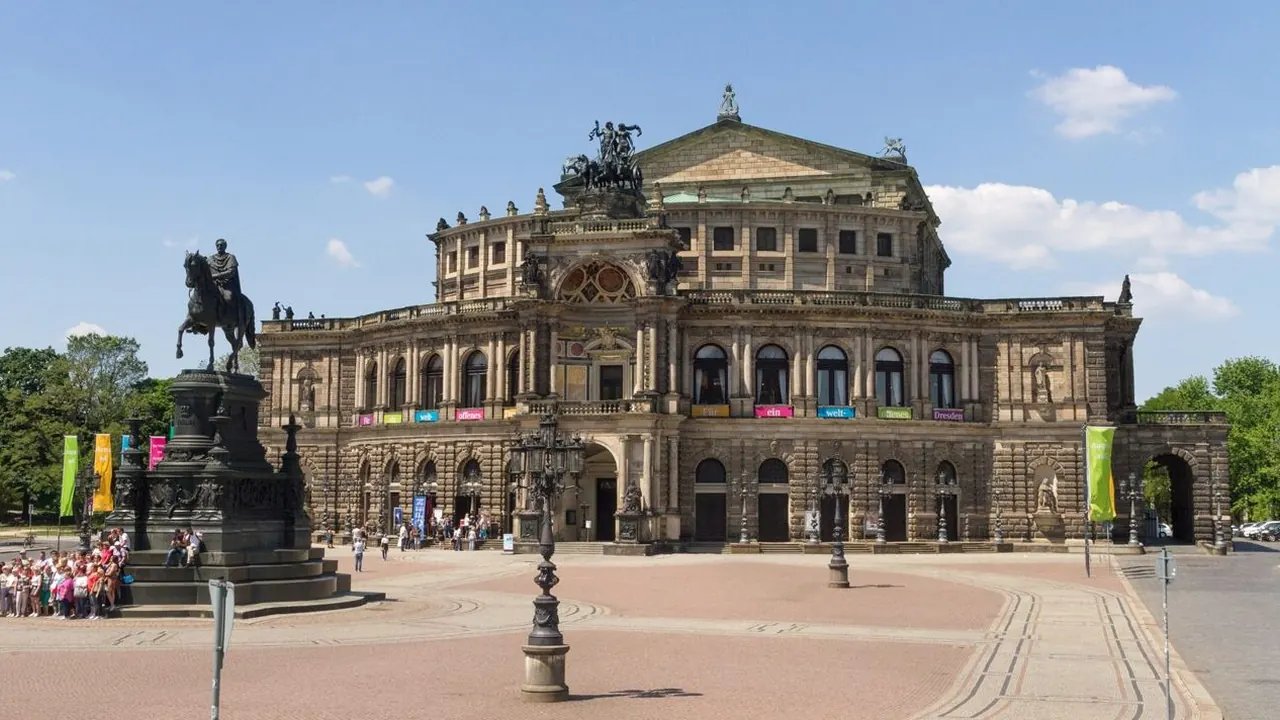
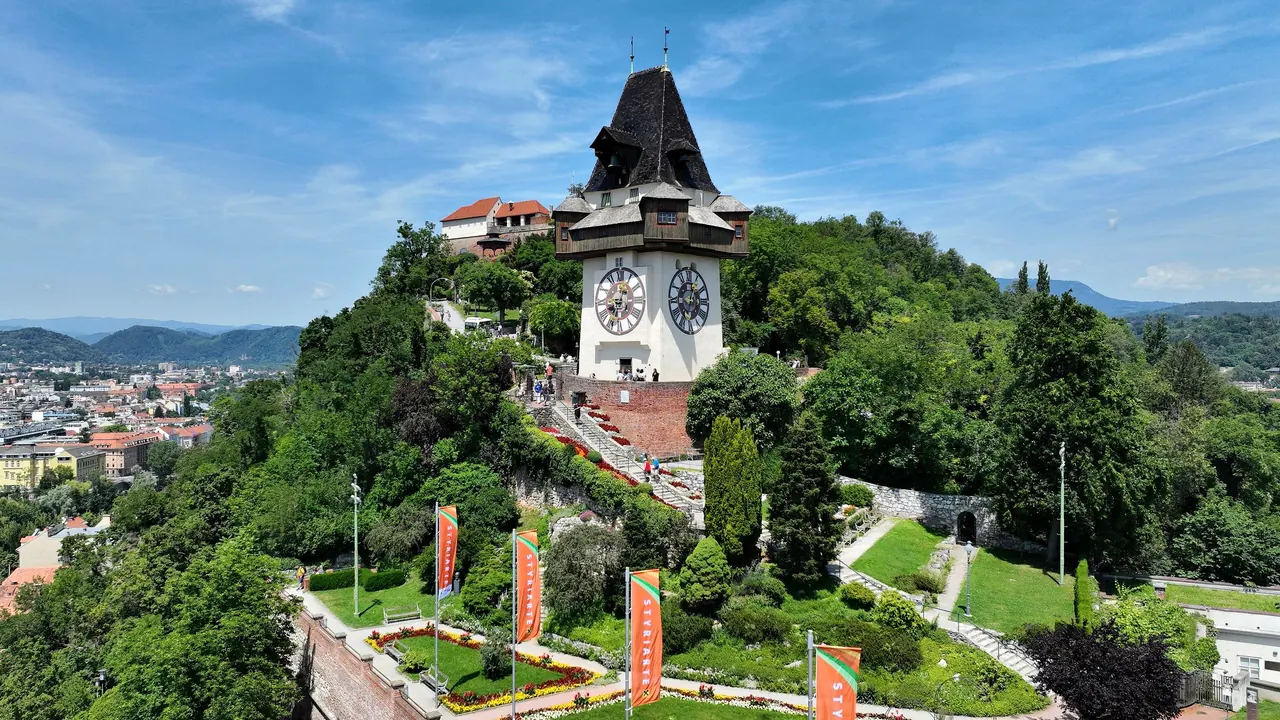
Photos: Dresden by Maksym Kozlenko, CC BY-SA 4.0, cropped; Graz by C.Stadler/Bwag, CC BY-SA 4.0, cropped.
Dresden or Graz?
Our verdict in twelve categories, each scored against the same fixed benchmark cities, and the climate month by month, so you can choose for your trip.
Choose Dresden for
- live music and the arts
- culture and sights
- day trips
Dresden is the stronger pick for anyone travelling for art and music. The Old Masters, the Green Vault and a night at the Semperoper add up to a deeper cultural stay than Graz offers, and trains along the Elbe reach Meissen, Saxon Switzerland, Leipzig and even Prague without a car. Your money also goes a little further here.
Choose Graz for
- food and drink
- wellness
- getting around
Choose Graz if the trip is about eating, drinking and slowing down. Styrian cooking with pumpkin seed oil, the morning farmers' markets and the wine taverns in the southern hills give it the edge at the table, and the thermal villages to the east make a spa day easy. Its small, flat, largely pedestrianised old town is also the simpler place to wander for a long weekend.
Scoreboard
Twelve categories on one fixed scale from 0 to 100. The shaded stretch is the gap between the two.
Your match
Pick a travel style or drag the sliders, and both match scores follow your weighting.
Wins on live music and the arts and culture and sights with your weighting.
Wins on food and drink and wellness with your weighting.
What matters to you?
Category by category
What the scores mean for a trip.
Beaches & swimming
Neither city is a place for beach time, and in both of them a hot day means a swim in a former gravel pit rather than the river. The difference is in what is on offer. Dresden has outdoor pools, flooded pits at the edge of town and the ponds around Moritzburg. Graz has a more organised lake scene at Schwarzlsee, with jetties, kiosks and water that warms to about 23°C, and Stubenbergsee makes a half-day out in the eastern hills.
Food & drink
Dresden eats heartily but without much range: sauerbraten, dumplings and game, with Christstollen and Eierschecke at the afternoon coffee table. The Elbe valley wines from Radebeul and Meissen are a pleasant surprise. Outside the casual Neustadt, choice thins out, and the streets around the Frauenkirche lean towards tourist menus.
Graz is the better place to eat. Styrian cooking is built around its regional produce, from pumpkin seed oil on everything to cold fried chicken salad and Wurzelfleisch. The farmers' markets at Kaiser-Josef-Platz and Lendplatz, and the Sauvignon Blanc poured at the Buschenschank taverns less than an hour south, make food a real reason to go.
Culture & sights
Dresden is the clear winner for sights. Its baroque riverfront holds collections of world rank: Raphael's Sistine Madonna in the Zwinger, the jewelled Green Vault in the Residenzschloss and Caspar David Friedrich at the Albertinum, with the rebuilt Frauenkirche at the centre. It is a city of great museums and needs three or four days, though much of what you see is reconstruction beside post-war blocks.
Graz offers a different pleasure, an old town that survived intact, with Renaissance arcaded courtyards and red roofs below the Schlossberg clock tower. The Landeszeughaus armoury and Schloss Eggenberg are its highlights, and the Kunsthaus adds a modern counterpoint. It is lovely to walk through, but its collections are smaller, and two or three days covers it.
Nightlife
Dresden has slightly more going on after dark, almost all of it in the Äußere Neustadt. This grid of old streets fills with students in small bars and beer kiosks, people drink on the pavements in summer, and a few clubs run in old industrial buildings. Across the river, the old town goes quiet after dinner.
Graz spreads its smaller scene across the Bermuda Triangle lanes in the old town, the artier bars of Lend and the university quarter. It suits wine bars and pub crawls, but it empties noticeably in the long summer break when the students leave.
Nature & outdoors
Both cities have good countryside close by, but it is very different. From Dresden, the suburban train reaches Saxon Switzerland in well under an hour, with sandstone towers, the Bastei view and the multi-day Malerweg trail. It is also a historic home of traditional free climbing, and the Elbe cycle route runs past vineyards and palaces.
Graz looks towards the Alps instead. The Schöckl home mountain has a cable car, trails and paragliders. The Bärenschützklamm gorge climbs past waterfalls on wooden ladders, and the Gesäuse and Hochschwab offer proper alpine hiking within about two hours.
Day trips
Dresden has the richer and easier choice of day trips. Meissen's cathedral and porcelain manufactory, the Moritzburg lodge, the Königstein fortress, Leipzig, Görlitz and Bautzen can all be reached by train or tram, and Prague is possible as a long day out.
Graz's outings are more rural: the South Styrian Wine Road, Riegersburg castle on its volcanic crag, the Lipizzaners at Piber and Admont Abbey's library. Maribor is an easy train ride, but most of the rest is far simpler with a car.
Good for families
Both cities are calm and manageable with children, and neither has a large theme park or aquarium. Dresden's appeal is trains and boats: the Transport Museum, the miniature railway run largely by children in the Großer Garten, and paddle steamer trips up the Elbe.
Graz puts its fun inside the castle hill. Children ride the lift up the Schlossberg and come down by the underground slide, and the Märchenbahn train runs through fairytale tunnels in the rock. The FRida & freD children's museum is good for a rainy day.
Getting around
Getting around Graz is a little easier. Its flat, largely pedestrianised centre puts the sights a few minutes apart, one ticket covers trams and buses, and cycling along the Mur is simple. Dresden is also walkable, with the old town and the Neustadt linked by the Augustus Bridge and trams covering the rest.
The difference shows outside the city. Dresden's suburban trains and paddle steamers reach most excursions without a car, while from Graz the vineyards and mountains are hard to reach without one.
Shopping & style
Neither city is a shopping destination, but Graz is slightly more pleasant to browse, with traditional shops in historic buildings on the Herrengasse and Sporgasse and small design studios in Lend. Its best souvenirs are edible: pumpkin seed oil, Schilcher rosé and regional chocolate.
Dresden's main streets are mostly chains, so the interest lies in the Neustadt's Kunsthofpassage, Meissen porcelain showrooms and Ore Mountain wooden toys. In Advent, the Striezelmarkt gives it a seasonal advantage.
Affordability
Dresden is the cheaper of the two. Hotels are reasonable for most of the year, Neustadt meals are good value, and one day ticket covers the suburban trains as well as the trams. The main cost to watch is museum entry, since each major collection charges separately.
Graz is fair rather than cheap. Student lunch menus and bakeries keep daytime spending down, but sit-down dinners and wine cost what they do anywhere in Austria, and combined tickets for the Joanneum museums only partly make up the difference.
Live music & performing arts
Dresden is one of Europe's major music cities. The Semperoper, where Wagner and Strauss had premieres, is home to the Staatskapelle with its sixteenth-century roots, and the Kreuzchor and Bach at the Frauenkirche make sacred music easy to find. Outside the Dixieland festival, though, live jazz and rock are thin.
Graz has a strong programme for a city of its size: Austria's second-largest opera house, Styriarte's early music in summer and steirischer herbst's avant-garde work in autumn. It is also the better choice for jazz, with an active club scene fed by the music university.
Wellness & relaxation
Graz is the better base for a spa break. The city itself has only pools and hotel spas, but Styria's thermal villages are about an hour east. Bad Blumau's Hundertwasser resort and the large warm pools at Loipersdorf and Bad Radkersburg are open to day visitors.
Dresden's relaxation is more local: sauna afternoons in the municipal baths, coffee and cake on a terrace above the Elbe, and long walks across the meadows. Its nearest thermal pool is at Bad Schandau, which fits well with a day in Saxon Switzerland.
When should you go?
Pick your month. The climate figures are measured averages, not a forecast.
Dresden in July
Graz in July
Daytime high, °C
Rainfall in the month, mm
Temperature and rainfall are climate normals, averaged over the years shown. Dresden: 1991-2020 normals, Dresden-Strehlen (3.8 km from centre). Graz: 1991-2020 normals, Graz Airport (7.9 km from centre).
The two cities follow almost the same temperature curve. Winters are cold, with highs only a few degrees above freezing from December to February, and summer peaks in the mid-twenties: 26°C in Dresden and 27°C in Graz in July. May, June and September are the most comfortable months for long days on foot, and July and August are warm enough for an afternoon at a lake or outdoor pool.
Rain and sunshine are where they differ. Graz gets much heavier summer rain, around 125mm a month from June to August against about 80mm in Dresden, so expect more wet afternoons there in high summer. Graz is clearly sunnier the rest of the year, though, with around 100 hours of sun in January, almost twice Dresden's. That makes it the brighter choice for a winter or early spring trip.
Which traveller are you?
On a culture and arts trip, Dresden is the clear choice. The Zwinger's Old Masters, the Green Vault treasures and the Albertinum's Romantic painting can fill several days, and the Semperoper and Staatskapelle give the evenings a musical tradition few cities can match.
For a trip on a tight budget, Dresden again comes out ahead. Hotels and meals in the Neustadt cost less than in Austria, and one day ticket covers the trams and the suburban trains to Meissen and Saxon Switzerland, so day trips stay cheap.
On a relaxing and wellness trip, Graz suits better. Large thermal pools at Loipersdorf, Bad Waltersdorf and Hundertwasser's Bad Blumau are about an hour away, and between spa days there are coffee houses, the Stadtpark gardens and Buschenschank afternoons in the vineyards.
Before you go
| Measure | Dresden | Graz |
|---|---|---|
| Official language | German | German, Austrian Sign Language |
| Currency | Euro (EUR) | Euro (EUR) |
| Sockets | CF230 V, 50 Hz | CF230 V, 50 Hz |
| Driving side | Right | Right |
| Time zone | UTC+1, UTC+2 in summer | UTC+1, UTC+2 in summer |
| Emergency number | 112 | 112 |
| Elevation | 126 m | 353 m |
| Main airport | Dresden Airport (DRS)10 km from centre13 non-stop destinations | Graz Airport (GRZ)9 km from centre26 non-stop destinations |
| Public holidays this year | 11 days | 16 days |
By the numbers
| Measure | Dresden | Graz |
|---|---|---|
| City population | 562,764 | 306,971 |
| People per km² | 1,713 | 2,406 |
| Museums within 10 km | 70 | 29 |
| UNESCO World Heritage sites within 50 km | 1 | 1 |
Where else could you go?
Every comparison below shares a destination with this one, so you can follow Dresden or Graz somewhere new.