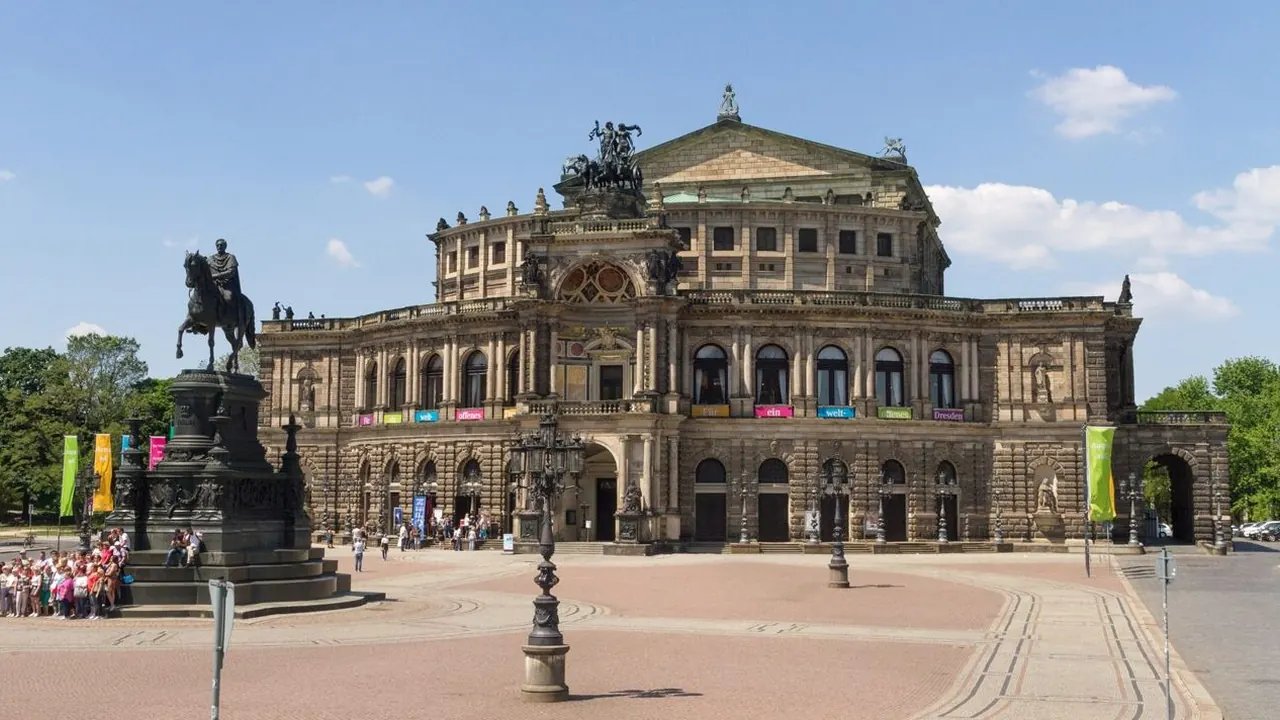
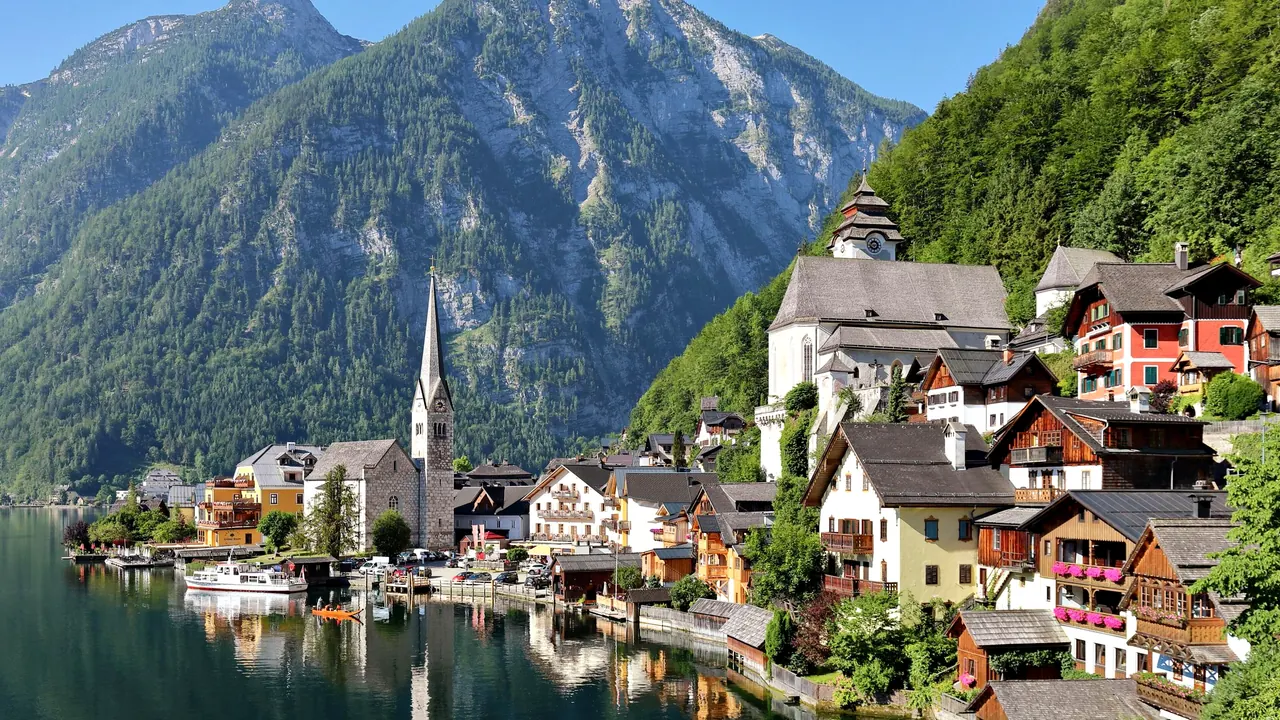
Photos: Dresden by Maksym Kozlenko, CC BY-SA 4.0, cropped; Hallstatt by C.Stadler/Bwag, CC BY-SA 4.0, cropped.
Dresden or Hallstatt?
Our verdict in twelve categories, each scored against the same fixed benchmark cities, and the climate month by month, so you can choose for your trip.
Choose Dresden for
- live music and the arts
- culture and sights
- nightlife
Dresden suits a traveller who wants several full days of art, music and architecture: the Old Masters and the Green Vault by day, the Semperoper or the Kreuzchor by night, and an easy tram-and-train base for Meissen, Saxon Switzerland and even Prague. It is also the cheaper and livelier place to stay, with the Neustadt's bars and casual restaurants filling the evenings.
Choose Hallstatt for
- beaches
- nature and the outdoors
- wellness
Choose Hallstatt when the landscape is the point. It rewards a quiet stay of two or three nights by a deep Alpine lake under the Dachstein, with the ice caves, the Krippenstein and the walk to the Gosausee close by. The trade-off is clear: rooms are dear, evenings are silent and the village itself takes only a day to see.
Scoreboard
Twelve categories on one fixed scale from 0 to 100. The shaded stretch is the gap between the two.
Your match
Pick a travel style or drag the sliders, and both match scores follow your weighting.
Wins on live music and the arts and culture and sights with your weighting.
Wins on beaches and nature and the outdoors with your weighting.
What matters to you?
Category by category
What the scores mean for a trip.
Beaches & swimming
Neither is a beach destination, but in Hallstatt you can at least swim where you are staying. There is a bathing lawn and jetty at the north end of the village and a larger lido at Obertraun, with clear, cold lake water that suits a plunge after a hike, though the season is short and the steep shores leave little room.
The Elbe in Dresden is for deckchairs on the sandy banks, not for swimming. To cool off there you go to the outdoor pools, the gravel pits on the city's edge or the ponds at Moritzburg.
Food & drink
Dresden has the broader table: Saxon roasts and dumplings, a serious afternoon coffee culture built on Eierschecke and Stollen, dry wines from the Elbe valley, and the Neustadt's mix of Vietnamese and Middle Eastern places and beer gardens. It is not a great food city, but there is enough variety for a week.
Hallstatt has a handful of guesthouse dining rooms and lakeside terraces, and lake char and whitefish are the one local dish worth seeking out. Kitchens close early once the day visitors leave, and for more choice people drive to Bad Ischl's patisseries.
Culture & sights
This is one of the widest gaps between them. Dresden's baroque riverfront holds collections of world rank: Raphael's Sistine Madonna in the Zwinger, the treasures of the Green Vault in the Residenzschloss, Caspar David Friedrich at the Albertinum, and the rebuilt Frauenkirche on the Neumarkt. Together they fill three or four days.
Hallstatt's draw is the village as a whole and its deep past. It has seven thousand years of salt mining, the Iron Age burial finds that gave their name to an era of European prehistory, and the painted skulls of the Beinhaus. It is fascinating, but one day covers it.
Nightlife
Dresden has a real if modest night out in the Äußere Neustadt, where students fill small bars, courtyard pubs and the pavements, and a few clubs occupy old industrial buildings. Hallstatt has none. After dinner the choice is a glass of wine on a terrace or a walk by the lake in the dark, and that quiet is exactly why some people stay overnight.
Nature & outdoors
Both have outstanding scenery close at hand, but Hallstatt lives in it. The Dachstein rises straight from the lake, and the Krippenstein cable car, the Five Fingers platform, the Giant Ice Cave and the walk to the Gosausee are all within reach. Winter adds freeride and ski touring.
Dresden's answer is Saxon Switzerland, a landscape of sandstone towers and gorges under an hour away by suburban train, with the Bastei, the Malerweg trail and traditional climbing, plus the Elbe cycle route through the vineyards. It makes a superb day or two out, but it is not the view you wake up to.
Day trips
Dresden is the better base, mainly because trains do the work. Meissen is about forty minutes away, Leipzig about an hour, and Görlitz and Bautzen an hour or so. Moritzburg and Königstein are close by, and Prague is just within a long day.
The outings from Hallstatt are lovely lake towns: Bad Ischl with the Kaiservilla, St Wolfgang, Gmunden, and Salzburg about an hour and a half away by car. Without a car, though, they take careful planning around the buses and the lakeside railway.
Good for families
Dresden is the easier city with children. The Großer Garten has a zoo and a miniature railway run by children, the Transport Museum is full of trams and trains, the Hygiene Museum has a hands-on section, and paddle steamers run up the Elbe.
Hallstatt has fewer attractions for children, but some memorable ones: the salt mine with its miners' slides and underground lake, and the ice caves for older children. Its steep, crowded single lane is hard going with a pushchair, so families often stay in Obertraun instead.
Getting around
Dresden works entirely without a car. The old town is walkable, the Neustadt is just across the Augustus Bridge, trams cover the rest, and suburban trains reach Meissen and Saxon Switzerland.
Hallstatt is tiny and walkable too, though steep. The problem is getting in and out: a boat crosses from the station on the far shore, and buses are thin outside summer, so many visitors are glad to have a car.
Shopping & style
Dresden gives a shopper more to do: chain stores on Prager Straße, second-hand and design shops around the Kunsthofpassage in the Neustadt, Meissen porcelain and Ore Mountain wooden toys, and the Striezelmarkt in Advent. Hallstatt's lane of souvenir shops takes half an hour, and salt from the local mine, sold in grinders and bath mixes, is the one thing you won't find elsewhere.
Affordability
A stay in Dresden costs noticeably less overall, and the money goes to different places. A room and dinner in the Neustadt stay reasonable, so most of the extra spending happens at the ticket desks: the Zwinger, the Green Vault and the Albertinum each charge separately. Rooms near the old town also rise during Advent and the big festival weeks.
In Hallstatt most of the budget goes on the bed. A village with so few rooms and visitors from around the world charges well above the Austrian norm, and resort-level meals plus the salt mine, the funicular and the Dachstein cable car add to the bill. Sleeping in Obertraun, Bad Goisern or Bad Ischl brings the cost down.
Live music & performing arts
Dresden is one of Europe's great music cities. There is the Semperoper with its Staatskapelle, the Philharmonic at the Kulturpalast and the Kreuzchor in the Kreuzkirche, so an evening of opera or sacred music is easy to plan. Hallstatt has a brass band on feast days and the odd church concert. For anything more you have to drive, to Bad Ischl for summer operetta or to Salzburg for its season.
Wellness & relaxation
Neither has a spa of its own, and both rely on a neighbour. Dresden has the sauna areas of its municipal baths and the thermal pool at Bad Schandau, while Hallstatt has the historic brine baths and thermal complex of Bad Ischl.
The difference is in the kind of calm. In Dresden it is spread through the day: the wide Elbe meadows and cake on a terrace above the river. In Hallstatt it comes in two short windows, the misty early morning and the empty evening, with a crowded lane in between.
When should you go?
Pick your month. The climate figures are measured averages, not a forecast.
Dresden in July
Hallstatt in July
Daytime high, °C
Rainfall in the month, mm
Where the figures come from
Hallstatt's temperatures are measured 56 km from the centre, at Salzburg.
Hallstatt has no rain gauge within 25 km of the centre, so its rainfall comes from a gridded climate dataset read at the city rather than from a gauge further away.
Temperature and rainfall are climate normals, averaged over the years shown. Dresden: 1991-2020 normals, Dresden-Strehlen (3.8 km from centre). Hallstatt: 1991-2020 normals, Salzburg (55.5 km from centre).
The two have almost the same temperatures, with highs around 25°C in July and August and cold winters close to freezing, so the real difference is rain. Summer is Hallstatt's best season for hiking and lake swims, and also its wettest, with about 178mm in July. Mist can settle on the lake for days. Dresden gets less than half that in its wettest month and more sunshine from May to August, which makes it the more dependable choice for long days walking the old town and the Elbe meadows.
Winter turns this around a little. Hallstatt gets slightly more sun than Dresden from November to March, and its cold months bring snowy lake views and ski touring on the mountain above. In both places May to September is the main window. Dresden's September, at 21°C and drier than high summer, is a good time for city walking. In Hallstatt it pays to stay flexible and wait for a clear spell between June and September.
Which traveller are you?
On a culture and arts trip, Dresden is the clear pick. The Old Masters, the Green Vault and the Albertinum fill the days, and the Semperoper, the Staatskapelle and the Kreuzchor fill the evenings, which Hallstatt's small museum and charnel house cannot match.
For an outdoors trip, Hallstatt wins because the mountains start at the edge of the village: the Krippenstein cable car, the ice caves, hut-to-hut hiking, via ferratas and the Gosausee walk. Dresden's Saxon Switzerland is excellent, but always a train ride away.
On a trip on a tight budget, Dresden goes much further, with reasonable hotels, good-value Neustadt meals and one ticket for trams and trains. Hallstatt's scarce rooms and paid attractions are costly, and staying outside the village adds bus or car journeys.
Before you go
| Measure | Dresden | Hallstatt |
|---|---|---|
| Official language | German | German, Austrian Sign Language |
| Currency | Euro (EUR) | Euro (EUR) |
| Sockets | CF230 V, 50 Hz | CF230 V, 50 Hz |
| Driving side | Right | Right |
| Time zone | UTC+1, UTC+2 in summer | UTC+1, UTC+2 in summer |
| Emergency number | 112 | 112 |
| Elevation | 126 m | 511 m |
| Main airport | Dresden Airport (DRS)10 km from centre13 non-stop destinations | Salzburg Airport (SZG)55 km from centre64 non-stop destinations |
| Public holidays this year | 11 days | 16 days |
By the numbers
| Measure | Dresden | Hallstatt |
|---|---|---|
| City population | 562,764 | 741 |
| People per km² | 1,713 | 12 |
| Museums within 10 km | 70 | 3 |
| UNESCO World Heritage sites within 50 km | 1 | 2 |
Where else could you go?
Every comparison below shares a destination with this one, so you can follow Dresden or Hallstatt somewhere new.
- Salzburgvs Hallstatt
- Leipzigvs Dresden
- Praguevs Dresden
- Bledvs Hallstatt
- Grazvs Hallstatt
- Cortina d'Ampezzovs Hallstatt