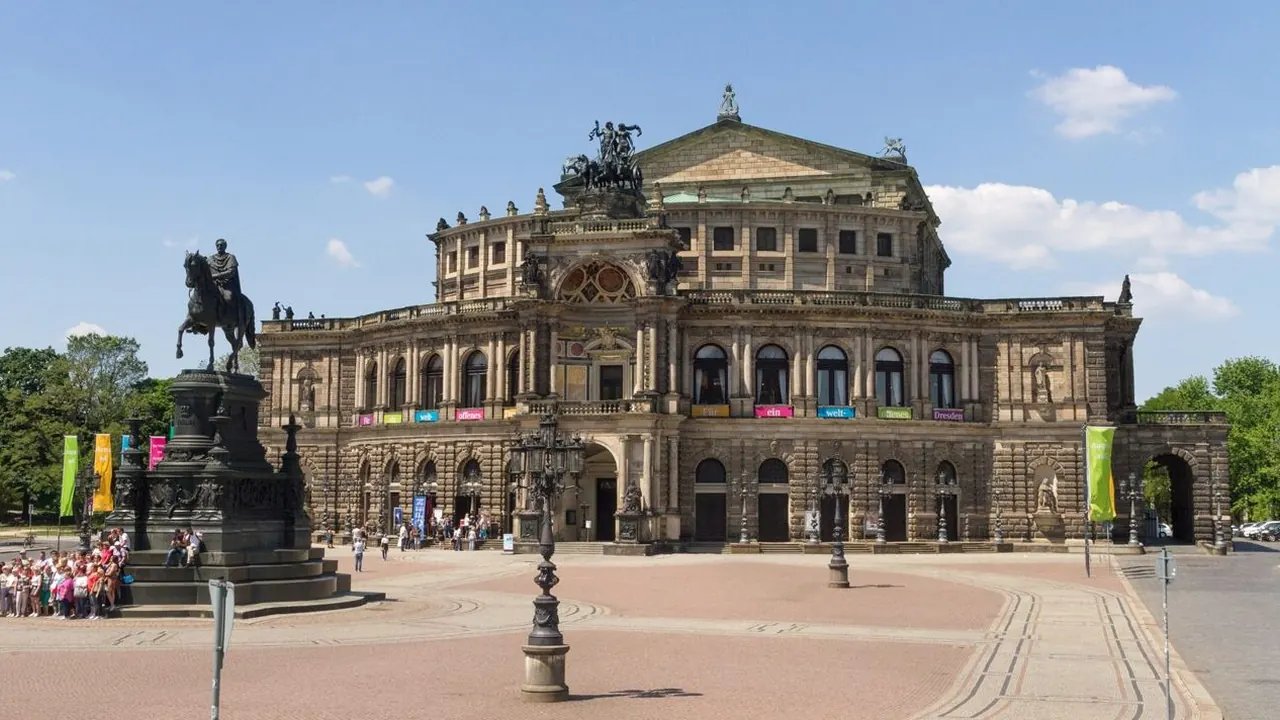
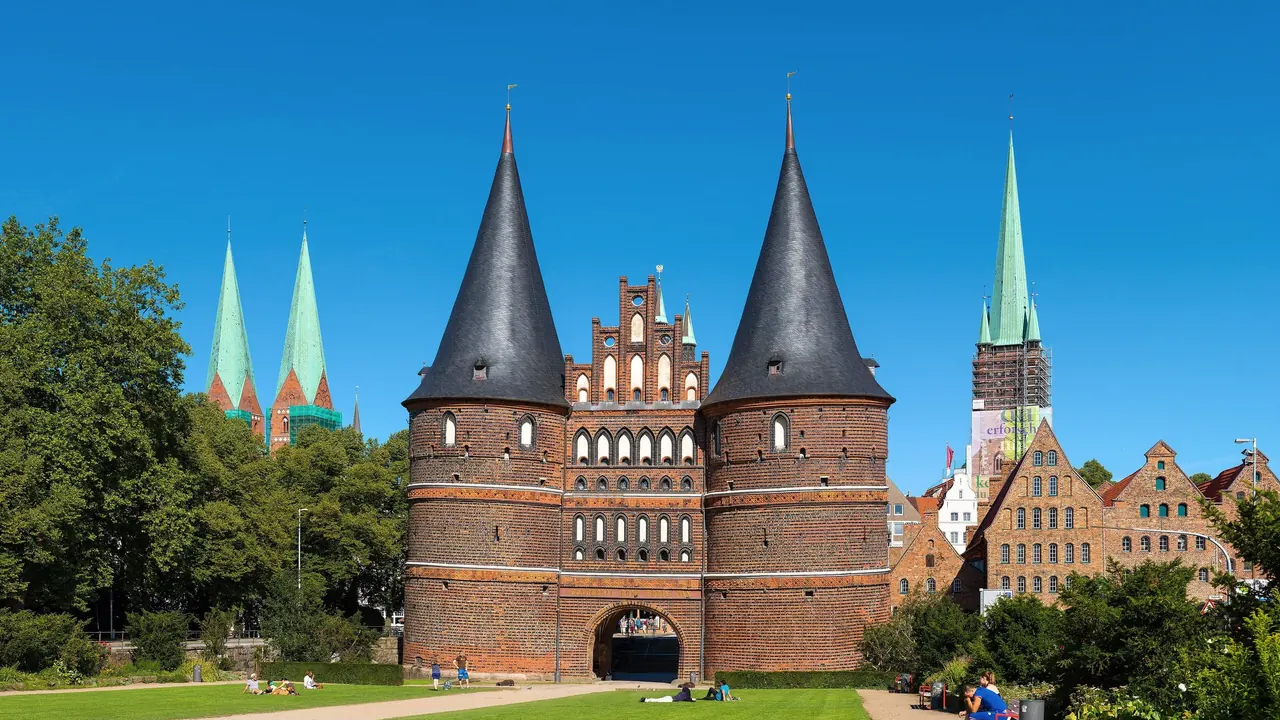
Photos: Dresden by Maksym Kozlenko, CC BY-SA 4.0, cropped; Lubeck by Christian Wolf (www.c-w-design.de), CC BY-SA 3.0 DE, cropped.
Dresden or Lubeck?
Our verdict in twelve categories, each scored against the same fixed benchmark cities, and the climate month by month, so you can choose for your trip.
Choose Dresden for
- live music and the arts
- nature and the outdoors
- nightlife
Dresden suits travellers who want art, music and landscape in a single stay. The Old Masters and the Green Vault, an evening at the Semperoper and a day among the sandstone towers of Saxon Switzerland give it far more range than its northern rival. The Neustadt also keeps the evenings livelier.
Choose Lubeck for
- beaches
Lübeck is the better pick for a quieter, smaller trip that can include the sea. Its brick Gothic island town can be seen well in a couple of days, and Travemünde's sandy beach is a short train ride away. In summer, old streets combined with Baltic afternoons are something landlocked Dresden cannot offer.
Scoreboard
Twelve categories on one fixed scale from 0 to 100. The shaded stretch is the gap between the two.
Your match
Pick a travel style or drag the sliders, and both match scores follow your weighting.
Wins on live music and the arts and nature and the outdoors with your weighting.
Wins on beaches with your weighting.
What matters to you?
Category by category
What the scores mean for a trip.
Beaches & swimming
Lübeck has the advantage because it actually reaches the sea. Travemünde's long sandy beach, lined with hooded wicker chairs, is part of the city, and the calm, tideless water of the bay is good for paddling, even though the Baltic stays cool.
Dresden lies far inland. The Elbe is for sitting beside rather than swimming in, so on a hot day you cool off in an outdoor pool, a flooded gravel pit or the ponds at Moritzburg.
Food & drink
Neither city is worth the trip for food alone, and they are close here. The difference is in what you eat. Dresden means Saxon roasts, dumplings, Stollen and Eierschecke at the afternoon coffee table, dry Elbe valley wines from Radebeul and Meissen, and the most varied, casual eating in the Neustadt.
Lübeck leans towards the sea and the sweet tooth: herring, fish sandwiches from harbour kiosks, Rotspon from the old cellars and marzipan in every form. The sea captains' guild house adds a meal with real history.
Culture & sights
Dresden goes further. Its collections are of world rank, with the Sistine Madonna in the Zwinger, the Green Vault in the Residenzschloss and Caspar David Friedrich at the Albertinum, and they fill three or four days. Much of the baroque core is reconstruction, though, and post-war blocks stand close by.
Lübeck has the more intact townscape. It is an island of brick Gothic churches, stepped gables and tucked-away courtyards, almost all of it a UNESCO World Heritage site. Its museums, from the Hansemuseum to the Buddenbrookhaus, are good but compact, and two days covers them.
Nightlife
Dresden has the livelier evenings, almost entirely thanks to the Äußere Neustadt. Student bars, beer kiosks and pavement drinking there go on late at weekends, and a few clubs occupy old industrial buildings.
Lübeck is quiet, with wine bars and pubs in the old town and on the Obertrave, a busier promenade at Travemünde in summer and little open after midnight. For a proper night out, people take the train to Hamburg.
Nature & outdoors
Dresden has the kind of landscape Lübeck lacks. The sandstone towers and gorges of Saxon Switzerland begin under an hour upriver, with the Bastei view, several days of walking on the Malerweg and a long climbing tradition on hundreds of rock towers. The Ore Mountains add modest cross-country skiing in winter.
Around Lübeck the country is gentle and full of water: canoeing on the Wakenitz, the clay cliff walk north of Travemünde, the Holstein Switzerland lakes and summer sailing on the bay. It is easy cycling country, but there are no heights or wild ground.
Day trips
Dresden has the wider choice of excursions. Meissen's porcelain and cathedral, Moritzburg and the Königstein fortress are all close. Leipzig and Görlitz are about an hour away, and Prague is reachable in a long day along the Elbe gorge.
Lübeck's best outing is Hamburg, under an hour by train. Wismar and Schwerin's island castle are about an hour away, with lake towns such as Ratzeburg nearer. Beyond those the options run out sooner than they do from Dresden.
Good for families
Both are easy, safe places to bring children, but they work in different ways. Dresden is good all year, with the zoo and children's railway in the Großer Garten, the Transport Museum, the hands-on Hygiene Museum and paddle steamers on the Elbe.
Lübeck comes into its own in summer. Travemünde's shallow beach, the aquarium along the bay and Hansa-Park give it the seaside and the amusement park that Dresden lacks. Outside the warm months there is much less for young visitors to do.
Getting around
You won't need a car in either city, so the differences are size and transport. Lübeck's sights sit on an island about 2km long with the station just across the river, and buses and a short train ride to Travemünde cover the rest.
Dresden spreads further along both banks of the Elbe. A dense tram network, suburban trains to Meissen and Saxon Switzerland, and even the paddle steamers make it simple to cover.
Shopping & style
Neither city is a shopping destination, and the best buys in both are local crafts rather than fashion. Dresden has Meissen porcelain, wooden Ore Mountain toys and the second-hand and design shops of the Neustadt and the Kunsthofpassage. In Advent it adds the Striezelmarkt.
Lübeck's chain stores line Breite Strasse and Königstrasse, with independents and galleries in the side passages, and marzipan is the souvenir everyone takes home. For fashion, both cities send you elsewhere, and from Lübeck that means Hamburg.
Affordability
Costs are much the same, with both in the moderate middle range for Western Europe. In Dresden the separate entry charges at each major museum add up, and rooms in the old town cost more in the Christmas market season.
In Lübeck the old town itself costs nothing to explore. A stay on the coast in July and August, though, is noticeably dearer than one in the city and books up early.
Live music & performing arts
This is one of the widest gaps between the two. Dresden's Semperoper is one of Europe's celebrated opera houses, home to the Staatskapelle and the scene of premieres by Wagner and Strauss. The Kreuzchor, the Philharmonic in the Kulturpalast and the Dresden Music Festival complete a full classical calendar.
Lübeck offers less, but what it has is distinctive: opera and drama at the Art Nouveau Theater Lübeck, organ concerts at the Marienkirche where Buxtehude played, and the Schleswig-Holstein Music Festival in summer. Both cities are thin on rock and jazz.
Wellness & relaxation
Neither city is made for a dedicated spa trip, and there is little to choose between them, but the calm comes from different places. Dresden's is inland and urban: an afternoon in the sauna of one of the municipal baths, or a short train ride upriver to the thermal pool at Bad Schandau, where Saxon Switzerland begins. Beyond that, the wide green Elbe meadows and a slow coffee and cake on a terrace above the water do most of the restoring.
Lübeck looks to the sea. Travemünde has been a bathing resort since the early nineteenth century, and the bay keeps up that tradition with wellness hotels, saunas and an indoor seawater pool at Scharbeutz, so warm water and sea air are easy to find even out of season. Back on the island, the courtyards behind the merchants' houses and the benches by the river give the quietest hours of a stay.
When should you go?
Pick your month. The climate figures are measured averages, not a forecast.
Dresden in July
Lubeck in July
Daytime high, °C
Rainfall in the month, mm
Temperature and rainfall are climate normals, averaged over the years shown. Dresden: 1991-2020 normals, Dresden-Strehlen (3.8 km from centre). Lubeck: 1991-2020 normals, Luebeck-Blankensee (6 km from centre).
Both cities have cold, grey winters at around 4°C and a warm season from May to September. Dresden, being inland, runs a little warmer, reaching 26°C in July and August against 24°C on the Baltic. Late spring and early autumn are the most comfortable times for walking Dresden's old town, because high summer is also its wettest stretch, with August the rainiest month at 83mm. In both cities spring is noticeably drier than summer.
Lübeck's beach season is short. The sea only warms to about 19°C by August, so the swimming window runs from late June to early September, and May to September is its best period overall. Its winters are darker than Dresden's, with about half as much December sunshine. Rain is spread more evenly through its year, so the cold months bring damp as well as gloom.
Which traveller are you?
On a beach and sun trip, Lübeck is the only real choice of the two. Travemünde's sandy beach is part of the city and calm, shallow resorts line the bay beyond it. Dresden has only river banks, outdoor pools and gravel-pit lakes.
For a culture and arts trip, Dresden is the stronger pick. Its baroque galleries hold Raphael and the Green Vault treasures, and the Semperoper and Staatskapelle give evenings a weight that Lübeck's fine Hanseatic museums and organ concerts cannot quite match.
On an outdoors trip, Dresden wins clearly. The gorges, climbing towers and Malerweg trail of Saxon Switzerland start less than an hour away by suburban train. Lübeck offers gentle canoeing on the Wakenitz, cliff walks and flat cycling, but no real drama.
Before you go
| Measure | Dresden | Lubeck |
|---|---|---|
| Official language | German | German |
| Currency | Euro (EUR) | Euro (EUR) |
| Sockets | CF230 V, 50 Hz | CF230 V, 50 Hz |
| Driving side | Right | Right |
| Time zone | UTC+1, UTC+2 in summer | UTC+1, UTC+2 in summer |
| Emergency number | 112 | 112 |
| Elevation | 126 m | 13 m |
| Main airport | Dresden Airport (DRS)10 km from centre13 non-stop destinations | Hamburg Helmut Schmidt Airport (HAM)53 km from centre120 non-stop destinations |
| Public holidays this year | 11 days | 10 days |
By the numbers
| Measure | Dresden | Lubeck |
|---|---|---|
| City population | 562,764 | 217,061 |
| People per km² | 1,713 | 1,013 |
| Museums within 10 km | 70 | 23 |
| UNESCO World Heritage sites within 50 km | 1 | 1 |
| Swim season, months above 21 °C | - | None |
Where else could you go?
Every comparison below shares a destination with this one, so you can follow Dresden or Lubeck somewhere new.
- Hamburgvs Lubeck
- Leipzigvs Dresden
- Karlovy Varyvs Dresden
- Praguevs Dresden
- Berlinvs Dresden
- Wroclawvs Dresden