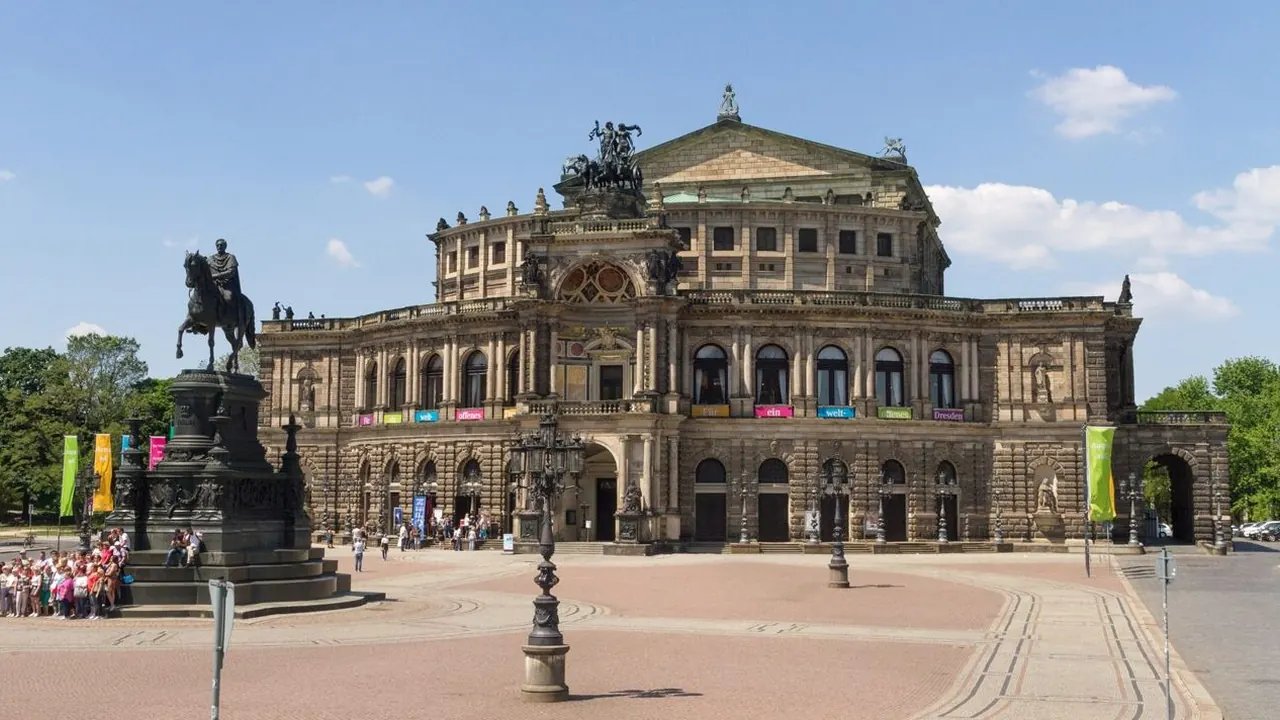
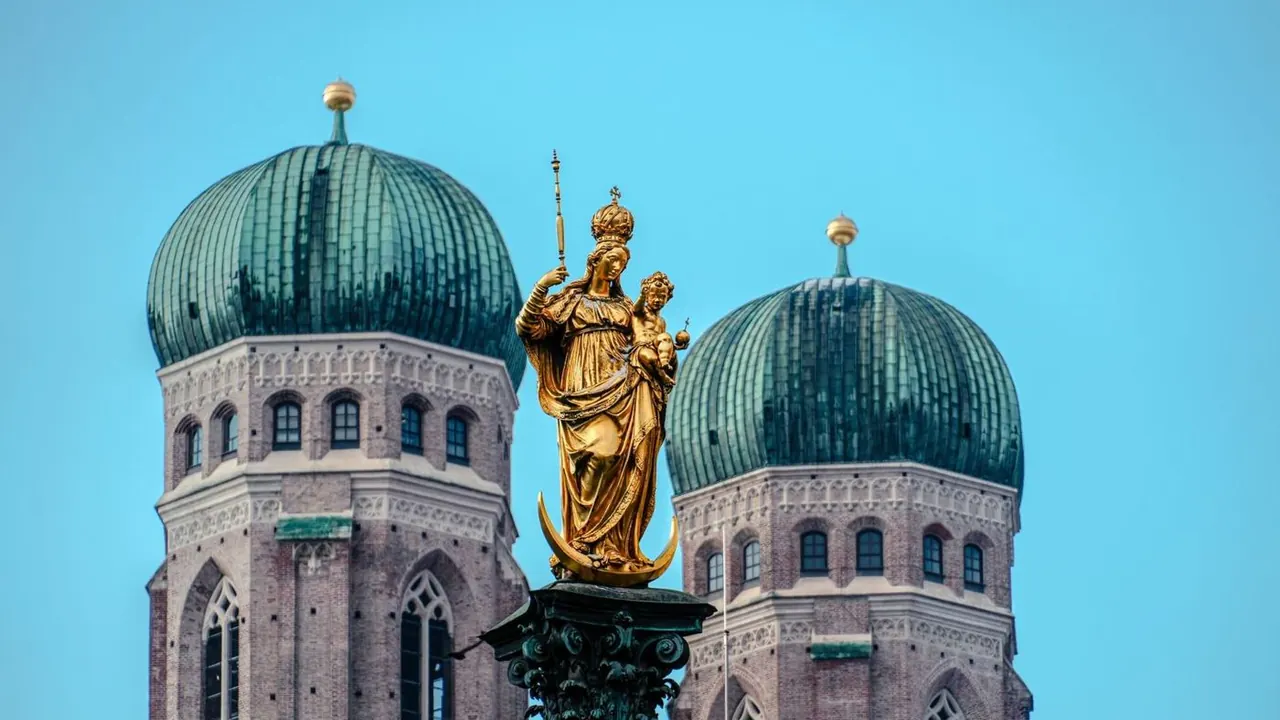
Photos: Dresden by Maksym Kozlenko, CC BY-SA 4.0, cropped; Munich by 0xd1ma, Pexels License.
Dresden or Munich?
Our verdict in twelve categories, each scored against the same fixed benchmark cities, and the climate month by month, so you can choose for your trip.
Choose Dresden for
- prices
Dresden suits a traveller who wants a first-rate baroque art city without Munich's prices. Its treasures, from the Green Vault to the Sistine Madonna, hold their own against anything in Bavaria, and they sit together along the Elbe within a short walk. Add the Semperoper, cheaper rooms and Saxon Switzerland's sandstone towers upriver, and you have a rich, compact stay of three or four days that costs noticeably less.
Choose Munich for
- shopping
- wellness
- beaches
Munich is the better pick if the art is only part of the plan. Around collections of the same standing it adds the Alps and the lakes, castles and Salzburg within reach, beer gardens, serious shopping, a wider stage programme and far more for children. It costs considerably more, especially for hotels, but it gives back more variety each day, and it holds a longer stay or a family trip far better.
Scoreboard
Twelve categories on one fixed scale from 0 to 100. The shaded stretch is the gap between the two.
Your match
Pick a travel style or drag the sliders, and both match scores follow your weighting.
Wins on prices with your weighting.
Wins on shopping and wellness with your weighting.
What matters to you?
Category by category
What the scores mean for a trip.
Beaches & swimming
Neither city is anywhere near the sea, but Munich has real summer swimming and Dresden does not. From Munich the S-Bahn reaches the Starnberger See and the Ammersee in under an hour, with jetties, lawns and clear alpine water, and the Isar's gravel banks are good for sunbathing in town.
In Dresden the Elbe is for deckchairs, not for swimming, so a cool-off means an outdoor pool, a flooded gravel pit or the ponds around Moritzburg.
Food & drink
Munich offers more as a place to eat and drink. Its brewery beer halls and chestnut-shaded beer gardens are an experience in their own right, the Viktualienmarkt is good for grazing, and a respectable layer of starred restaurants sits above the pork knuckle and white sausage.
Dresden's table is plainer Saxon fare, but it has a different accent. Its strengths are baking and wine rather than beer: Christstollen, Eierschecke with afternoon coffee, and dry whites from the vineyards around Radebeul and Meissen. Its most varied eating is in the Neustadt.
Culture & sights
These two are equals in culture, but the experience differs. Dresden's riches sit close together along the Elbe: the Zwinger's Old Masters, the Green Vault's jewelled treasures, the Albertinum's Romantic painters and the rebuilt Frauenkirche. The city around them is partly reconstructed and mixed with post-war blocks.
Munich's collections are spread out and wider in range. The Kunstareal alone holds three Pinakotheken, ancient sculpture and the Blue Rider painters. The Residenz, Nymphenburg and the Deutsches Museum add royal palaces and science, and the Dachau memorial adds twentieth-century history Dresden does not offer in the same form.
Nightlife
Dresden's nightlife is almost all in the Äußere Neustadt. Students fill small bars and courtyard pubs there, and on summer nights people drink on the pavements. It is friendly and informal but compact, and the old town falls quiet after dinner.
Munich has the wider range after dark. You can spend a whole evening in a beer hall or beer garden, or move on to the cocktail and gay bars around Gärtnerplatz and finish in a techno club that runs until morning at weekends. For a fortnight each autumn, the Oktoberfest tents take over the city.
Nature & outdoors
Both have fine country close by, but Munich's reaches higher. The Alps rise about an hour south, with Zugspitze views, proper alpine hiking and winter skiing, and the Five Lakes are good for sailing and cycling. In town, the English Garden is big enough to have surfers on the Eisbach wave.
Dresden's prize is Saxon Switzerland, a short train ride upriver. Its sandstone towers, the Bastei viewpoint and the Malerweg trail are dramatic, and its traditional climbing culture is world-famous. The Ore Mountains offer only gentle skiing, though, and nothing near the scale of the Alps.
Day trips
Munich gives the longer and grander list of excursions. Neuschwanstein and the royal castles, Salzburg and Innsbruck across the border, and the old towns of Nuremberg, Regensburg and Augsburg are all easy days by train.
Dresden's day trips are closer to home but still rewarding. They include porcelain-making Meissen, the lakeside lodge at Moritzburg, the Königstein fortress, Leipzig, and the intact streets of Görlitz. Prague is possible but makes a long day.
Good for families
Munich is the easier city with children. The zoo at Hellabrunn, the Sea Life aquarium, the Deutsches Museum's hands-on floors and beer gardens with playgrounds cover a week. In summer there are the lakes, and Legoland is within driving distance.
Dresden manages a few good days. Children run the miniature railway in the Großer Garten, the Transport Museum is full of trams, and paddle steamers go up the Elbe. Beyond that it has no aquarium or theme park, and its formal galleries hold young visitors less well.
Getting around
Both are easy without a car, but Munich's network goes further. U-Bahn, S-Bahn, trams and buses work as one system, reaching Nymphenburg, the Olympic Park, the airport and the lakes. The flat streets suit cycling too, though delays on the central S-Bahn line can be a nuisance.
Dresden has no underground. It manages with a walkable old town, a short bridge crossing to the Neustadt and a dense tram network. Suburban trains along the Elbe and the slow paddle steamers to Pillnitz cover the excursions.
Shopping & style
Munich is the shopping city of the two by a wide margin. It has luxury labels on Maximilianstrasse and in the Theatinerstrasse arcades, department stores on the pedestrian axis, a centuries-old fine-food delicatessen and Bavarian Tracht from specialist tailors.
Dresden is mostly chains on Prager Straße. Its more distinctive buys are second-hand and design pieces around the Kunsthofpassage, Meissen porcelain and carved Ore Mountain figures. In Advent, the Striezelmarkt is one of the country's oldest Christmas markets.
Affordability
Dresden is clearly kinder to the wallet. Rooms are reasonable for most of the year and Neustadt meals are good value. The main costs that add up are separate museum entries and the higher hotel rates at Christmas market time.
Munich is Germany's most expensive city, and you feel it most in hotel bills, which climb steeply during Oktoberfest and trade fairs. A picnic in a beer garden, free parks and lakes, and token Sunday museum fees soften it only partly.
Live music & performing arts
Both are great music cities, but Munich has more depth and range. The Bavarian State Opera, three orchestras of standing, chamber opera in the rococo Cuvilliés Theatre and major German drama houses fill the year. Jazz clubs and big touring acts at the Olympic Park cover the rest.
Dresden's strength is concentrated in classical music and its history. The Semperoper and the ancient Staatskapelle are linked with Wagner and Strauss premieres, the Kreuzchor sings in the Kreuzkirche, and Bach is played in the Frauenkirche. Away from that, live music is thinner outside festival time.
Wellness & relaxation
Munich takes bathing more seriously. The Art Nouveau Müller'sches Volksbad has vaulted pools and a Roman-style steam bath, one of Europe's largest thermal complexes is at Erding, and the spa towns of Bad Tölz and Bad Reichenhall lie towards the mountains.
Dresden offers municipal saunas and a thermal pool at Bad Schandau, at the edge of Saxon Switzerland. Its calm comes more from the wide Elbe meadows and an evening old town that empties early.
When should you go?
Pick your month. The climate figures are measured averages, not a forecast.
Dresden in July
Munich in July
Daytime high, °C
Rainfall in the month, mm
Temperature and rainfall are climate normals, averaged over the years shown. Dresden: 1991-2020 normals, Dresden-Strehlen (3.8 km from centre). Munich: 1991-2020 normals, München (1.9 km from centre).
The two cities follow almost the same temperature curve. Summer highs reach about 26°C in July and August, and January sits near 4°C, so both are grey and cold for street walking from November to February. Late spring and September are the most comfortable months for sightseeing in either. Dresden is a little warmer in late spring.
Rain is the real difference. Munich's summers are wet, with around 120mm a month from May to August, while Dresden peaks at about 80mm in August and stays dry through spring. Munich gets slightly more sunshine in summer and in the dark months, though. Its lakes are warm enough for a fresh swim from June to early September. Dresden has no comparable swimming water, so summer there is better for river walks and terrace cafés.
Which traveller are you?
On a trip on a tight budget, Dresden lets the money go further. Stay in the Neustadt, plan your days around two or three of the big museums rather than all of them, and avoid Advent, when old-town rooms cost more.
For a shopping trip, plan on Munich and leave space in your luggage. One long day on foot covers luxury, department-store and independent shopping, and a second day can go to the boutiques. In Dresden, set aside an afternoon at most.
On a family trip with children, Munich keeps young ones busy for a week, while Dresden suits three or four days. In Munich, keep museum mornings short and spend summer afternoons outdoors. In Dresden, break up the galleries with a river or countryside day.
Before you go
| Measure | Dresden | Munich |
|---|---|---|
| Official language | German | German |
| Currency | Euro (EUR) | Euro (EUR) |
| Sockets | CF230 V, 50 Hz | CF230 V, 50 Hz |
| Driving side | Right | Right |
| Time zone | UTC+1, UTC+2 in summer | UTC+1, UTC+2 in summer |
| Emergency number | 112 | 112 |
| Elevation | 126 m | 519 m |
| Main airport | Dresden Airport (DRS)10 km from centre13 non-stop destinations | Munich Airport (MUC)29 km from centre210 non-stop destinations |
| Public holidays this year | 11 days | 12 days |
By the numbers
| Measure | Dresden | Munich |
|---|---|---|
| City population | 562,764 | 1,505,036 |
| People per km² | 1,713 | 4,844 |
| Museums within 10 km | 70 | 74 |
| UNESCO World Heritage sites within 50 km | 1 | 1 |
Where else could you go?
Every comparison below shares a destination with this one, so you can follow Dresden or Munich somewhere new.