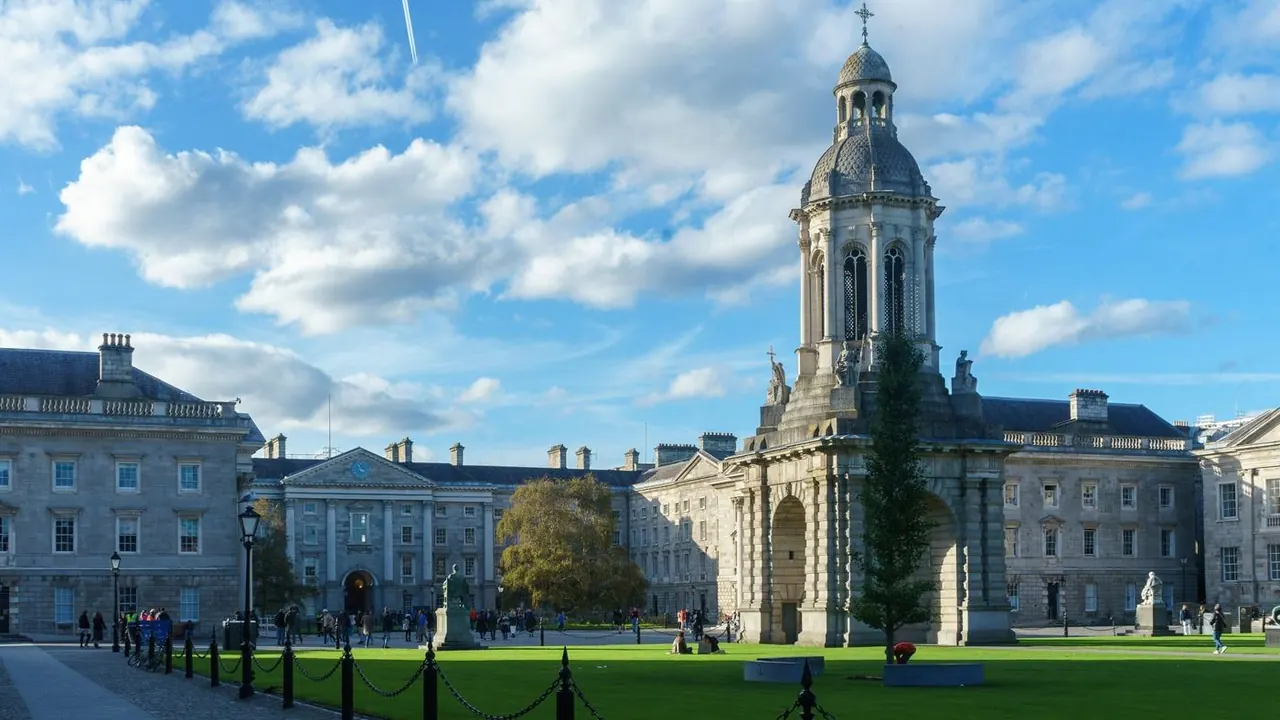
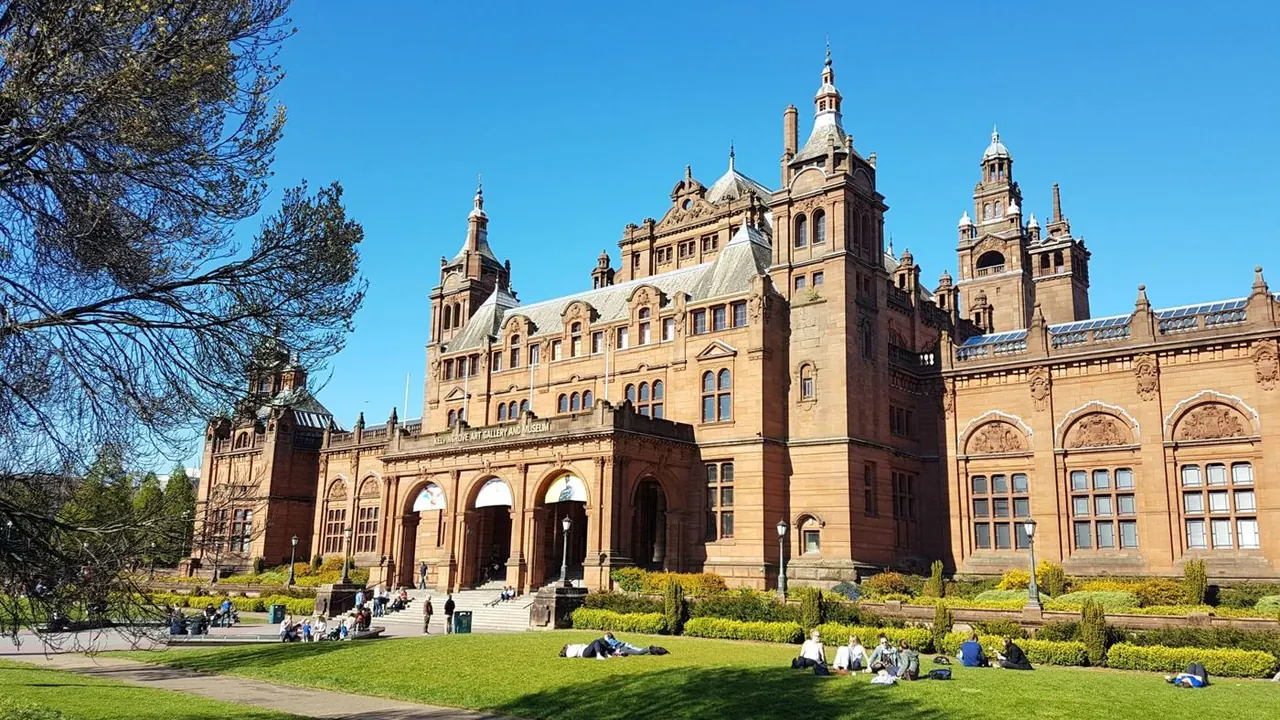
Photos: Dublin by David Kernan, CC BY 4.0, cropped; Glasgow by Stinglehammer, CC BY-SA 4.0, cropped.
Dublin or Glasgow?
Our verdict in twelve categories, each scored against the same fixed benchmark cities, and the climate month by month, so you can choose for your trip.
Choose Dublin for
- beaches
- culture and sights
Dublin suits travellers who want a compact, walkable city break with the coast close at hand. The Book of Kells, the national museums and the Georgian squares are all a short stroll apart, the DART runs out to Howth and Dalkey, and the evenings are built around long conversations in old pubs. It is the drier and sunnier of the two, but it costs a good deal more, so it makes most sense for a short stay where convenience matters more than the budget.
Choose Glasgow for
- prices
- shopping
- live music and the arts
Glasgow is the stronger choice if you want more nights out, more live music and a lower bill. Its gig circuit, underground clubs and resident opera and ballet go deeper than Dublin's, the shopping streets are bigger, and most of the major museums are free. Loch Lomond, the West Highland Way and Edinburgh are all within easy reach, which makes it a better base for a longer trip, as long as you pack for plenty of rain.
Scoreboard
Twelve categories on one fixed scale from 0 to 100. The shaded stretch is the gap between the two.
Your match
Pick a travel style or drag the sliders, and both match scores follow your weighting.
Wins on beaches and culture and sights with your weighting.
Wins on prices and shopping with your weighting.
What matters to you?
Category by category
What the scores mean for a trip.
Beaches & swimming
Neither city is a place for warm-water beach days, but Dublin has far more coast to enjoy. Sandy strands such as Dollymount, Sandymount and Killiney are on the DART line around the bay. Its year-round swimmers at the Forty Foot and Seapoint make a cold dip a real local experience you can join.
Glasgow has no beach of its own. The nearest sand is at Largs, Troon or Ayr, about an hour away by train, and these trips are more about promenades, views to Arran and fish and chips than about swimming.
Food & drink
Dublin's best cooking is in the modern bistros of Dublin 2 and Dublin 8, built on very good Irish produce: Atlantic shellfish, grass-fed lamb and farmhouse cheese. The drink often outshines the plates, from stout poured slowly in a Victorian pub to whiskey tastings, and meals cost a lot for what you get.
Glasgow's strength comes from the people who settled there: long-established curry houses and the cafés, ice cream parlours and chip shops that Italian families built up. Finnieston does modern Scottish cooking with west coast seafood, and the South Side has neighbourhood bakeries and small restaurants. The centre is full of chains, so in Glasgow it pays to choose your neighbourhood before you choose a table.
Culture & sights
The two cities offer about the same amount of sightseeing, but from different eras. Dublin is Georgian and literary. Its sights sit close together: the Book of Kells and the Long Room, the Chester Beatty Library, two medieval cathedrals and Kilmainham Gaol, with the story of independence running through them.
Glasgow is a Victorian city of sandstone and trade. Its standouts are the huge free collections at Kelvingrove and the Burrell, along with the buildings of Charles Rennie Mackintosh, which are found nowhere else. Its sights are more spread out, so visiting them takes more travel across the city.
Nightlife
Both are excellent for going out, but they mean different things by it. A Dublin night is pints and talk in old pubs with snugs and coal fires, or younger bars on Camden and Wexford Streets. Most venues close not long after the pubs, so there is very little clubbing.
Glasgow goes further. On top of its loud, friendly pubs, it has a respected underground techno and house scene in basement clubs that keep going until around 3am. It is the better choice for anyone who wants to dance as well as drink.
Nature & outdoors
Glasgow has the edge for serious outdoor days because the Highlands begin so close by. Loch Lomond is about 40 minutes away, with Ben Lomond and Conic Hill to climb. The West Highland Way starts on the city's edge, and Arran's rugged hills are a ferry ride away.
Dublin's outdoors is gentler and nearer the sea: the cliff path at Howth, the coastal walk from Bray to Greystones, deer in Phoenix Park, and the rounded granite hills of Wicklow. These are lovely walks, but it is softer country than Glasgow's.
Day trips
Dublin's day trips go further back in time, while Glasgow's are easier to reach by train. From Dublin you can see the passage tombs of Newgrange and Knowth, which are older than the pyramids, the Hill of Tara, and the monastic round tower at Glendalough. Most of these rural sites are much simpler with a tour or a hire car, though Kilkenny and Belfast are comfortable by rail.
From Glasgow, Edinburgh and Stirling are each under an hour by train, Linlithgow Palace is on the Edinburgh line, and New Lanark is about an hour south. Ferries add Bute and Arran, and Culzean Castle adds the Ayrshire cliffs, so you can fill a week without ever hiring a car.
Good for families
Children are well looked after in both cities, so the choice depends on what your family enjoys. Dublin has a zoo inside Phoenix Park, Viking displays at Dublinia, and a theme park about half an hour away. Its compact, flat centre is easy going with a buggy.
Glasgow has no zoo or theme park in town. It makes up for this with free, hands-on museums: trams and a tall ship at the Riverside, a Spitfire at Kelvingrove, and the Science Centre. Its steep central streets and heavier rain mean planning more indoor days.
Getting around
In Dublin a single tap-on card covers the trams, the DART and the buses. In Glasgow the buses are run by several companies with separate fares, which can confuse a first-time visitor. Dublin's flat centre is a pleasant walk from end to end, and the DART runs along the bay to Howth, Dalkey and Bray. There is no metro, though, so the airport and outer districts depend on buses that get stuck in traffic.
Glasgow's centre is a grid, but some streets climb steeply to the north. The Subway is a single small loop serving the West End and Govan, and the real workhorse is the suburban rail network from Central and Queen Street, which reaches the South Side, the coast and most day trips.
Shopping & style
Glasgow is clearly the bigger place to shop. The pedestrian loop of Buchanan, Sauchiehall and Argyle Streets is far larger than anything in Dublin, Princes Square and the Argyll Arcade add Victorian arcades, and the West End and the Barras market bring vintage clothes and old-fashioned character.
Dublin's shopping centres on Grafton Street and the Powerscourt Townhouse. It is better for things to take home than for fashion: Aran knitwear, linen, tweed and whiskey, which Glasgow tends to leave to the Highlands.
Affordability
Glasgow is considerably cheaper. Its hotel rooms cost less, curry houses and pub lunches keep meals reasonable, and nearly all its major museums are free, so the main extra cost is rail fares for day trips.
Dublin is one of the more expensive cities in Europe to stay in. Rooms near the centre are the biggest strain, and pub rounds add up quickly. Free national museums and staying near a tram or DART stop outside the centre help, but only partly.
Live music & performing arts
Glasgow has the deeper scene, above all for live music. It has one of Britain's strongest gig circuits, from the Barrowland Ballroom to small rooms where many bands began, and Celtic Connections in winter. Scottish Opera, Scottish Ballet and two national orchestras are also based in the city.
Dublin's strength is theatre. The Abbey and the Gate stage Irish drama, and on most nights you can find a traditional session in a pub. Opera is the gap, since Dublin has no permanent opera house, and that is exactly where Glasgow is strong.
Wellness & relaxation
Neither is a city for a relaxing spa break, and both mostly rely on hotel spas. Dublin's one real ritual is outdoors: a cold sea dip at the Forty Foot or Seapoint, often followed by a seafront sauna. Glasgow's equivalent is indoors, at its Victorian swimming clubs with Turkish baths, though these are mainly for members.
For real calm, Dublin offers quiet Georgian squares and the villages along the bay, while from Glasgow people head out to the lochs.
When should you go?
Pick your month. The climate figures are measured averages, not a forecast.
Dublin in July
Glasgow in July
Daytime high, °C
Rainfall in the month, mm
Where the figures come from
Glasgow has no rain gauge within 25 km of the centre, so its rainfall comes from a gridded climate dataset read at the city rather than from a gauge further away.
Glasgow's sunshine is measured 90 km from the centre, at Eskdalemuir.
Temperature and rainfall are climate normals, averaged over the years shown. Dublin: 1991-2020 normals, Dublin Airport (9.3 km from centre). Glasgow: 1991-2020 normals, Glasgow Airport (11.5 km from centre).
Temperatures in the two cities are almost the same all year. It is never too hot for walking the streets, summer highs reach about 20°C in July and August, and winters are mild but grey. The sea warms to about 15°C off both coasts in late summer, so neither city offers a warm beach day, only a brisk dip. The real difference is rain. Dublin gets a fairly steady 50mm to 80mm each month. Glasgow is far wetter, with more than 140mm in December and January.
Dublin is also clearly sunnier, especially from April to June, and May is its brightest month. For both cities, late spring to early autumn is the time to go. Glasgow is at its best in April and May, when the rain is lightest. From October to February its days are short, dark and very wet, while Dublin's winter is damp but still workable for a city break.
Which traveller are you?
On a trip on a tight budget, Glasgow is the easier city. Hotel rooms are generally cheaper, curry houses and pub lunches keep meals sensible, and its biggest sights are free. In Dublin, the cost of a room in or near the centre hits hard.
For a shopping trip, choose Glasgow. Buchanan, Sauchiehall and Argyle Streets form a large pedestrian loop, Princes Square adds upmarket fashion, and the West End has vintage and independent shops. Dublin's shopping mostly comes down to Grafton Street, Henry Street and Irish crafts.
For a short city break, Dublin fits a few days neatly. Trinity, the national museums, the cathedrals and the Georgian squares are a flat walk apart. The DART adds Howth or Dalkey in an afternoon, and the drier weather wastes fewer hours.
Before you go
| Measure | Dublin | Glasgow |
|---|---|---|
| Official language | English, Irish | English |
| Currency | Euro (EUR) | Pound Sterling (GBP) |
| Sockets | G230 V, 50 Hz | G230 V, 50 Hz |
| Driving side | Left | Left |
| Time zone | UTC, UTC+1 in summer | UTC, UTC+1 in summer |
| Emergency number | 112 | 112 or 999 |
| Elevation | 20 m | 21 m |
| Main airport | Dublin Airport (DUB)9 km from centre200 non-stop destinations | Glasgow Airport (GLA)11 km from centre95 non-stop destinations |
| Public holidays this year | 11 days | 10 days |
By the numbers
| Measure | Dublin | Glasgow |
|---|---|---|
| City population | 592,713 | 626,410 |
| People per km² | 5,154 | 190 |
| Museums within 10 km | 40 | 29 |
| UNESCO World Heritage sites within 50 km | 1 | 2 |
| Swim season, months above 21 °C | None | None |
Where else could you go?
Every comparison below shares a destination with this one, so you can follow Dublin or Glasgow somewhere new.