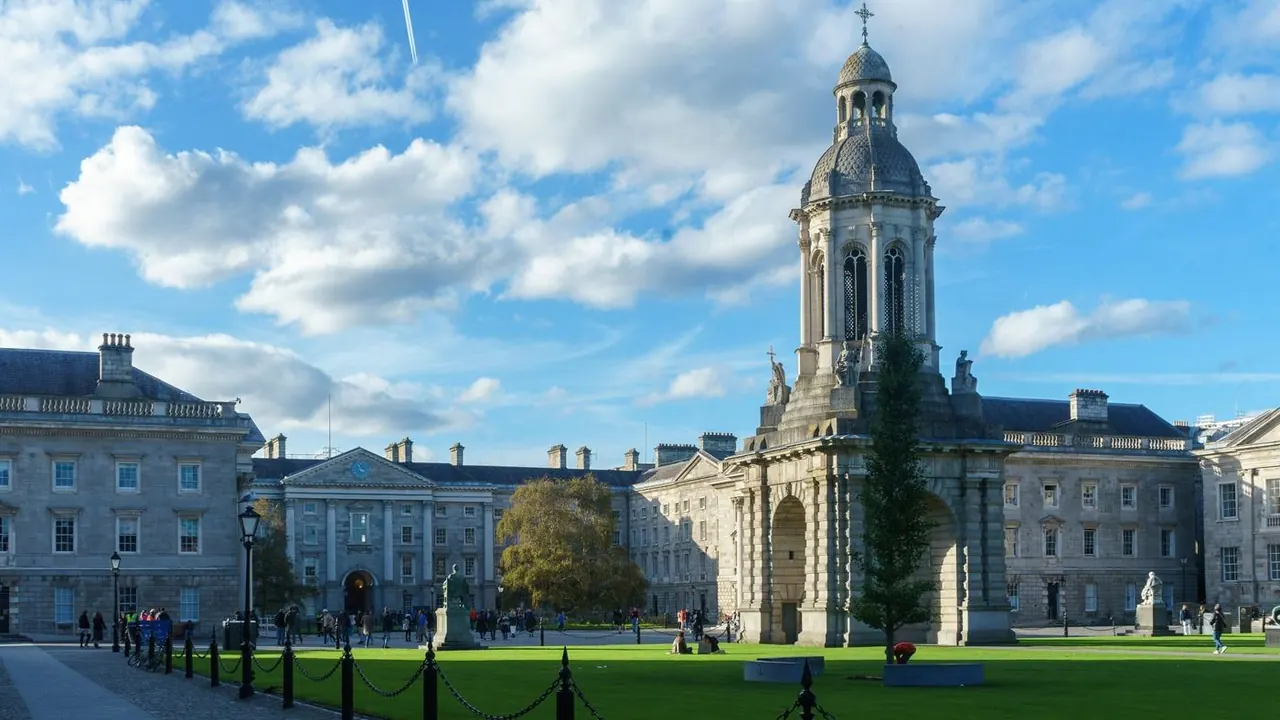
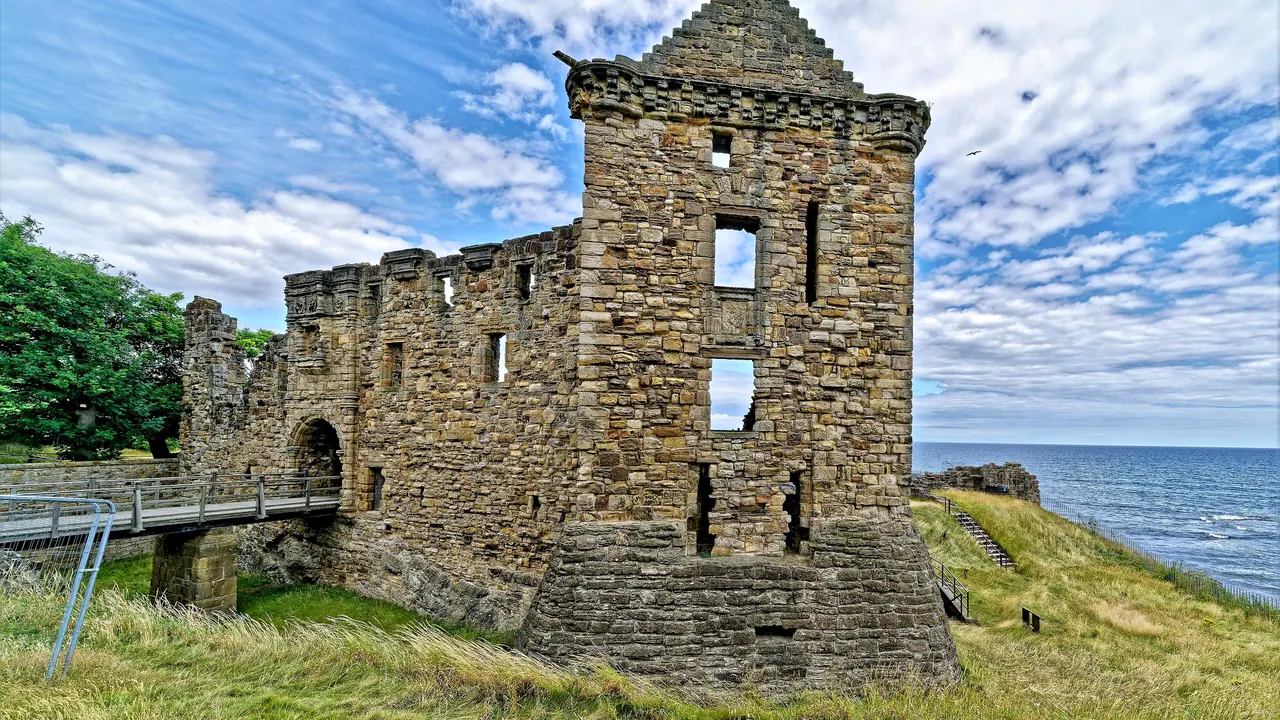
Photos: Dublin by David Kernan, CC BY 4.0, cropped; St Andrews by Holger Uwe Schmitt, CC BY-SA 4.0, cropped.
Dublin or St Andrews?
Our verdict in twelve categories, each scored against the same fixed benchmark cities, and the climate month by month, so you can choose for your trip.
Choose Dublin for
- nightlife
- live music and the arts
- shopping
Dublin is the choice for a proper city trip. It has a capital's depth: free national museums, the Book of Kells and Kilmainham Gaol, the Abbey and the Gate theatres, traditional music in the pubs most nights, and plenty to fill several evenings. Food, shopping and things for children all go further here, and the DART puts cliff walks and mountains within easy reach. It costs a lot, but the rewards are greater.
Choose St Andrews for
- prices
- wellness
- beaches
St Andrews suits travellers who want to slow down. It is a small, walkable town of cathedral ruins, university quadrangles and long sandy beaches. Golfers come for the Old Course and the links around it, and others come for coastal walks, quiet evenings and the East Neuk fishing villages a short drive away. Rooms are a little easier on the budget than Dublin's. Come for fresh air rather than nightlife or a packed cultural programme.
Scoreboard
Twelve categories on one fixed scale from 0 to 100. The shaded stretch is the gap between the two.
Your match
Pick a travel style or drag the sliders, and both match scores follow your weighting.
Wins on nightlife and live music and the arts with your weighting.
Wins on prices and wellness with your weighting.
What matters to you?
Category by category
What the scores mean for a trip.
Beaches & swimming
Neither is a place for warm-water swimming. The Irish Sea and the North Sea both stay cold through summer, and in both places the local habit is the hardy all-year dip rather than a day of sunbathing. Where they differ is layout. Dublin's sandy strands, Dollymount, Sandymount, Portmarnock and Killiney, are spread around the bay and reached by DART, and the Forty Foot and Seapoint are where people go for the morning plunge.
In St Andrews the beaches are right in town. West Sands, with its dunes and golf links, is made for long walks and kites. East Sands by the harbour is sheltered enough for families, and Castle Sands sits below the cliffs. If you want to step out of your room onto the sand, the small town makes it easier.
Food & drink
Dublin eats and drinks better, mostly because of what is in the glass. Slow-poured stout in old pubs, whiskey distilleries and tasting bars, and modern bistros in Dublin 2 and Dublin 8 cooking Atlantic fish and Irish lamb give it more range than St Andrews. Meals are still expensive for what you get.
St Andrews is pleasant rather than a reason to come. It has cafés and bakeries, a few serious restaurants cooking East Neuk crab and Fife lamb, and ice cream queues on summer evenings. Its best food moment is probably fish and chips eaten on a harbour wall in one of the nearby fishing villages.
Culture & sights
Dublin has a capital's collections. There are the Book of Kells and the Long Room at Trinity, the free national museums and gallery, the Chester Beatty Library's Asian and Islamic manuscripts, two medieval cathedrals and Kilmainham Gaol, all set among Georgian squares with a strong literary history. It easily fills three days.
St Andrews tells one strong medieval story. You can climb St Rule's Tower over the ruined cathedral, crawl through the castle's siege mine and walk the quadrangles of a university founded in 1413. Add the golf heritage, and a day or two covers it well.
Nightlife
The gap here is wide. Dublin can carry a whole weekend of evenings out: old pubs with coal fires near Grafton and Baggot Streets, younger and later crowds on Camden, Wexford and George's Streets, and Temple Bar for anyone who wants the noise. The one weakness is clubbing, because most places shut not long after the pubs.
St Andrews has traditional bars, golfers' lounges and a few student haunts that only get lively in term. In the summer, when most visitors come, the town is in bed early. Anyone wanting a real night out there takes the bus to Dundee or Edinburgh.
Nature & outdoors
Dublin has more within reach. Phoenix Park, with its deer, is in the city. The DART runs to the cliff path at Howth and the walk from Bray Head, and the granite hills, bogs and lakes of Wicklow, including Glendalough, start just beyond the suburbs.
St Andrews is open coast and farmland under big skies. The Fife Coastal Path runs out of town in both directions, and seals haul out at Tentsmuir past the Eden estuary. Real hill walking in the Lomonds or Perthshire means driving, so it is less varied without a car.
Day trips
Both make a strong base, but for different kinds of outing. From Dublin the draw is very old Ireland: the passage tombs of Newgrange and Knowth in the Boyne Valley, the Hill of Tara, and Glendalough's monastic round tower. Medieval Kilkenny and a train to Belfast add two quite different cities.
From St Andrews the trips are about harbours and Scottish royalty. The East Neuk villages are close by, and Falkland Palace, Scone, Glamis and Stirling are within a drive. Dundee's V&A is near, and Edinburgh makes an easy full day. Either way, the rural sites are much simpler with a car or a tour.
Good for families
Dublin gives families more to do. Dublin Zoo sits inside Phoenix Park, there is room to run and deer to spot, and the free natural history museum and the Viking displays at Dublinia save rainy afternoons. Children are welcome in pubs over a daytime lunch.
St Andrews is safer and gentler, and small enough to let older children roam. It has sandcastles on East Sands, the aquarium, Craigtoun Park's miniature railway and a go on the putting green beside the Old Course. With no big family attraction and weather that can cut beach days short, it suits a slow few days better than a busy week.
Getting around
Both centres are easy on foot, but the two places work differently beyond that. Dublin's flat core runs from Trinity to St Patrick's, and the Luas trams, buses and the coastal DART all take one tap-on card. There is no metro, though, so trips to the airport and the outer districts depend on buses that get stuck in traffic.
St Andrews is just a few parallel streets, with the beaches, the castle and the Old Course minutes apart. It has no railway station of its own, so arriving means a bus or taxi from Leuchars, about 8km away, and the countryside really needs a car.
Shopping & style
Dublin offers far more. Grafton Street with Brown Thomas, the shops in the Georgian Powerscourt Townhouse, Henry Street for the chains and design shops around Drury Street make for a real day out. The souvenirs worth buying are Aran knits, linen, tweed and whiskey.
St Andrews is an afternoon's browse along its three streets. Golf gear and Old Course souvenirs are the speciality, alongside cashmere, tartan and independent bookshops. Serious shoppers head to Edinburgh.
Affordability
Neither is cheap, but Dublin is the harder of the two on a budget. Its hotel rooms are among Europe's priciest, especially on match or concert weekends, and city-centre rounds add up quickly. The free national museums and the walkable centre help offset this.
In St Andrews, meals cost about the UK average and walking costs nothing. Rooms are still dear, and they jump around tournaments and graduation weeks. The big extra is a round on the famous courses, so golfers should budget for that separately.
Live music & performing arts
Dublin is the clear choice for a night at the theatre or a concert. The Abbey and the Gate carry a long Irish dramatic tradition, the National Concert Hall is home to the national orchestra, and traditional sessions run in pubs nearly every night. The local-led sessions are usually the best. The gap is opera.
St Andrews has a modest, university-led programme. The Byre Theatre shows drama and comedy, and there are choral evenings in St Salvator's Chapel and the occasional pub folk session, but much of it stops in the summer break.
Wellness & relaxation
Dublin offers calm in pockets rather than as a whole. You find it on a bench in St Stephen's Green, in an hour among the brick terraces around Merrion Square, or on a DART ride out to the slower villages along the bay, such as Dalkey. Its spas are in the larger hotels, and there are no thermal baths or hammams to build a day around.
St Andrews is quiet as a whole, not just in patches. Here the calm comes from the setting: the ruined cathedral on its headland, the clifftop path above the rocks, and the university quadrangles with the students away. Full pools and treatment rooms are found only at the golf resorts on the edge of town. The hardy can join the cold dip off Castle Sands, but like Dublin it has no bathing tradition beyond the sea.
When should you go?
Pick your month. The climate figures are measured averages, not a forecast.
Dublin in July
St Andrews in July
Daytime high, °C
Rainfall in the month, mm
Temperature and rainfall are climate normals, averaged over the years shown. Dublin: 1991-2020 normals, Dublin Airport (9.3 km from centre). St Andrews: 1991-2020 normals, Leuchars (6.5 km from centre).
The two climates are almost the same: cool, changeable and never really beach weather. Summer highs reach about 20°C in Dublin in July and a degree lower in St Andrews, which is ideal for walking but rarely warm enough to lie on the sand. May is the sunniest month in both places. From December to February, daytime highs in both stay in single figures.
The rain is where they differ a little. Dublin gets steadily wetter through autumn and is wettest in November, at 83mm. St Andrews has a noticeably drier spring, with only 43mm in April, so April to June is a good time to go there. October is its wettest month. The sea is cold all year in both. It peaks at about 15°C off Dublin and 14°C in the North Sea off St Andrews, so swimming means a brisk dip, not a long swim.
Which traveller are you?
For a food and nightlife trip, Dublin wins clearly. You get Victorian pubs with snugs, late bars on Camden and Wexford Streets, whiskey tastings and good bistros cooking Irish produce. In St Andrews, evenings go quiet early, especially outside university term.
On a relaxing and wellness trip, St Andrews is the better fit. It is unhurried, with long walks on West Sands, sea air and resort spas that take day visitors. Dublin is a busy capital, and its calm comes in snatches in the parks.
For golfers, St Andrews is in a league of its own. You can play the Old Course and the other links courses around the town, cross the Swilcan Bridge and visit the British Golf Museum. Dublin offers nothing that compares, so golfers who also want city life should treat it as a separate trip.
Before you go
| Measure | Dublin | St Andrews |
|---|---|---|
| Official language | English, Irish | English |
| Currency | Euro (EUR) | Pound Sterling (GBP) |
| Sockets | G230 V, 50 Hz | G230 V, 50 Hz |
| Driving side | Left | Left |
| Time zone | UTC, UTC+1 in summer | UTC, UTC+1 in summer |
| Emergency number | 112 | 112 or 999 |
| Elevation | 20 m | 24 m |
| Main airport | Dublin Airport (DUB)9 km from centre200 non-stop destinations | Edinburgh Airport (EDI)56 km from centre163 non-stop destinations |
| Public holidays this year | 11 days | 10 days |
By the numbers
| Measure | Dublin | St Andrews |
|---|---|---|
| City population | 592,713 | 16,460 |
| People per km² | 5,154 | - |
| Museums within 10 km | 41 | 5 |
| UNESCO World Heritage sites within 50 km | 1 | 0 |
| Swim season, months above 21 °C | None | None |
Where else could you go?
Every comparison below shares a destination with this one, so you can follow Dublin or St Andrews somewhere new.
- Edinburghvs St Andrews
- Aberdeenvs St Andrews
- Kilkennyvs Dublin
- Glasgowvs St Andrews
- Belfastvs Dublin
- Invernessvs St Andrews