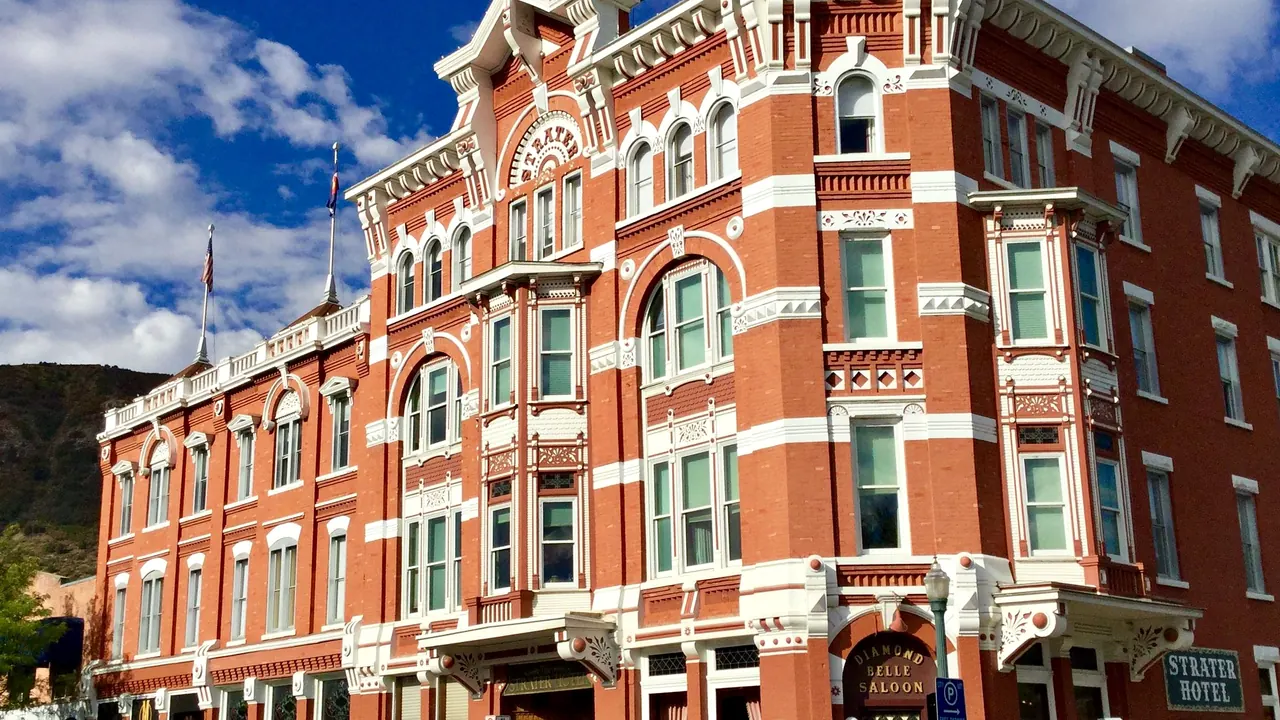
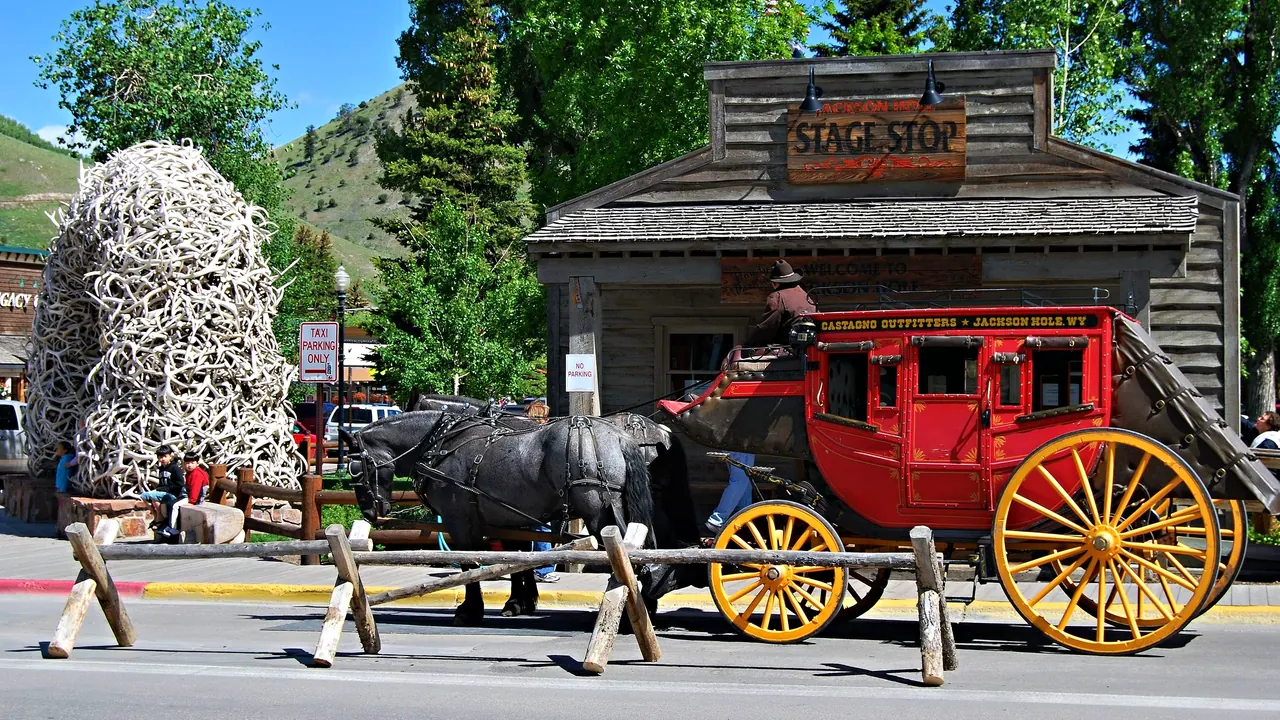
Photos: Durango, Colorado by Adeledstarr, CC BY-SA 4.0, cropped; Jackson Hole by Pavel Špindler, CC BY 3.0, cropped.
Durango, Colorado or Jackson Hole?
Our verdict in twelve categories, each scored against the same fixed benchmark cities, and the climate month by month, so you can choose for your trip.
Choose Durango, Colorado for
- day trips
- prices
- culture and sights
Durango is the better pick for a road trip that mixes mountains with history and doesn't cost a fortune. The San Juans give it serious biking, hiking and skiing. Its real edge is what lies around it: the cliff dwellings of Mesa Verde, the steam train to Silverton, Puebloan ruins at Aztec and Chimney Rock, and hot springs at the end of the day. Its brick Victorian main street also gives an evening stroll more sense of place.
Choose Jackson Hole for
- nature and the outdoors
- families
- shopping
Choose Jackson Hole when the landscape itself is the whole point. The Tetons rise straight from the valley and Grand Teton National Park starts minutes from town, with Yellowstone within reach. You pass moose, bison and bears along the way, and in winter there is some of the steepest lift-served skiing on the continent. Families who want wildlife and Junior Ranger badges do especially well. The catch is the cost, among the highest anywhere in the country, and the lack of nearby towns worth a day out.
Scoreboard
Twelve categories on one fixed scale from 0 to 100. The shaded stretch is the gap between the two.
Your match
Pick a travel style or drag the sliders, and both match scores follow your weighting.
Wins on day trips and prices with your weighting.
Wins on nature and the outdoors and families with your weighting.
What matters to you?
Category by category
What the scores mean for a trip.
Beaches & swimming
Neither town is a swimming destination, and in both the water is cold for all but a few summer weeks. The difference is the kind of swim. In Durango it means floating down the Animas on a tube through the middle of town, or a dip at Lake Nighthorse or on the sandy edges of Vallecito.
Jackson Hole has the slightly better lake swim. String Lake is shallow and sandy-bottomed, warms enough by late summer and has the Tetons straight above it. The Snake River there is for rafts, not for bathing.
Food & drink
The two eat about equally well, but in different styles. Durango keeps things casual, with green-chile Southwestern plates and breakfast cafés. Above all it has a remarkable number of breweries for a town its size, and cyclists and rafters fill the taprooms.
Jackson leans upmarket, because the valley's money supports more chef-driven dining rooms and serious wine lists. Elk, bison and huckleberries give its cooking a regional flavour of its own. Almost nothing there is cheap, though, so Durango is the easier place for a simple meal.
Culture & sights
Durango has more to see in town. The railway that founded it in 1880 still runs steam trains from the old depot, with the roundhouse museum alongside. The brick and sandstone of the historic district have real Victorian character, and the college on the mesa adds a respected Southwestern and Native American collection.
Jackson's sights are fewer and quieter. There are the antler arches and boardwalks of the Town Square and the National Museum of Wildlife Art above the elk refuge. Inside the park are the barns of Mormon Row and the little log chapel whose window frames the peaks. They are memorable stops, but small ones.
Nightlife
Both towns go to bed early, and neither has clubs. In Durango an evening out means a taproom patio or an old saloon with a piano player, and college students keep a few bars busy at weekends.
Jackson gets livelier in winter, when the bars at the base of Teton Village fill up loudly as the lifts close. In town, a historic saloon with saddles for bar stools and a country dance floor is the closest either place comes to dancing. In spring and autumn, though, Jackson's bars can be almost empty.
Nature & outdoors
Both are first-rate mountain bases, but Jackson Hole has the bigger landscape. The Tetons rise from the valley floor with no foothills, Grand Teton National Park begins minutes from town and Yellowstone is within reach. Its moose, bison, elk and bears make the valley feel wilder, and the tram at Teton Village serves some of the steepest lift-served terrain in North America.
Durango's strengths lie elsewhere. It is one of the country's best-known mountain-biking towns, with singletrack starting at the edge of town. The Colorado Trail begins just north, you can raft through the centre, and the high peaks of the Weminuche Wilderness rise behind. There is deep snow at the ski resort half an hour away.
Day trips
Durango is far ahead here. Mesa Verde's cliff dwellings are about an hour west, and the narrow-gauge steam train climbs the Animas canyon to the mining town of Silverton. Ouray, the Puebloan ruins at Aztec and Chimney Rock, and the hot springs of Pagosa Springs each make a full day out.
From Jackson, nearly every excursion goes into the parks rather than to another town. The Idaho farm towns of Victor and Driggs over Teton Pass make a pleasant drive. None of the nearby towns is worth a whole day for its own sake.
Good for families
Both suit outdoor families, and neither has zoos, aquariums or much to do on a wet day. Jackson Hole has the edge with children because the animals do the entertaining. Kids can spot moose and bison from the car, ride a sleigh through the elk herd, earn Junior Ranger badges and watch the summer rodeo or the staged shootout on the square. The ski resort also has a good ski school.
In Durango the highlights are the steam train up the canyon, gentle tubing on the river and the ladders of Mesa Verde, which bring ancient history to life. In both places the altitude and long drives can tire young children.
Getting around
Getting around works the same way in both: a compact, walkable centre and a car for everything else. In Durango, the top of Main Avenue is a flat quarter-hour walk from the depot. A paved riverside trail serves walkers and cyclists, and a trolley runs along the main corridor.
Jackson's few blocks around the Town Square are just as easy to walk, and a bus to Teton Village helps in ski season. There is no public transport into Grand Teton or Yellowstone, so without a car you depend on tours, and winter roads call for care.
Shopping & style
Both offer an hour or two of browsing rather than a shopping trip, and both sell turquoise, boots and outdoor gear. Jackson has a little more range, with its many galleries of Western and wildlife art, handmade cowboy hats and a few upscale boutiques serving the valley's wealthy residents.
Durango is more down to earth. Along Main Avenue you find Navajo and Pueblo silver and rugs, bike and fishing shops and sweet shops, and no luxury shopping at all.
Affordability
Neither town is cheap, but the gap between them is wide. Durango costs less than Colorado's famous ski towns, and spring and late autumn bring real savings away from the busy summer and peak ski weeks.
Jackson Hole is among the most expensive places to stay in the country, with resort prices on everything from rooms to rafting. In both towns the trails and views are free once you arrive. In Jackson, staying over the pass in Idaho is the usual way to soften the bill.
Live music & performing arts
Durango's stage has the more playful streak. Its summer Victorian melodrama invites the audience to boo the villain, and the concert hall at the college on the mesa brings in touring musicians and dance. Its own summer festival adds chamber and orchestral music in the mountains.
Jackson's strength is the bigger classical name. The Grand Teton Music Festival, running since the 1960s, brings players from leading American orchestras to a timber hall in Teton Village, and in town the evenings lean towards country bands in the saloons. Either place will give you a chuckwagon supper with cowboy music, but outside summer neither has much on most nights.
Wellness & relaxation
Durango is the easier place to slow down. Natural mineral pools are a few minutes north of town, and Pagosa Springs and Ouray both have spring-fed pools of their own within a drive. A soak fits around almost any day.
In Jackson the springs are more of an outing. One pool sits in a forested canyon south of town and is reached by snowmobile or dog sled in winter, and another park has pools on the banks of the Snake. Beyond them, wellness mostly means luxury resort spas and massages for sore skiers.
When should you go?
Pick your month. The climate figures are measured averages, not a forecast.
Durango, Colorado in July
Jackson Hole in July
Daytime high, °C
Rainfall in the month, mm
Where the figures come from
Durango, Colorado has no weather station within reach, so its figures come from a gridded climate model rather than a measured record, and read a broad area rather than the city itself.
Temperature and rainfall are climate normals, averaged over the years shown. Durango, Colorado: 1991-2020 normals, TerraClimate 4 km grid at the town, no weather station within 90 km. Jackson Hole: 1991-2020 normals, Jackson Hole / Moose (14.9 km from centre).
Both towns follow the same pattern: short, hot summers, long snowy winters and golden aspens in September. Durango has the milder winter, with January afternoons around 5°C against freezing in Jackson Hole. Its spring also warms earlier, so April and May are pleasant for walking Main Avenue and the lower trails. June is Durango's driest month. From July the rain returns, and August is the wettest month of the year, so hikes are best done in the morning.
Jackson Hole has the more clear-cut summer. July is the warmer of the two, peaking around 32°C, and nearly rainless at 7mm, so July and August are the surest months for the high trails and a swim in String Lake. Spring there is wetter and slower to warm, with May the rainiest month. From December to March the valley belongs to skiers.
Which traveller are you?
On a trip on a tight budget, Durango is the clear choice. Rooms and meals cost less than in Jackson Hole, spring and late autumn bring prices down further, and the trails, the river and the Victorian main street cost nothing.
For an outdoors trip, Jackson Hole wins. The Tetons rise straight from the valley and Grand Teton National Park begins minutes away, with Yellowstone within a drive. Moose, bison and bears on the flats bring wildlife that Durango cannot match.
On a culture and arts trip, Durango gives you more. The steam railway, the Victorian historic district and the college's Native American collection fill a day. Beyond town, Mesa Verde, Aztec and Silverton turn the region into a history tour.
Before you go
| Measure | Durango, Colorado | Jackson Hole |
|---|---|---|
| Currency | US Dollar (USD) | US Dollar (USD) |
| Sockets | AB120 V, 60 Hz | AB120 V, 60 Hz |
| Driving side | Right | Right |
| Time zone | UTC-7, UTC-6 in summer | UTC-7, UTC-6 in summer |
| Emergency number | 911 | 911 |
| Elevation | 1,988 m | 1,901 m |
| Main airport | Durango La Plata County Airport (DRO)18 km from centre4 non-stop destinations | Jackson Hole Airport (JAC)15 km from centre16 non-stop destinations |
| Public holidays this year | 12 days | 11 days |
By the numbers
| Measure | Durango, Colorado | Jackson Hole |
|---|---|---|
| City population | 19,071 | 10,760 |
| People per km² | 739 | 1,416 |
| Museums within 10 km | 2 | 1 |
| UNESCO World Heritage sites within 50 km | 1 | 0 |
Where else could you go?
Every comparison below shares a destination with this one, so you can follow Durango, Colorado or Jackson Hole somewhere new.
- Telluridevs Durango, Colorado
- Big Skyvs Jackson Hole
- Moabvs Durango, Colorado
- Taosvs Durango, Colorado
- Aspenvs Durango, Colorado
- Santa Fevs Durango, Colorado