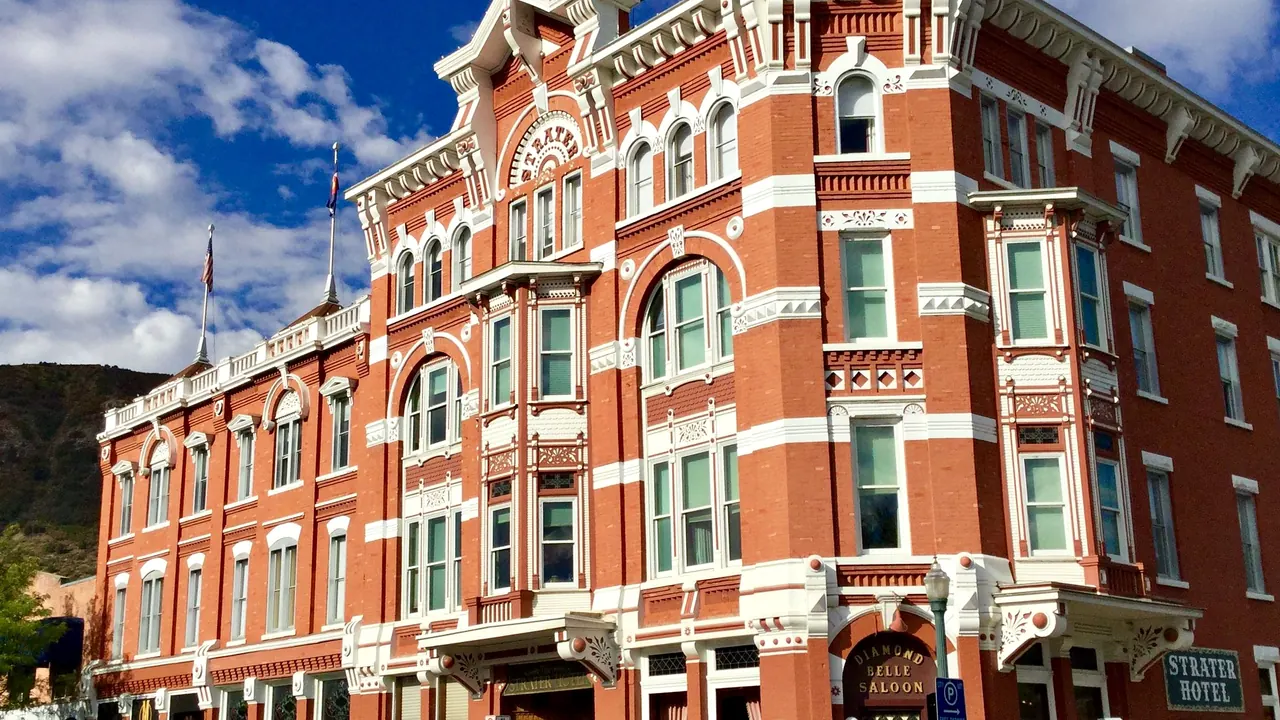
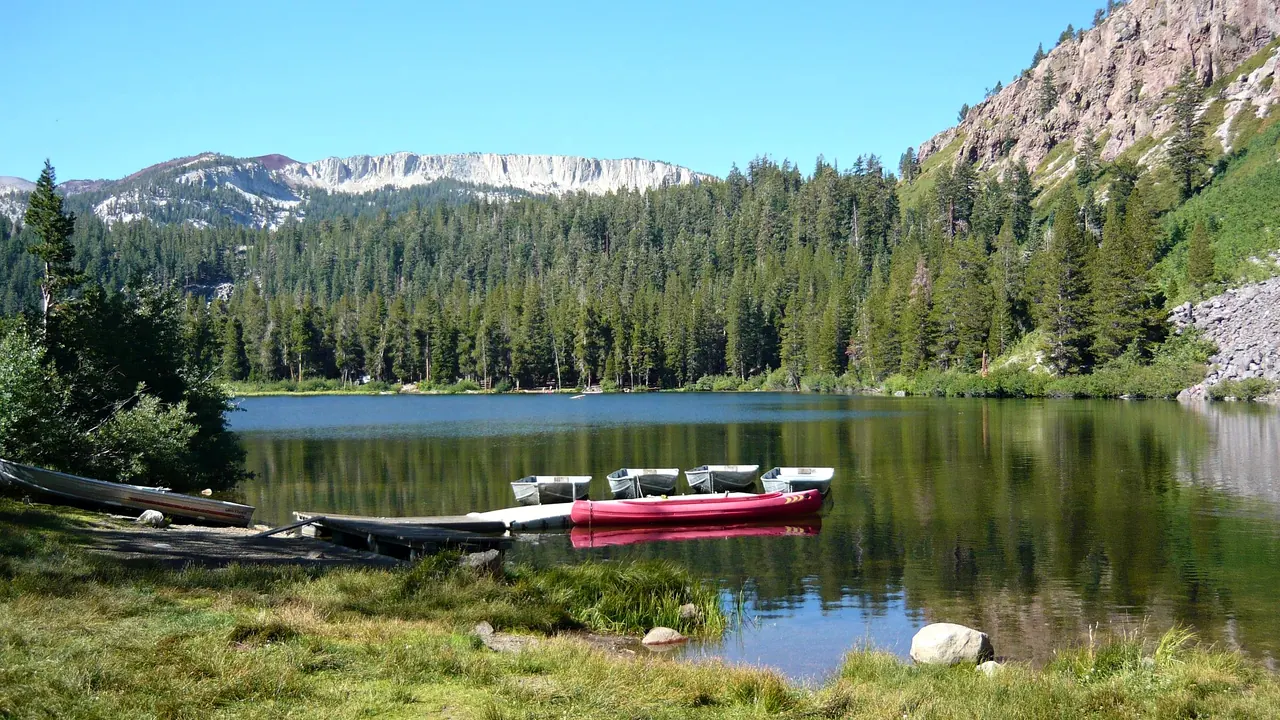
Photos: Durango, Colorado by Adeledstarr, CC BY-SA 4.0, cropped; Mammoth Lakes by Dr. Al. K. Lisch, CC BY-SA 3.0, cropped.
Durango, Colorado or Mammoth Lakes?
Our verdict in twelve categories, each scored against the same fixed benchmark cities, and the climate month by month, so you can choose for your trip.
Choose Durango, Colorado for
- day trips
- culture and sights
- prices
Durango is the better choice for a rounded mountain vacation with a real town at its centre. The Victorian streets of Main Avenue, the steam railway and the ancestral Puebloan cliff dwellings at Mesa Verde give you days that are not only about trails, and the breweries, saloons and summer stage shows fill the evenings a little better. It is also the easier of the two on the wallet.
Choose Mammoth Lakes for
- getting around
- beaches
- nature and the outdoors
Mammoth Lakes is for travellers who want the mountain itself and little else. Its ski area is among the largest in North America and the season often runs into early summer, while the Lakes Basin, Devils Postpile and the Yosemite high country over Tioga Pass sit close by. The town is mostly lodges and condominiums, but in winter the shuttles and the Village gondola let you ski without driving.
Scoreboard
Twelve categories on one fixed scale from 0 to 100. The shaded stretch is the gap between the two.
Your match
Pick a travel style or drag the sliders, and both match scores follow your weighting.
Wins on day trips and culture and sights with your weighting.
Wins on getting around and beaches with your weighting.
What matters to you?
Category by category
What the scores mean for a trip.
Beaches & swimming
Neither town is a place to swim, and in both the water stays cold even in July. What you do with it differs. In Durango the summer pleasure is floating the Animas on an inner tube right through town, with Lake Nighthorse for a short dip.
In Mammoth Lakes the swimming happens in alpine lakes such as Horseshoe Lake or the warmer Crowley reservoir. Most people there paddle or fish rather than swim, and Hot Creek is off limits to bathers.
Food & drink
Durango feeds you better. Its Southwestern green-chile plates and the kitchens cooking Colorado lamb and trout give meals a regional character, and the town has an unusual number of breweries for its size.
Mammoth Lakes eats like a ski resort: burgers, pizza, tacos and steakhouses built for big winter crowds, with little cuisine of its own. Some places also cut back in the quiet spring and autumn months.
Culture & sights
Neither town is a sightseeing destination, but Durango at least has a town worth looking at. Its downtown still feels like a frontier railway town. A stroll past the mining-boom hotel fronts and old saloons, a look at the locomotives in the yard and a stop at the county museum in its old schoolhouse take an hour or two. After that, the bigger history lies in the country around the town rather than in its streets.
Mammoth Lakes offers much less. Almost nothing survives from its mining-camp years, so it feels like a modern resort built for skiing, and its one small museum is soon seen. Here, sightseeing means getting in the car, because the region's heritage is an hour or more away.
Nightlife
Both towns go quiet well before midnight, and neither has clubs. In Durango, evenings mean taproom patios, old saloons with a piano player, and a few bars kept busy by students at weekends. Mammoth Lakes depends more on the season: après-ski packs the Village in winter and can run late on long weekends, while summer nights are very quiet.
Nature & outdoors
Both are first-rate mountain bases, so the choice comes down to the kind of landscape you want. Durango has the rugged San Juans, singletrack starting at the edge of town, the Colorado Trail, whitewater on the Animas and the dramatic drive north towards Silverton.
Mammoth Lakes offers the bigger ski mountain with the longer season, plus the volcanic Eastern Sierra. Its highlights are the granite-ringed Lakes Basin, the basalt columns of Devils Postpile, the tufa towers of Mono Lake and, in summer, Tuolumne Meadows about an hour away.
Day trips
Durango has far better days out. Mesa Verde's cliff dwellings, the narrow-gauge train up the canyon to Silverton, the ruins at Aztec and the hot springs of Pagosa Springs give you several full and very different excursions, though you need a car for almost all of them.
From Mammoth Lakes the options are thinner and further apart. Bodie ghost town and the Manzanar historic site are the high points. When the passes close in winter, Yosemite Valley is out of reach altogether.
Good for families
Both suit outdoor families, and both have the same gaps: no zoos, aquariums or big museums for bad weather, and altitude that can tire small children at first. In Durango the treats are the steam train, gentle rafting and climbing the ladders at Mesa Verde. Mammoth Lakes adds a large ski school, a snow tubing hill, and rowing boats in the Lakes Basin, and condominiums with kitchens make family stays simpler.
Getting around
Mammoth Lakes is easier to manage without a car, at least in winter. Free shuttles link the lodgings to the lift bases, a gondola rises from the Village, and in summer a trolley runs up to the lakes and shuttles serve Reds Meadow.
Durango has the more walkable centre: a quarter of an hour covers Main Avenue, and the river trail links the parks. Beyond town, though, trailheads, the ski area and Mesa Verde all need a hire car.
Shopping & style
Durango gives you an afternoon worth spending. Main Avenue has Navajo and Pueblo silver, turquoise jewellery, rugs, Western boots and galleries, alongside its outdoor shops. Mammoth Lakes is purely practical, with good ski, climbing and fly-fishing shops, rental outlets and souvenirs, and nothing you would travel to buy.
Affordability
Durango is the gentler of the two on cost. It is still a US mountain resort with full restaurant prices, but it is cheaper than the famous Colorado ski towns and drops noticeably in spring and late autumn.
Mammoth Lakes is the expensive one. Its lift tickets are among the costliest anywhere, and lodging, ski hire and even groceries carry resort prices. A summer visit spent hiking and driving, with self-catering, is the way to keep the bill down.
Live music & performing arts
Durango has more to watch. There is a summer chamber and orchestral festival, a college concert hall that hosts touring music and dance, and Western fun in the form of a Victorian melodrama and chuckwagon supper shows. Mammoth Lakes has a resident community theatre that plays through the year, plus a summer jazz festival and outdoor concerts in the meadows, but no touring programme.
Wellness & relaxation
Hot springs are the draw in both places, but the experience is quite different. Durango's are developed mineral pools a few minutes north of town, with the terraced pools of Pagosa Springs an hour away. Mammoth Lakes offers primitive pools out in the sagebrush, reached by dirt road and without facilities, which can be crowded at sunset. For massages and hot tubs, Mammoth relies on its big lodges.
When should you go?
Pick your month. The climate figures are measured averages, not a forecast.
Durango, Colorado in July
Mammoth Lakes in July
Daytime high, °C
Rainfall in the month, mm
Where the figures come from
Durango, Colorado has no weather station within reach, so its figures come from a gridded climate model rather than a measured record, and read a broad area rather than the city itself.
Mammoth Lakes's station stands 227 m below the city centre, so the centre is likely a little cooler than the figures say.
Mammoth Lakes has no rain gauge within 25 km of the centre, so its rainfall comes from a gridded climate dataset read at the city rather than from a gauge further away.
Temperature and rainfall are climate normals, averaged over the years shown. Durango, Colorado: 1991-2020 normals, TerraClimate 4 km grid at the town, no weather station within 90 km. Mammoth Lakes: 2008-2020 (rainfall 1991-2020) normals, Mammoth / Whitmore Hot Springs (12 km from centre).
Durango has the hotter summer. Highs reach 30°C in July, and June is very dry, which makes it the best month for long rides and hikes. Afternoon storms pick up through August and September, but early autumn, with the aspens turning, is still a fine time to go. Winters are cold, with highs around 5°C, and they suit skiing more than strolling round town. Spring warms up steadily and stays fairly dry.
Mammoth Lakes is a little cooler at the height of summer, at about 28°C, and from June to September it is almost rainless. That long, dry stretch is ideal for the lakes, the trails and Tioga Pass. Its winters are much wetter, at around 80mm in January, and up here that falls as heavy snow. This is what feeds the long ski season, but it also means winter roads can need chains. In Durango the rain is spread far more evenly through the year.
Which traveller are you?
For a culture and arts trip, Durango is clearly the pick. It has a historic railway town with its roundhouse museum, the college's collection of Native American material, a summer chamber festival and Mesa Verde within reach. Mammoth Lakes offers little beyond a log-cabin museum.
On a trip on a tight budget, Durango will cost you less. It is cheaper than the big Colorado ski towns, and the trails and the river are free. Mammoth Lakes carries steep lift, lodging and grocery prices, so self-catering in a condominium is the usual workaround.
For an outdoors trip, especially a ski vacation, Mammoth Lakes edges ahead. You get a huge ski mountain with a long season, a bike park, the granite lakes of the Lakes Basin and Yosemite's high country. Durango answers with famous singletrack and rafting, but its ski area is smaller.
Before you go
| Measure | Durango, Colorado | Mammoth Lakes |
|---|---|---|
| Currency | US Dollar (USD) | US Dollar (USD) |
| Sockets | AB120 V, 60 Hz | AB120 V, 60 Hz |
| Driving side | Right | Right |
| Time zone | UTC-7, UTC-6 in summer | UTC-8, UTC-7 in summer |
| Emergency number | 911 | 911 |
| Elevation | 1,988 m | 2,402 m |
| Main airport | Durango La Plata County Airport (DRO)18 km from centre4 non-stop destinations | Reno Tahoe International Airport (RNO)217 km from centre25 non-stop destinations |
| Public holidays this year | 12 days | 13 days |
By the numbers
| Measure | Durango, Colorado | Mammoth Lakes |
|---|---|---|
| City population | 19,071 | 7,191 |
| People per km² | 739 | 110 |
| Museums within 10 km | 2 | 0 |
| UNESCO World Heritage sites within 50 km | 1 | 0 |
Where else could you go?
Every comparison below shares a destination with this one, so you can follow Durango, Colorado or Mammoth Lakes somewhere new.
- Telluridevs Durango, Colorado
- South Lake Tahoevs Mammoth Lakes
- Moabvs Durango, Colorado
- Taosvs Durango, Colorado
- Aspenvs Durango, Colorado
- Santa Fevs Durango, Colorado