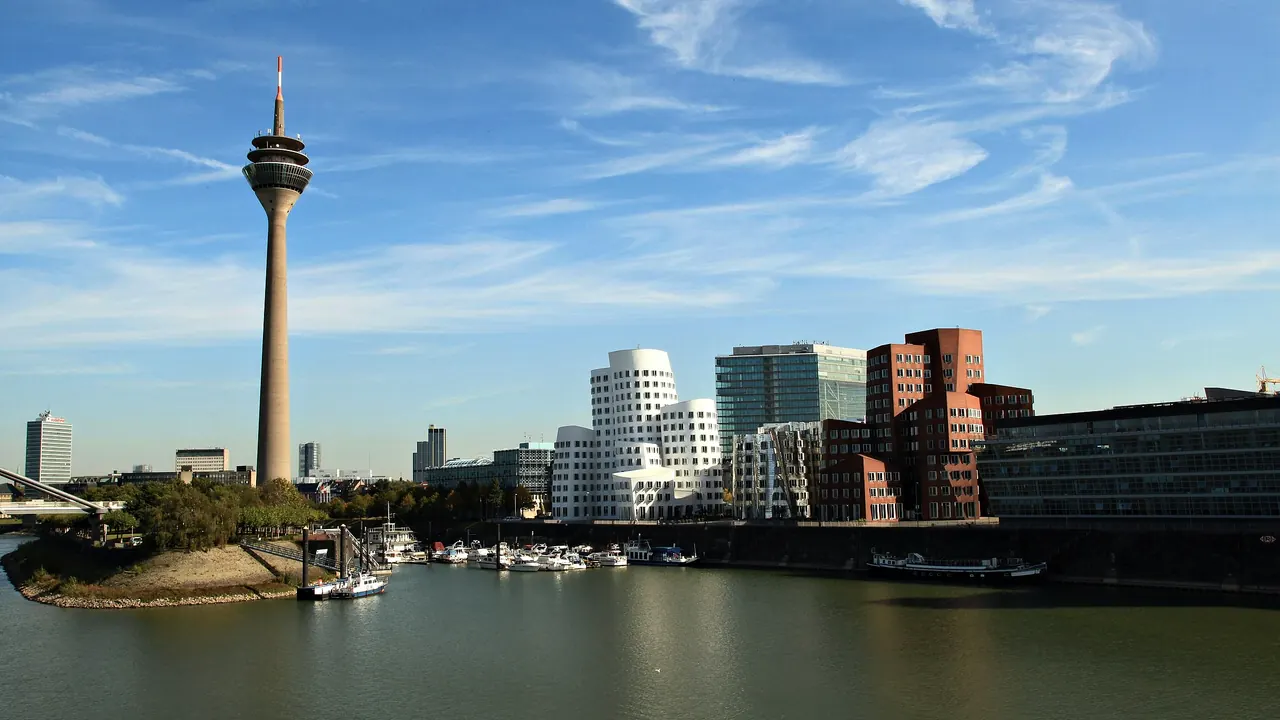
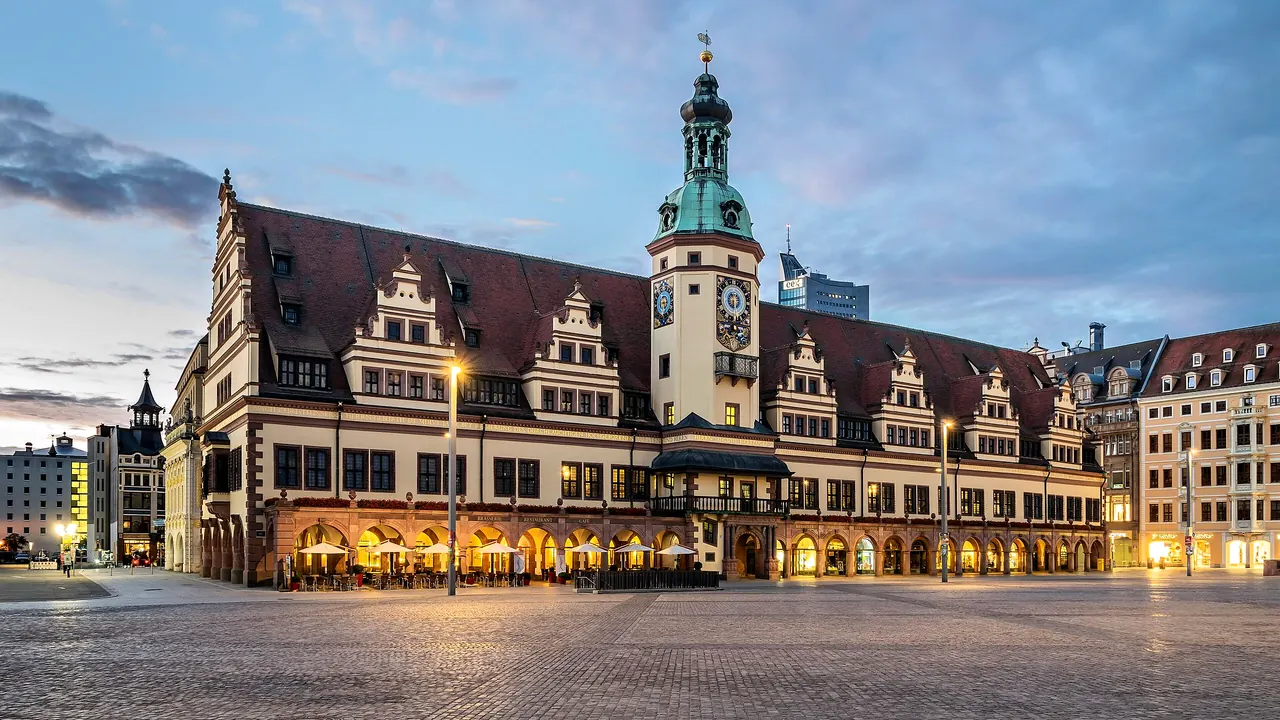
Photos: Dusseldorf by Frank Vincentz, CC BY-SA 3.0, cropped; Leipzig by Krzysztof Golik, CC BY-SA 4.0, cropped.
Dusseldorf or Leipzig?
Our verdict in twelve categories, each scored against the same fixed benchmark cities, and the climate month by month, so you can choose for your trip.
Choose Dusseldorf for
- shopping
- food and drink
- wellness
Düsseldorf suits travellers who want to eat, shop and drink well in a polished, compact city. The Altstadt brewhouses and the Japanese quarter around Immermannstrasse give it the stronger table. The Königsallee makes it the obvious pick for shopping, and its leisure baths and Rhine meadows offer a little more ease. You pay for this, above all for a bed.
Choose Leipzig for
- beaches
- live music and the arts
- prices
Music lovers and anyone watching the accommodation budget will do better in Leipzig. The Gewandhaus Orchestra, the opera on Augustusplatz and the Thomanerchor in Bach's own church give it a concert life Düsseldorf cannot match. Rooms cost less, and in a hot summer the flooded mine lakes south of town offer real swimming, which the Rhine never can.
Scoreboard
Twelve categories on one fixed scale from 0 to 100. The shaded stretch is the gap between the two.
Your match
Pick a travel style or drag the sliders, and both match scores follow your weighting.
Too close to call, level with your weighting
Wins on shopping and food and drink with your weighting.
Wins on beaches and live music and the arts with your weighting.
What matters to you?
Category by category
What the scores mean for a trip.
Beaches & swimming
Düsseldorf's Rhine looks tempting on a summer evening, but the currents and barge traffic make swimming dangerous. On a hot day people go instead to Unterbacher See on the south-eastern edge of the city or to an outdoor pool. The North Sea is too far away and too cool to count.
Leipzig does better for an inland city. South of the centre, old mines have been flooded to form lakes, the Cospudener See and Markkleeberger See among them. They have sandy shores, clear water and beach bars, and you can reach them by tram or by bike. It is still lake bathing for a few warm weeks, not a beach vacation.
Food & drink
Düsseldorf is the better place to eat. Its Altstadt brewhouses serve Altbier with sauerbraten, pork knuckle and the Halve Hahn, all with the city's sharp mustard. The Japanese quarter around Immermannstrasse adds ramen counters, izakaya and bakeries you will not find in most German cities, and there is fine dining and Carlsplatz market on top.
Leipzig's food is plainer and honest: Saxon roasts with dumplings, Leipziger Allerlei, salty, slightly sour Gose beer and a coffee-house tradition going back three centuries. The more interesting eating is out in the Südvorstadt and Plagwitz, and there is little fine dining.
Culture & sights
Düsseldorf is the art city of the two. The Kunstsammlung splits between a house of Klee and classic modern art and a former parliament building where you walk on a net slung under the glass dome, and the Kunstpalast runs from old masters to glass. Wartime bombing left little old fabric, so the finest historic building is out in the southern suburbs: Benrath Palace, a pink rococo summer residence.
Leipzig's sights tell a story rather than fill a gallery. Bach worked in the Thomaskirche and is buried there. The Monday prayers at the Nikolaikirche led to the peaceful revolution that ended East Germany, and the Runde Ecke covers the Stasi years. The old trade-fair arcades link them, and the Grassi museums are solid but less well known. A long weekend covers the essentials in either city.
Nightlife
A night out in Düsseldorf is one long pub crawl. Hundreds of bars and brewhouses crowd a few Altstadt streets, and at weekends the lanes fill with people drinking Altbier standing outside, stag groups among them. Clubs play a small part, and the biggest party of the year is Carnival, when the whole city goes out in costume for days.
In Leipzig it is the other way round, because its strength is club culture. Electronic music plays in old factories and warehouses until well past dawn, and the doors are easy-going. The bars on the Karli, in Connewitz and in the canal-side mills of Plagwitz have a student, alternative feel. Outside term time and on weeknights the city can seem quiet.
Nature & outdoors
Both are flat river cities with gentle green surroundings rather than real scenery. Düsseldorf's outdoors are the Rhine meadows and their long cycle paths to Kaiserswerth. Grafenberg forest and the Neandertal are close by, and the wooded Bergisches Land begins within half an hour.
Leipzig has its green space inside the city. The Auwald floodplain forest runs right through it, and canals let you paddle from Plagwitz almost into the centre. The southern lakes add sailing and a white-water canoe course, but for real hills you need a train of about two hours.
Day trips
Both make excellent bases for day trips. The difference is what lies around them. From Düsseldorf you reach Cologne cathedral in under half an hour, and Bonn and the Brühl palaces are close behind. The Ruhr's industrial heritage at Zollverein, Charlemagne's Aachen and Dutch Maastricht are further out.
Leipzig sits in the heartland of German history and ideas. Dresden, Weimar, Erfurt, Reformation Wittenberg, the Bauhaus at Dessau and Naumburg cathedral are all within easy reach, and Berlin is just over an hour away. Fast, frequent trains serve both cities, so neither needs a car.
Good for families
Both are safe, flat and easy with a pushchair, so the choice comes down to what children will do. Düsseldorf has smaller attractions spread around the city: the Aquazoo, the tilted windows of the Rheinturm, the free game park in Grafenberg forest and Phantasialand within about an hour.
Leipzig has one big draw, its zoo, where the covered Gondwanaland hall works in any weather. In summer it adds lake beaches with shallow water and the Belantis theme park. Once the zoo is done, the list is shorter.
Getting around
Both cities are compact and flat, and neither needs a car. In Düsseldorf you can walk between the Altstadt, the Kö, the Hofgarten and the Rhine promenade. The airport is minutes away by train, and the regional network carries you on to Cologne and the Ruhr once you understand the fare zones.
Leipzig's old town fits inside its ring road and takes about a quarter of an hour to cross on foot. Trams run out to the districts and the zoo, and an S-Bahn line goes south to the lakes. With wide streets and many cycle lanes, it is the easier of the two by bike.
Shopping & style
Düsseldorf is the shopping city of the two. The Königsallee has luxury flagships and jewellers along its canal, and Schadowstrasse and the Kö-Bogen cover the high street. Flingern's boutiques and the Japanese quarter's homeware and stationery shops add character.
Leipzig's covered arcades make browsing pleasant on a wet day, but the shops in them are mostly chains and there is little luxury. Its individual side is in Plagwitz, with vintage clothes, record shops and the galleries of the old Spinnerei cotton mill.
Affordability
Leipzig is easier on the wallet, mainly because of the room. Hotels within walking distance of its old town cost less than in most large German cities, while Düsseldorf's business visitors keep its hotels expensive for a city of its size. Beyond the bed the gap narrows, since meals and transport cost about the same across Germany.
Both cities fill up during trade fairs, when room rates jump, so check the fair calendar before booking either. To keep daily spending down, eat at Düsseldorf's brewhouses and noodle bars, or in Leipzig's student districts.
Live music & performing arts
Leipzig is clearly the stronger music city. The Gewandhaus Orchestra is among the oldest and finest in the world, and the opera faces it across Augustusplatz. The Thomanerchor sings Bach in his own church on many weekends, and two very different festivals, the Bachfest and the Wave-Gotik-Treffen, fill the city each year.
Düsseldorf has a solid programme: the Deutsche Oper am Rhein, the symphony orchestra in the domed Tonhalle and the Schauspielhaus, though the theatre is mainly for German speakers. What sets it apart is electronic music, as the birthplace of Kraftwerk.
Wellness & relaxation
Neither city has hot springs of its own, but Düsseldorf offers more. Its pools and leisure baths have sauna areas, large thermal complexes are within about an hour, and Aachen's hot springs make an easy day out. The Hofgarten and the Japanese garden in Nordpark suit slow afternoons.
In Leipzig, wellness mostly means sauna complexes and hotel spas, and the spa towns are separate trips. Its calm comes instead from uncrowded streets and long walks through the Auwald.
When should you go?
Pick your month. The climate figures are measured averages, not a forecast.
Dusseldorf in July
Leipzig in July
Daytime high, °C
Rainfall in the month, mm
Temperature and rainfall are climate normals, averaged over the years shown. Dusseldorf: 1991-2020 normals, Düsseldorf (8.3 km from centre). Leipzig: 1991-2020 (sunshine 1961-1990, rainfall 1961-1990) normals, Leipzig-Holzhausen (5.7 km from centre).
The two cities have almost the same summer, peaking around 25°C in July and August, so June to early September is the comfortable stretch for long days on foot in either. Leipzig is the less sunny of the pair from April to September but drier for most of the year, although June is its wettest month at 67mm, much of it in summer downpours. Only Leipzig has a real bathing season, and it is short: its lakes are worth the trip in July and August.
Winter is where they part. Düsseldorf stays slightly milder, with January highs around 6°C against 4°C in Leipzig, but it is wetter and greyer, with rain spread evenly across the months and little sun from November to January. Leipzig's winters are colder but drier. In both cities May and September make good shoulder months for sightseeing.
Which traveller are you?
On a shopping trip, Düsseldorf is where to spend the money. Give a whole day to the Kö and its department stores, and take home a jar of the city's spicy brown mustard and some Japanese groceries. In Leipzig, a browse through the vintage shops fills an afternoon and not much more.
For a culture and arts trip built around music, plan Leipzig around its evenings: a Gewandhaus concert, a night at the opera, a Thomanerchor motet at the weekend, or a June visit for the Bachfest. If modern painting matters more to you, Düsseldorf is the better choice.
On a trip on a tight budget, choose Leipzig. Take a mid-range room within walking distance of the old town, cool off in the southern lakes on hot days, and put the savings towards concert seats. In Düsseldorf the hotel bill alone would use up that money.
Before you go
| Measure | Dusseldorf | Leipzig |
|---|---|---|
| Official language | German | German |
| Currency | Euro (EUR) | Euro (EUR) |
| Sockets | CF230 V, 50 Hz | CF230 V, 50 Hz |
| Driving side | Right | Right |
| Time zone | UTC+1, UTC+2 in summer | UTC+1, UTC+2 in summer |
| Emergency number | 112 | 112 |
| Elevation | 38 m | 110 m |
| Main airport | Düsseldorf Airport (DUS)7 km from centre182 non-stop destinations | Leipzig/Halle Airport (LEJ)13 km from centre20 non-stop destinations |
| Public holidays this year | 11 days | 11 days |
By the numbers
| Measure | Dusseldorf | Leipzig |
|---|---|---|
| City population | 619,444 | 615,932 |
| People per km² | 2,849 | 2,068 |
| Museums within 10 km | 25 | 40 |
| UNESCO World Heritage sites within 50 km | 4 | 1 |
Where else could you go?
Every comparison below shares a destination with this one, so you can follow Dusseldorf or Leipzig somewhere new.
- Colognevs Dusseldorf
- Maastrichtvs Dusseldorf
- Dresdenvs Leipzig
- Berlinvs Leipzig
- Utrechtvs Dusseldorf
- Antwerpvs Dusseldorf