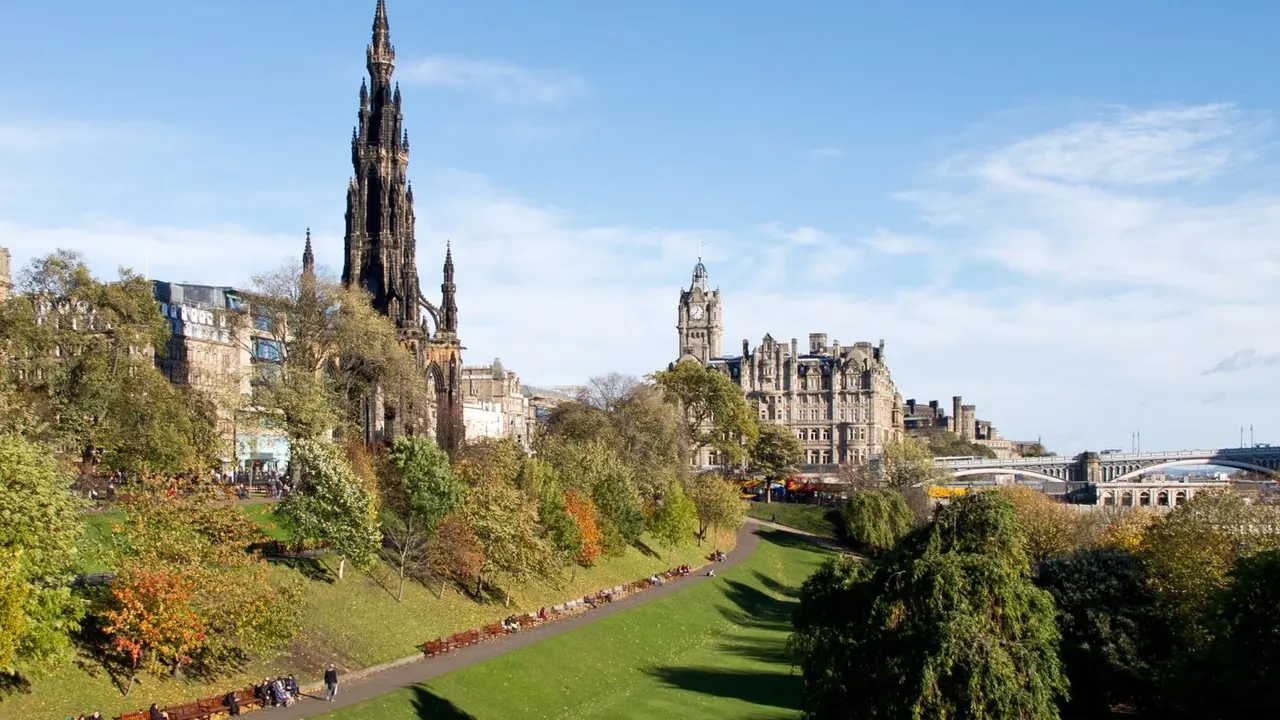
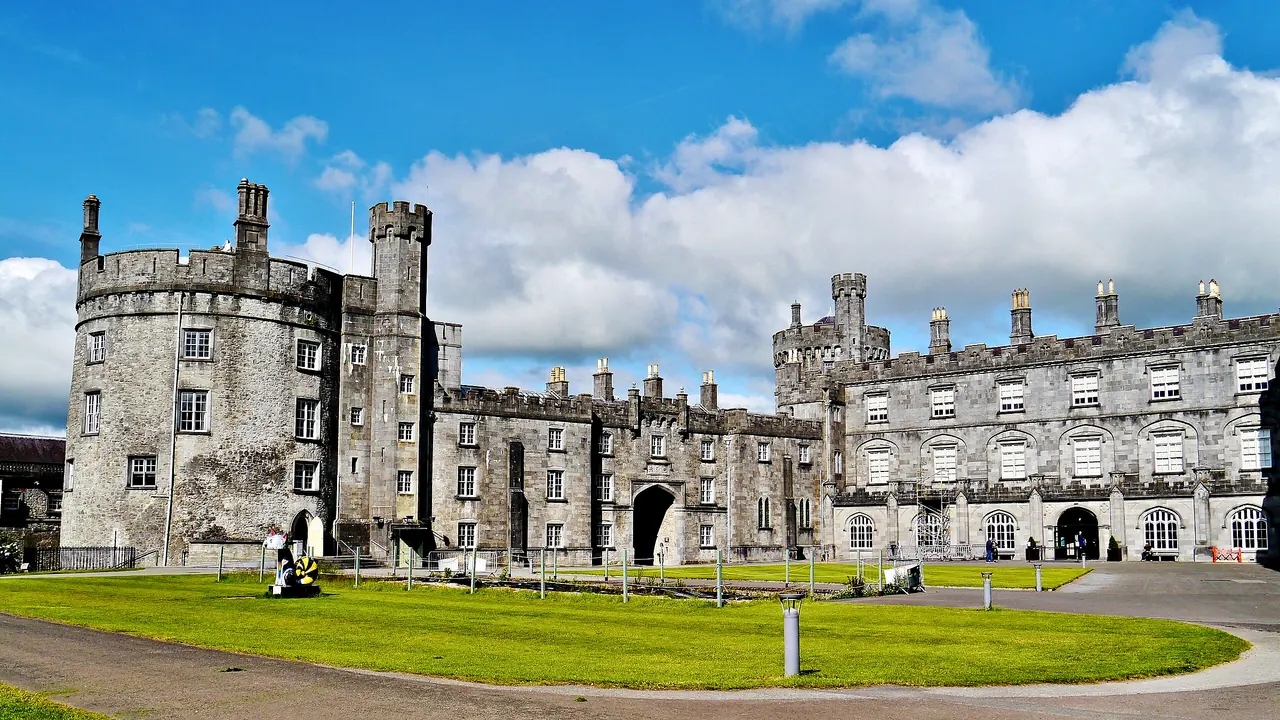
Photos: Edinburgh by Carlos Delgado, CC BY-SA 3.0, cropped; Kilkenny by Zairon, CC BY 4.0, cropped.
Edinburgh or Kilkenny?
Our verdict in twelve categories, each scored against the same fixed benchmark cities, and the climate month by month, so you can choose for your trip.
Choose Edinburgh for
- live music and the arts
- culture and sights
- nature and the outdoors
Edinburgh is the stronger choice for almost any trip that wants range. It packs a UNESCO-listed old and new town, free national museums, a volcanic hill to climb before breakfast and a rail station in the middle that puts Glasgow, Stirling and St Andrews within easy reach. Anyone travelling with children, chasing the August festivals or planning a week without a car will get more out of it.
Choose Kilkenny for
- prices
Kilkenny suits a slower, smaller trip. It is a single medieval mile between a castle and a cathedral, with fiddle sessions in firelit pubs and the abbeys and green river valleys of Ireland's southeast around it. It rewards travellers who want a couple of quiet days, are happy to drive the country lanes to the Rock of Cashel and Jerpoint, and prefer a town where they can know every street by the second evening.
Scoreboard
Twelve categories on one fixed scale from 0 to 100. The shaded stretch is the gap between the two.
Your match
Pick a travel style or drag the sliders, and both match scores follow your weighting.
Wins on live music and the arts and culture and sights with your weighting.
Wins on prices with your weighting.
What matters to you?
Category by category
What the scores mean for a trip.
Beaches & swimming
Edinburgh at least has sand you can reach by city bus. Portobello's long beach and Victorian promenade sit on the eastern edge of town, and the broad East Lothian strands at Gullane and North Berwick are a short trip further. The North Sea is cold, though, and most people walk rather than swim.
Kilkenny is inland, so the coast means an hour's drive to Tramore or the coves of the Copper Coast. The water there is slightly less bracing, but going to the seaside is a day out by car rather than part of the stay.
Food & drink
Edinburgh offers more choice and more ambition. West-coast scallops and langoustines, Highland game and a handful of serious modern dining rooms in Leith and Stockbridge give a visitor several good dinners, and the whisky bars, with their long shelves of single malts, are a draw on their own.
Kilkenny's table is smaller and more rural: county lamb, cheeses and dairy, gastropub steak and chowder, with the most ambitious cooking in country-house kitchens outside town. Its drinking is rooted in centuries of brewing beside St Francis Abbey. In both places street food is scarce, but in Kilkenny the range of cuisines runs out quickly.
Culture & sights
Edinburgh is a capital's worth of heritage: the castle rock, the Royal Mile's closes and St Giles', Holyroodhouse, and the Georgian crescents of the New Town, together a single World Heritage Site. On top of that come the national collections, from Pictish stones to old masters, mostly free.
Kilkenny is a compact medieval town rather than a city of museums. The walk from its Norman castle to St Canice's Cathedral, with the round tower to climb and Rothe House and the Black Abbey on the way, is coherent and charming, but it is done in a day or two where Edinburgh fills several.
Nightlife
Both towns go out to the pub, but Edinburgh offers more variety. Victorian bars on Rose Street, Grassmarket dens under the castle and harbour pubs in Leith sit alongside basement cocktail bars around George Street and the late, loud Cowgate, and in August the centre barely sleeps.
Kilkenny's evenings happen in low-ceilinged bars with fires and snugs on High Street and Parliament Street. Weekends are lively with wedding and birthday groups, but there is one small nightclub, and midweek the town is quiet early.
Nature & outdoors
Edinburgh has the rare luxury of wild ground inside the city. Arthur's Seat rises over Holyrood Park a short walk from the Royal Mile, and the Pentland Hills give real ridge walking within half an hour. The gannets of the Bass Rock and the edge of the Highlands are within reach for a longer day.
Kilkenny's surroundings are softer: farmland, the wooded Nore valley down to Inistioge, and modest climbs on Brandon Hill and the Blackstairs. Its wilder country, the Comeragh corrie lakes and the Wicklow Mountains, requires a drive of an hour or more.
Day trips
Edinburgh is the easier base because the train does the work. Glasgow, Stirling Castle and Linlithgow Palace are all under an hour by rail, and St Andrews and the Borders abbeys make full days without a car.
Kilkenny has a fine set of excursions of its own, focused on monastic and Norman sites: the Rock of Cashel, the carved cloister at Jerpoint and Kells Priory in its fields, with Waterford and Glendalough further out. Apart from Waterford and Dublin by train, nearly all of them need a car.
Good for families
Edinburgh keeps children busy for several days. There are soldiers' stories at the castle, dinosaurs and machines in the National Museum, Dynamic Earth under Arthur's Seat, the optical illusions of Camera Obscura and the hillside zoo. The steep cobbles and August crowds are the price.
Kilkenny is gentler and simpler: a small, safe town with castle lawns to run on. The best outings, the tree-top courses near Castlecomer, Dunmore Cave and the open farms, are a drive away, and once the knights and castles are done there is no zoo or aquarium to fall back on.
Getting around
Both centres are walked rather than driven, but they feel different underfoot. Edinburgh's sights spread over hills, bridges and stairways, which takes effort, though the dense bus network, the tram to Leith and the airport, and Waverley station in the middle make the wider city and the rest of Scotland easy to reach.
Kilkenny's centre is a level, single kilometre, simpler on foot than Edinburgh's ridges. Beyond it, rural buses are sparse, so the county's abbeys and villages mean a hire car, a taxi or a tour.
Shopping & style
Cashmere, tweed and tartan from specialist kiltmakers are what Edinburgh sends visitors home with, along with single malts from shops with deep shelves, where Kilkenny's equivalent is a handmade pot, glass or piece of silver. Edinburgh also has far more ground to cover, with chains along Princes Street, upmarket labels around George Street and St Andrew Square, independents on the curve of Victoria Street and small boutiques in Stockbridge. The Royal Mile's tartan souvenir shops are worth approaching with care.
Kilkenny's shopping fits into an afternoon. The design shops in the former castle stables opposite the gate, and the studios of potters, weavers and silversmiths around the county, are the real reason to browse. High Street's boutiques, bookshops and delis are pleasant but few, and serious fashion means a trip to Dublin.
Affordability
Neither is a budget destination, and the costs fall in different places. In Edinburgh the burden is the hotel room, which becomes extreme during the August festivals and at Hogmanay, while the free national museums, Arthur's Seat and cheap buses offset some of it.
Kilkenny's rooms are easier midweek but climb at weekends and festival times, and meals and pints cost what they do anywhere in Ireland. Its heritage sites charge little, but the hire car needed to see the county is the extra cost Edinburgh visitors avoid.
Live music & performing arts
Edinburgh's August is in a league of its own, with the Fringe filling cellars, churches and tents, the International Festival bringing major orchestras and opera, and the Tattoo on the castle esplanade. The rest of the year still offers two resident orchestras, Scottish Opera and Ballet at the Festival Theatre, and strong drama at the Lyceum and Traverse.
Kilkenny's strength is nightly traditional music in the pubs, plus a run of festivals: the August arts festival with concerts in St Canice's, a comedy festival and a roots weekend in May. Beyond those weeks there is little orchestral music or major theatre.
Wellness & relaxation
Neither is a place to come for spas, though Edinburgh has slightly more to offer. The Victorian Turkish baths at Portobello, the modernist Commonwealth Pool and the shoreside saunas of the cold-water swimmers are unusual extras, while restful mornings in the Botanic Garden are best kept for outside August.
Kilkenny's version of rest is the country-house hotel spa in parkland, and the quiet villages along the Nore. Staying out of town matters there too, as the centre is noisy on weekend nights.
When should you go?
Pick your month. The climate figures are measured averages, not a forecast.
Edinburgh in July
Kilkenny in July
Daytime high, °C
Rainfall in the month, mm
Where the figures come from
Edinburgh has no rain gauge within 25 km of the centre, so its rainfall comes from a gridded climate dataset read at the city rather than from a gauge further away.
Edinburgh's sunshine is measured 52 km from the centre, at Leuchars.
Kilkenny has no rain gauge within 25 km of the centre, so its rainfall comes from a gridded climate dataset read at the city rather than from a gauge further away.
Kilkenny's sunshine is measured 77 km from the centre, at Rosslare.
Temperature and rainfall are climate normals, averaged over the years shown. Edinburgh: 1991-2020 normals, Edinburgh Airport (10 km from centre). Kilkenny: 1991-2020 normals, Kilkenny (2.1 km from centre).
Neither place is ever warm enough for a beach vacation. Summer highs top out around 19°C in Edinburgh and 20°C in Kilkenny, and the sea stays chilly: about 14°C off Portobello in August, a little milder at around 16°C on the Waterford coast. Late spring and summer are the best months in both for walking and sightseeing, with the longest days and the most sunshine. Kilkenny is the sunnier of the two from April to August, while Edinburgh's summer brings more cloud and its wettest stretch.
The bigger difference comes in autumn and winter. Edinburgh stays fairly even, with no month truly soaked, but it turns cold and dark, with highs only in single figures from November to March. Kilkenny is a degree or two milder through winter but much wetter, with October to December the rainiest months at up to about 103mm. Spring, from April to June, is the gentlest time to see both.
Which traveller are you?
On a culture and arts trip, Edinburgh is far ahead. The Old Town and Georgian New Town, the free national galleries and museums, and an orchestra and theatre season that becomes the August Fringe outweigh Kilkenny's lovely but brief Medieval Mile.
For an outdoors trip, Edinburgh again, because the wild ground starts in town. Arthur's Seat, the Water of Leith and the Pentland ridges need no car, whereas Kilkenny's gentle Nore Valley walks are pleasant and its real mountains are an hour's drive away.
On a family trip with children, Edinburgh has far more to fill the days: the castle, hands-on museum galleries, Dynamic Earth and the zoo. Kilkenny is calm and safe, with castle lawns and a forest adventure park nearby, but has no big attraction.
Before you go
| Measure | Edinburgh | Kilkenny |
|---|---|---|
| Official language | English | English, Irish |
| Currency | Pound Sterling (GBP) | Euro (EUR) |
| Sockets | G230 V, 50 Hz | G230 V, 50 Hz |
| Driving side | Left | Left |
| Time zone | UTC, UTC+1 in summer | UTC, UTC+1 in summer |
| Emergency number | 112 or 999 | 112 |
| Elevation | 47 m | 60 m |
| Main airport | Edinburgh Airport (EDI)11 km from centre163 non-stop destinations | Dublin Airport (DUB)109 km from centre200 non-stop destinations |
| Public holidays this year | 10 days | 11 days |
By the numbers
| Measure | Edinburgh | Kilkenny |
|---|---|---|
| City population | 488,050 | 22,179 |
| People per km² | 1,884 | 828 |
| Museums within 10 km | 32 | 4 |
| UNESCO World Heritage sites within 50 km | 3 | 0 |
| Swim season, months above 21 °C | None | None |
Where else could you go?
Every comparison below shares a destination with this one, so you can follow Edinburgh or Kilkenny somewhere new.