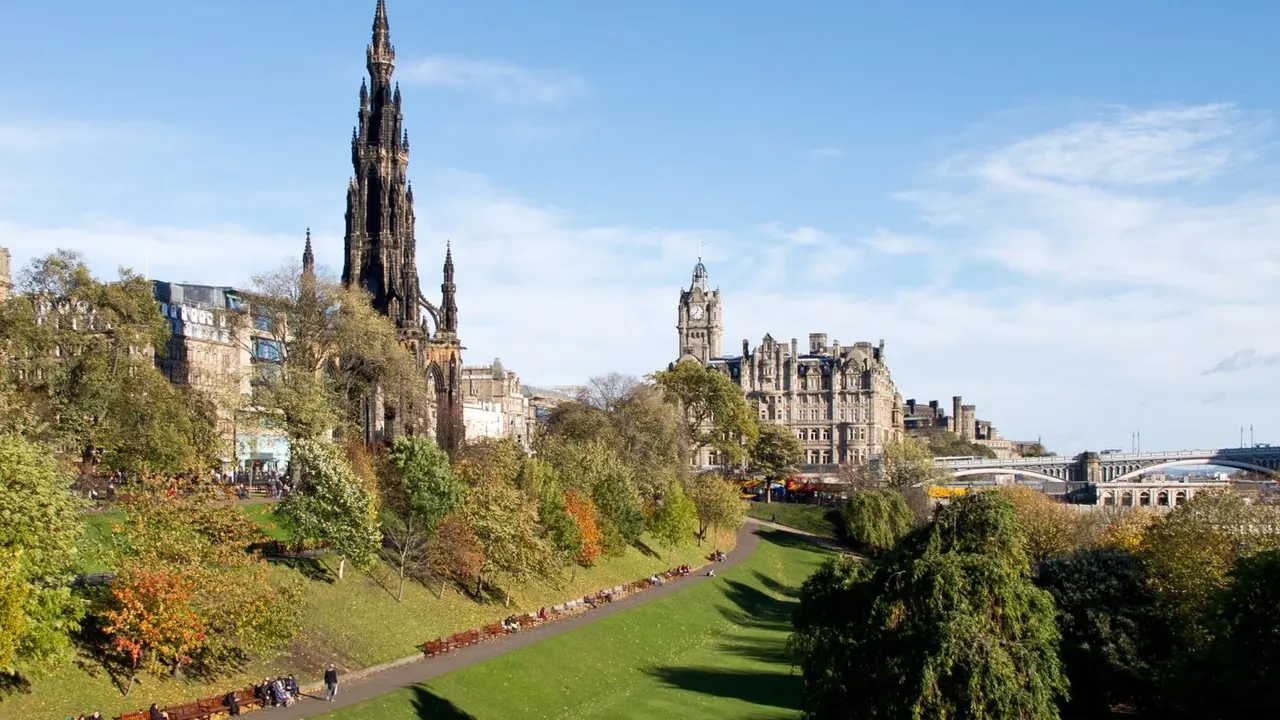
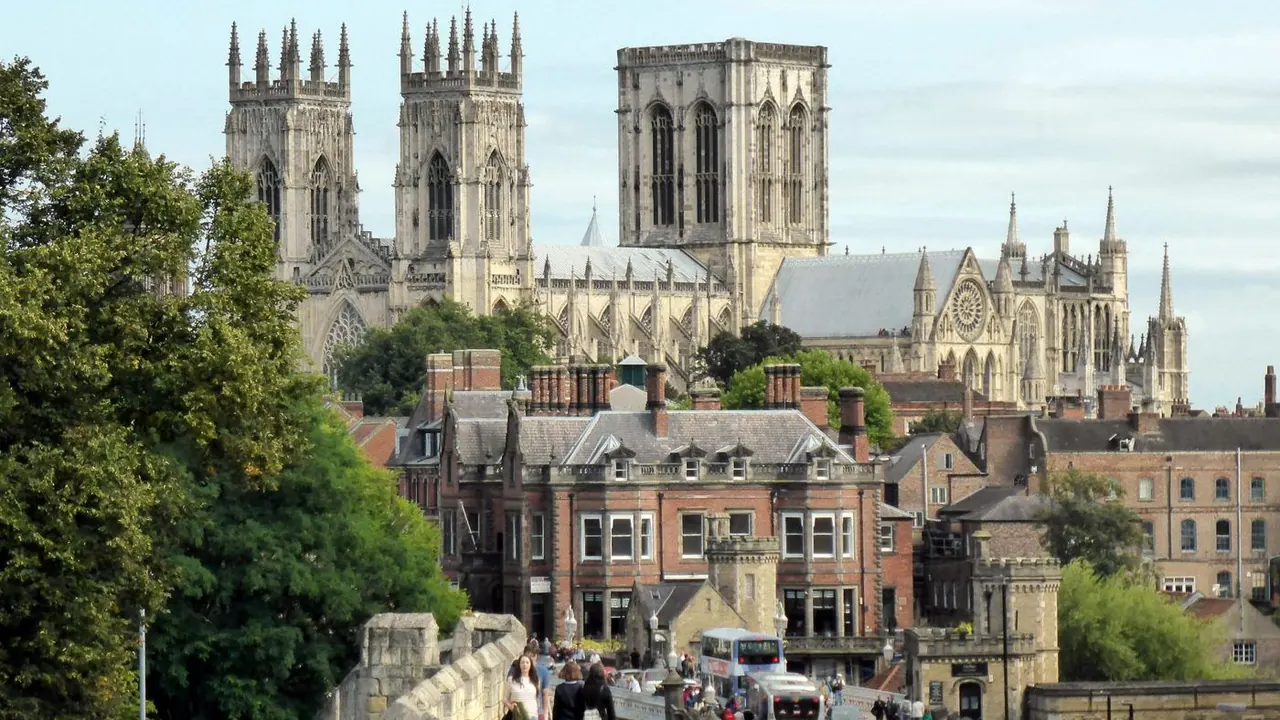
Photos: Edinburgh by Carlos Delgado, CC BY-SA 3.0, cropped; York by PAUL FARMER, CC BY-SA 2.0, cropped.
Edinburgh or York?
Our verdict in twelve categories, each scored against the same fixed benchmark cities, and the climate month by month, so you can choose for your trip.
Choose Edinburgh for
- live music and the arts
- nightlife
- nature and the outdoors
Edinburgh suits the traveller who wants a capital with some drama to it: a castle on a volcanic rock, a wild hill to climb before lunch, whisky bars and pubs that stay open later, and in August the largest arts festival anywhere. It rewards four or five days with walking boots and theatre tickets, as long as the budget can take the hotel rooms.
Choose York for
- prices
- day trips
For a smaller, gentler and slightly cheaper break, York is the easier choice. Its flat, walled centre takes twenty minutes to cross on foot. The Minster and the Roman, Viking and medieval layers fill two or three days, and trains run out to Durham, Harrogate and the Yorkshire coast. It is better for a quiet weekend of old inns and afternoon tea than for late nights.
Scoreboard
Twelve categories on one fixed scale from 0 to 100. The shaded stretch is the gap between the two.
Your match
Pick a travel style or drag the sliders, and both match scores follow your weighting.
Wins on live music and the arts and nightlife with your weighting.
Wins on prices and day trips with your weighting.
What matters to you?
Category by category
What the scores mean for a trip.
Beaches & swimming
Edinburgh at least has a seaside of its own. Portobello's long sands and promenade are a bus ride from the centre, the wide East Lothian beaches at Gullane and North Berwick are within an hour, and a small group of cold-water swimmers goes in all year at Portobello and Wardie Bay.
York is inland, so a beach means a day out to Scarborough's two bays, or to Filey or Whitby, an hour or more by train. In both cases the North Sea stays chilly even in August, so the beach is a change of scene rather than a reason to go.
Food & drink
Edinburgh eats better, mainly thanks to the Scottish larder: west-coast scallops and langoustines, Highland lamb and autumn game, cooked in a modern style in Leith, Stockbridge and the New Town. Whisky is its standout, with bars carrying hundreds of single malts.
York's table is more traditional and narrower. It offers afternoon tea with fat rascals in historic tearooms, Yorkshire ales, Sunday roasts and pies from the Shambles Market, which is comforting rather than ambitious, and there is little international cooking. Both cities serve their most ordinary food on the main tourist streets.
Culture & sights
Both are heritage cities of real standing, but the heritage takes different forms. Edinburgh is a capital of two contrasting townscapes, the medieval Old Town on its ridge and the Georgian New Town across the gardens. Behind them stand free national collections, from the National Museum to the old masters of the Scottish National Gallery.
York is more compact and more layered in time. It has a Gothic Minster with vast medieval glass and walls you can walk, and its Roman, Viking and medieval history is laid out at Jorvik, the Yorkshire Museum and Clifford's Tower. Edinburgh gives grander views and galleries, York more history packed into a smaller space.
Nightlife
Edinburgh stays out later. The Cowgate, deep under the Old Town's bridges, is a real late-night strip of clubs and loud bars, and the Georgian basements around George Street hold cocktail bars for a smarter crowd. In August the festivals keep the whole centre going into the small hours. Most nights still revolve around the pub, from the Victorian bars of Rose Street to the Grassmarket dens and the harbour pubs of Leith.
In York the pub is almost the whole story, and its centuries-old inns on Micklegate, Stonegate and the riverside make a very good ale crawl. Weeknights wind down early and weekends lean towards stag and hen parties, so anyone who wants serious clubbing takes the train to Leeds.
Nature & outdoors
Edinburgh comes out ahead because the wild starts inside the city. Arthur's Seat rises from Holyrood Park beside the Royal Mile, the Water of Leith runs through woods to the sea, and the Pentland ridges are within half an hour. Loch Lomond and the edge of the Highlands are within reach for a full day.
York sits on the flat Vale of York, so in town nature means river paths, the open Strays and cycle routes. The North York Moors and the Dales are superb walking country, but they lie well outside the city and are much easier with a car.
Day trips
Both make fine bases, with York slightly ahead for range. Edinburgh's day trips are classic Scotland by train: Glasgow and Stirling within the hour with Linlithgow on the way, St Andrews a little further, and the Borders abbeys and Rosslyn Chapel to the south.
York reaches Durham's cathedral, Harrogate, Leeds and the coast quickly by rail. It also has grand country houses and ruined abbeys such as Castle Howard, Fountains and Rievaulx, though many of these are easiest by car or on a coach tour.
Good for families
Edinburgh packs more for children into the city itself. It has the castle with its cannons, the hands-on galleries of the National Museum, Dynamic Earth below Arthur's Seat, Camera Obscura's illusions and a hillside zoo, with Holyrood Park and Portobello's sands for running about. The price is the Old Town's steps and cobbles, which are hard going with a buggy, and August crowds that slow everything down.
York's centre is easier on small legs, flat and mostly pedestrianised. Its big draws are the locomotives you can walk around at the National Railway Museum, Jorvik and the Victorian street in the Castle Museum, and walking the walls feels like an adventure. Its theme park, zoo and beach, though, are all about an hour away.
Getting around
Edinburgh's sights sit close together, but they are spread over ridges joined by bridges, stairways and steep cobbled closes, so the walking takes effort. The dense Lothian buses and the tram from the airport through Princes Street to Leith save your legs, and Waverley station sits right in the centre.
York is flat, and most of the centre inside its walls is pedestrianised, so walking and cycling get you almost everywhere. Its station is a major rail hub, but buses out into the countryside are thin.
Shopping & style
Neither city is worth a trip for the shopping alone, but they sell different things. Edinburgh's buys are Scottish: cashmere, tweed, kilts from specialist makers and deep selections of whisky. Chains line Princes Street, upmarket labels sit on George Street, and independents fill Victoria Street and Stockbridge.
In York the pleasure is browsing independent bookshops, jewellers and antiques dealers in the medieval lanes of Stonegate and Petergate, and the Christmas markets are worth a trip in themselves. In both cities the best-known street, the Royal Mile in one and the Shambles in the other, is heavy with souvenirs.
Affordability
Edinburgh is the dearer of two expensive cities. Its central rooms are costly all year and extreme during the August festivals and Hogmanay, when many visitors retreat to Leith. Free national museums, free views from Arthur's Seat and modest bus fares soften the blow.
York's rooms climb at weekends, on race days and at Christmas, but a midweek stay or a bed just outside the walls cuts the cost noticeably. The Minster and Jorvik charge admission, yet the centre is walkable from end to end, so getting around costs nothing.
Live music & performing arts
This is where the two differ most. In August Edinburgh becomes the world's busiest performing arts city, with the Fringe in hundreds of venues, the International Festival's orchestras and opera, and the Tattoo on the castle esplanade. Out of season it still has two orchestras, Scottish Opera and Scottish Ballet at the Festival Theatre, and drama at the Lyceum and the Traverse.
York's programme is modest but has its own character: the historic Theatre Royal and its pantomime, early music in a medieval church, free choral evensong at the Minster, and the Mystery Plays performed on wagons when they are revived. It has no orchestra or opera company of note.
Wellness & relaxation
Neither is a spa city, and each has a Victorian Turkish bath within reach, in different places. Edinburgh's is in the city at Portobello's swim centre, close to the cold-water swimmers and shoreline saunas at Portobello and Wardie Bay. For York the nearest is Harrogate's Royal Baths, half an hour away by train, so rest in town means the Museum Gardens, the riverside paths and a long afternoon tea.
When should you go?
Pick your month. The climate figures are measured averages, not a forecast.
Edinburgh in July
York in July
Daytime high, °C
Rainfall in the month, mm
Where the figures come from
Edinburgh has no rain gauge within 25 km of the centre, so its rainfall comes from a gridded climate dataset read at the city rather than from a gauge further away.
Edinburgh's sunshine is measured 52 km from the centre, at Leuchars.
York has no rain gauge within 25 km of the centre, so its rainfall comes from a gridded climate dataset read at the city rather than from a gauge further away.
York's sunshine is measured 48 km from the centre, at Leeming.
Temperature and rainfall are climate normals, averaged over the years shown. Edinburgh: 1991-2020 normals, Edinburgh Airport (10 km from centre). York: 1991-2020 normals, Linton-On-Ouse (14.9 km from centre).
Both cities have the same cool, changeable climate, and neither ever gets too hot for walking the streets. Summer is the most comfortable time in each, though York runs a degree or two warmer, peaking around 21°C in July against Edinburgh's 19°C. Edinburgh's sunniest month is May, a fine time for Arthur's Seat and the Pentlands, while York's sunshine holds up better through July and August. The sea off Portobello reaches only about 14°C at its warmest, so the beach is for walking rather than swimming in any month.
Rain is spread across the year in both, with no true dry season. Edinburgh's wettest stretch comes in autumn, with October the wettest month at around 73mm, while York's spring is a touch drier. Winters in both are short-dayed, grey and cold at around 7°C. That is fine for museums and pubs but leaves little light for long walks.
Which traveller are you?
On a culture and arts trip, Edinburgh has the edge. York's Minster and walls match it for heritage, but Edinburgh adds two orchestras, Scottish Opera and Ballet, strong drama at the Lyceum and Traverse, and in August the Fringe and International Festival.
For an outdoors trip, Edinburgh has a real hill within walking distance of the centre in Arthur's Seat, with the Pentland ridges within half an hour and the Bass Rock gannets offshore. York's moors and Dales are lovely but much easier to reach by car.
On a trip with a tight budget, York makes the money go further. Rooms are dear in both, but Edinburgh's festival and Hogmanay rates are extreme. In York a midweek stay, free walks on the walls and the free National Railway Museum all help.
Before you go
| Measure | Edinburgh | York |
|---|---|---|
| Official language | English | English |
| Currency | Pound Sterling (GBP) | Pound Sterling (GBP) |
| Sockets | G230 V, 50 Hz | G230 V, 50 Hz |
| Driving side | Left | Left |
| Time zone | UTC, UTC+1 in summer | UTC, UTC+1 in summer |
| Emergency number | 112 or 999 | 112 or 999 |
| Elevation | 47 m | 25 m |
| Main airport | Edinburgh Airport (EDI)11 km from centre163 non-stop destinations | Leeds Bradford Airport (LBA)39 km from centre69 non-stop destinations |
| Public holidays this year | 10 days | 8 days |
By the numbers
| Measure | Edinburgh | York |
|---|---|---|
| City population | 488,050 | 208,400 |
| People per km² | 1,884 | 766 |
| Museums within 10 km | 32 | 24 |
| UNESCO World Heritage sites within 50 km | 3 | 2 |
| Swim season, months above 21 °C | None | - |
Where else could you go?
Every comparison below shares a destination with this one, so you can follow Edinburgh or York somewhere new.