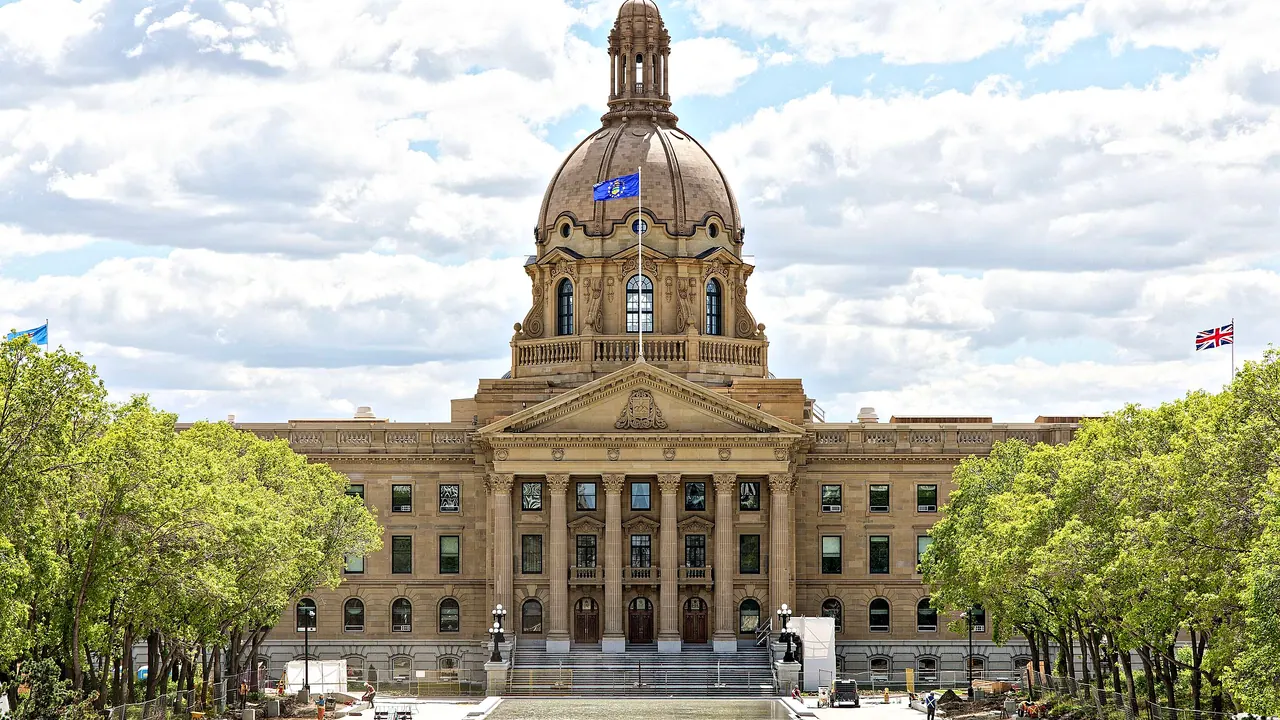
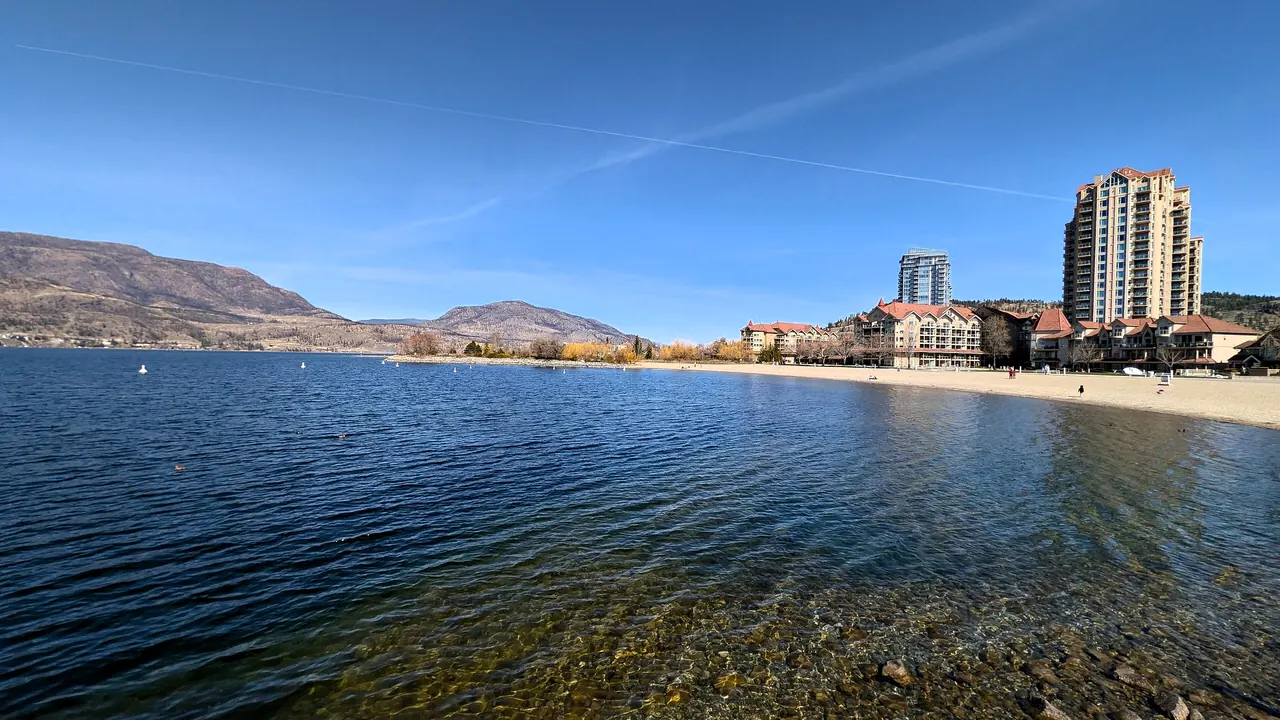
Photos: Edmonton by D. Benjamin Miller, CC0; Kelowna by Joli Rumi, CC BY-SA 4.0, cropped.
Edmonton or Kelowna?
Our verdict in twelve categories, each scored against the same fixed benchmark cities, and the climate month by month, so you can choose for your trip.
Choose Edmonton for
- live music and the arts
- culture and sights
- shopping
Edmonton suits travellers who want a proper city with things to do in the evening and on a rainy day. It has the bigger museums, a stage life built around the Fringe and the Folk Music Festival, the giant West Edmonton Mall and a long green river valley through its centre. It is also the cheaper and easier base, and it keeps working in winter, when the mall, the pedways and the Nordic spas take over.
Choose Kelowna for
- beaches
- nature and the outdoors
- day trips
Kelowna is the choice for a summer of lake, vineyards and hills. You can swim from sandy beaches right beside downtown, eat on winery terraces above the water, ride the Myra Canyon trestles and spend a day touring the Okanagan wine towns. In winter the draw changes to skiing at Big White. Pick it for landscape and slow days outdoors rather than for sights or nightlife.
Scoreboard
Twelve categories on one fixed scale from 0 to 100. The shaded stretch is the gap between the two.
Your match
Pick a travel style or drag the sliders, and both match scores follow your weighting.
Too close to call, level with your weighting
Wins on live music and the arts and culture and sights with your weighting.
Wins on beaches and nature and the outdoors with your weighting.
What matters to you?
Category by category
What the scores mean for a trip.
Beaches & swimming
Edmonton is a prairie city, and swimming there means driving an hour or more to Pigeon, Wabamun or Sylvan Lake. You get narrow sandy strips, cooler water and a chance of algae closures late in the summer. For most visitors, the indoor wave pool at West Edmonton Mall or a city outdoor pool is the easier answer.
Kelowna has a real beach season on its doorstep. Hot Sands in City Park is next to downtown, and Gyro and Rotary beaches further south have clear fresh water and room for paddleboards and windsurfing. The only limit is the calendar: the lake is cold outside the hot months.
Food & drink
Edmonton eats like a big prairie city. There are Alberta beef steakhouses and Ukrainian perogies and cabbage rolls, plus Vietnamese, Lebanese, Ethiopian and Filipino kitchens on the arterial roads. It has more international range than Kelowna, but Whyte Avenue and 124 Street are the only areas where eating out feels like part of the trip.
Kelowna's food is the bigger draw because it comes from the valley around it. You can have lunch on a winery terrace above the lake, buy summer cherries and peaches at farm stands, and visit the cideries and distilleries. In town the choice thins quickly beyond downtown, so plan your best meals at the wineries.
Culture & sights
Edmonton has the better sights, though they are regional. The Royal Alberta Museum has strong First Nations galleries, the Art Gallery of Alberta has its swirling steel shell, the domed Legislature stands above the river, and Fort Edmonton Park is a living-history village. That is a solid two days.
Kelowna's cultural side takes an afternoon. There is the Okanagan Heritage Museum, a small art gallery and the log buildings of Father Pandosy Mission. People come for the lake and the vineyards, not the museums.
Nightlife
Edmonton gives you more choice of evening. Whyte Avenue's pubs, dive bars and small clubs are full of students at weekends, the streets around the arena fill up on hockey and concert nights, and 124 Street suits a quieter glass of wine. Kelowna's going out is mostly the patios and taprooms on Bernard Avenue. They are lively on summer nights with lake-weekend crowds and stag and hen parties, but quiet for the rest of the year.
Nature & outdoors
Kelowna has the grander landscape. A long glacial lake lies between dry, pine-dotted hills, with vineyards above it. There are boats and kayaks on the water, a short climb up Knox Mountain, the Kettle Valley Rail Trail across Myra Canyon's wooden trestles, and mountain-bike trails in the hills. Big White adds winter skiing about an hour away.
Edmonton's best outdoor asset runs through the city itself. The North Saskatchewan River Valley has well over 150km of wooded trails, with beavers and deer. Elk Island's bison herds and dark skies, sometimes with the northern lights, are about 40 minutes away. The mountains are much further off.
Day trips
From Edmonton the choice is thin. The Ukrainian Cultural Heritage Village and the Reynolds-Alberta Museum make good single outings. The places most people really want to see, Drumheller's badlands and Jasper or Banff, need an overnight stay.
Kelowna's day trips make a fuller circuit through wine country. You can drive south to Penticton and the Naramata Bench, go on to the vineyards of Oliver and Osoyoos and the Nk'Mip desert cultural centre, or head north to Vernon and the O'Keefe Ranch. Summerland's steam train is a good extra for families. The towns are small and you need a car, but every route is scenic.
Good for families
Both work well with children, but in different ways. Edmonton is the all-weather option. West Edmonton Mall puts a waterpark, roller coasters and an ice rink under one roof, and the science centre, Valley Zoo and Fort Edmonton's steam train fill the rest of a visit in any season.
Kelowna is a summer of outdoor days. There are shallow lake beaches, paddleboards, pick-your-own orchards and an easy cycle along the flat Myra Canyon trail, plus ski-in, ski-out stays at Big White in winter. It has no zoo or theme park, so rainy days are harder to fill.
Getting around
Edmonton is the easier of the two without a car. The LRT links downtown, the university and the south of the city, and you can walk between downtown and Old Strathcona over the High Level Bridge. In the cold months the pedways keep you indoors downtown. The mall and Fort Edmonton Park are still a slow bus ride away.
In Kelowna you can walk the strip from City Park to the marina and cycle the lakeside path south to the beaches. Almost everything else, from the wineries to Myra Canyon, means a car, a driver or an organised wine tour.
Shopping & style
Edmonton has far more shops. West Edmonton Mall alone is a day out, with hundreds of chain stores, and Whyte Avenue's record and vintage shops and 124 Street's galleries and boutiques give you something more individual. Indigenous art from the museum shops makes a good souvenir. Kelowna has a few boutiques on Bernard Avenue and a regional mall, and its best buys are things to eat and drink: wine from the cellar door, cider and orchard preserves.
Affordability
Edmonton is the gentler city on the budget. Downtown hotels are fairly priced outside festival weeks and big games, car hire is easy, and the summer festivals and river valley trails cost nothing. Eating and drinking cost about the same in both cities.
Kelowna is expensive in July and August. Lakefront rooms charge peak rates, and winery tastings, boat rentals and a near-essential hire car soon add up. Spring and autumn are much kinder to the budget, apart from ski weeks at Big White.
Live music & performing arts
Edmonton is the clear choice for stage and music. In August the Fringe festival fills Old Strathcona with hundreds of shows, and the Folk Music Festival takes over the hillside at Gallagher Park. The Citadel, the Winspear Centre with the Edmonton Symphony and the Jubilee Auditorium keep theatre, opera and ballet going all year.
Kelowna's programme is local: community theatre, the Okanagan Symphony at the Rotary Centre for the Arts, and touring acts at the arena. In summer, free concerts in City Park and music on winery patios make a pleasant evening, but not a reason to travel.
Wellness & relaxation
Kelowna is the easier place simply to slow down. It has resort spas in the lakeside hotels, long vineyard lunches and quiet mornings on the water. Outside the peak summer weeks the whole town seems to take its time.
Edmonton's version is narrower but distinctive: Nordic-style spas with saunas, cold plunges and outdoor hot pools, at their best when there is snow on the ground. A slow afternoon in the Muttart Conservatory's pyramids is the other calm option. Neither city has hot springs or a bathing tradition.
When should you go?
Pick your month. The climate figures are measured averages, not a forecast.
Edmonton in July
Kelowna in July
Daytime high, °C
Rainfall in the month, mm
Temperature and rainfall are climate normals, averaged over the years shown. Edmonton: 1991-2020 (sunshine 1981-2010) normals, University Of Alberta Metabolic Centre (2.5 km from centre). Kelowna: 1991-2020 normals, Kelowna Mws0 (8.4 km from centre).
Edmonton has a short, bright summer. Daytime highs reach about 25°C in July, the days are long and sunny, and June to August is the time for the river valley trails, the lakes outside town and the festivals. July is also the wettest month, at about 104mm, so expect some showery days. From November to March the days stay near or below freezing, around -5°C in midwinter, which suits only the spas, skating and life indoors.
Kelowna is warmer all year and much drier in summer. July and August reach about 30°C with little rain, and that is when the lake is warm enough for long swims, though the middle of the day can feel too hot for walking. May, June and September are better for hiking, cycling and wine touring. Winter stays close to freezing, too cold for the lake, and that is the season for Big White.
Which traveller are you?
For a beach and sun trip, Kelowna wins easily. Its sandy beaches start at the edge of downtown, Okanagan Lake gets warm enough for long summer swims, and the summers are hot and dry. Edmonton's lakes are an hour's drive and cooler.
On a culture and arts trip, Edmonton is the better pick. The Royal Alberta Museum, the Art Gallery of Alberta and Fort Edmonton Park fill two days, and the Citadel, the Winspear Centre and the August Fringe give you far more for your evenings.
For an outdoors trip, choose Kelowna. It offers lake sports, Knox Mountain, the Myra Canyon trestles, rough hiking in Okanagan Mountain Park and, in winter, skiing at Big White. Edmonton's river valley and the bison at Elk Island are good, but the scenery is flatter.
Before you go
| Measure | Edmonton | Kelowna |
|---|---|---|
| Official language | French, English | French, English |
| Currency | Canadian Dollar (CAD) | Canadian Dollar (CAD) |
| Sockets | AB120 V, 60 Hz | AB120 V, 60 Hz |
| Driving side | Right | Right |
| Time zone | UTC-7, UTC-6 in summer | UTC-8, UTC-7 in summer |
| Emergency number | 911 | 911 |
| Elevation | 645 m | 344 m |
| Main airport | Edmonton International Airport (YEG)25 km from centre52 non-stop destinations | Kelowna International Airport (YLW)10 km from centre24 non-stop destinations |
| Public holidays this year | 13 days | 11 days |
By the numbers
| Measure | Edmonton | Kelowna |
|---|---|---|
| City population | 1,010,899 | 144,576 |
| People per km² | 1,316 | 683 |
| Museums within 10 km | 13 | 0 |
| UNESCO World Heritage sites within 50 km | 0 | 0 |
Where else could you go?
Every comparison below shares a destination with this one, so you can follow Edmonton or Kelowna somewhere new.
- Whistlervs Kelowna
- Vancouvervs Kelowna
- Calgaryvs Edmonton
- Lake Louisevs Kelowna
- Lake Louisevs Edmonton
- Banffvs Edmonton