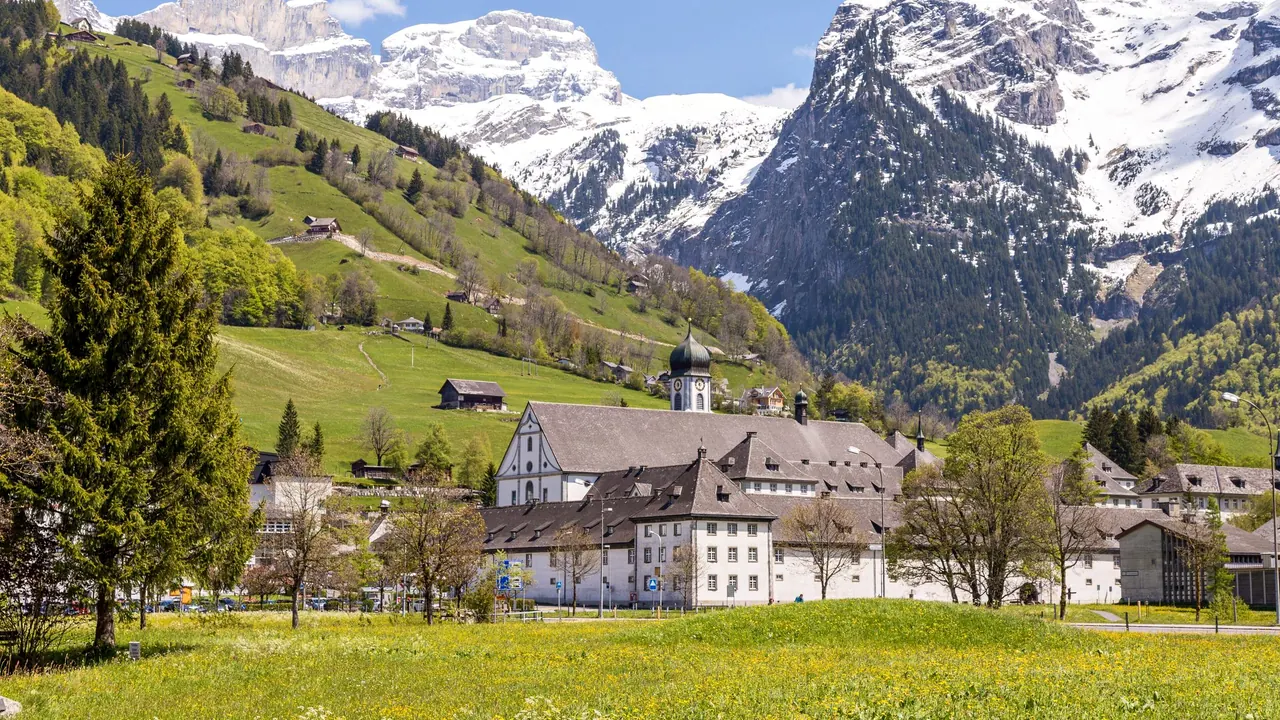
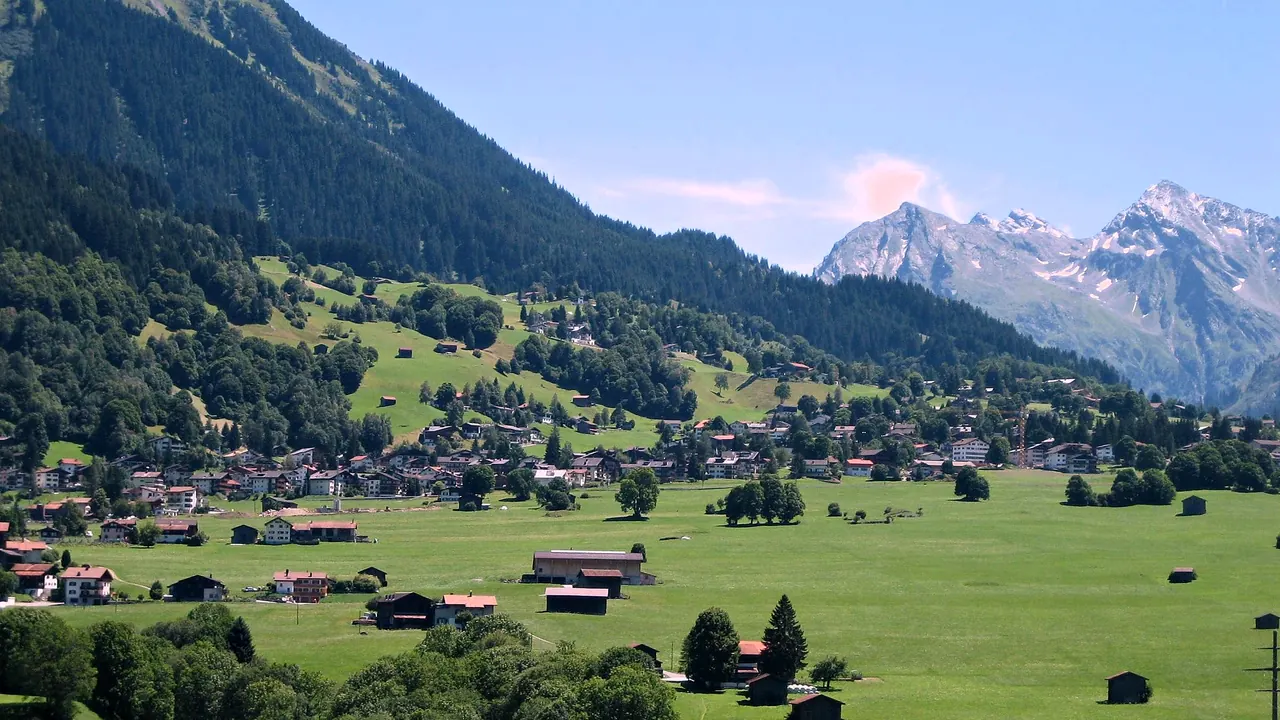
Photos: Engelberg by JoachimKohler-HB, CC BY-SA 4.0, cropped; Klosters by Adrian Michael, CC BY-SA 3.0, cropped.
Engelberg or Klosters?
Our verdict in twelve categories, each scored against the same fixed benchmark cities, and the climate month by month, so you can choose for your trip.
Choose Engelberg for
- day trips
- beaches
- culture and sights
Engelberg suits travellers who want the mountain to be the main event and still like a bit of life around it. The Titlis glacier keeps snow within reach in every season, the steep north faces draw serious freeriders, and the après-ski crowd is younger and stays out later. Lucerne is close enough for an easy afternoon off the slopes, and the monastery gives the village a real centre.
Choose Klosters for
- wellness
- food and drink
Klosters is the quieter, more discreet choice, for people who want long ski runs, high summer walks and early nights. Its strengths are the Parsenn runs down to the valley, the Silvretta hiking country and the thermal baths of the Engadine beyond the Vereina tunnel. The Graubünden cooking and wine give meals a regional flavour of their own. Expect calm evenings rather than a party.
Scoreboard
Twelve categories on one fixed scale from 0 to 100. The shaded stretch is the gap between the two.
Your match
Pick a travel style or drag the sliders, and both match scores follow your weighting.
Wins on day trips and beaches with your weighting.
Wins on wellness and food and drink with your weighting.
What matters to you?
Category by category
What the scores mean for a trip.
Beaches & swimming
Neither is a swimming destination, but Engelberg does a little better for a summer dip. In about an hour the train reaches Lake Lucerne, where the lidos and lakeside meadows have properly swimmable water.
From Klosters the nearest open water is the bathing area on the lake at Davos, which stays cold even in high summer, so most swimming happens in the village's outdoor pool, in hotel pools or in the region's thermal baths.
Food & drink
Both eat the way Swiss mountain resorts do, in wood-panelled rooms and slope-side huts, so the difference is in the regional flavour. Engelberg's menus are central Swiss: fondue, rösti and Älplermagronen, with cheese made in front of you at the monastery dairy as its one real food stop.
Klosters cooks from Graubünden, with capuns, pizokel, barley soup and air-dried Bündnerfleisch, and pours Pinot Noir from the Bündner Herrschaft just down the valley. It also has a few more refined kitchens for its well-off regulars.
Culture & sights
Engelberg has the stronger single sight. Its Benedictine abbey, founded in 1120, fills the valley floor, and the late-baroque church with its huge organ is worth an hour, along with the Belle Époque hotels and the small valley museum.
Klosters has less to show: Augusto Giacometti's stained glass in the church of St. Jakob and a farmhouse museum of Prättigau rural life. Its charm lies more in its timber chalets than in anything to visit.
Nightlife
Engelberg is the livelier of the two in winter. A young crowd of freeriders and seasonal workers fills the bars at the foot of the slopes and keeps a couple of late bars and a small club going at weekends.
Klosters prefers a drink by the fire in a hotel bar, and only a late spot or two gets busy, in the peak weeks around Christmas, New Year and February. Anyone wanting more goes up the valley to Davos. In summer both villages go to bed early.
Nature & outdoors
Both villages have outstanding mountains, but of different kinds. Engelberg is built around Titlis: cable cars climb to a glacier with an ice cave and a suspension bridge, so there is snow even in July, and its steep north faces are among the best-known freeride terrain in the Alps. The gentler Brunni side has a via ferrata, and the Four Lakes walk over the Jochpass is the classic summer route.
Klosters suits skiers who like long cruising runs, with the Parsenn's descents to the valley shared with Davos and the quieter Madrisa opposite. In summer it opens onto the wider Silvretta massif with its huts and tarns, and the Swiss National Park lies beyond the Vereina tunnel.
Day trips
Engelberg has the easier and richer day out on its doorstep. Lucerne, with its covered bridges, old town and lake steamers, is under an hour away, and Stans, Schwyz, Einsiedeln's abbey and even Zurich are within reach, although every trip starts down the same valley.
Klosters's outings take longer but are varied: Chur's old centre, the Heidi country around Maienfeld, Vaduz, and the sgraffito villages of the Lower Engadine through the Vereina tunnel. A full day on the Albula line to St. Moritz is the most rewarding of them.
Good for families
Both villages are safe, traffic-calm places with ski schools and gentle beginner slopes. Engelberg has the Härzlisee with its stepping stones and rafts, boats on the Trübsee and summer snow on Titlis, plus Lucerne's transport museum for a wet day. Very young children may struggle with the cold and altitude at the glacier station.
Klosters centres family days on the Madrisa side, with its mountain adventure area and farm-hut walks, but has nothing obvious for when it rains.
Getting around
Neither needs a car, and both are reached by train. Engelberg is the more compact: a small, flat village where the station, hotels and cable cars are a short walk apart, though it sits at the end of a dead-end valley.
Klosters stretches along its valley between two stations, so the local and ski buses do more of the work. It lies on a through line, with direct trains to Davos and car trains through the Vereina tunnel to the Engadine.
Shopping & style
Engelberg's main street is aimed at tour groups, with watch and jewellery shops alongside the ski rental and well-stocked outdoor gear. The thing most worth taking home is cheese from the monastery dairy, with some Swiss chocolate.
Around Platz in Klosters the tone is more upmarket, with a few fashion and interior boutiques for regular guests and delicatessens selling Graubünden cured meats and cheese. For a proper day of shopping, guests head to Zurich.
Affordability
Both are expensive by any European measure, and there is little to choose between them. In Engelberg the Titlis cable car is a big cost in itself, though a Swiss travel pass covers the train and takes something off some lifts.
Klosters sets its prices for an upmarket clientele, and the guest card for local transport is the main saving. In both, a self-catering apartment helps more than anything else.
Live music & performing arts
Live performance is thin in both, so the difference lies in where you go for more. Engelberg's highlight is organ music in its baroque abbey church, alongside a small summer festival, and Lucerne's concert halls are under an hour away.
Klosters has a summer classical concert series and the odd church recital. Otherwise it means a hotel pianist, and theatre requires a trip to Chur.
Wellness & relaxation
Engelberg first made its name as a health resort, and its clean air and mountain silence still help you unwind, but how calm it feels depends on when you go. Early summer and midweek winter days are peaceful. In the busiest ski weeks, and when queues build at the Titlis cable car, the village feels more like a resort than a retreat. For water there are hotel spas and the indoor pool at the sports centre, but no thermal springs.
Klosters is the more restful of the two because its quiet does not depend on the calendar. It is a discreet, unshowy village of timber chalets with long views down the Prättigau. A day of walking, then a sauna and an early night is simply how the place works, and nothing in the village pulls you the other way.
When should you go?
Pick your month. The climate figures are measured averages, not a forecast.
Engelberg in July
Klosters in July
Daytime high, °C
Rainfall in the month, mm
Where the figures come from
Engelberg has no weather station within reach, so its figures come from a gridded climate model rather than a measured record, and read a broad area rather than one spot.
Klosters's temperatures are measured 51 km from the centre, at S. Valentino Alla Muta.
Klosters's station stands 280 m above the city centre, so the centre is likely a little warmer than the figures say.
Klosters has no rain gauge within 25 km of the centre, so its rainfall comes from a gridded climate dataset read at the destination rather than from a gauge further away.
Temperature and rainfall are climate normals, averaged over the years shown. Engelberg: 2001-2020 normals, NASA POWER reanalysis grid, no weather station within 90 km. Klosters: 1991-2020 normals, S. Valentino Alla Muta (51.4 km from centre).
Engelberg and Klosters have much the same mountain climate, with Engelberg a degree or so warmer through the summer. From December to February daytime highs stay around freezing, which is the season for skiing and sledging. March and November are cold for long days outside. April and October are cool but fine for walking. July and August reach about 21°C in Engelberg, which is mild walking weather, but neither village ever gets warm enough for an outdoor swim to be tempting.
Rain is where they differ. Engelberg is the wetter village almost all year, with around 150mm a month from May to August, so its warmest weeks are also its wettest. Klosters is clearly drier in winter and spring, at roughly 60mm to 70mm a month, which makes it the safer choice for a dry spell on the slopes in March or April. It is also somewhat drier in high summer, though June to August are still its rainiest months. September is the exception, when Klosters is slightly the wetter of the two. Even so, in both villages September rain falls well below the summer peak and daytime highs are in the mid to high teens, so it is the most comfortable month for long walks.
Which traveller are you?
On a culture and arts trip, Engelberg is the better base. Its 12th-century Benedictine abbey, with the baroque church and its great organ, is a real sight in its own right, and Lucerne's old town and concert halls are less than an hour away by train.
For a relaxing and wellness trip, Klosters is the calmer place to unwind. The village is unhurried even in season, its hotels have good spas, and the thermal baths at Scuol and the big sauna complex in Davos are both within easy reach.
For an outdoors trip, both villages have superb mountains, so it comes down to the kind you want. Engelberg has glacier snow all year and famous steep freeride terrain. Klosters has the long Parsenn runs, Silvretta hut walks and the Swiss National Park within reach.
Before you go
| Measure | Engelberg | Klosters |
|---|---|---|
| Official language | French, German, Italian, Romansh | French, German, Italian, Romansh |
| Currency | Swiss Franc (CHF) | Swiss Franc (CHF) |
| Sockets | CJ230 V, 50 Hz | CJ230 V, 50 Hz |
| Driving side | Right | Right |
| Time zone | UTC+1, UTC+2 in summer | UTC+1, UTC+2 in summer |
| Emergency number | 112 | 112 |
| Elevation | 1,015 m | 1,179 m |
| Main airport | Zürich Airport (ZRH)72 km from centre226 non-stop destinations | Zürich Airport (ZRH)120 km from centre226 non-stop destinations |
| Public holidays this year | 13 days | 9 days |
By the numbers
| Measure | Engelberg | Klosters |
|---|---|---|
| Population | 4,181 | 4,499 |
| People per km² | 56 | 20 |
| Museums within 10 km | 0 | 3 |
| UNESCO World Heritage sites within 50 km | 2 | 1 |
Where else could you go?
Every comparison below shares a destination with this one, so you can follow Engelberg or Klosters somewhere new.
- Davosvs Klosters
- Arosavs Klosters
- Andermattvs Engelberg
- Lenzerheidevs Klosters
- Grindelwaldvs Engelberg
- Samnaunvs Klosters