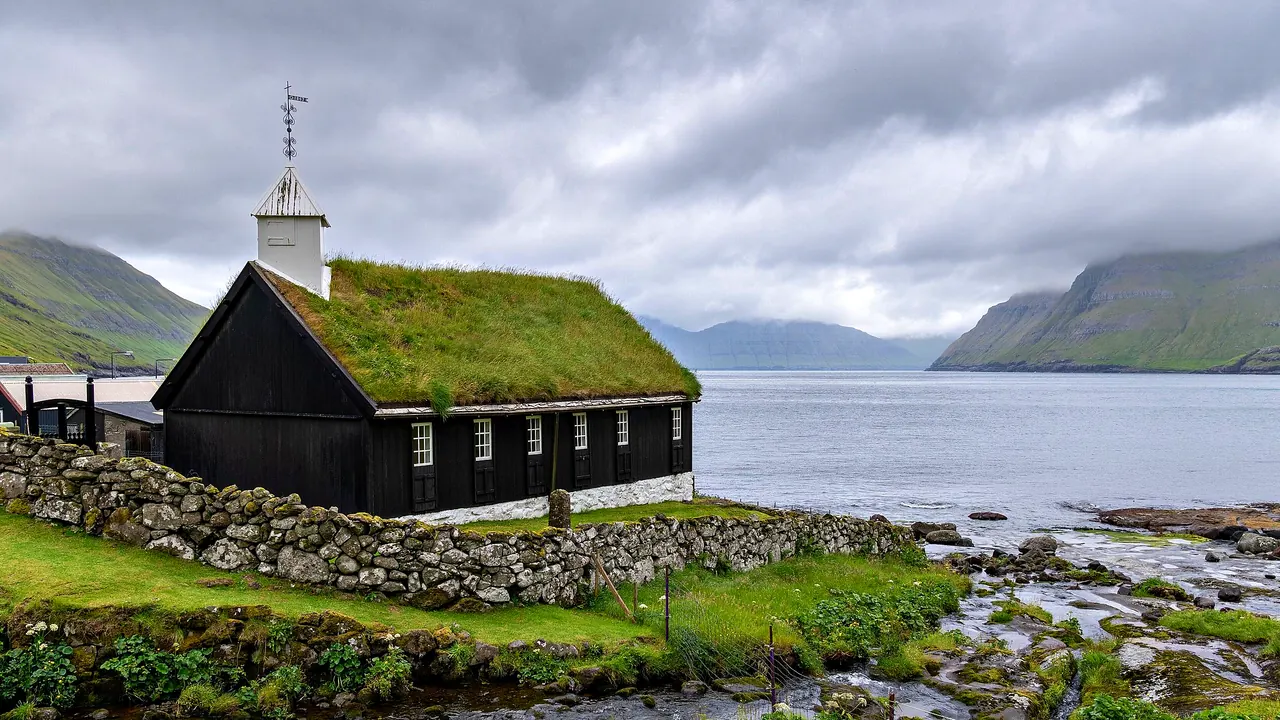
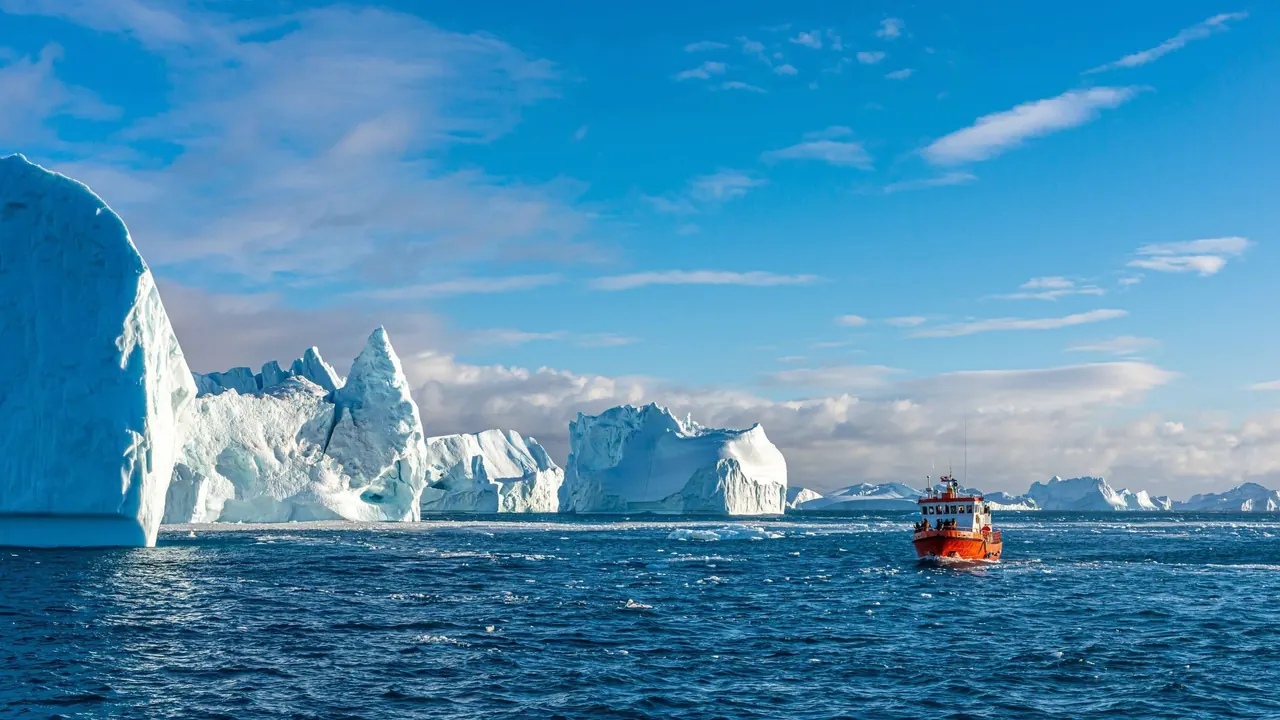
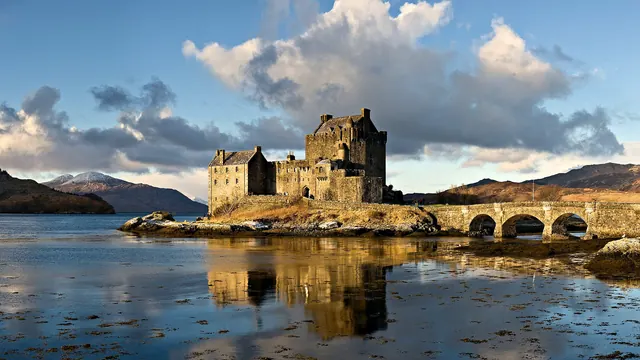
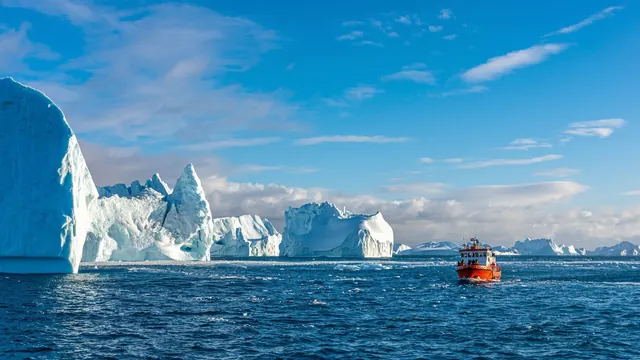
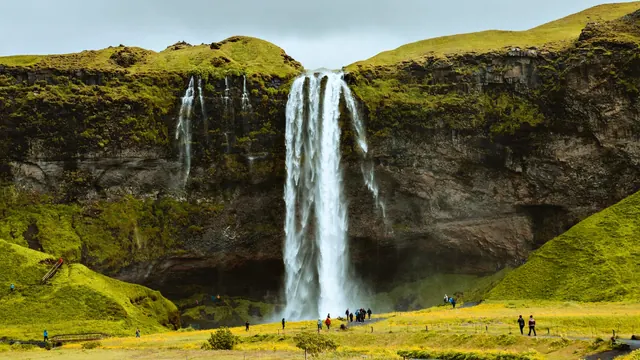
Photos: Faroe Islands by Ekrem Canli, CC BY-SA 4.0, cropped; Greenland by Holger J. Bub, Pexels License.
Faroe Islands or Greenland?
Our verdict in twelve categories, each scored against the same fixed benchmark cities, and the climate month by month, so you can choose for your trip.
Choose Faroe Islands for
- getting around
- food and drink
- day trips
The Faroe Islands suit a traveller who wants dramatic Atlantic scenery without a complicated trip. Bridges and subsea tunnels tie the main islands together, so you can stay in Tórshavn, drive to cliffs, waterfalls and turf-roofed villages, and be back for dinner. The food is more interesting, families manage more easily, and a week can be planned with a hire car and some slack for the weather.
Choose Greenland for
- nature and the outdoors
- wellness
- culture and sights
Greenland is for the traveller who wants the bigger, wilder landscape and accepts the logistics that come with it. The Ilulissat Icefjord, the edge of the ice sheet at Kangerlussuaq, whales in Disko Bay and dog sledding in late winter are on a scale the Faroes cannot match. No roads link the towns, though, so you fly or sail between regions and keep spare days for fog and wind.
Scoreboard
Twelve categories on one fixed scale from 0 to 100. The shaded stretch is the gap between the two.
Your match
Pick a travel style or drag the sliders, and both match scores follow your weighting.
Wins on getting around and food and drink with your weighting.
Wins on nature and the outdoors and wellness with your weighting.
What matters to you?
Category by category
What the scores mean for a trip.
Beaches & swimming
Neither place is for swimming, so the difference is mostly in what the shore looks like. The Faroes have a few small black-sand bays, such as Tjørnuvík under its mountains and Sandur on Sandoy, plus bracing dips at Sandagerði in Tórshavn in water around 10°C.
Greenland's coves near Ilulissat and Qaqortoq are shingle and sand with icebergs drifting past in water only a few degrees above freezing. These are places for walking, and anyone who wants to bathe should head for the hot spring at Uunartoq instead.
Where in Faroe Islands: Tjørnuvík, Sandur, Tórshavn
Food & drink
The Faroes are the better place to eat, with more choice and a cuisine all their own. Wind-dried skerpikjøt and fermented ræst give the islands a sharp, distinctive taste. Tórshavn has everything from harbour fish places to ambitious New Nordic tasting menus, and you can dine at a family's table through heimablídni, classically at the farmhouse in Kirkjubøur.
Greenland's ingredients are just as striking: musk ox, reindeer, snow crab, Arctic char and suaasat soup. Careful cooking is mostly limited to a few restaurants in Nuuk and Ilulissat, though, and elsewhere you are down to hotel dining rooms and grill bars.
Where in Faroe Islands: Tórshavn, Kirkjubøur, Klaksvík
Where in Greenland: Nuuk, Ilulissat, South Greenland
Culture & sights
The two are about even, and in both places culture is a quiet addition to the landscape. The Faroes keep theirs close together. Tinganes and the National Museum are in Tórshavn, and Kirkjubøur, with its unfinished Magnus Cathedral, is half an hour south, so a couple of days covers it all.
Greenland's sights are spread far apart. The Qilakitsoq mummies are in Nuuk's National Museum, while the Norse ruins of Kujataa, including Hvalsey church and Erik the Red's farm, are in the far south and take boat transfers and several days to reach.
Where in Faroe Islands: Tórshavn, Kirkjubøur, Saksun, Gjógv
Where in Greenland: South Greenland, Nuuk, Sisimiut, Ilulissat
Nightlife
Nights out are limited in both, but Tórshavn has a bit more going on. A few pubs, cocktail and beer bars around the harbour fill up on Friday and Saturday, and Ólavsøka in late July packs the town. In Greenland, going out means a handful of Nuuk bars that turn into dance floors at weekends, and the hotel bar everywhere else.
Where in Faroe Islands: Tórshavn
Where in Greenland: Nuuk
Nature & outdoors
Both are trips you take for the landscape, but Greenland works on a far larger scale. The Ilulissat Icefjord sends icebergs the size of city blocks into Disko Bay, where humpbacks feed. At Kangerlussuaq a road runs to the ice sheet itself, and East Greenland around Tasiilaq has the most dramatic peaks. Winter adds dog sledding, ski touring and northern lights.
The Faroes are greener and easier to reach. They have sea cliffs, Sørvágsvatn hanging above the ocean on Vágar, the Múlafossur waterfall, puffins on Mykines and the ridge walk to Kallur on Kalsoy. The views are grand, but the islands are compact, with no ice or glaciers.
Where in Faroe Islands: Vágar, Mykines, Kalsoy, Eysturoy
Where in Greenland: Disko Bay and Ilulissat, Kangerlussuaq, East Greenland, South Greenland
Day trips
Day trips are easier in the Faroes because everything is connected by road and short ferry. From Tórshavn you can reach Kirkjubøur, the fishing port of Klaksvík, Gjógv and Saksun, or take the ferry to Nólsoy. Each fills a few hours, and you can combine several.
In Greenland every outing means a boat or small plane. The worthwhile places are the Norse sites around Qaqortoq and Narsaq in the south, while in Disko Bay settlements such as Oqaatsut and Ilimanaq are little more than a few painted houses. You will move between bases rather than day-trip from one.
Where in Faroe Islands: Kirkjubøur, Klaksvík, Gjógv, Nólsoy
Where in Greenland: South Greenland, Disko Bay
Good for families
The Faroes are the easier choice with children. The Vestmanna boat trip into sea caves suits younger children, there are ferry rides and sheep everywhere, and Tórshavn has an aquarium and playgrounds. Still, the unfenced cliff walks call for older children in good boots.
Greenland has nothing built for children. Its memorable moments, such as whales off Ilulissat, a dog-sled ride or musk oxen near Kangerlussuaq, come with long, cold boat trips and delayed flights. That makes it better for teenagers than toddlers.
Where in Faroe Islands: Tórshavn, Vestmanna, Mykines
Where in Greenland: Ilulissat, Kangerlussuaq
Getting around
The Faroes are far easier to get around. Bridges and subsea tunnels join Vágar, Streymoy, Eysturoy, Borðoy and Sandoy, so most sights are within about an hour's drive of Tórshavn, and with a hire car you can fit several walks into one day. Islands such as Kalsoy and Nólsoy still depend on car ferries, and rural buses are sparse. Mykines, reached by small boat or helicopter, is the island most often cut off by wind and swell.
In Greenland no road joins any two towns, and you can never rely on a hire car. You travel between regions by small plane, helicopter or the summer coastal ferry, and fog regularly delays flights. Disko Bay is the simplest region to manage, because Ilulissat is walkable and boats link it to the smaller settlements around the bay.
Where in Faroe Islands: Tórshavn, Streymoy, Eysturoy, Vágar
Where in Greenland: Ilulissat, Disko Bay
Shopping & style
Shopping is small in both, so the difference is in what you bring home. In the Faroes it is wool: patterned jumpers, yarn and designer knitwear from a few shops in the old centre of Tórshavn.
In Greenland it is carved tupilak figures, beadwork, sealskin and soft qiviut musk ox wool, sometimes bought straight from the carver in Nuuk, Ilulissat or Tasiilaq. Check the import rules for sealskin before you buy.
Where in Faroe Islands: Tórshavn
Where in Greenland: Nuuk, Ilulissat, Tasiilaq
Affordability
Both are among the most expensive places you can travel to, and the gap between them is small. The Faroes' costs are hotels, meals out and a hire car, and self-catering is the main way to save. Some popular walks also charge for crossing private land.
In Greenland the biggest costs are the domestic flights and boat trips you need just to get around. Hikers who camp along the Arctic Circle Trail are the only ones who travel cheaply there.
Live music & performing arts
There is little to see on any given night in either place, and summer is the time for both. In the Faroes, the Nordic House in Tórshavn hosts concerts all year, shore festivals take place at Gøta and Klaksvík, and the whole capital joins the medieval chain dance at Ólavsøka.
Greenland centres on the Katuaq cultural centre in Nuuk, with Greenlandic-language rock at summer festivals there and in Sisimiut. Drum and mask dancing are something you come across by luck.
Where in Faroe Islands: Tórshavn, Gøta, Klaksvík
Where in Greenland: Nuuk, Sisimiut
Wellness & relaxation
The hot spring on Uunartoq is the one thing that sets these two apart, and only Greenland has it. The Faroes have no hot springs at all. There, wellness means a hotel spa or sauna in Tórshavn, the public pools or a cold plunge at Sandagerði, along with the restful pace of quiet villages and long summer evenings.
In Greenland, natural pools at around 37°C sit on an uninhabited island in the far south, with icebergs floating in the fjord beyond. Reaching them is a boat trip from Qaqortoq or Nanortalik, so most visitors plan it as a separate trip. Everywhere else, the choice comes down to a hotel sauna, much as in the Faroes.
Where in Faroe Islands: Tórshavn
Where in Greenland: Uunartoq, South Greenland
When should you go?
Pick your month, and for a country the place in it. The climate figures are measured averages, not a forecast.
Tórshavn (Faroe Islands) in July
Nuuk (Greenland) in July
Daytime high, °C
Rainfall in the month, mm
Temperature and rainfall are climate normals, averaged over the years shown. Tórshavn (Faroe Islands): 1991-2020 normals, Thorshavn (0.8 km from centre). Nuuk (Greenland): 1991-2020 normals, Godthaab / Nuuk (1.2 km from centre).
The Faroes stay mild all year. Tórshavn runs from about 6°C in winter to 13°C in July and August and rarely freezes for long. May to July is the driest stretch and the best time for walking. From October to January the rain is heavy and the storms come often. The sea peaks at about 10°C in late summer, which is enough for a quick, bracing dip and nothing more. Long winter nights bring a chance of northern lights.
Greenland's seasons are much sharper. Nuuk stays below freezing from November to April and reaches only about 11°C in July. June to August is the time for hiking and boat trips among the ice, and the sea stays close to freezing all year. Late winter gives Greenland a second season that the Faroes lack: dog sledding over snow, with the northern lights overhead. November is Nuuk's wettest month by a wide margin.
Which traveller are you?
For an outdoors trip, Greenland repays the effort. You could spend a week walking the Arctic Circle Trail from Kangerlussuaq to Sisimiut, or stay in Ilulissat to kayak among the icebergs and watch for whales. In late winter you could travel by dog sled instead.
On a family trip with children, the Faroes keep the days short. You can rent one house, drive to a different waterfall or village each morning and head home when the rain sets in. In Greenland, nearly every outing is a flight or a full day on a boat.
For a short city break, choose the Faroes. You can fly into Vágar and stay in Tórshavn, spending a morning among the turf-roofed houses of Tinganes and an evening over Faroese lamb, with a drive out to Gásadalur in between. In Greenland, two or three days barely cover one region.
More comparisons
Each shares a side with Faroe Islands or Greenland.
Where else could you go?
Set Faroe Islands or Greenland against any other country.