Tórshavn
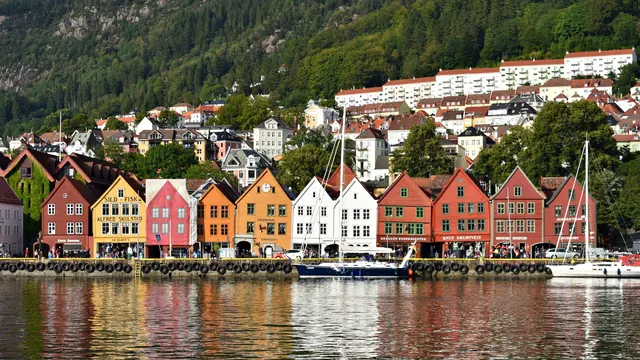
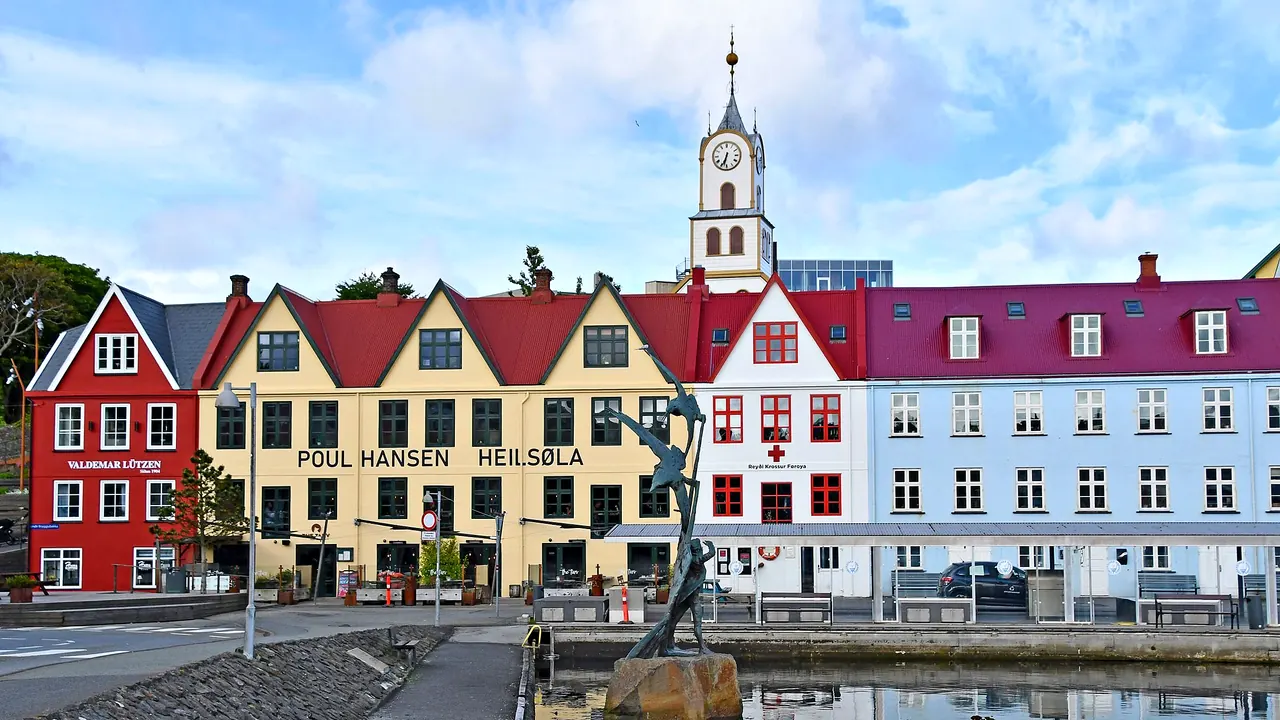
Coloured houses around the Vágsbotn harbour, with the cathedral tower behind
- Nature & outdoors88
- Getting around45
- Food & drink40
Photo: Pasztilla aka Attila Terbócs, CC BY-SA 4.0, cropped
Match
32
Every category weighted equally
- Beach & sun30
- Culture & arts31
- Food & nightlife29
- Family trip34
- Outdoors38
- Relax & unwind33
- Shopping & style31
- On a budget30
Tórshavn in twelve categories
Our verdict on each, scored 0 to 100 against the same fixed benchmark cities, so a score means the same thing on every page.
Beaches & swimming. Scores 8 out of 100.
Food & drink. Scores 40 out of 100.
Culture & sights. Scores 30 out of 100.
Nightlife. Scores 18 out of 100.
Nature & outdoors. Scores 88 out of 100.
Day trips. Scores 30 out of 100.
Good for families. Scores 35 out of 100.
Getting around. Scores 45 out of 100.
Shopping & style. Scores 22 out of 100.
Affordability. Scores 12 out of 100.
Live music & performing arts. Scores 25 out of 100.
Wellness & relaxation. Scores 28 out of 100.
Tórshavn category by category
Beaches & swimming
8This is not a place to swim. The sea around the islands barely reaches 11°C even in late summer, the air is often cooler than that, and most of the shore is rock and cliff rather than sand. The few sandy bays, such as the black-sand cove at Tjørnuvík or the beach at Sandur, are best enjoyed in a waterproof jacket. A small group of locals take cold dips off the harbour rocks all year, and visitors can join in for the shock of it. For warm water, the town's indoor pool is the realistic choice.
Food & drink
40Faroese cooking is built on what the islands can produce: lamb, fish, seabirds and whale, much of it wind-dried in slatted sheds or fermented into ræst, a sharp, aged flavour that defines the local table. Visitors who want to meet it directly can book heimablídni, home dining in a farmhouse or family kitchen, which is often the most memorable meal of a stay. The town also has a small number of ambitious kitchens that treat Faroese langoustine, scallops and lamb with real care.
Beyond that the choice is short. A handful of cafés, a few casual places for fish and burgers and some hotel restaurants make up the everyday offer, and local breweries supply decent beer. It rewards curiosity rather than appetite for variety.
Culture & sights
30The heart of the town is Tinganes, a small rocky headland of turf-roofed, red-painted wooden buildings. The Faroese assembly first met here in the Viking age, and the government has its offices here today, while the parliament itself sits in its own building elsewhere in town. Next to the headland is the old quarter of Reyn, a tight knot of tarred houses and narrow lanes, and the grassy ramparts of Skansin fort look over the harbour.
The National Museum covers island life from the Viking age onwards, with an old farmhouse kept as it was, and the art museum holds the best collection of Faroese painting. The grass-roofed Nordic House is the town's architectural landmark. It can all be seen in a day or two at an easy pace.
Nightlife
18Going out means a few pubs and bars within a couple of streets of the harbour, busy on Friday and Saturday nights when young people come in from the villages and the evening can run late. On weekdays the town is quiet early. It is friendly and easy to fall into conversation, but there is no club scene to speak of and nobody plans a trip around it.
Nature & outdoors
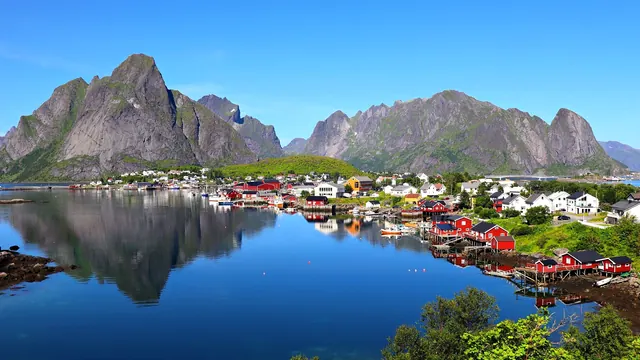
88The landscape is the reason to come. From the town, roads and subsea tunnels reach steep green islands of basalt cliffs and sharp ridges, with waterfalls dropping straight into the Atlantic at Gásadalur, the lake that seems to hang above the sea at Sørvágsvatn, and the high cliffs and stacks of the northern coast. Slættaratindur, the highest summit at under 900m, is a manageable climb with views across the whole group. In summer the island of Mykines, reached by a short ferry, holds large puffin colonies.
There are boat trips beneath the bird cliffs at Vestmanna, sea kayaking in the fjords and walks straight from the edge of town. The weather decides everything: fog and wind can close a hike within the hour, and the long light of June contrasts with short, stormy winter days.
Day trips
30The one outing with real historical weight is Kirkjubøur, a short drive south. It holds the roofless medieval St Magnus Cathedral, the small church of St Olav, still in use, and a timber farmhouse lived in by the same family for centuries. Klaksvík, the second town, is under an hour away by subsea tunnel and has a working fishing harbour and a large modern church. In small villages such as Saksun and Gjógv, a turf-roofed church or a cluster of old houses is reason enough for a stop.
That is about the whole list. The villages are tiny, and nearly every excursion from the town is really a trip into the landscape, not a visit to another place.
Good for families
35The town is small, safe and unhurried, and children are part of everyday life here, so a family will not find it hard to manage. What it lacks is anything made for them: there is a small aquarium of local sea life, playgrounds and the indoor pool, and little else. Children who enjoy boats, sheep, puffins and wind-blown walks will have a good time; those who need attractions may get restless, especially on a run of rainy days.
Getting around
45The centre is compact and easy on foot, though hilly, and red town buses cover the outer districts. Beyond the town, a network of intercity buses and ferries reaches most islands, and long subsea tunnels link the main ones, but services to the villages are sparse and do not fit a sightseeing day well. Most visitors hire a car, and the roads are quiet and well kept, if narrow in places, with single-lane tunnels and sheep on the tarmac. Fog and wind can delay ferries and flights.
Shopping & style
22Shopping is a short affair. The thing worth buying is Faroese knitwear, from traditional patterned sweaters in undyed island wool to contemporary design pieces, found in a few shops around the old centre along with local crafts, prints and ceramics. A modest shopping centre covers everyday needs. There is no luxury or fashion depth, and prices are high.
Affordability
12This is an expensive place to travel. Hotel rooms are few and priced high, especially in summer, restaurant meals and drinks cost well above most of Europe, and the need to hire a car adds to the bill. Self-catering apartments and supermarket shopping help keep costs down, and the landscape, the main attraction, is free to walk in.
Live music & performing arts
25For a town this size the music runs deep: the islands have a strong tradition of singing and songwriting, and the Faroese chain dance, with its long ballads sung by the dancers themselves, is performed at the national festival of Ólavsøka each summer. The Nordic House hosts concerts, theatre and the small Faroese symphony orchestra, and there is a jazz festival in the town's calendar. On a random night, though, there may be little on, and a visitor needs to check what coincides with their stay.
Wellness & relaxation
28There is no spa or bathing tradition here, and wellness amounts to a hotel spa, the indoor public pool and the occasional sauna paired with a cold-water dip. What the town does offer is quiet: little traffic, a slow harbour pace, long summer evenings of light and very few crowds. It suits a visitor who unwinds by walking and looking at the sea, not one who wants treatments.
When should you go?
Pick a month to see what it is like. The climate figures are measured averages, not a forecast.
Tórshavn in July
Daytime high, °C
Rainfall in the month, mm
The whole year
Shaded against this destination’s own year: the deepest cell is its best month for that figure and the palest its weakest.
Temperature and rainfall are climate normals, averaged over the years shown. Tórshavn: 1991-2020 normals, Thorshavn (0.8 km from centre).
Before you go
| Measure | Tórshavn |
|---|---|
| Official language | Danish, Faroese |
| Currency | Danish Krone (DKK) |
| Sockets | CEFK230 V, 50 Hz |
| Driving side | Right |
| Time zone | UTC, UTC+1 in summer |
| Emergency number | 112 |
| Elevation | 24 m |
| Main airport | Vágar Airport (FAE)27 km from centre11 non-stop destinations |
| Public holidays this year | 17 days |
By the numbers
| Measure | Tórshavn |
|---|---|
| Population | 14,038 |
| People per km² | 120 |
| Museums within 10 km | 3 |
| UNESCO World Heritage sites within 50 km | 0 |
| Swim season, months above 21 °C | None |
Compare Tórshavn with
Every comparison with a written verdict behind it.