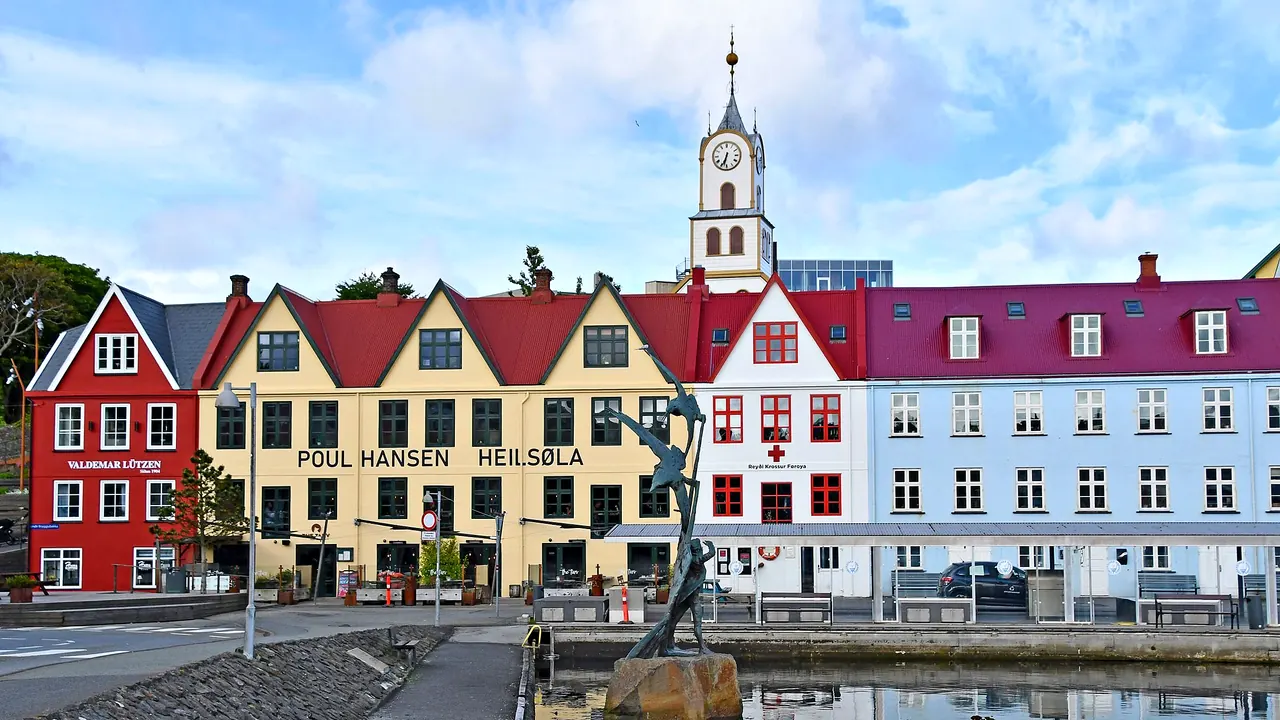
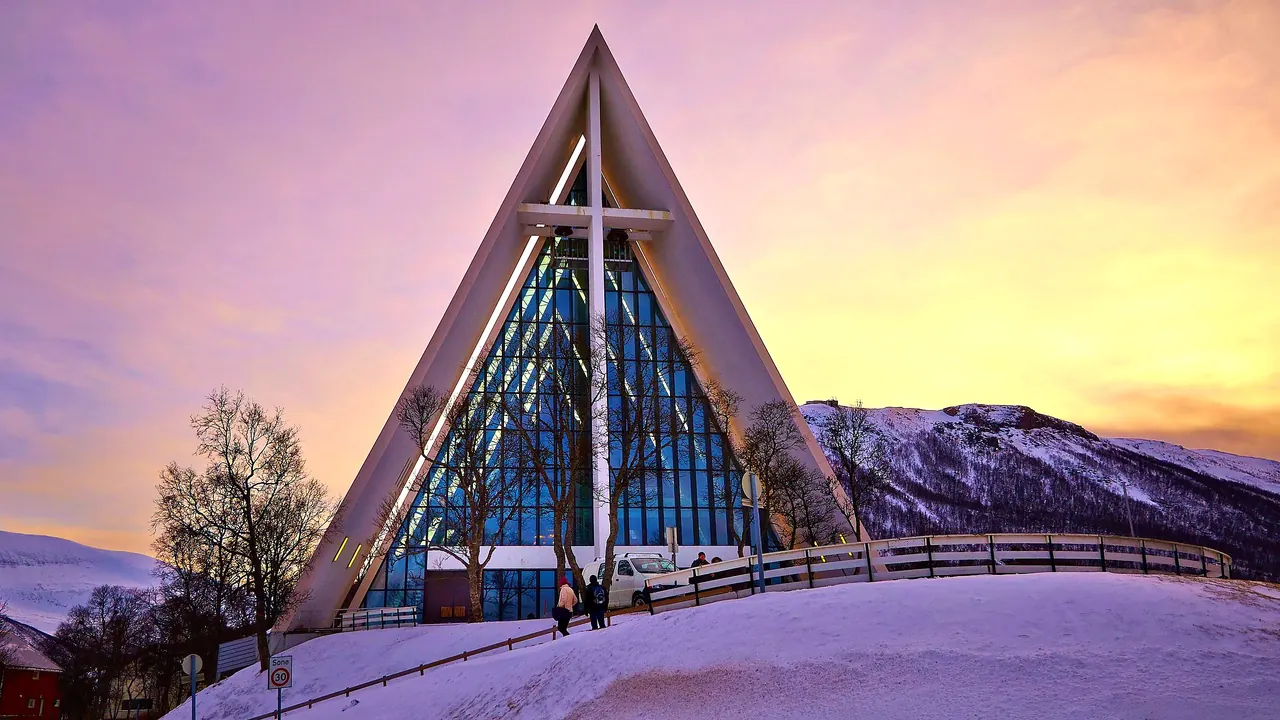
Photos: Tórshavn by Pasztilla aka Attila Terbócs, CC BY-SA 4.0, cropped; Tromso by Moyan Brenn, CC BY 2.0, cropped.
Tórshavn or Tromso?
Our verdict in twelve categories, each scored against the same fixed benchmark cities, and the climate month by month, so you can choose for your trip.
Choose Tórshavn for
- day trips
- shopping
- food and drink
Tórshavn suits a traveller who wants raw island scenery and a strong sense of place: sea cliffs, turf-roofed villages, wind-dried food served in a farmhouse kitchen and a historic harbour quarter you can walk round in an afternoon. With a hire car it gives a self-directed trip across linked islands, plus a medieval site at Kirkjubøur that Tromso has nothing to match. It is quieter after dark and asks you to accept rain and fog as part of the deal.
Choose Tromso for
- nightlife
- getting around
- families
Choose Tromso for an organised Arctic adventure with more going on in town. Winter brings aurora hunting, whale safaris and dog sledding, and summer brings midnight-sun hikes. It is easier to manage with children and without a car, and in the evenings there are livelier bars, floating saunas in the harbour and concerts. The trade-off is real cold and, in midwinter, almost no daylight.
Scoreboard
Twelve categories on one fixed scale from 0 to 100. The shaded stretch is the gap between the two.
Your match
Pick a travel style or drag the sliders, and both match scores follow your weighting.
Wins on day trips and shopping with your weighting.
Wins on nightlife and getting around with your weighting.
What matters to you?
Category by category
What the scores mean for a trip.
Beaches & swimming
Neither place is for swimming. Both seas stay around 10°C, and the beaches are places for a walk in a waterproof jacket, not a towel. What differs is how locals take the plunge. In Tórshavn a few hardy swimmers go in off the harbour rocks all year, while in Tromso the dip usually comes between rounds in a floating sauna. Sommaroy's white sand looks better in photographs than the black-sand cove at Tjørnuvík, though neither will feel tropical.
Food & drink
Both tables draw on cold northern waters, but they differ in character. Tórshavn's food is more distinctive and harder to forget: wind-dried lamb and fish, the sharp fermented flavour of ræst, and heimablídni, a home-cooked meal in a farmhouse kitchen that many visitors remember as the meal of the trip.
Tromso's food is more seasonal than strange. Skrei cod in late winter, king crab, reindeer and cloudberries are served on the old wooden quays, with fish soup after a cold excursion and an old brewery at the centre of local drinking. Both offer little everyday variety beyond that.
Culture & sights
Each town takes a day or two at an easy pace, but the sights differ. Tórshavn's appeal is its historic setting. The turf-roofed government buildings on Tinganes stand where an assembly met in the Viking age, beside the tarred lanes of Reyn and the ramparts of Skansin.
Tromso is mostly modern and is led by one great building, the Arctic Cathedral with its stacked white triangles. Its museums are about exploration and the north: Amundsen and Nansen at the Polar Museum and Sami culture at Tromso Museum.
Nightlife
Tromso has much more going on after dark. The university keeps Storgata and the harbour streets busy at weekends with cocktail bars and a couple of dance floors that stay open late, and in midsummer the light never fades. Tórshavn has a handful of pubs near the harbour that fill on Friday and Saturday when young people come in from the villages. It is easy to fall into conversation there, but there is no club to finish the night in, and on weekdays the town goes quiet early.
Nature & outdoors
Both towns are bases for spectacular landscape, and the difference is in kind. Tórshavn gives you an ocean landscape: basalt cliffs, the waterfall at Gásadalur dropping into the Atlantic, Sørvágsvatn seeming to hang above the sea, and puffins on Mykines in summer. Roads and subsea tunnels lead to the cliffs, waterfalls and lake, and Mykines is a short ferry ride away, so you can explore it all on your own.
Tromso has an Arctic landscape that changes completely with the seasons. Winter brings aurora nights, orcas and humpbacks in the fjords, and sledding and ski touring towards the Lyngen Alps. Summer brings midnight-sun climbs and the Senja coast, and the Fjellheisen cable car lifts you to a ridge straight from town.
Day trips
Tórshavn has more to visit as a destination in its own right. Kirkjubøur, a short drive south, combines the roofless medieval St Magnus Cathedral, a church still in use and a farmhouse held by one family for centuries. Klaksvík's fishing harbour and villages such as Gjógv and Saksun add some variety. From Tromso the options are smaller: Sommaroy and the old trading post at Hillesoy are pleasant, but with no other town or heritage site nearby, most days out are another fjord or aurora tour.
Good for families
Tromso has more to fill a family's days. Polaria's bearded seals and the science centre cover a half-day, and husky rides, reindeer feeding and sledding are what children remember. Midwinter cold and darkness need some planning.
Tórshavn is just as safe and relaxed, but beyond a small sea-life aquarium, playgrounds and the pool there is little made for children. A run of wet days there can test anyone younger than a keen puffin-spotter.
Getting around
Tórshavn's centre is compact and walkable, though hilly, but the islands beyond depend on sparse buses and ferries that don't fit a sightseeing day. In practice you need a hire car, along with patience for single-lane tunnels, sheep on the road and fog that can hold up ferries.
Tromso is easier without a car. Its small centre takes a quarter of an hour to cross on foot, buses link the island to the airport and the mainland, and organised tours take most visitors out to the fjords and aurora spots. In winter the steep streets above the harbour get icy, so grippy footwear matters.
Shopping & style
Neither town is a shopping destination, but Tórshavn has more worth buying. Its few shops around the old centre sell Faroese knitwear, from patterned sweaters in undyed wool to design pieces, along with local prints and ceramics. Tromso's Storgata is more practical. It is the place for thermal layers and outdoor gear before a sledding trip, with some Norwegian knitwear and Sami crafts among the souvenir trolls.
Affordability
Both are expensive, and the costs pile up in different ways. In Tórshavn the burden is a short supply of hotel rooms, especially in summer, plus the car hire that island touring requires. In Tromso it is the paid excursions, since whale safaris, dog sledding and aurora tours add up quickly on top of Norwegian restaurant prices. Self-catering helps in both. The free option in Tórshavn is the walking, and in Tromso it is hunting the aurora yourself from the hills above town.
Live music & performing arts
Tromso has more of a regular season. The Arctic Philharmonic and the Halogaland Theatre perform through the year, the Northern Lights Festival brings music to the dark winter, and there are midnight concerts in the Arctic Cathedral in summer.
Tórshavn's strength is tradition rather than programme. The Faroese chain dance with its sung ballads appears at Ólavsøka each summer, and the Nordic House hosts the small symphony orchestra. On many nights, though, little is on.
Wellness & relaxation
Tromso makes relaxing easier. Floating saunas moored in the harbour, followed by a plunge into the fjord with snowy peaks opposite, are a real local ritual, and a large swimming hall helps on dark afternoons. Tórshavn has no such bathing tradition, only a hotel spa, the indoor pool and the odd sauna. Its calm comes from emptiness instead: little traffic, a slow harbour and long light evenings, without the late aurora tours that can make a Tromso stay tiring.
When should you go?
Pick your month. The climate figures are measured averages, not a forecast.
Tórshavn in July
Tromso in July
Daytime high, °C
Rainfall in the month, mm
Temperature and rainfall are climate normals, averaged over the years shown. Tórshavn: 1991-2020 normals, Thorshavn (0.8 km from centre). Tromso: 1991-2020 normals, Tromso (0.9 km from centre).
Tórshavn's weather barely changes through the year. Daytime highs run from about 6°C in winter to 13°C in July and August, so it is never hot and seldom bitter, but it is wet. May and June are the driest months and the best for hiking and touring the islands, while October to January is the wettest and stormiest stretch. The sea stays cold all year and is never warm enough for a beach trip.
Tromso swings much further. From December to February daytime highs sit around freezing, which brings snow for sledding and long dark nights for the aurora. July reaches about 16°C, a little warmer than Tórshavn. The light changes most of all: there is no sunshine at all in December, against around 257 hours in June, when midnight-sun walks are at their best. It is drier than Tórshavn in almost every month, most noticeably through autumn and winter. Its sea peaks near 11°C in August, which is still no good for swimming.
Which traveller are you?
On a food and nightlife trip, Tromso is the better pick. Both towns serve fine northern seafood, and Tórshavn's farmhouse dinners are memorable, but Tromso's weekends run later, with cocktail bars and dance floors around the harbour. Tórshavn's evenings come down to a few friendly pubs.
On a family trip with children, Tromso is easier. Everything in town sits close together, and in winter the snow becomes the entertainment. A summer visit avoids the deep cold and the late-night tours. Tórshavn suits children happy with boats, sheep and windy walks, and not much else.
For an outdoors trip, both are superb, and the choice comes down to style. Tromso suits travellers who want guided Arctic experiences such as whale trips, sledding and ski touring. Tórshavn rewards independent walkers with a hire car who don't mind fog changing their plans.
Before you go
| Measure | Tórshavn | Tromso |
|---|---|---|
| Official language | Danish, Faroese | Norwegian, Nynorsk, Bokmål, Sámi |
| Currency | Danish Krone (DKK) | Norwegian Krone (NOK) |
| Sockets | CEFK230 V, 50 Hz | CF230 V, 50 Hz |
| Driving side | Right | Right |
| Time zone | UTC, UTC+1 in summer | UTC+1, UTC+2 in summer |
| Emergency number | 112 | Police 112, ambulance 113, fire 110 |
| Elevation | 24 m | 20 m |
| Main airport | Vágar Airport (FAE)27 km from centre11 non-stop destinations | Tromsø Airport (TOS)4 km from centre49 non-stop destinations |
| Public holidays this year | 17 days | 13 days |
By the numbers
| Measure | Tórshavn | Tromso |
|---|---|---|
| Population | 14,038 | 79,943 |
| People per km² | 120 | 32 |
| Museums within 10 km | 3 | 8 |
| UNESCO World Heritage sites within 50 km | 0 | 0 |
| Swim season, months above 21 °C | None | None |
Where else could you go?
Every comparison below shares a destination with this one, so you can follow Tórshavn or Tromso somewhere new.
- Kirunavs Tromso
- Lofotenvs Tromso
- Laplandvs Tromso
- Rovaniemivs Tromso
- Bergenvs Tórshavn
- Reykjavikvs Tórshavn