Photos: Kiruna by Steinkatz, CC BY 4.0, cropped; Tromso by Moyan Brenn, CC BY 2.0, cropped.
Kiruna or Tromso?
Our verdict in twelve categories, each scored against the same fixed benchmark cities, and the climate month by month, so you can choose for your trip.
Choose Kiruna for
- prices
- day trips
Kiruna suits travellers who want the inland Arctic at its most extreme: deep, dry cold, frozen lakes, husky teams across birch forest and a night in the ice hotel at Jukkasjärvi. It also has a story Tromso lacks, the iron-ore mine you can go down into and the company town built around it. It is the slightly less painful choice on cost, but the evenings are very quiet and there is little to do beyond the excursions.
Choose Tromso for
- nightlife
- live music and the arts
- getting around
Tromso is for those who want mountains and sea together. You get fjords with whales in winter, a cable car to a ridge above town, and a compact harbour centre where the day can end with fish soup, a concert or a few busy bars. It is the easier pick with children and for anyone who wants some town life between trips into the wilderness, provided the higher prices are acceptable.
Scoreboard
Twelve categories on one fixed scale from 0 to 100. The shaded stretch is the gap between the two.
Your match
Pick a travel style or drag the sliders, and both match scores follow your weighting.
Wins on prices and day trips with your weighting.
Wins on nightlife and live music and the arts with your weighting.
What matters to you?
Category by category
What the scores mean for a trip.
Beaches & swimming
Neither is a place to swim, but the cold water is different in each. In Kiruna, swimming means a short dip in the lakes or the Torne river in high summer, in fresh water that can feel a little less harsh.
In Tromso the water is the sea, colder still. The sand is real, though, at Telegrafbukta in town and on the white beaches of Sommaroy, which make a fine walk on a bright evening even if a swim lasts seconds.
Food & drink
Tromso eats better, mainly because of the sea. King crab, halibut, stockfish and late-winter skrei come to tables along the old wooden quays, fish soup is a reliable hot meal after a tour, and the town has a long brewing tradition to go with it.
Kiruna's best food is meat and lake fish, such as reindeer, moose and Arctic char. Much of the best cooking happens out at the lodges and the Jukkasjärvi ice hotel complex rather than in town, where pizzerias, hotel dining rooms and fika cafés soon start to repeat.
Culture & sights
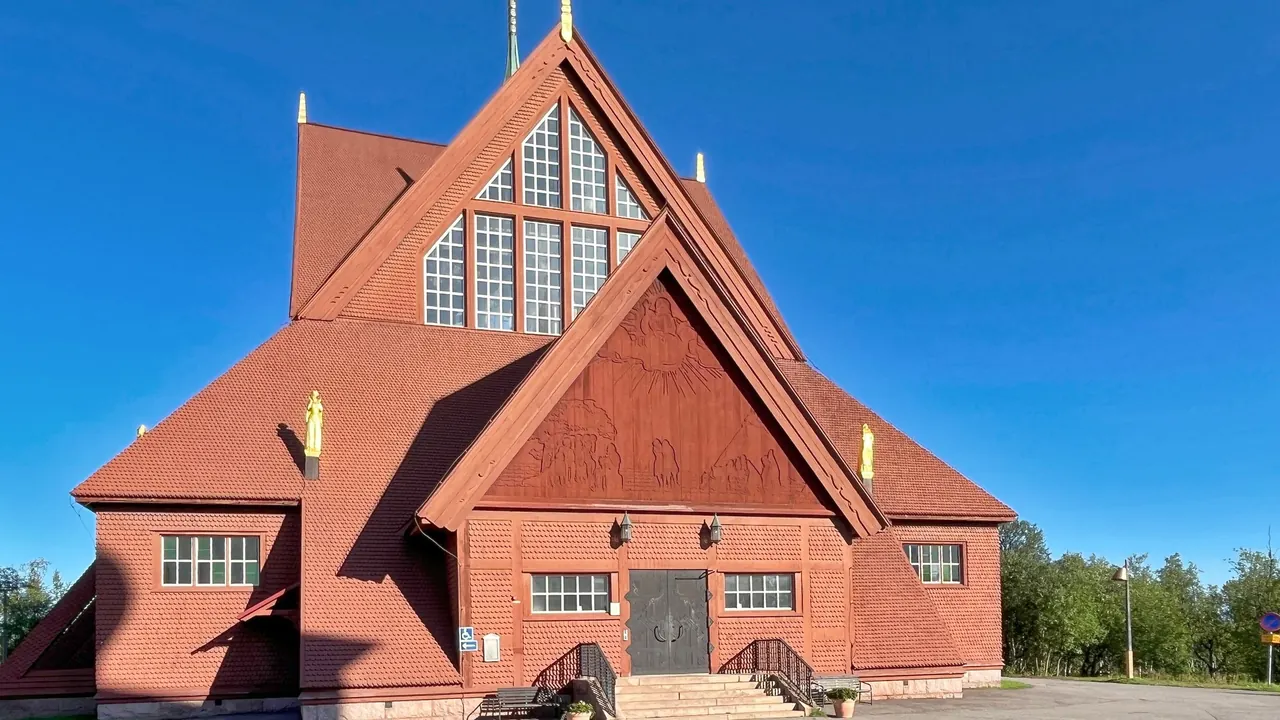
Both can be seen in a day or two, but the sights are of different kinds. Kiruna's main sight is industrial: a guided descent into the iron-ore mine, with the goahti-shaped wooden church and the town hall tower telling the company-town story above ground. Sami culture here is met mostly on excursions.
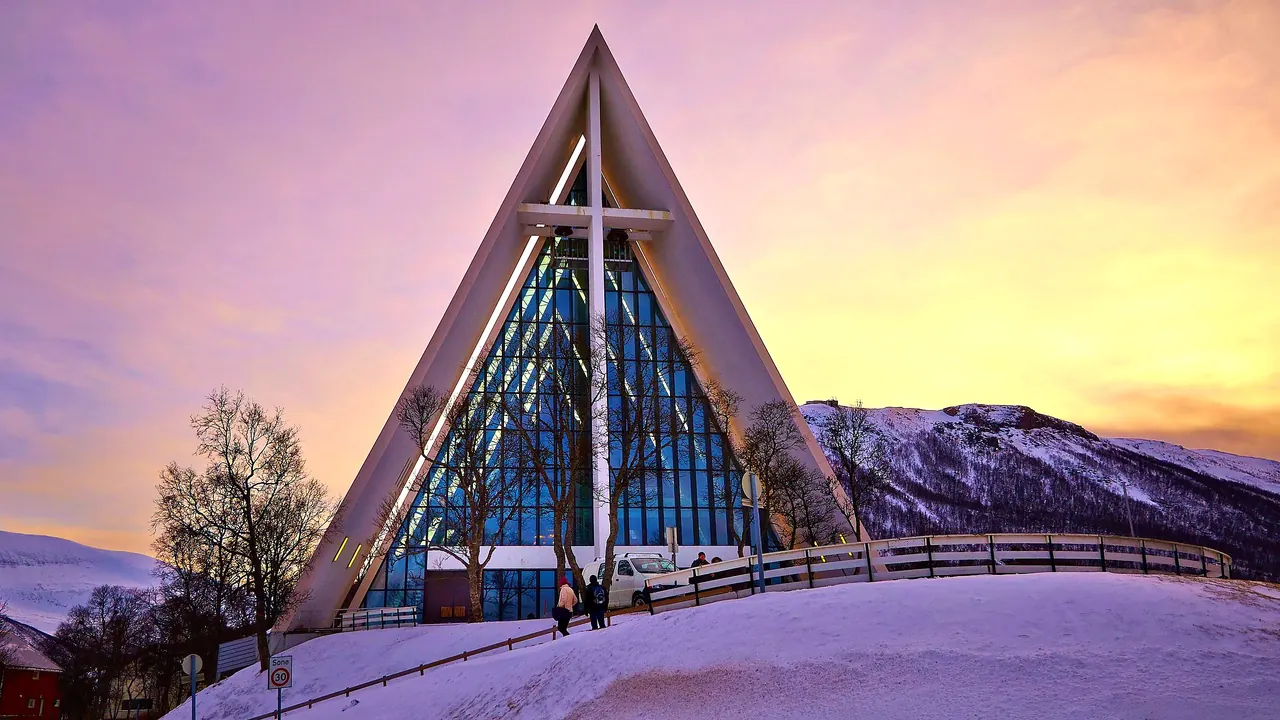
Tromso works through museums. The Polar Museum covers Amundsen, Nansen and the trappers, Tromso Museum explains Sami life and the aurora, and there is a regional art museum. Across the bridge, the Arctic Cathedral with its glass mosaic is the building most visitors remember.
Nightlife
Tromso is far livelier after dark. Thanks to its university, weekends around Storgata and the harbour bring cocktail bars, pubs and a couple of late dance floors, and in midsummer the light never fades on a Saturday night. It is still small and quiet midweek.
Kiruna has a few pubs and hotel bars and the odd late weekend spot for miners. On winter nights most visitors are out on an aurora hunt rather than in a bar.
Nature & outdoors
Both are excellent bases for the Arctic outdoors, but Tromso has the more varied landscape. Steep island mountains, the Fjellheisen cable car, orcas and humpbacks in the fjords in winter, the Lyngen Alps within reach and kayaking among the skerries in summer give it sea as well as snow.
Kiruna's appeal is the open inland wilderness and its deeper cold. It has frozen lakes for sledding and snowmobiling, Abisko's canyon trails and the start of the Kungsleden by train, Kebnekaise reached from Nikkaluokta, and rafting on the Torne.
Day trips
Kiruna has the one real outing to a place: Jukkasjärvi, a short ride up the Torne, with the ice hotel, a seventeenth-century wooden church and a Sami homestead museum. Beyond that there is Gällivare, another mining town at the end of a longer train ride.
Tromso's outings are to the coast rather than to sights. The fishing village of Sommaroy sits among its islands, Hillesoy has an old trading post and church, and the hamlets of Kvaloya and Senja are as much about the drive as the place itself. From either town, most days away are spent out in the wilderness.
Good for families
Tromso is the better choice with children. Polaria and the science centre fill a dark afternoon, the compact centre is easy with a pushchair, and winters near freezing are much kinder than inland Lapland. Summer evenings there are long and gentle.
Kiruna can thrill older children with huskies, snowmobiles and a room made of ice. However, everything is a guided excursion in temperatures far below zero, so it is hard work with toddlers.
Getting around
Tromso is easier to manage without a car. The harbour, museums and restaurants are a quarter of an hour apart on foot, buses cross to the mainland and the airport, and the walk over the bridge to the Arctic Cathedral is part of the visit. Watch for the steep, icy streets above the harbour.
Kiruna's centre is also walkable, but it is more spread out from what visitors come for. Its advantage is the Malmbanan railway west to Abisko and the mountains. Otherwise it depends on tour pickups or a hire car driven on snow.
Shopping & style
Neither is a place to shop for fun, and in both the useful buy is warm outdoor clothing. Kiruna's best purchase is Sami duodji, such as horn-handled knives, birch cups and woven bands, best bought at the homesteads around Jukkasjärvi. Tromso has a little more choice along Storgata, with Norwegian knitwear, a few craft shops and a modest mall.
Affordability
Both are costly, but Tromso costs noticeably more. Norwegian prices on meals and especially alcohol, busy aurora-season hotels, and whale safaris on top of sledding and aurora tours all push a stay up quickly.
Kiruna is still an expensive Swedish town, and its excursions and a night in the ice hotel carry premium prices. Day-to-day costs are lighter, though, and a summer visit is a good deal cheaper than winter.
Live music & performing arts
Tromso has a real programme for a small city. The Arctic Philharmonic and the Halogaland Theatre perform through the season, the Northern Lights Festival brings music in midwinter, the film festival fills January, and the cathedral hosts midnight concerts in summer.
Kiruna has almost nothing regular. Occasional concerts happen in the church or community hall, and its winter festival is the main chance to hear joik.
Wellness & relaxation
Both are built around sauna and cold water rather than spas, and the difference is the setting. In Kiruna it is a wood-fired sauna at a wilderness lodge, a plunge through a hole in a frozen lake and a hot tub under the night sky. In Tromso, the floating saunas in the harbour lead straight into the fjord with snowy peaks across the water, and a public swimming hall offers warm pools on dark afternoons.
When should you go?
Pick your month. The climate figures are measured averages, not a forecast.
Kiruna in July
Tromso in July
Daytime high, °C
Rainfall in the month, mm
Where the figures come from
Kiruna has no rain gauge within 25 km of the centre, so its rainfall comes from a gridded climate dataset read at the destination rather than from a gauge further away.
Temperature and rainfall are climate normals, averaged over the years shown. Kiruna: 2005-2020 (rainfall 1991-2020) normals, Kiruna Airport (3.8 km from centre). Tromso: 1991-2020 normals, Tromso (0.9 km from centre).
Kiruna, inland, has the harder winter. Daytime highs sit around -8°C in January and stay below freezing from November to March, but the air is dry, with little snow or rain in any winter month. Summer is short and is also its rainier season, with July the wettest month, so the warmest weeks bring the most showers. July and August, at about 17°C, are the comfortable months for walking and hiking.
Tromso, on the coast, is much milder in winter, around -1°C in January, but it is wet for most of the year. Autumn is its wettest season, peaking at 128mm in October. There is no recorded sunshine in December and barely any in November or January, while May to July bring long, bright days. Its summer is a touch cooler than Kiruna's. Neither has a beach season: the sea is warmest in late summer at about 10°C, which is enough only for a plunge after the sauna.
Which traveller are you?
For a food and nightlife trip, Tromso is clearly ahead. Its harbourside kitchens serve king crab and skrei cod, there is a historic brewery at the heart of drinking life, and Storgata stays busy at weekends. Kiruna's evenings rarely go beyond a hotel bar.
On a tight budget, Kiruna is the more forgiving of two expensive places. Meals and drinks avoid Norwegian prices, summer stays cost less, and self-catering helps. Tromso's alcohol, hotels and whale or aurora tours add up even faster.
On a family trip with children, Tromso works better. Polaria's seals and the science centre fill a cold afternoon, the centre is easy to walk, and winters are milder. Kiruna has nothing built for children and suits only older ones who can handle deep cold.
Before you go
| Measure | Kiruna | Tromso |
|---|---|---|
| Official language | Swedish | Norwegian, Nynorsk, Bokmål, Sámi |
| Currency | Swedish Krona (SEK) | Norwegian Krone (NOK) |
| Sockets | CF230 V, 50 Hz | CF230 V, 50 Hz |
| Driving side | Right | Right |
| Time zone | UTC+1, UTC+2 in summer | UTC+1, UTC+2 in summer |
| Emergency number | 112 | Police 112, ambulance 113, fire 110 |
| Elevation | 550 m | 20 m |
| Main airport | Kiruna Airport (KRN)3 km from centre4 non-stop destinations | Tromsø Airport (TOS)4 km from centre49 non-stop destinations |
| Public holidays this year | 16 days | 13 days |
By the numbers
| Measure | Kiruna | Tromso |
|---|---|---|
| Population | 17,284 | 79,943 |
| People per km² | 1,516 | 32 |
| Museums within 10 km | 1 | 8 |
| UNESCO World Heritage sites within 50 km | 0 | 0 |
| Swim season, months above 21 °C | - | None |
Where else could you go?
Every comparison below shares a destination with this one, so you can follow Kiruna or Tromso somewhere new.
- Lofotenvs Tromso
- Lofotenvs Kiruna
- Rovaniemivs Kiruna
- Laplandvs Kiruna
- Laplandvs Tromso
- Rovaniemivs Tromso