Photos: Kiruna by Steinkatz, CC BY 4.0, cropped; Rovaniemi by Moskenes, CC BY-SA 4.0, cropped.
Kiruna or Rovaniemi?
Our verdict in twelve categories, each scored against the same fixed benchmark cities, and the climate month by month, so you can choose for your trip.
Choose Kiruna for
- day trips
- nature and the outdoors
- prices
Kiruna is the better pick for travellers who want the Arctic at its wildest. It lies well inside one of the most reliable auroral zones, the mountains of Abisko and Kebnekaise are within reach, and the underground mine visits and the ice hotel at Jukkasjärvi give a trip a few sights you will not find anywhere else. It suits adults and older children who are happy with long, cold days outdoors and quiet evenings.
Choose Rovaniemi for
- families
- wellness
- live music and the arts
Families with young children, and anyone who wants the north in a gentler form, will do better in Rovaniemi. Santa Claus Village, the Ranua zoo and easy husky and reindeer rides are organised with small children in mind, and the Finnish sauna is part of everyday life rather than an extra. It also has a little more going on in the evenings, with a chamber orchestra, a theatre and a student crowd at weekends.
Scoreboard
Twelve categories on one fixed scale from 0 to 100. The shaded stretch is the gap between the two.
Your match
Pick a travel style or drag the sliders, and both match scores follow your weighting.
Wins on day trips and nature and the outdoors with your weighting.
Wins on families and wellness with your weighting.
What matters to you?
Category by category
What the scores mean for a trip.
Beaches & swimming
Neither town is a place to swim, and both get only a few weeks in July when locals take to the water. Rovaniemi's sandy river shores along the Kemijoki and Ounasjoki are a little warmer and easier to enjoy than the cold lakes and Torne river around Kiruna. In both, the swim most visitors take is a plunge through the ice after a sauna.
Food & drink
The two towns eat in much the same way: reindeer, Arctic char, lingonberries and cloudberries, with hotel dining rooms and pizza places making up the rest. Kiruna's best cooking is out at the lodges and the ice hotel at Jukkasjärvi, where tasting menus draw on Sami traditions.
Rovaniemi has a few more restaurants in the centre cooking Lappish dishes with care, along with Finnish touches such as warm squeaky cheese with jam. Neither has a market or street food, so a long stay soon repeats itself in both.
Culture & sights
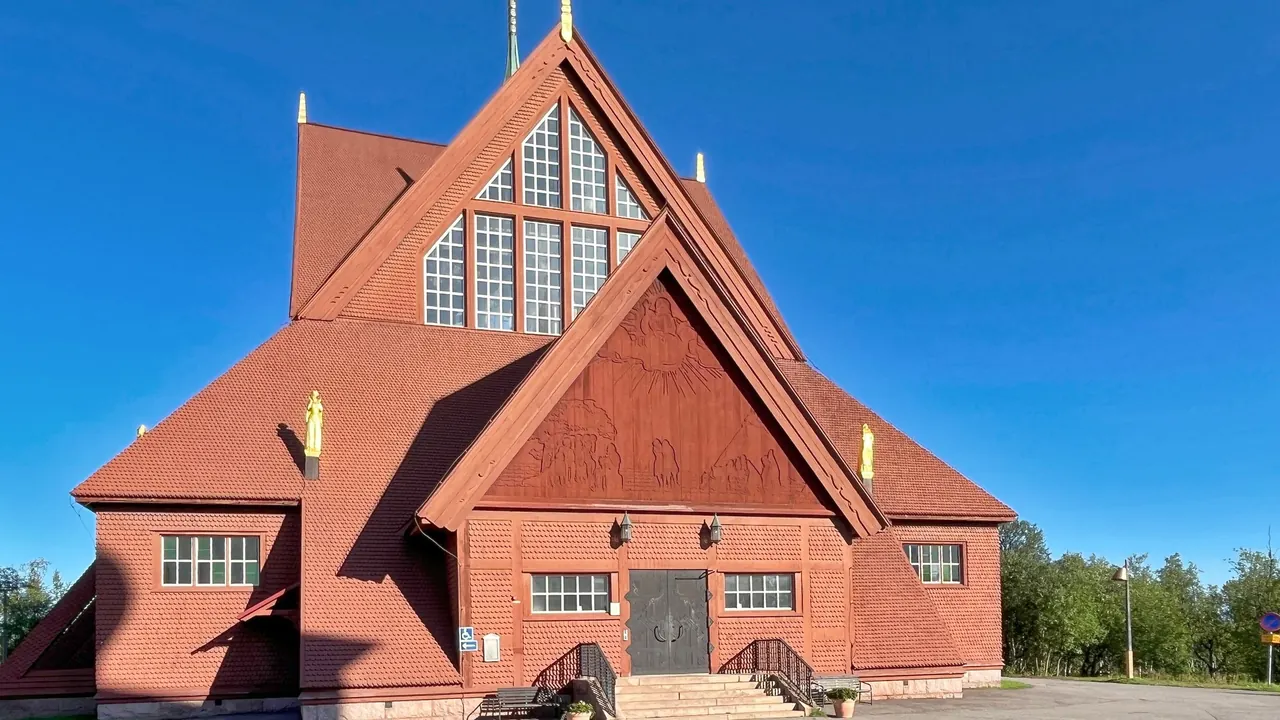
Each town fills about a day, and the kind of sight is what differs. Kiruna's story is industrial: a trip deep underground into the iron-ore mine, and the wooden church shaped like a Sami hut, which is one of Sweden's best-loved buildings.
Rovaniemi was rebuilt after the fires of 1944 and offers museums and architecture instead. Arktikum gives a few good hours on Lapland and the Sámi, and Alvar Aalto's library, city hall and Lappia Hall form a compact civic group.
Nightlife
Evenings are quiet in both, and on winter nights most visitors are out watching the sky anyway. Kiruna has a few pubs and hotel bars where miners gather at weekends. Rovaniemi adds one or two small nightclubs, and the university students make Friday and Saturday a little livelier in term.
Nature & outdoors
Both are built around snow, sled dogs and the northern lights, but Kiruna's wilderness is the bigger and wilder of the two. It sits under one of the most reliable auroral zones, and Abisko's canyon trails, the start of the Kungsleden and Kebnekaise, Sweden's highest mountain, bring real mountains within reach.
Rovaniemi's landscape is gentler: snowy taiga, frozen rivers and the forested fell of Ounasvaara on the edge of town, with Korouoma canyon and Pyhä-Luosto further out. It is easier going, though less dramatic.
Day trips
Kiruna gives you a little more to visit for a day. Jukkasjärvi, about 17km away, combines the ice hotel, a seventeenth-century church and a Sami homestead museum, and the train runs to Abisko and to Gällivare.
Rovaniemi has almost nothing like it. Kemi, Tornio and Haparanda are ordinary towns about an hour and a half away, so the outings there are activities in the forest rather than visits to other places.
Good for families
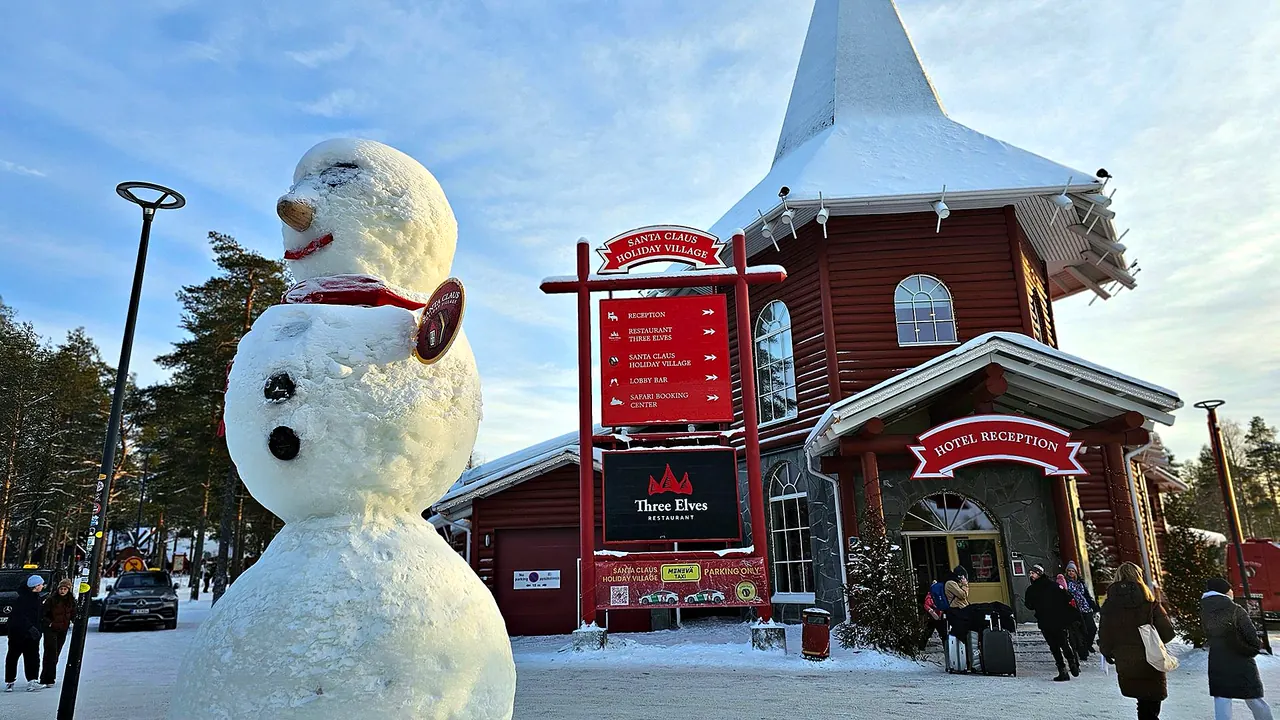
This is where Rovaniemi pulls well ahead. Santa Claus Village, Santa's post office, a Christmas cave park and the Arctic zoo at Ranua make a trip that young children will remember, and husky and reindeer rides are easy to book.
Kiruna can thrill older children with husky driving and a night in a room of ice, but nothing there is designed for them. Late aurora nights and deep cold make it hard going with toddlers.
Getting around
Both have small, walkable centres with icy winter pavements, and in both the tour operators collect you for the main activities. Kiruna has one practical advantage, the Malmbanan railway, which reaches Abisko and the mountains without a car. In Rovaniemi a local bus reaches Santa Claus Village, but the fells and Ranua really need a hired car.
Shopping & style
Neither is a shopping town, but Rovaniemi has a little more to browse: a pedestrian street, a couple of shopping centres and the row of gift shops at Santa Claus Village. Kiruna's offer is mostly outdoor gear and souvenirs. In both, the best buys are Sami crafts such as horn-handled knives and birch cups, which in Kiruna are found at the homesteads around Jukkasjärvi.
Affordability
Both are expensive, and the guided activities take most of the budget. Kiruna comes out slightly easier on the wallet. Rovaniemi fills up around Christmas, when rooms such as glass-roofed cabins are in high demand. In both towns, summer, supermarkets and self-catering accommodation keep costs down.
Live music & performing arts
Rovaniemi has a small but regular programme, with concerts by the Lapland Chamber Orchestra in the Korundi building and the regional theatre in Aalto's Lappia Hall, although the plays are almost all in Finnish. Kiruna has nothing comparable beyond occasional church concerts and the joik singing of its winter festival.
Wellness & relaxation
Both towns rely on the sauna and the stillness of the north rather than spas. In Kiruna relaxation comes after a day out in the cold: a wood-fired lodge sauna, an ice-hole plunge or a hot tub under the aurora.
Rovaniemi makes it part of daily life. Most cottages and hotels have a sauna, and an evening in a lakeside smoke sauna is a Finnish tradition rather than a treat. Outside Christmas the town is calm enough for a slow, restful stay.
When should you go?
Pick your month. The climate figures are measured averages, not a forecast.
Kiruna in July
Rovaniemi in July
Daytime high, °C
Rainfall in the month, mm
Where the figures come from
Kiruna has no rain gauge within 25 km of the centre, so its rainfall comes from a gridded climate dataset read at the destination rather than from a gauge further away.
Rovaniemi has no rain gauge within 25 km of the centre, so its rainfall comes from a gridded climate dataset read at the destination rather than from a gauge further away.
Temperature and rainfall are climate normals, averaged over the years shown. Kiruna: 2005-2020 (rainfall 1991-2020) normals, Kiruna Airport (3.8 km from centre). Rovaniemi: 2008-2020 (rainfall 1991-2020) normals, Rovaniemi Rautatieasema / Kuusela (0.6 km from centre).
In both towns it stays below freezing all day from December to March. This is the dark, snowy season for sledding and the northern lights. Kiruna is the harsher of the two at both ends of it. It is already below zero in November, when Rovaniemi has only just reached freezing, and its thaw comes later. In April and May Kiruna is still a place of melting snow and slush under long, bright days, while Rovaniemi moves into spring a few weeks sooner. Late autumn is the in-between time in both towns, with the days shortening fast before the snow settles.
Summer is short and mild in both, and never warm enough for a proper beach trip. Kiruna reaches about 17°C in July, but that is also its wettest month at about 95mm. June is the better time for hiking there, under the midnight sun, and August is a good second choice once the rain eases a little. Rovaniemi is warmer, at around 21°C in July, which makes it the more comfortable of the two for walking around town or swimming in the river.
Which traveller are you?
On a family trip with young children, Rovaniemi is the clear choice. Santa Claus Village, the Christmas cave park and the polar bears at Ranua are built for small children, while Kiruna's guided excursions and deep cold suit older children far better.
For an outdoors trip, Kiruna has the edge. The aurora is more reliable over the town, and the canyon trails at Abisko, the Kungsleden and Kebnekaise give real mountain hiking that Rovaniemi's forested fells and gentle taiga cannot match.
For a relaxing and wellness trip, Rovaniemi suits better. Saunas come with most cottages and hotels, and a smoke sauna by a lake is a normal evening out. Kiruna has wood-fired lodge saunas too, but its days are spent outdoors in demanding cold.
Before you go
| Measure | Kiruna | Rovaniemi |
|---|---|---|
| Official language | Swedish | Finnish, Swedish |
| Currency | Swedish Krona (SEK) | Euro (EUR) |
| Sockets | CF230 V, 50 Hz | CF230 V, 50 Hz |
| Driving side | Right | Right |
| Time zone | UTC+1, UTC+2 in summer | UTC+2, UTC+3 in summer |
| Emergency number | 112 | 112 |
| Elevation | 550 m | 88 m |
| Main airport | Kiruna Airport (KRN)3 km from centre4 non-stop destinations | Rovaniemi Airport (RVN)8 km from centre44 non-stop destinations |
| Public holidays this year | 16 days | 15 days |
By the numbers
| Measure | Kiruna | Rovaniemi |
|---|---|---|
| Population | 17,284 | 65,329 |
| People per km² | 1,516 | 9 |
| Museums within 10 km | 1 | 6 |
| UNESCO World Heritage sites within 50 km | 0 | 0 |
Where else could you go?
Every comparison below shares a destination with this one, so you can follow Kiruna or Rovaniemi somewhere new.
- Tromsovs Kiruna
- Lofotenvs Kiruna
- Laplandvs Kiruna
- Tromsovs Rovaniemi
- Turkuvs Rovaniemi
- Helsinkivs Rovaniemi