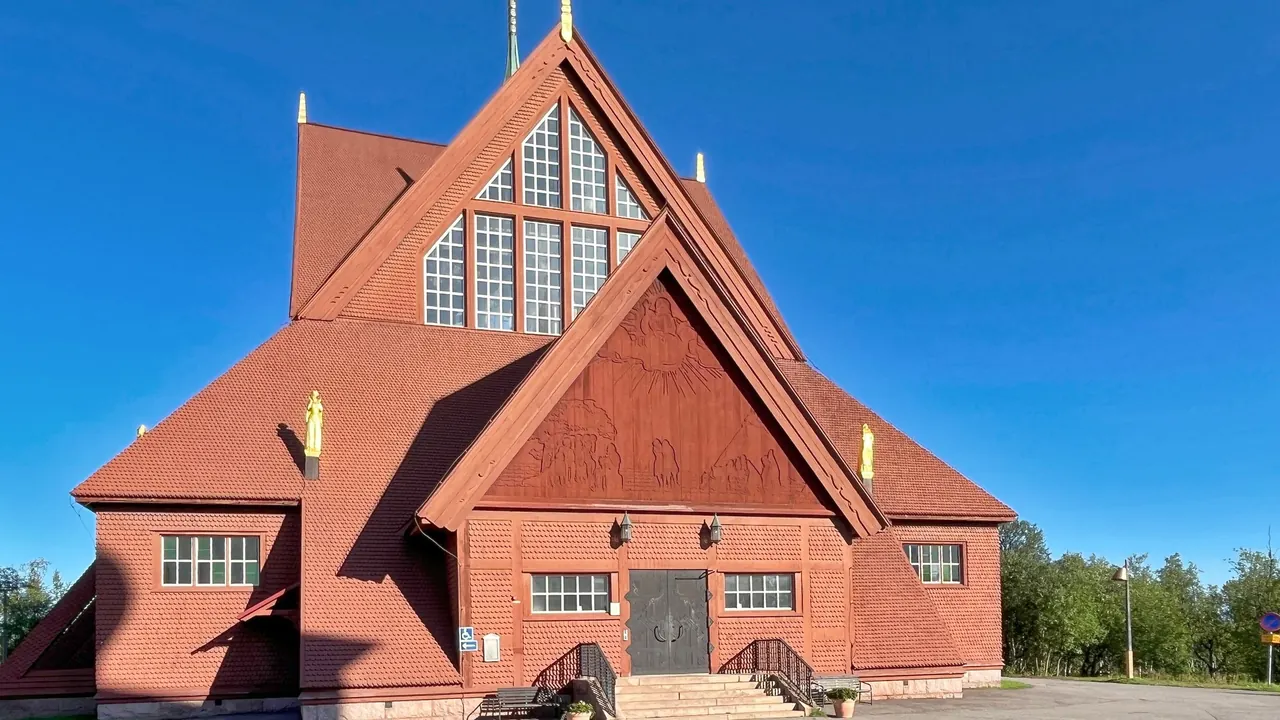
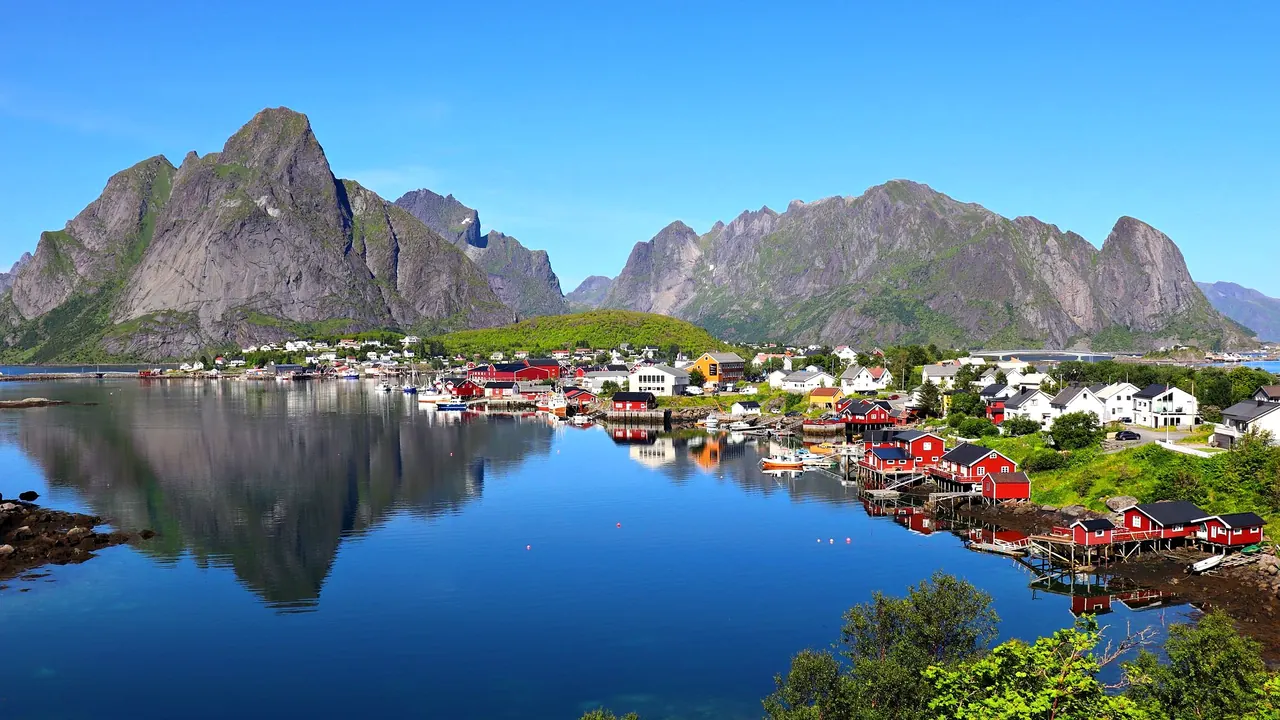
Photos: Kiruna by Steinkatz, CC BY 4.0, cropped; Lofoten by Mario Vogt, Pexels License.
Kiruna or Lofoten?
Our verdict in twelve categories, each scored against the same fixed benchmark cities, and the climate month by month, so you can choose for your trip.
Choose Kiruna for
- prices
- getting around
- nightlife
Kiruna suits a winter trip built around snow and organised adventure. Here you can drive a husky team across frozen lakes, ride a snowmobile through birch forest, sleep in the ice hotel at Jukkasjärvi and go deep into a working iron-ore mine. Everything runs from a small town you can walk around, reached by plane or by train. It is far from cheap, but it costs less than Lofoten, and the tour operators collect you for each activity, so you never need to drive on snow yourself.
Choose Lofoten for
- beaches
- food and drink
- culture and sights
Lofoten is the choice for someone who wants scenery above all, and especially for summer hikers. Granite peaks rise straight from the sea, with fishing harbours, red rorbu cabins and pale sandy bays below them, and short climbs give views that Kiruna's open wilderness cannot match. It suits a slower, self-driven trip with a hire car, a cabin with a kitchen and fish bought from the quay. It is the more expensive of the two, and the weather is wetter and changes faster.
Scoreboard
Twelve categories on one fixed scale from 0 to 100. The shaded stretch is the gap between the two.
Your match
Pick a travel style or drag the sliders, and both match scores follow your weighting.
Wins on prices and getting around with your weighting.
Wins on beaches and food and drink with your weighting.
What matters to you?
Category by category
What the scores mean for a trip.
Beaches & swimming
Neither place is a beach destination, but Lofoten at least has real beaches. Haukland, Uttakleiv, Ramberg and Kvalvika have white sand and turquoise water under the peaks, good for walks and picnics in the midnight sun, with a short, cold swim if you want one.
Kiruna has no coast at all. A summer swim there means a lake or the Torne river for a few weeks in July, and for most visitors the only plunge is into an ice hole after the sauna.
Food & drink
Kiruna's best cooking is out of town, at the wilderness lodges and the Jukkasjärvi ice hotel. Their tasting menus use reindeer, moose, Arctic char and cloudberries in the Sami and Lapland tradition. In town the choice soon runs out: hotel restaurants, pizzerias and fika cafés.
Lofoten eats better and with a clearer identity, because its food comes from centuries of cod fishing. Stockfish, klippfisk, cod tongues and fish soup appear on the menus, and in late winter the skrei season brings the freshest cod. The restaurants are spread thinly between Svolvær, Henningsvær and Reine, but self-caterers can buy fish straight from the quay.
Culture & sights
Kiruna's sights tell the story of a company town: guided visits deep into the iron-ore mine, and the wooden church shaped like a Sami goahti hut. You will see them in a day, and Sami culture comes mostly through excursions.
Lofoten has a little more to see, and all of it tells the story of the sea. There are preserved fishing villages at Nusfjord and Å with their stockfish and fishery museums, the reconstructed Viking chieftain's longhouse at Borg, and the large wooden church at Kabelvåg. That is enough to fill several rainy afternoons.
Nightlife
Both are quiet in the evening, and the best nights in either are spent outdoors under the northern lights. Kiruna's few pubs and hotel bars fill up with miners and locals at weekends, with one or two places open late. In Lofoten the evening is a beer by a Svolvær harbour or on a Henningsvær quay in the summer light, and in summer many people go hiking at midnight instead.
Nature & outdoors
Both are true Arctic wilderness, but Lofoten's landscape is the more dramatic. Its jagged peaks rise straight from the Norwegian Sea above fjords and white bays, so you can hike, kayak, climb and surf all in one place, and late winter brings ski touring that runs down to the sea.
Kiruna's country is wider and flatter, birch forest and frozen lakes under one of the most reliable aurora zones on earth. It is at its best in deep winter for sledding and skiing. In summer, Abisko's canyon trails, the Kungsleden and Kebnekaise, Sweden's highest mountain, are all within reach.
Day trips
From Kiruna there is really one outing: Jukkasjärvi, about 17km up the Torne river, with its ice hotel, seventeenth-century wooden church and Sami homestead museum. Beyond that you have Gällivare, another mining town an hour and a half away by train, and Abisko, which is a place for walking rather than sightseeing.
Lofoten gives you more places to go, though they are mostly the same kind of place. From a base in the middle of the islands you can drive to Henningsvær on its skerries, to Svolvær and Kabelvåg, or west to Reine and Hamnøy. Each is good for an afternoon, but after two or three the harbours and fish racks start to look alike. For something different, ferries go out to the seabird islands of Værøy and Røst.
Good for families
Lofoten suits a wider range of children. The sandy beaches at Ramberg and Haukland have rock pools, children can fish off the quays, the Viking museum at Borg has costumes and boats, and Kabelvåg's small aquarium has seals and otters. The long car journeys and steep, exposed hikes are the drawbacks.
Kiruna works for older children who want huskies, snowmobiles and a night in an ice room. Every activity is a guided excursion, though, and the deep cold, polar darkness and late nights hunting the aurora are hard on small children.
Getting around
Kiruna is easier to manage without your own car. The compact centre can be walked in good boots, buses run to the airport and Jukkasjärvi, and the Malmbanan railway takes you to Abisko. Tour operators pick you up for most activities.
Lofoten more or less requires a hire car. Its trailheads, beaches and villages are spread along about two hours of the E10, with single-lane bridges, little parking at the busy trailheads and few buses. Just getting there means choosing between small airports, the Bodø ferry and coastal ships.
Shopping & style
There is little shopping in either, and what is worth buying is quite different. In Kiruna it is Sami duodji, such as reindeer-horn knives, birch cups and woven bands, sold in a few craft shops and at the Jukkasjärvi homesteads. Lofoten has art instead: paintings and photography in the galleries of Henningsvær and Svolvær, village glassblowers and potters, wool sweaters and stockfish to take home.
Affordability
In Kiruna most of the money goes on activities. Husky sledding, snowmobile trips, aurora tours and a night in the ice hotel all come at premium prices and fill most of a stay. Swedish prices for meals and rooms are easier to bear, though, and a summer visit costs much less than one in winter.
In Lofoten the expense comes from simply being there. Meals, alcohol, groceries and fuel all cost Norwegian prices, you will almost certainly need a hire car on top, and the cabins sell out early. What eases it is that the scenery costs nothing, and most rooms have a kitchen, so many visitors cook for themselves and go hiking instead of paying for tours.
Live music & performing arts
Neither has a regular theatre or concert season, and the little there is happens at different times of year. Kiruna's moment comes in winter, when the winter festival brings music and Sami joik singing, with occasional concerts in the church. Lofoten's comes in summer, with small festivals and concerts in churches and old fish-processing buildings.
Wellness & relaxation
Relaxation in both means saunas and stillness, not spas, but the setting differs. In Kiruna you sit in a wood-fired sauna at a wilderness lodge, plunge through a hole in a frozen lake and lie in a hot tub under a winter sky. In Lofoten the saunas stand by the shore or float in the harbour, you cool off in the sea, and a rorbu cabin over the water gives you quiet light evenings in summer.
When should you go?
Pick your month. The climate figures are measured averages, not a forecast.
Kiruna in July
Lofoten in July
Daytime high, °C
Rainfall in the month, mm
Where the figures come from
Kiruna has no rain gauge within 25 km of the centre, so its rainfall comes from a gridded climate dataset read at the destination rather than from a gauge further away.
Lofoten has no rain gauge within 25 km of the centre, so its rainfall comes from a gridded climate dataset read at the destination rather than from a gauge further away.
Temperature and rainfall are climate normals, averaged over the years shown. Kiruna: 2005-2020 (rainfall 1991-2020) normals, Kiruna Airport (3.8 km from centre). Lofoten: 2011-2025 (rainfall 1991-2020) normals, Svolvaer Airport (4.4 km from centre).
These two places have very different climates. Kiruna is inland and has a hard continental winter: daytime highs stay below freezing from November to March and drop to about -8°C in January, which is ideal for dog-sledding but bitter for anyone just walking around town. Lofoten sits on the sea and stays much milder, with winter days hovering just above freezing. The trade-off is weather: Lofoten's autumn and early winter are its wettest time, with October bringing about 115mm of rain.
Summer brings the two closer together, and both reach about 17°C in July. That month is Kiruna's wettest, so June and August are often the better choice for hiking there, while Lofoten is at its driest from May to July, its best stretch for long days on the ridges. The sea around Lofoten only reaches about 13°C in August, so swimming means a quick dip there, never a beach vacation.
Which traveller are you?
On an outdoors trip, Lofoten is the stronger choice. Steep, short hikes such as Reinebringen and Ryten, climbing on Svolvær granite, sea kayaking and surfing at Unstad all start close to where you sleep, with the mountains rising straight out of the sea.
On a tight budget, Kiruna is the easier of the two, though neither is cheap. Swedish prices are kinder than Norwegian ones for food, fuel and rooms, summer is cheaper still, and you can reach Abisko by train instead of hiring a car.
For a winter trip of husky sledding and snowmobiling, choose Kiruna. Its deep inland cold keeps the frozen lakes and forest snowbound all season, and these guided excursions are the centre of a stay, with an ice hotel night and aurora hunting alongside.
Before you go
| Measure | Kiruna | Lofoten |
|---|---|---|
| Official language | Swedish | Norwegian, Nynorsk, Bokmål, Sámi |
| Currency | Swedish Krona (SEK) | Norwegian Krone (NOK) |
| Sockets | CF230 V, 50 Hz | CF230 V, 50 Hz |
| Driving side | Right | Right |
| Time zone | UTC+1, UTC+2 in summer | UTC+1, UTC+2 in summer |
| Emergency number | 112 | Police 112, ambulance 113, fire 110 |
| Elevation | 550 m | - |
| Main airport | Kiruna Airport (KRN)3 km from centre4 non-stop destinations | Svolvær Airport, Helle (SVJ)3 non-stop destinations |
| Public holidays this year | 16 days | 13 days |
By the numbers
| Measure | Kiruna | Lofoten |
|---|---|---|
| Population | 17,284 | - |
| People per km² | 1,516 | - |
| Museums within 10 km | 1 | - |
| UNESCO World Heritage sites within 50 km | 0 | - |
| Swim season, months above 21 °C | - | None |
Where else could you go?
Every comparison below shares a destination with this one, so you can follow Kiruna or Lofoten somewhere new.
- Tromsovs Kiruna
- Tromsovs Lofoten
- Rovaniemivs Kiruna
- Laplandvs Kiruna
- Laplandvs Lofoten
- Norwegian Fjordsvs Lofoten