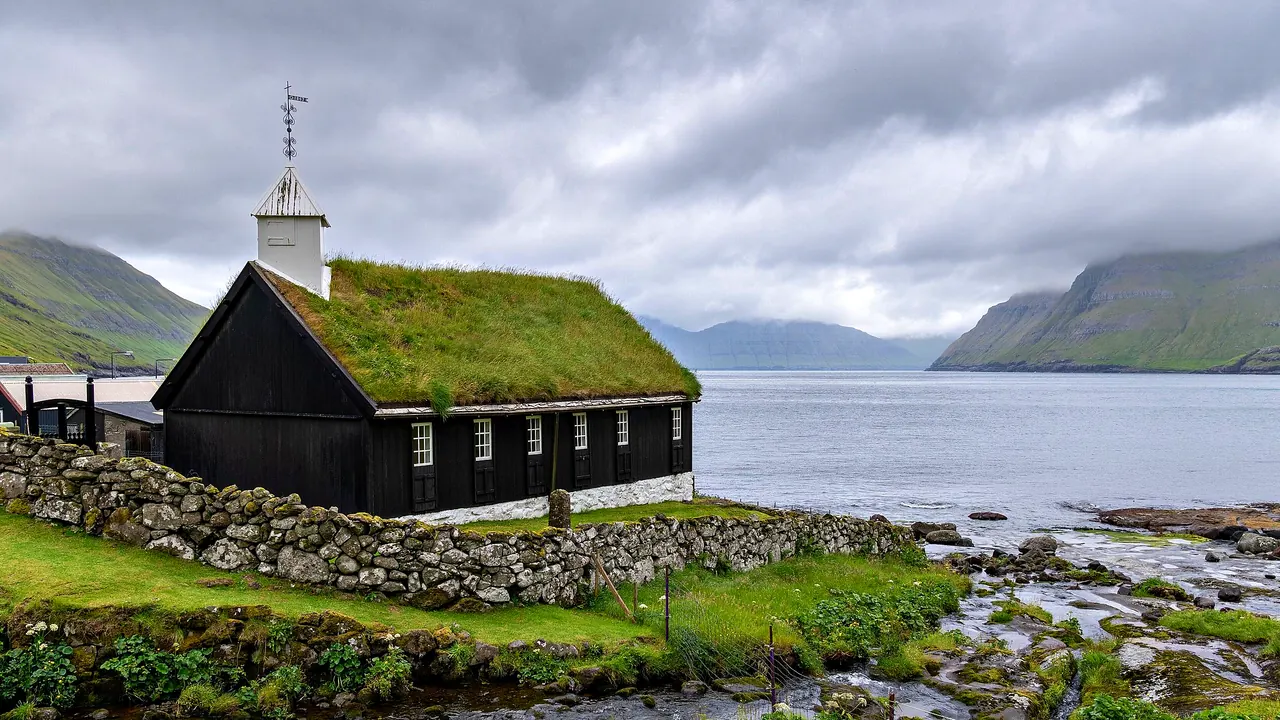
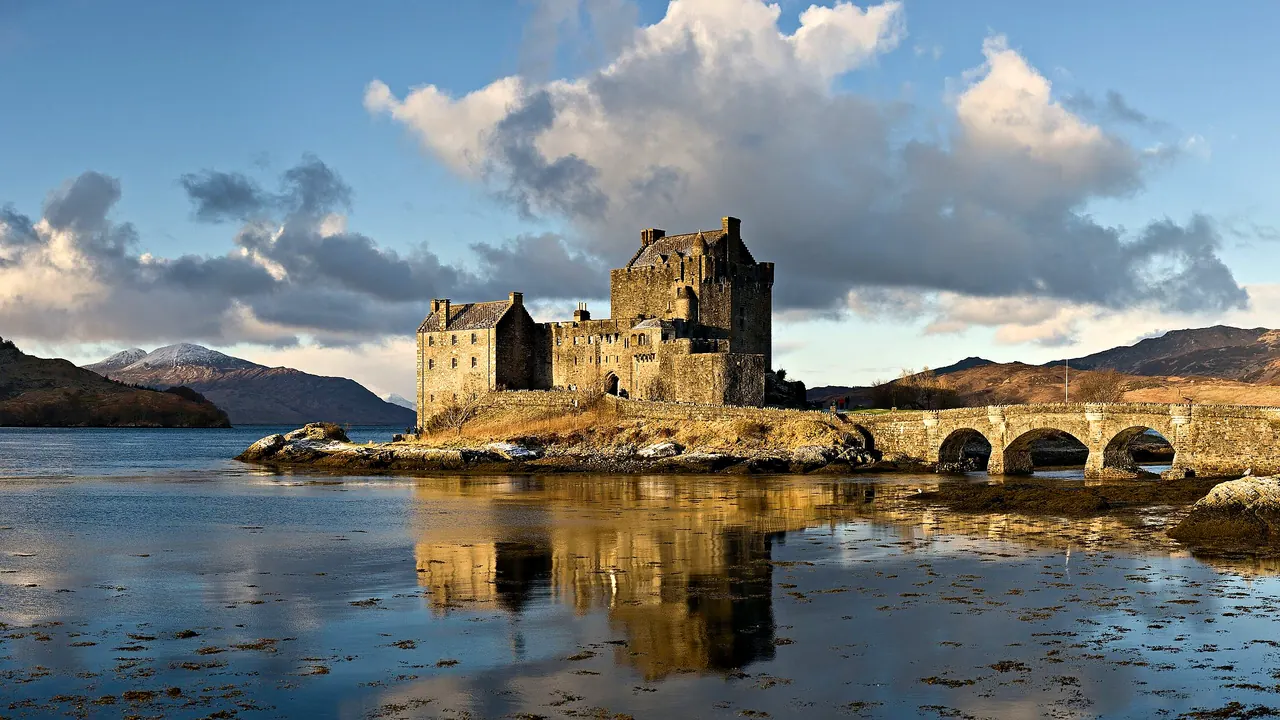
Photos: Faroe Islands by Ekrem Canli, CC BY-SA 4.0, cropped; Scotland by Diliff, CC BY-SA 3.0, cropped.
Faroe Islands or Scotland?
Our verdict in twelve categories, each scored against the same fixed benchmark cities, and the climate month by month, so you can choose for your trip.
Choose Faroe Islands for
Faroe Islands does not lead in any category we score.
The Faroe Islands suit a traveller who wants the landscape and very little else. Eighteen treeless islands of sheer cliffs, sea stacks and waterfalls, joined by tunnels so most of the great views are within an hour of Tórshavn, make a compact, remote trip of walks, boat rides to bird cliffs and puffins, and meals of wind-dried mutton found nowhere else. Choose them if you are happy with quiet evenings, high costs and weather that rewrites your plans.
Choose Scotland for
- culture and sights
- live music and the arts
- day trips
Scotland has mountains and coast of the same quality and a great deal more around them. Edinburgh's castle and Royal Mile, Glasgow's galleries, clubs and concert halls, the August festivals, Speyside and Islay whisky, castles for children and easy day trips by train fill the days the hills leave free. It is also the less punishing of the two on cost, especially outside Edinburgh. For a first trip north, a family vacation or anyone who wants cities with their scenery, it is the stronger choice.
Scoreboard
Twelve categories on one fixed scale from 0 to 100. The shaded stretch is the gap between the two.
Your match
Pick a travel style or drag the sliders, and both match scores follow your weighting.
Has no clear advantage with the weighting you have chosen.
Wins on culture and sights and live music and the arts with your weighting.
What matters to you?
Category by category
What the scores mean for a trip.
Beaches & swimming
Neither place is for swimming, but Scotland at least has beaches worth travelling to. The Faroes have a handful of small dark bays, Tjørnuvík's black sand and the shore at Sandur, which are scenery more than places to spend a day, and a dip at Sandagerði is a matter of seconds.
Scotland's sand is a real draw: white shell beaches and turquoise shallows at Luskentyre on Harris, the Silver Sands of Morar, and wide sheltered bays at North Berwick and Gullane an easy train ride from Edinburgh. You would walk and picnic there rather than swim, but they make a good day out.
Where in Faroe Islands: Tjørnuvík, Sandur, Tórshavn
Where in Scotland: Isle of Harris, Morar and Arisaig, Tiree, East Lothian coast
Food & drink
The Faroes offer a sharper, stranger cuisine: wind-dried skerpikjøt, fermented ræst, seabirds, and the chance to eat heimablídni at a family's table or in the old farmhouse at Kirkjubøur. Tórshavn has almost every restaurant, though, and a week of eating out soon runs through them.
Scotland gives more choice over a longer trip. Edinburgh and Glasgow have deep restaurant scenes, Glasgow's South Asian cooking among them, the west coast harbours serve langoustines and scallops off the boat, and Speyside and Islay make whisky a reason to travel in itself.
Where in Faroe Islands: Tórshavn, Kirkjubøur, Klaksvík
Culture & sights
The Faroese heritage is small and particular: the turf-roofed parliament houses on Tinganes, the National Museum, and the unfinished Magnus Cathedral at Kirkjubøur. Beyond that, the villages of Saksun and Gjógv are the sights.
Scotland is in another league for sightseeing. Edinburgh alone, with its castle, Royal Mile, Holyrood and national collections, outweighs the islands, and Glasgow adds Kelvingrove and Mackintosh. Further out are Stirling Castle, the Borders abbeys and Orkney's Skara Brae.
Where in Faroe Islands: Tórshavn, Kirkjubøur, Saksun, Gjógv
Nightlife
Nights out in the Faroes mean a few harbour pubs and bars in Tórshavn on Friday and Saturday, friendly but small, with alcohol bought in shops only from the state outlets. Away from the capital, evenings end after dinner.
Scotland has proper city nightlife. Glasgow's clubs have a long reputation for house and techno, the Merchant City and West End fill with bars, and Edinburgh's Old Town pubs and New Town cocktail bars come fully alive in August. Even a Highland village pub with a fire and fiddle offers more than most Faroese evenings.
Where in Faroe Islands: Tórshavn
Nature & outdoors
The scenery here is equally strong in both, but different in kind. The Faroes pack it tight: cliffs hundreds of metres high, Sørvágsvatn hanging above the sea, Múlafossur falling into the ocean, puffins on Mykines and the Kallur lighthouse ridge on Kalsoy, all treeless and open and mostly an hour's drive apart.
Scotland is bigger and higher, with real mountains: Ben Nevis and Glen Coe, the Cuillin ridge on Skye, the Cairngorm plateau and its pine forest, and long routes such as the West Highland Way. Its wildlife extends to whales, dolphins and eagles over Mull, but covering it takes long drives. In both, the weather can turn within the hour.
Where in Faroe Islands: Vágar, Mykines, Kalsoy, Eysturoy
Where in Scotland: Isle of Skye, Glen Coe and Lochaber, Cairngorms National Park, Assynt and Wester Ross
Day trips
From Tórshavn, every outing is short: Kirkjubøur is half an hour away, and you can also visit the fishing port of Klaksvík, go to Gjógv and Saksun or take a ferry to Nólsoy. Each fills a few hours, and most days end up as walks.
Scotland gives you far more to choose from. From Edinburgh or Glasgow, Stirling and Linlithgow Palace are easy by train, the two cities are a day trip from each other, and St Andrews, the East Neuk of Fife and New Lanark are a short drive away. Inverness puts Culloden and Cawdor Castle within reach, and Oban opens up Mull and the abbey on Iona.
Where in Faroe Islands: Kirkjubøur, Klaksvík, Gjógv, Nólsoy
Good for families
The Faroes give hardy children sheep, ferries and wild weather, with the Vestmanna boat trip under the bird cliffs as the easiest outing and puffins on Mykines for older ones. Beyond a small aquarium in Tórshavn, nothing is built for them, and the cliff paths are unfenced.
Scotland is much easier with children. Castles everywhere, Edinburgh's zoo and Camera Obscura, Glasgow's Science Centre and Riverside Museum, the aquarium at North Queensferry and the Highland Wildlife Park near Aviemore can fill a whole week, with rock pools in Fife in between.
Where in Faroe Islands: Tórshavn, Vestmanna, Mykines
Getting around
In the Faroes, subsea tunnels and bridges link Vágar, Streymoy, Eysturoy and Borðoy, so distances are short and the roads quiet. Rural buses are sparse, though, so a hire car is close to essential, and boats to Mykines are often cancelled by swell.
Scotland is easier where most visitors start. Edinburgh is walkable, Glasgow has a subway, and fast trains run across the Central Belt and on to Aberdeen. North and west it becomes as car-dependent as the Faroes, with single-track roads and summer ferries that fill up.
Where in Faroe Islands: Tórshavn, Streymoy, Eysturoy, Vágar
Shopping & style
The Faroes really offer one thing worth buying: patterned wool jumpers and island-designed knitwear from a few shops in old Tórshavn. Beyond that, it is village groceries.
Scotland gives you both a high street and local crafts. Glasgow's Buchanan Street and the West End are proper shopping streets, and Edinburgh has Stockbridge and Victoria Street. Harris Tweed on Harris, Borders cashmere and single malts bought at Speyside distilleries make better souvenirs than tartan from the Royal Mile.
Where in Faroe Islands: Tórshavn
Where in Scotland: Glasgow, Edinburgh, Isle of Harris, Scottish Borders
Affordability
Both are costly, but the Faroes are hard to do cheaply anywhere. Beds are few, meals out are expensive, you need a car or paid boat trips, and some popular walks charge for crossing private land. Self-catering is the main way to save.
Scotland leaves more room to manage costs. Edinburgh in August is punishing, but Glasgow, Dundee and weekend Aberdeen are gentler. The national museums are free, hostels and cottages are widespread, and pub food keeps eating out affordable.
Live music & performing arts
Faroese music is lovely when you find it: the Nordic House in Tórshavn, summer shore festivals at Gøta and Klaksvík, and the chain dance to medieval ballads at Ólavsøka. On an ordinary night, though, there is usually little to see.
Scotland has far more to see. Edinburgh's International Festival and Fringe turn August into the biggest arts event anywhere, and Glasgow keeps going all year with Scottish Opera, two symphony orchestras, a strong gig circuit and Celtic Connections in winter. Pub folk sessions add the unplanned evenings.
Where in Faroe Islands: Tórshavn, Gøta, Klaksvík
Where in Scotland: Edinburgh, Glasgow, Highlands and Islands
Wellness & relaxation
Neither has a bathing culture, but Scotland has more to offer. In the Faroes, wellness means a hotel sauna in Tórshavn, the public pools or a cold plunge at Sandagerði, with the quiet roads doing the rest.
Scotland keeps Victorian Turkish baths at Portobello and Glasgow's Arlington Baths, has country-house spas around Gleneagles and Crieff, and offers the deep quiet of a cottage on Harris or Mull.
Where in Faroe Islands: Tórshavn
Where in Scotland: Perthshire, Edinburgh, Outer Hebrides, Isle of Mull
When should you go?
Pick your month, and for a country the place in it. The climate figures are measured averages, not a forecast.
Where in Scotland
Tórshavn (Faroe Islands) in July
Edinburgh (Scotland) in July
Daytime high, °C
Rainfall in the month, mm
Temperature and rainfall are climate normals, averaged over the years shown. Tórshavn (Faroe Islands): 1991-2020 normals, Thorshavn (0.8 km from centre). Edinburgh (Scotland): 1991-2020 (sunshine 1981-2010, rainfall 1981-2010) normals, Edinburgh Airport (10 km from centre).
Neither has a beach season. In Tórshavn, daytime highs barely reach 13°C even in July and August, and the sea there stays cold all year. Tórshavn is driest from May to July, and with the near-endless light of early summer that makes June to August the time to go. From October its rain builds to a January peak of 163mm, and short, windy days make hiking hard work.
Scotland is milder. Edinburgh and Glasgow reach about 19°C in July and August, and the sea off Glasgow warms to 15°C at best. The east is noticeably drier than the west: Glasgow and the Highlands are wet from October to January, while Edinburgh's rainfall stays moderate all year. May is the sunniest month in the Highlands and has long days before the midges of high summer, while the cities work for a break in any season.
Which traveller are you?
More comparisons
Each shares a side with Faroe Islands or Scotland.
Where else could you go?
Set Faroe Islands or Scotland against any other country.