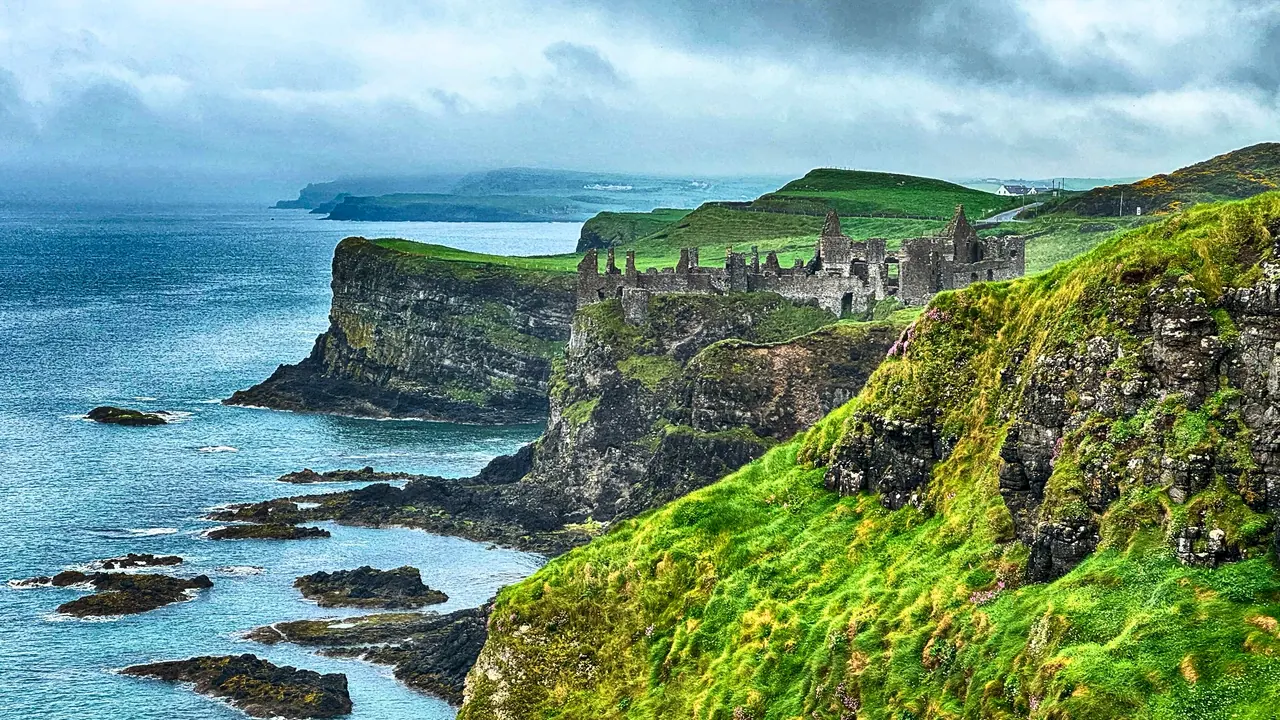
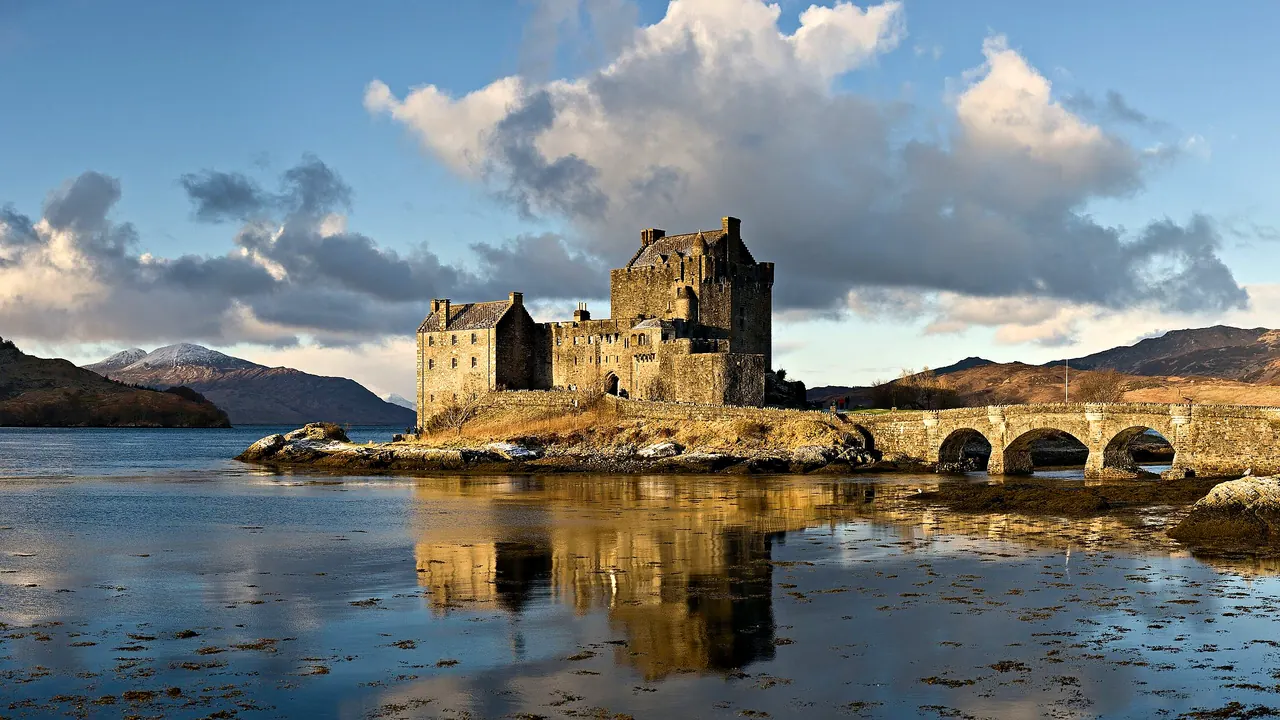
Photos: Northern Ireland by Gillfoto, CC BY-SA 4.0, cropped; Scotland by Diliff, CC BY-SA 3.0, cropped.
Northern Ireland or Scotland?
Our verdict in twelve categories, each scored against the same fixed benchmark cities, and the climate month by month, so you can choose for your trip.
Choose Northern Ireland for
- prices
Northern Ireland suits a shorter, easier trip where you want to see a lot without much travelling. Belfast's murals and Titanic slipways, Derry's walls, the Giant's Causeway and the Mournes all fit into a loop of a few days' driving. Rooms and meals cost less than across the water, and the country is small enough that you never spend a day just getting somewhere.
Choose Scotland for
- live music and the arts
- culture and sights
- shopping
Scotland is the bigger trip, and it comes out ahead on almost everything else. Edinburgh and Glasgow give you stronger museums, theatre, music, shopping and food. The Highlands and islands offer wilder mountains and coast than anything in Ulster. It costs more and asks more of your time, especially if Skye or the Hebrides are on the list, but for a first long visit to either it gives you more in return.
Scoreboard
Twelve categories on one fixed scale from 0 to 100. The shaded stretch is the gap between the two.
Your match
Pick a travel style or drag the sliders, and both match scores follow your weighting.
Wins on prices with your weighting.
Wins on live music and the arts and culture and sights with your weighting.
What matters to you?
Category by category
What the scores mean for a trip.
Beaches & swimming
Both countries have lovely sand and cold water, around 14°C to 15°C at best, so on either side a swim means a quick dip, often in a wetsuit. The difference is where the beaches are. Northern Ireland's best ones, Portstewart Strand, Whiterocks and Murlough under the Mournes, are an easy drive from Belfast, and Portrush has surf schools for the Atlantic swell.
Scotland's most striking beaches, the white shell sand of Luskentyre on Harris, the Silver Sands of Morar and Tiree's empty bays, are a long journey away. East Lothian's wide bays at North Berwick and Gullane are the ones you can reach on a day out from Edinburgh.
Where in Northern Ireland: Causeway Coast, County Down coast
Where in Scotland: Isle of Harris, Morar and Arisaig, Tiree, East Lothian coast
Food & drink
Scotland eats better, both in its cities and on its coast. Edinburgh has tasting menus and Glasgow has strong South Asian cooking. In Oban and the west coast harbours, langoustines and scallops come straight off the boat. Whisky makes the biggest difference: dozens of Speyside distilleries in a few valleys and the peated malts of Islay, against Bushmills alone on the Causeway Coast.
In Northern Ireland, good meals are mostly in Belfast. St George's Market and the Ulster fry with soda and potato bread are the highlights, and Strangford Lough adds oysters and mussels. You will eat well enough, but you will not plan the trip around food.
Where in Northern Ireland: Belfast, Strangford Lough, Causeway Coast
Culture & sights
Northern Ireland's sightseeing is many modest pleasures rather than a few famous ones. A week might take in the Ulster Museum and the Edwardian City Hall in Belfast, the Norman castle at Carrickfergus, the clifftop Mussenden Temple, Armagh's Georgian Mall and the house and gardens at Mount Stewart. At the Ulster Folk Museum you can wander old farmhouses and shopfronts. It is varied and rewarding, but you put the trip together piece by piece.
Scotland has both more depth and the headline sights. Edinburgh alone can fill several days, from Holyrood Palace to the New Town and the National Galleries. Glasgow is a second, Victorian city with Kelvingrove's collections and Mackintosh's buildings. Further out, Stirling and the Wallace Monument tell of the wars of independence, and Skara Brae on Orkney reaches back to Neolithic times.
Where in Northern Ireland: Belfast, Derry, Causeway Coast, Armagh
Nightlife
Scotland has the later nights, and Glasgow is the reason. It has busy bars in the Merchant City and the West End and a club scene known for house and techno. Edinburgh's historic pubs and New Town cocktail bars add a second city, and the nightlife there comes fully alive in August.
Belfast's Cathedral Quarter has a fine run of old pubs and snugs, with crowds on the cobbles at weekends. Derry and summer Portrush add to that on a smaller scale. A night out in Northern Ireland means talk and pints rather than dancing until dawn.
Where in Northern Ireland: Belfast, Derry, Portrush
Nature & outdoors
Both countries are at their best outdoors, but Scotland's landscape is on another scale. Ben Nevis and Glen Coe, the Cuillin on Skye, the Cairngorm plateau and the odd peaks of Assynt give you serious hill walking and winter climbing. Around the Hebrides there are whales, puffins and sea eagles.
Northern Ireland's coast and hills are smaller and closer together. On the Causeway Coast you have the basalt columns and the rope bridge at Carrick-a-Rede, and the Mournes offer granite tors to 850m above Newcastle. The Glens of Antrim and the Lough Erne lakes are never more than a few hours apart.
Where in Northern Ireland: Causeway Coast and Glens of Antrim, Mourne Mountains, Fermanagh Lakelands, Strangford Lough
Where in Scotland: Isle of Skye, Glen Coe and Lochaber, Cairngorms National Park, Assynt and Wester Ross
Day trips
Scotland has more good bases and more places to reach from them. From Edinburgh or Glasgow, the other city, Stirling, St Andrews, the East Neuk and New Lanark are easy by train or a short drive. Inverness covers Culloden and Speyside, and Oban leads to Mull and the abbey on Iona.
Northern Ireland works almost entirely from Belfast. Carrickfergus castle is a short train ride away, and Armagh's cathedrals and Navan Fort are an hour off. Derry is a scenic train journey along the coast, and Dublin, about two hours south, is an easy extra day in another capital.
Where in Northern Ireland: Belfast as a base, Derry, Armagh, Dublin (across the border)
Good for families
Both are friendly, safe places for children, with plenty of castles and wildlife and no big theme park. The main difference is how far you drive. Northern Ireland keeps distances short: W5 and Belfast Zoo on Cave Hill, the seaside amusements at Portrush and the Causeway stones to scramble over all fit within a small area.
Scotland has more variety. There is the Riverside Museum's trams and trains in Glasgow, the wolves and snow monkeys of the Highland Wildlife Park and Fife's rock pools. The long drives north can tire young children, though.
Where in Northern Ireland: Belfast, Portrush and the Causeway Coast, Mourne Mountains and Newcastle
Getting around
Scotland is a little easier to travel without a car. Fast, frequent trains link Edinburgh and Glasgow in under an hour and continue to Stirling, Perth and Aberdeen. Glasgow has its small subway. Beyond the Central Belt, single-track roads and summer ferries to the islands make journeys slower than the map suggests.
In Northern Ireland, the railway runs to Derry and Portrush, but the Glens, the Mournes and the Fermanagh lakes really need a hire car. The quiet roads and short distances mean the whole country is a loop of a few days.
Where in Northern Ireland: Belfast, Belfast to Derry railway, Causeway Coast
Shopping & style
Irish linen and Belleek porcelain from Fermanagh are the things to take home from Northern Ireland. The shopping itself is essentially Belfast: the chains and covered mall around City Hall, independent shops near the Cathedral Quarter and the craft stalls at St George's Market.
Glasgow on its own offers more than that, with the long pedestrian run of Buchanan, Sauchiehall and Argyle Streets and independent shops in the West End. Scotland's own goods are more varied too: Harris Tweed bought on Harris itself, cashmere from the Borders mills, Fair Isle knits and single malts from the distillery shops.
Where in Northern Ireland: Belfast, Belleek, Fermanagh
Where in Scotland: Glasgow, Edinburgh, Isle of Harris, Scottish Borders
Affordability
Northern Ireland is the cheaper trip. Belfast's hotels are moderate, Derry is easier again, and farmhouse B&Bs and lakeside cottages in Fermanagh are fair value. Only the north coast gets dear and booked up in summer.
Scotland costs noticeably more in season. Edinburgh's rooms reach extreme levels during the August festivals, and Skye and the Highlands have too few beds and add ferry fares on top. Basing yourself in Glasgow or Dundee, using the free national museums and going in spring or autumn all soften the bill.
Where in Northern Ireland: Belfast, Derry, Fermanagh
Live music & performing arts
Scotland is far ahead here. In August, Edinburgh's International Festival and Fringe fill hundreds of venues from morning to after midnight. For the rest of the year, Glasgow has Scottish Opera, two symphony orchestras, a strong indie gig circuit and Celtic Connections in winter.
Belfast offers a solid programme on a smaller scale: the Victorian Grand Opera House, the Ulster Orchestra at the Ulster Hall and Irish drama at the Lyric. Both countries share the pleasure of traditional pub sessions, and in Northern Ireland the best are in Belfast's older bars and in Derry.
Where in Northern Ireland: Belfast, Derry
Where in Scotland: Edinburgh, Glasgow, Highlands and Islands
Wellness & relaxation
Neither country has a real spa tradition, so rest on either side means a country hotel or a quiet corner. Scotland keeps a little Victorian bathing history, with the tiled Turkish baths at Portobello and Glasgow's Arlington Baths, the Perthshire hydros and the Hebrides for complete stillness.
Northern Ireland's version is more modern and outdoors. You can take a cold sea dip at Newcastle followed by a sauna under the Mournes, stay at a resort spa in mid-Antrim or take slow lakeside walks beside Lough Erne.
Where in Northern Ireland: Fermanagh lakelands, Newcastle, Mid-Antrim
Where in Scotland: Perthshire, Edinburgh, Outer Hebrides, Isle of Mull
When should you go?
Pick your month, and for a country the place in it. The climate figures are measured averages, not a forecast.
Where in Scotland
Belfast (Northern Ireland) in July
Edinburgh (Scotland) in July
Daytime high, °C
Rainfall in the month, mm
Temperature and rainfall are climate normals, averaged over the years shown. Belfast (Northern Ireland): 1991-2020 normals, Belfast / Aldergrove Airport (19.4 km from centre). Edinburgh (Scotland): 1991-2020 (sunshine 1981-2010, rainfall 1981-2010) normals, Edinburgh Airport (10 km from centre).
The two share almost the same calendar. From June to August, Belfast, Edinburgh and the Highlands all reach about 19°C at most. That is good weather for walking cliffs and city streets, but never beach heat. May is the brightest month in both, with long light evenings for hiking the Causeway Coast, the Mournes or Skye. Winter days are short and grey everywhere, with highs of about 7°C.
The real difference is rain. Edinburgh and the east of Scotland are the driest places of all, while Glasgow is very wet from October to January, at up to 141mm a month. Belfast sits in between, getting wetter from August onwards. Neither sea is inviting: the warmest it gets is about 15°C off western Scotland in midsummer and 14°C in Belfast Lough in September.
Which traveller are you?
On an outdoors trip, choose Scotland. There are good day hikes straight from Fort William, Aviemore and Skye, plus bigger mountains, sea kayaking in the Hebrides and eagles over Mull. Northern Ireland's coast and hills sit closer together, but they are smaller and less wild.
More comparisons
Each shares a side with Northern Ireland or Scotland.
Where else could you go?
Set Northern Ireland or Scotland against any other country.