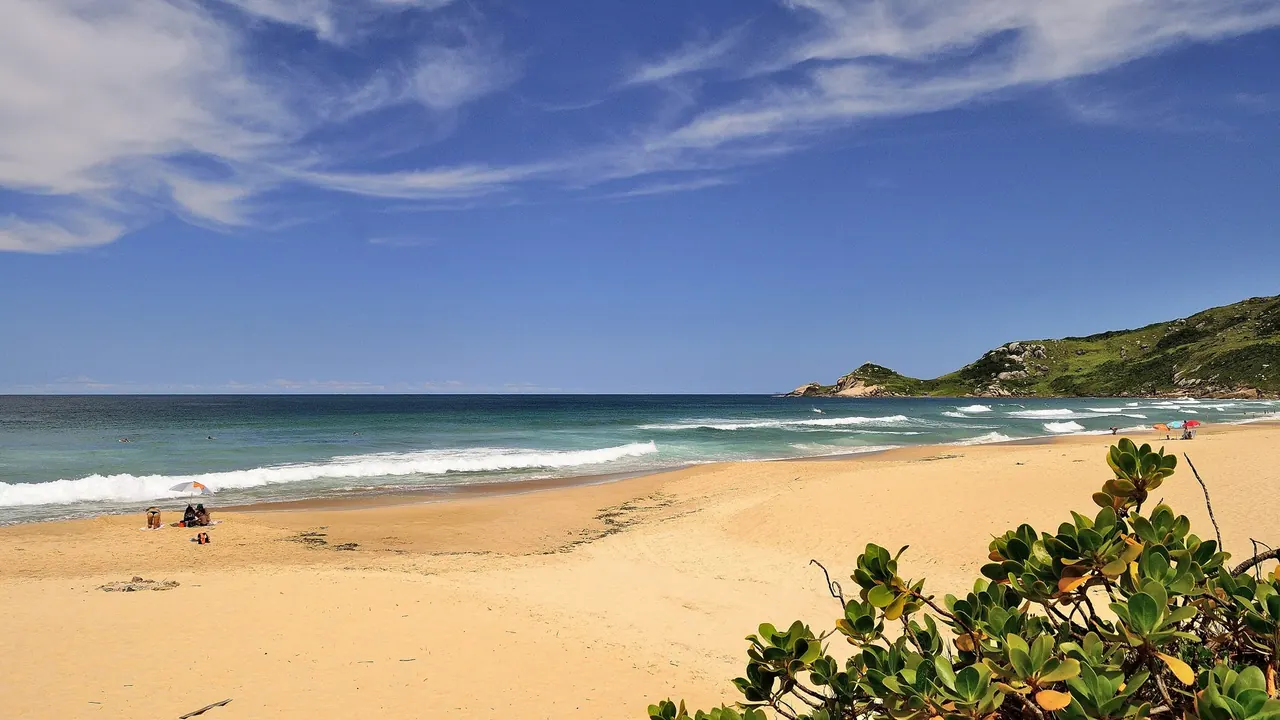
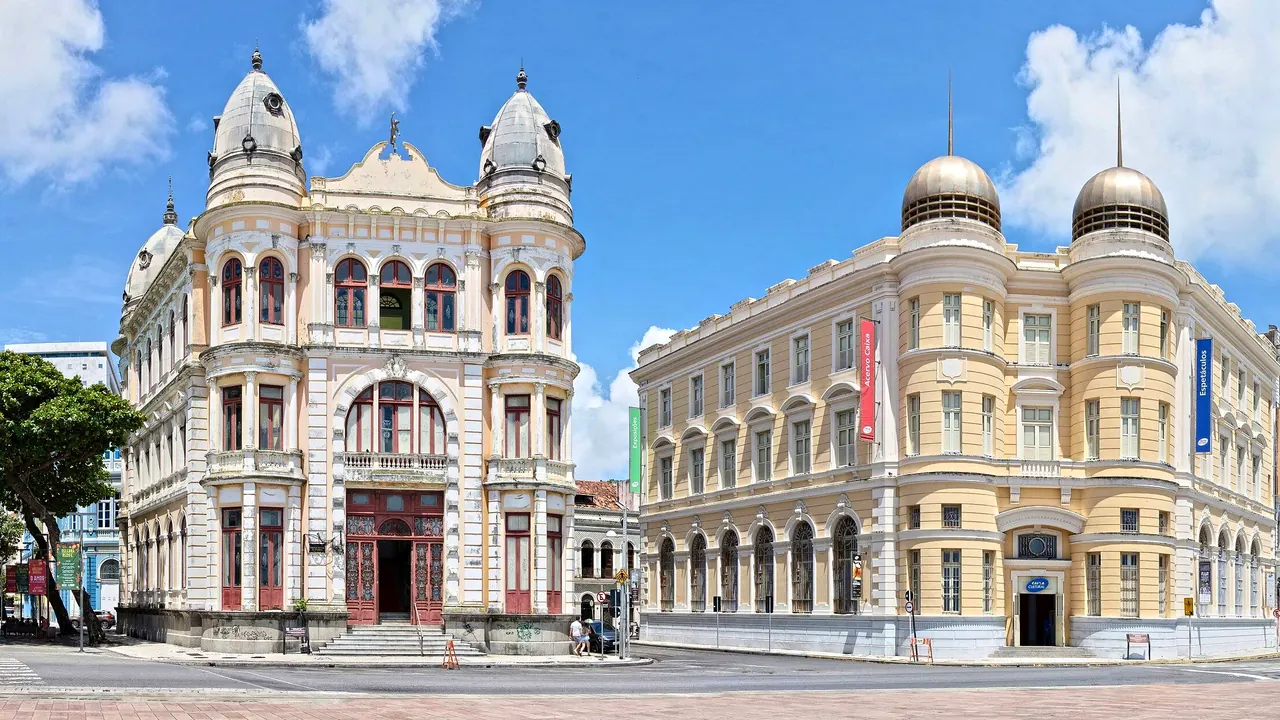
Photos: Florianopolis by Papa Pic, CC0; Recife by Wilfredor, CC0.
Florianopolis or Recife?
Our verdict in twelve categories, each scored against the same fixed benchmark cities, and the climate month by month, so you can choose for your trip.
Choose Florianopolis for
- nature and the outdoors
- beaches
- wellness
Florianopolis is the choice for a trip built around the sea and the outdoors. Santa Catarina island gives you dozens of beaches, from the calm northern bays to the surf of the east coast, plus forest trails, a lagoon for wind sports and a slower pace in the southern villages. It suits travellers who will rent a car, pick one corner of the island and spend most days on the sand or on a trail, and who don't mind that the sights are few.
Choose Recife for
- live music and the arts
- culture and sights
- prices
Recife rewards travellers who want a city with a past and a sound of its own. Dutch and Portuguese history, baroque churches, the Brennand collections and colonial Olinda next door give it far more to see, and frevo, maracatu and forró are played live through the year. Day to day it is also cheaper. The trade-off is a city beach meant for wading rather than swimming, so beach time means heading down the coast to Porto de Galinhas.
Scoreboard
Twelve categories on one fixed scale from 0 to 100. The shaded stretch is the gap between the two.
Your match
Pick a travel style or drag the sliders, and both match scores follow your weighting.
Too close to call, 2 points apart
Wins on nature and the outdoors and beaches with your weighting.
Wins on live music and the arts and culture and sights with your weighting.
What matters to you?
Category by category
What the scores mean for a trip.
Beaches & swimming
Florianopolis is the stronger beach destination by some way. The island's coasts differ: Jurere and Daniela have calm, warm bays, Mole and Joaquina face open Atlantic surf, and Lagoinha do Leste can only be reached on a forest trail. You can swim straight from where you stay, at least from December to March.
Recife's Boa Viagem is a city beach for sun, coconut water and wading in the reef pools at low tide. Shark warnings keep bathers inside the reef, so the city shore is not for real swimming. The water is warmer than Florianopolis's all year, but to swim properly you have to go south to the natural pools of Porto de Galinhas or the calm water at Carneiros.
Food & drink
Recife has the more distinctive table. Pernambuco cooking gives you carne de sol with macaxeira, sururu broths, crab cracked with a mallet at the kiosks, and sweets such as bolo de rolo, with markets like São José for a local scene.
Florianopolis eats more narrowly but very well at what it does: oysters farmed in its own waters, eaten at the water's edge in Ribeirao da Ilha, and the long sequencia de camarao. Away from seafood the choice thins out quickly.
Culture & sights
Recife offers far more to see. Recife Antigo's Kahal Zur Israel synagogue, the gilded Capela Dourada, the Instituto Ricardo Brennand's castle collection and the strange sculpture garden of the Oficina Brennand could fill several days. Olinda's colonial hilltop is next door, although the centre between these sights is often run-down.
Florianopolis's heritage is smaller and quieter. It has the Hercilio Luz bridge, the Palacio Cruz e Sousa off Praca XV and the Azorean fishing villages with their whitewashed churches. It makes a pleasant day, but it is not a reason to come.
Nightlife
Both cities go out well, but in different ways. Florianopolis is a summer party island: glossy beach clubs and touring DJs at Jurere Internacional, and younger bar crowds around Lagoa da Conceicao. In winter much of it closes down.
Recife's nights are steadier through the year and more local, with plastic tables on the pavement around Rua da Moeda, live forró and brega, and clubs playing brega funk. At Carnival the streets of Recife and Olinda become one long party.
Nature & outdoors
Florianopolis is much the greener and more active choice. Atlantic forest trails lead to Lagoinha do Leste and along the Costa da Lagoa, the lagoon is good for kitesurfing and paddling, the Joaquina dunes are used for sandboarding, and the east coast has consistent surf. Southern right whales calve offshore in the cooler months.
Recife is flat delta country. Its natural side means river trips on the Capibaribe, the forest patch at Dois Irmãos and the reefs and mangroves down the coast, and the humid heat makes midday activity heavy going.
Day trips
Recife has the edge, mostly thanks to Olinda, a colonial town a short taxi ride away that easily fills a day and an evening. Igarassu, Itamaracá's Dutch fort and the clay market at Caruaru add more, though the longer trips take a full day on the road.
From Florianopolis the outings are more varied in kind but further away. They include the German-settled towns of Blumenau and Pomerode, the high-rise beach city of Balneario Camboriu, the surf towns of Garopaba and Praia do Rosa, and a boat to the Anhatomirim fortress.
Good for families
Florianopolis is the easier family beach vacation. The northern beaches at Canasvieiras, Jurere and Daniela have shallow, gentle water and plenty of space, sandboarding and boat trips keep older children busy, and Beto Carrero World is within a day's reach. Summer traffic jams are the main drawback.
In Recife, children love spotting fish in the reef pools of Porto de Galinhas, and the zoo at Dois Irmãos helps. But the city itself is hot and hard work with small children, which is why many families stay at a resort down the coast instead.
Getting around
Neither city is easy without a car, but Recife is a little simpler. Most visitors stay in Boa Viagem, walk the promenade and take cheap ride-hailing trips to Recife Antigo and Olinda. The metro serves the airport but does little for sightseeing.
Florianopolis is spread along roughly 50km of island, and its buses run through hub terminals that turn short hops into long rides. Summer traffic clogs the bridges and the roads north. The sensible plan is a hire car and a base close to the beaches you want.
Shopping & style
Recife gives you more to bring home. The old prison cells of the Casa da Cultura sell clay figurines, hammocks and cordel woodcuts, Olinda has artists' studios and Carnival puppet makers, and the potters of Alto do Moura are within reach.
Florianopolis has malls, surf and swimwear boutiques at Jurere and Lagoa, and one real local craft, the renda de bilro bobbin lace of Santo Antonio de Lisboa.
Affordability
A week in Florianopolis costs noticeably more than one in Recife, and most of the gap is in the room bill. By Brazilian standards the island is a dear place to sleep in summer, especially over New Year and Carnival, and Jurere Internacional sits firmly at the luxury end. Simple seafood places, bakeries and car hire stay reasonable, and between April and November beds become far easier on the budget.
In Recife, everyday spending stays low all year. Per-kilo lunches, crab at the kiosks, cold beer and ride-hailing hops across town cost little, Boa Viagem's seafront hotels give fair value, and most museums ask little or nothing. Only rooms at Carnival and the resorts around Porto de Galinhas push costs up.
Live music & performing arts
Recife is the clear choice for anyone travelling to hear music. Frevo brass and umbrella dancing, maracatu drum processions and the manguebeat sound all come from here. They are rehearsed and played through the year, and bands play coco and ciranda in the streets of Recife Antigo and Olinda.
In Florianopolis, live performance amounts to the Teatro Alvaro de Carvalho, touring Brazilian acts and samba or MPB sets in the bars around Lagoa.
Wellness & relaxation
Florianopolis is the more restful place, at least outside high summer. The southern villages and quieter corners of Lagoa are unhurried, yoga studios serve the surf crowd, and the thermal waters of Santo Amaro da Imperatriz and Aguas Mornas are under an hour inland.
Recife has no bathing tradition and is noisy and hot. Real rest there means moving to a spa resort at Porto de Galinhas or Muro Alto, beside calm reef water.
When should you go?
Pick your month. The climate figures are measured averages, not a forecast.
Florianopolis in July
Recife in July
Daytime high, °C
Rainfall in the month, mm
Temperature and rainfall are climate normals, averaged over the years shown. Florianopolis: 1991-2020 normals, Florianopolis (1.7 km from centre). Recife: 1991-2020 normals, Recife (4 km from centre).
The two cities follow opposite calendars. Florianopolis has real seasons. From December to March the days are hot and the sea warms to about 26°C, which makes these the beach months, though they are also the wettest, with January the rainiest month. By June to August the days are mild and good for hiking the trails, but the sea drops to around 18°C and swimming becomes hard going. April and May are a good compromise, still warm and with less rain.
Recife is hot all year, with highs of about 30°C in every month and warm sea throughout, so the question there is rain rather than temperature. April to July is the wet season, peaking at 388mm in June, when outings down the coast are often rained off. From September to January the weather is drier and sunnier, with November and December the brightest months. Because of the steady heat, walking the old centre is best done early or late in the day in any season.
Which traveller are you?
For a beach and sun trip, Florianopolis wins clearly. It has sheltered bays in the north, surf beaches in the east and wild coves in the south, all on one island. In Recife the city beach is mainly for wading, and proper swimming means a drive south.
On a culture and arts trip, Recife has far more to offer. There are colonial churches, the first synagogue in the Americas, the Brennand collections and Olinda next door, and frevo and maracatu are performed all year. Florianopolis has a day or two of heritage at most.
For an outdoors trip, choose Florianopolis. You can walk forest trails to beaches reached only on foot, kitesurf on Lagoa da Conceicao, sandboard the Joaquina dunes and watch whales from July. Recife's outdoor side is mostly reef snorkelling down the coast, in flat, humid country.
Before you go
| Measure | Florianopolis | Recife |
|---|---|---|
| Official language | Portuguese | Portuguese |
| Currency | Brazilian Real (BRL) | Brazilian Real (BRL) |
| Sockets | CN60 Hz | CN60 Hz |
| Driving side | Right | Right |
| Time zone | UTC-3 | UTC-3 |
| Emergency number | Police 190, ambulance 192, fire 193 | Police 190, ambulance 192, fire 193 |
| Elevation | 3 m | 6 m |
| Main airport | Hercílio Luz International Airport (FLN)9 km from centre23 non-stop destinations | Recife/Guararapes - Gilberto Freyre International Airport (REC)9 km from centre39 non-stop destinations |
| Public holidays this year | 14 days | 14 days |
By the numbers
| Measure | Florianopolis | Recife |
|---|---|---|
| City population | 587,486 | 1,488,920 |
| People per km² | 870 | 6,805 |
| Museums within 10 km | 11 | 21 |
| UNESCO World Heritage sites within 50 km | 0 | 1 |
| Swim season, months above 21 °C | 7 months | 12 months |
Where else could you go?
Every comparison below shares a destination with this one, so you can follow Florianopolis or Recife somewhere new.
- Sao Paulovs Florianopolis
- Paratyvs Florianopolis
- Foz do Iguacuvs Florianopolis
- Salvadorvs Recife
- Rio de Janeirovs Florianopolis
- Buziosvs Florianopolis