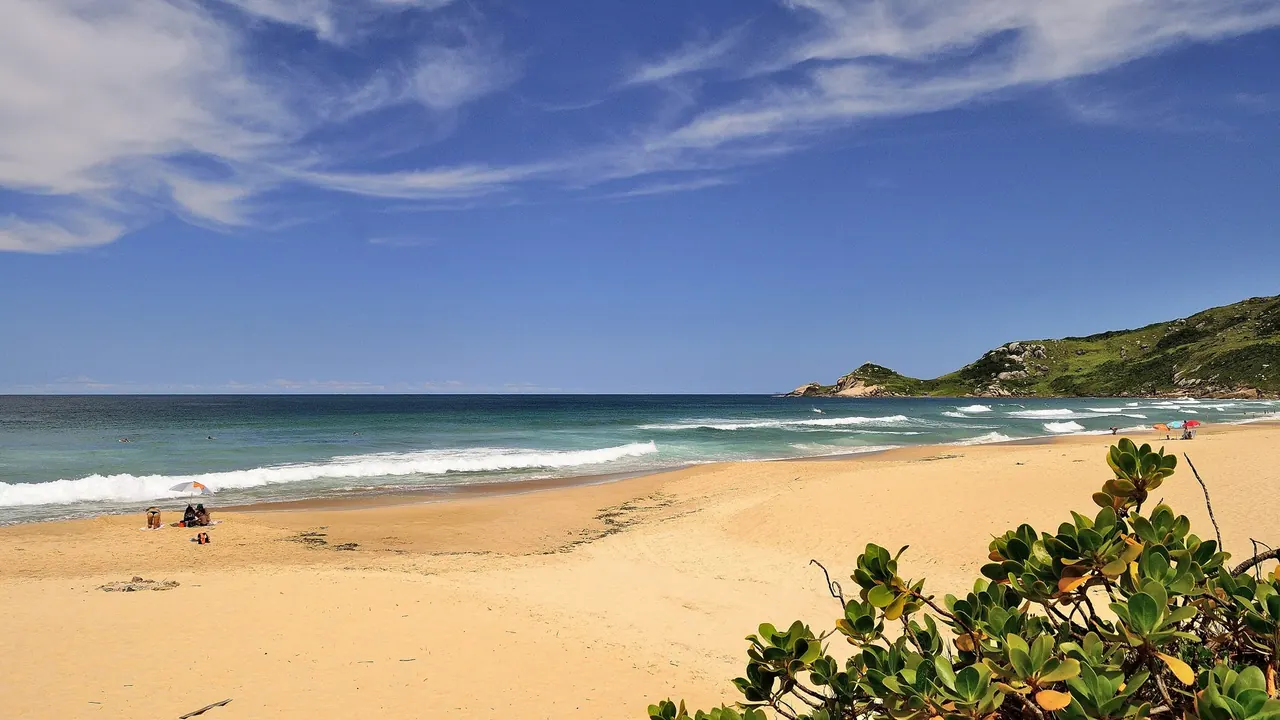
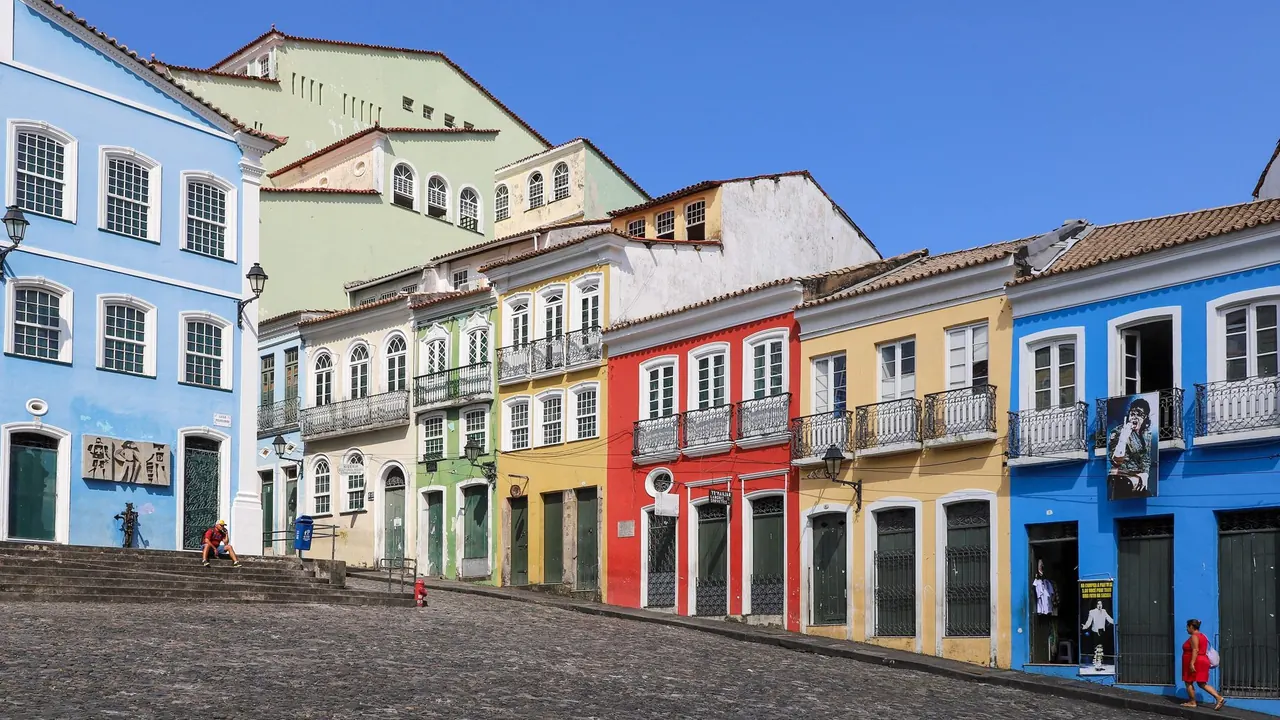
Photos: Florianopolis by Papa Pic, CC0; Salvador by Paul R. Burley, CC BY-SA 4.0, cropped.
Florianopolis or Salvador?
Our verdict in twelve categories, each scored against the same fixed benchmark cities, and the climate month by month, so you can choose for your trip.
Choose Florianopolis for
- nature and the outdoors
- families
- wellness
Florianopolis suits travellers who want the island itself. You can choose between calm northern bays and open surf beaches, walk forest trails to beaches with no road, kitesurf on the lagoon and slow down in the southern villages. It is the easier pick for families and active couples, as long as they stay near the beaches they plan to use and accept that there are few sights.
Choose Salvador for
- culture and sights
- live music and the arts
- getting around
Choose Salvador if you care about the city as much as the sand. The baroque churches of the Pelourinho, the Afro-Brazilian heritage, the bloco drumming and Bahian cooking give it a depth Florianopolis cannot match. Its beaches are just as good, the sea is warm all year and day-to-day costs are lower.
Scoreboard
Twelve categories on one fixed scale from 0 to 100. The shaded stretch is the gap between the two.
Your match
Pick a travel style or drag the sliders, and both match scores follow your weighting.
Wins on nature and the outdoors and families with your weighting.
Wins on culture and sights and live music and the arts with your weighting.
What matters to you?
Category by category
What the scores mean for a trip.
Beaches & swimming
The two are evenly matched for beaches, but the water and the setting differ. Florianopolis has dozens of beaches around its island: sheltered northern bays at Jurere and Daniela, surf beaches such as Mole and Joaquina, and coves like Lagoinha do Leste that you can only reach on foot or by boat. Swimming there is mostly a summer activity.
In Salvador the beach is part of everyday city life. The calm bay cove at Porto da Barra sits at one end, and wider, cleaner ocean beaches run north to Flamengo, with warm water in every month. The central stretches can be murky after rain, so the best beach days often mean heading north or out to Praia do Forte.
Food & drink
Salvador has the more distinctive food. Bahian cooking is built on dendê palm oil, coconut milk and West African tradition. You can buy acarajé from baianas on the squares, sit down to moqueca simmered in a clay pot, and wander the stalls of the São Joaquim market.
Florianopolis eats well within a narrower range. Oysters come straight from the farms to the tables at Ribeirao da Ilha and Santo Antonio de Lisboa, the sequencia de camarao makes a long shrimp feast, and the Mercado Publico is good for a cold chope. Neither city has much variety beyond its regional food, but the beach-town menus in Florianopolis repeat themselves sooner.
Culture & sights
This is where the two cities differ most. Salvador was Brazil's first capital. It has the UNESCO-listed Pelourinho, dozens of baroque churches led by the gilded São Francisco, the Lacerda Elevator down to the Mercado Modelo, and Afro-Brazilian heritage running through all of it. That is enough for several full days.
Florianopolis has a pleasant handful of sights: the Hercilio Luz bridge, the square around Praca XV with the pink Palacio Cruz e Sousa, the colonial fortresses on the bay and the whitewashed Azorean villages. They fill an easy afternoon or two but are not a reason to come.
Nightlife
Salvador has the more dependable nightlife, because it does not depend on the season. Rio Vermelho has pavement bars and acarajé stalls open late, Barra draws a younger beachfront crowd, and the Pelourinho squares fill at weekends and on Tuesdays. Street Carnival is the peak of the year. There are few clubs, and people take taxis between districts after dark.
Florianopolis is more about clubs and beach clubs. Jurere Internacional has glossy parties that run from day into night, with big-name DJs in high season, and Lagoa da Conceicao has a looser, younger bar scene. In winter, much of this closes down.
Nature & outdoors
Florianopolis is much the better base for the outdoors. Much of the hilly island is protected land, with Atlantic forest trails to beaches you can only walk to, the Costa da Lagoa path, kitesurfing and paddling on the lagoon, sandboarding at Joaquina and consistent surf. Southern right whales calve off the coast to the south from July to November.
Salvador's surroundings are low and coastal. The highlights are sailing on the Bay of All Saints, the dunes and dark lagoon of Abaeté, humpback whales from July to October and the turtle project at Praia do Forte. For serious hiking you need a multi-day trip to the Chapada Diamantina.
Day trips
Salvador has the slightly better day trips, mainly because of Cachoeira, a baroque river town in the Recôncavo about two hours inland. Praia do Forte, with its castle ruins, and the ferry to Itaparica make easy days out. Morro de São Paulo works better as an overnight stay.
Trips from Florianopolis are more varied but less memorable. You can visit the German-settled towns of Blumenau and Pomerode, the high-rise beach city of Balneario Camboriu, the surf towns of Garopaba and Praia do Rosa, or colonial Laguna.
Good for families
Florianopolis is the easier choice for families. The northern beaches have shallow, gentle water and plenty of space, older children can try sandboarding at Joaquina, and Beto Carrero World is about an hour and a half away. The drawback is the summer traffic between beaches.
Salvador welcomes children just as warmly, and Porto da Barra is a calm, shallow cove for young swimmers. Beyond that there is little built for children. The old town is steep and cobbled, the sun is strong, and parents need to keep a close eye on their belongings.
Getting around
Neither city is easy to get around, but Salvador is less tiring. Its main sights are in the upper and lower towns, linked by the Lacerda Elevator. Barra is walkable along the seafront, and cheap taxis and ride-hailing cover the rest. The metro is mainly useful for the airport.
Florianopolis is spread over an island about 50km long with only a few narrow roads. Buses run through hub terminals and summer traffic jams are long, so most visitors hire a car and stay near the beaches they want to use.
Shopping & style
Neither city is a big shopping destination, but Salvador has more to bring home. The Mercado Modelo and the Pelourinho sell carved wood, drums, berimbaus and Bonfim ribbons, and the São Joaquim market is worth a wander. In Florianopolis the local find is renda de bilro bobbin lace from the Azorean villages, along with surf and swimwear boutiques at Jurere and Lagoa. For fashion, both cities rely on malls.
Affordability
Salvador is the cheaper of the two. Street food, beach-shack meals, ride-hailing and simple guesthouses in Barra or the Pelourinho cost little, and many churches and museums are cheap or free. Only Carnival week sends prices up steeply.
Florianopolis is one of Brazil's more expensive destinations. Summer rooms push costs up, especially at New Year and Carnival and in Jurere Internacional. Visiting between April and November makes it much better value.
Live music & performing arts
Salvador is one of Brazil's great music cities. Bloco drum groups playing samba-reggae and axé hold open rehearsals in the Pelourinho and Liberdade, most often in the months before Carnival. The Balé Folclórico da Bahia performs most evenings, and capoeira rodas start up in the squares. The Teatro Castro Alves is home to the state symphony orchestra, though the classical and theatre programme is thin.
Florianopolis has samba and MPB sets in bars around Lagoa and the centre, and theatre and touring acts at the Teatro Alvaro de Carvalho and the Centro Integrado de Cultura. There is not much you would plan an evening around.
Wellness & relaxation
Florianopolis is the better place to slow down, at least outside high season. The southern villages and quiet corners of Lagoa are calm, yoga studios and small retreats cater to the surf crowd, and the hot springs of Santo Amaro da Imperatriz are under an hour inland.
Salvador has no bathing tradition, and its centre is hot and noisy. Rest comes from the easygoing Bahian pace, a quiet guesthouse in Santo Antônio or a resort spa up the coast.
When should you go?
Pick your month. The climate figures are measured averages, not a forecast.
Florianopolis in July
Salvador in July
Daytime high, °C
Rainfall in the month, mm
Temperature and rainfall are climate normals, averaged over the years shown. Florianopolis: 1991-2020 normals, Florianopolis (1.7 km from centre). Salvador: 1991-2020 normals, Salvador (4.5 km from centre).
Florianopolis is a summer destination. From December to March the days are hot and the sea is warm enough for long swims. This is also the wettest stretch, with about 243mm of rain in January, mostly in heavy showers. From June to August the days are mild and good for walking the trails, but the sea drops to 18°C and only the hardy will swim. In October and November the air is warm again while the water is still cool.
Salvador is warm in every month, and the sea never falls below 25°C. Rain matters more than temperature here. April to July is the wet season, with about 290mm in April. September to February is drier and sunnier, and December and January are the brightest months, though the midday heat makes the steep streets of the old town hard work. Both cities are at their best in the southern summer, but Salvador also works in spring, when Florianopolis is still too cool for the sea.
Which traveller are you?
On a culture and arts trip, Florianopolis's sights fill a day or two, so Salvador is the clear choice. Stay in the Pelourinho or Santo Antônio to walk to churches by day and drum rehearsals by night.
For an outdoors trip, Florianopolis wins. Base yourself around Lagoa da Conceicao or the south of the island, so trailheads, lagoon and surf are a short hop rather than a cross-island drive. Salvador's flat coast offers boat days rather than hiking.
On a family trip with children, Florianopolis is easier. Stay on the north shore so the calm bays are on the doorstep, and come between December and March for warm water. In Salvador, most families end up at resorts up the coast.
Before you go
| Measure | Florianopolis | Salvador |
|---|---|---|
| Official language | Portuguese | Portuguese |
| Currency | Brazilian Real (BRL) | Brazilian Real (BRL) |
| Sockets | CN60 Hz | CN60 Hz |
| Driving side | Right | Right |
| Time zone | UTC-3 | UTC-3 |
| Emergency number | Police 190, ambulance 192, fire 193 | Police 190, ambulance 192, fire 193 |
| Elevation | 3 m | 8 m |
| Main airport | Hercílio Luz International Airport (FLN)9 km from centre21 non-stop destinations | Deputado Luiz Eduardo Magalhães International Airport (SSA)20 km from centre31 non-stop destinations |
| Public holidays this year | 14 days | 14 days |
By the numbers
| Measure | Florianopolis | Salvador |
|---|---|---|
| City population | 587,486 | 2,417,678 |
| People per km² | 870 | 3,489 |
| Museums within 10 km | 11 | 49 |
| UNESCO World Heritage sites within 50 km | 0 | 1 |
| Swim season, months above 21 °C | 7 months | 12 months |
Where else could you go?
Every comparison below shares a destination with this one, so you can follow Florianopolis or Salvador somewhere new.