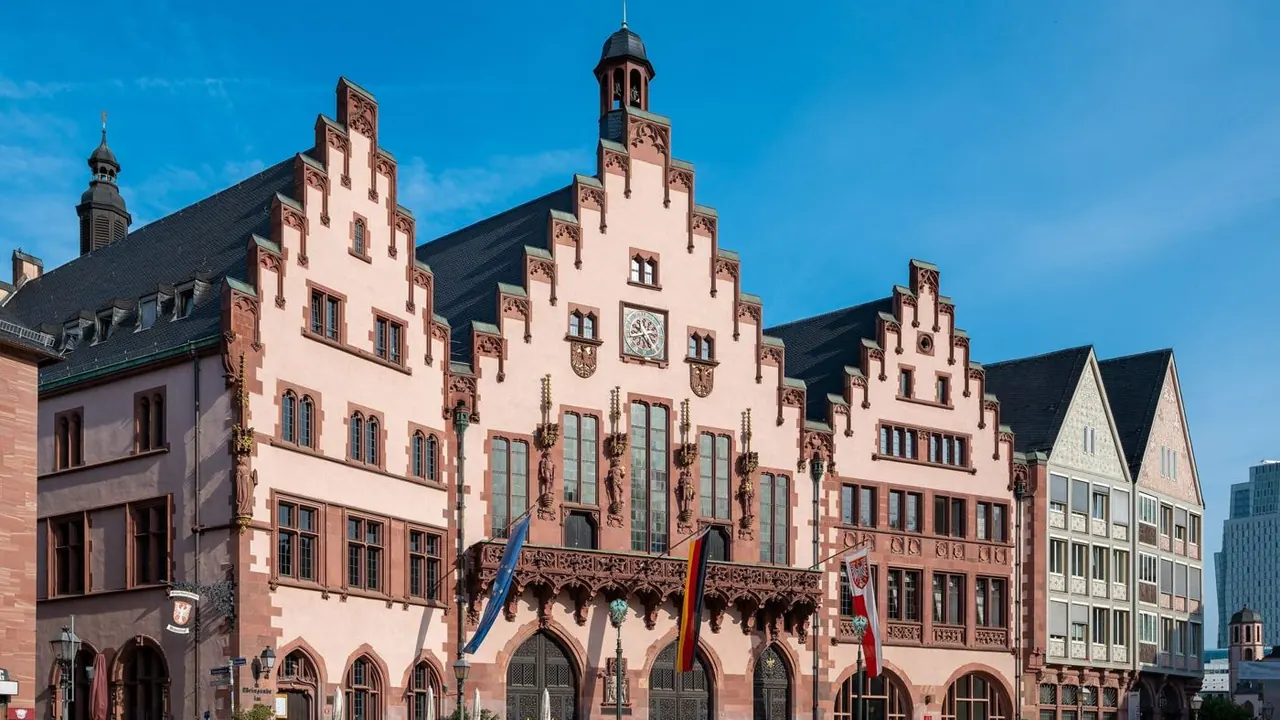
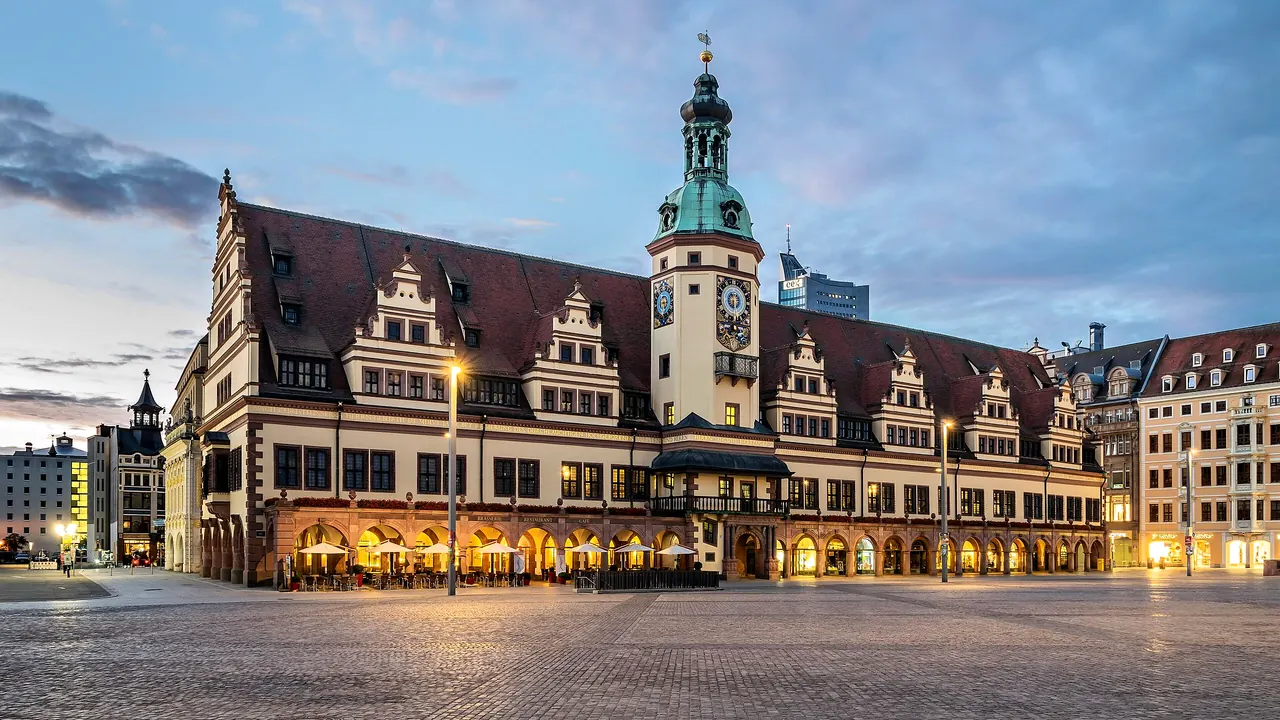
Photos: Frankfurt by Thomas Wolf, CC BY-SA 3.0 DE, cropped; Leipzig by Krzysztof Golik, CC BY-SA 4.0, cropped.
Frankfurt or Leipzig?
Our verdict in twelve categories, each scored against the same fixed benchmark cities, and the climate month by month, so you can choose for your trip.
Choose Frankfurt for
- wellness
- nature and the outdoors
- shopping
Frankfurt suits a traveller who wants a comfortable base with plenty within reach. You get the Städel and the Museumsufer, apple-wine taverns in Sachsenhausen, the Rhine Gorge and the Riesling villages an hour away, Taunus forest at the edge of town and the thermal baths of Wiesbaden and Bad Homburg for a slow afternoon. It eats, shops and relaxes a little better, provided you book around the trade fairs.
Choose Leipzig for
- beaches
- prices
- live music and the arts
Leipzig rewards people who travel for music and late nights and would rather spend less on the room. The Gewandhaus Orchestra, the Thomanerchor singing in Bach's own church and a club scene in old factories give its evenings a weight Frankfurt does not have. The flooded mines south of town make proper swimming lakes in summer, and beds are noticeably cheaper.
Scoreboard
Twelve categories on one fixed scale from 0 to 100. The shaded stretch is the gap between the two.
Your match
Pick a travel style or drag the sliders, and both match scores follow your weighting.
Too close to call, level with your weighting
Wins on wellness and nature and the outdoors with your weighting.
Wins on beaches and prices with your weighting.
What matters to you?
Category by category
What the scores mean for a trip.
Beaches & swimming
Neither city has a coast, but Leipzig comes much closer to a summer swim. The Cospudener See and Markkleeberger See, made by flooding old mines, have sandy shores, clear water and beach bars a tram or bike ride from the centre.
Frankfurt's options are outdoor pools and gravel-pit lakes such as the Langener Waldsee in the forest to the south, and the Main is for sitting beside, not swimming in. On a hot day in August, Leipzig is where packing a swimsuit makes sense.
Food & drink
Frankfurt eats a little better. That is thanks to its apple-wine taverns with Grüne Soße and Handkäs, the Kleinmarkthalle, and a wider choice of Turkish, Italian and Asian cooking, including serious restaurants for business dinners.
Leipzig's Saxon roasts and dumplings are filling and fair value, but the city stands out more for what you drink. There is sour, salted Gose beer and a coffee-house tradition going back three centuries. For a good meal, head to the casual kitchens on the Karli or in Plagwitz rather than to fine dining.
Culture & sights
These two are evenly matched, but the culture is of a different kind. Frankfurt's is mostly indoors, in the line of museums along both banks of the Main, led by the Städel's paintings and the Senckenberg. Its old town is largely a reconstruction, set against Germany's only real skyline.
In Leipzig, the history is in the places themselves. You can see Bach's grave in the Thomaskirche, the Nikolaikirche where the 1989 revolution gathered, the old trade-fair arcades, the Stasi headquarters at the Runde Ecke and the huge monument to the battle of 1813. Choose Frankfurt for art and Leipzig for history.
Nightlife
Leipzig has the better nights out. Both cities have roots in electronic music, but Leipzig's clubs grew up in empty factories and warehouses, and its weekend nights run past dawn with relaxed door policies. Bars on the Karli, in alternative Connewitz and in the canal-side mills of Plagwitz fill out the rest of the week, at least in term time.
Frankfurt's club scene is smaller and more serious. Most evenings there are spent in the cocktail bars of the Bahnhofsviertel, the cider taverns of Sachsenhausen or along Berger Straße. It only really gets going on Friday and Saturday.
Nature & outdoors
Frankfurt has more varied country nearby. The Taunus starts at the northern suburbs, with beech forest, Roman frontier trails and the Großer Feldberg at about 880m. The Rheingau and Rhine Gorge add vineyard walks with real views.
Leipzig is flat and its green spaces are mostly about water. You can walk in the Auwald floodplain forest, canoe the canals from Plagwitz, or go sailing and paddling on the mining lakes, where there is even a white-water course. For hills, though, you need a train to Saxon Switzerland or the Harz.
Day trips
Both cities are excellent rail hubs, and Frankfurt has a slight edge for range and scenery. Heidelberg and the castle-lined Rhine Gorge are each about an hour away, and high-speed trains reach Cologne Cathedral just as fast. The wine villages of the Rheingau add a relaxed day on the river.
Leipzig's trips are about history more than landscape. Options include Dresden's Zwinger, Weimar's Goethe and Bauhaus, the Reformation church in Wittenberg, and Dessau, with Berlin about an hour and a quarter away. Either city could fill a week of day trips.
Good for families
The two are equally good with children, but the main draw is different. Frankfurt's is the hall of dinosaur skeletons at the Senckenberg, with the zoo, the Palmengarten glasshouses and boat trips past the skyline as extras.
In Leipzig, the big attraction is the zoo, whose covered Gondwanaland tropical hall saves a rainy day. In summer there are also shallow lakes and the Belantis theme park. Once you have done these, there is less left to see than in Frankfurt.
Getting around
Getting around is just as easy in both, and neither needs a car. Frankfurt's strength is its network. U-Bahn, S-Bahn and trams cover the whole region on one ticket system, and the airport is only about a quarter of an hour from the centre, although the zones take some getting used to.
Leipzig is simpler. You can walk across the old town inside its ring road in about fifteen minutes, trams run out to the zoo and Plagwitz, and the flat streets with their cycle lanes make a bike the quickest way around.
Shopping & style
Frankfurt has more to offer shoppers. There are department stores and malls on the Zeil, luxury fashion and jewellery around Goethestraße, and independent shops on Berger Straße and Schweizer Straße.
Leipzig is mainly chain stores, although its covered arcades make for a pleasant stroll in any weather. Its more interesting shopping is out west: vintage and record shops on Karl-Heine-Strasse, galleries at the Spinnerei cotton mill, and sheet-music and instrument shops for musicians.
Affordability
Leipzig is the cheaper of the two, and nearly all of the saving is on accommodation. Mid-range rooms within walking distance of the old town cost much less than Frankfurt's hotels, which are priced for bankers and become very hard to find during the trade fairs.
Day-to-day spending is closer between the two. Frankfurt's cider taverns and Turkish grills are good value, while restaurant meals and drinks in Leipzig cost the national average. Both cities have big trade fairs that push up hotel prices, so check the fair calendar before booking either.
Live music & performing arts
Frankfurt has a real peak in its opera company, one of the most respected in Germany, which stages adventurous productions across a full season. The Alte Oper brings in the radio symphony orchestra and touring ensembles. Beyond that, the scene is smaller: serious drama at the Schauspiel, contemporary dance, a few jazz cellars and a quiet summer.
Leipzig goes further, because music runs through the whole city. The Gewandhaus Orchestra, one of the oldest in the world, faces the opera house across Augustusplatz, and the Thomanerchor sings Bach in his own church on term weekends. The Bachfest in June and the Wave-Gotik-Treffen at Whitsun are the two big musical events of the year.
Wellness & relaxation
Frankfurt is clearly better for unwinding, because of the spa towns around it. You can bathe in the Art Nouveau Kaiser-Friedrich-Therme in Wiesbaden, fed by hot springs, or in the thermal complex in Bad Homburg's spa park. Bad Nauheim and Bad Soden are also within reach.
Leipzig's version of wellness is modern sauna complexes and a few lakeside saunas, and its spa towns need a separate drive. It is better for slow walks in the Auwald and quiet Sundays than for a spa break.
When should you go?
Pick your month. The climate figures are measured averages, not a forecast.
Frankfurt in July
Leipzig in July
Daytime high, °C
Rainfall in the month, mm
Temperature and rainfall are climate normals, averaged over the years shown. Frankfurt: 1991-2020 normals, Frankfurt Westend (2 km from centre). Leipzig: 1991-2020 (sunshine 1961-1990, rainfall 1961-1990) normals, Leipzig-Holzhausen (5.7 km from centre).
The two cities share the same central European climate, so the calendar is much the same. Late spring through September is the time for walking the streets and sitting outside, with highs in the low to mid twenties from June to August. The lakes are only really warm enough for swimming in July and August. Frankfurt runs about a degree warmer and is clearly sunnier in high summer, with around 246 hours of sun in July against Leipzig's 210.
Leipzig's summer is also its wettest stretch, with 56mm in July, so a midsummer visit there should allow for some heavy showers. From November to February both are grey and cold, with daytime highs of about 5°C. Days are dark too, especially in Frankfurt, which gets the least sun of the two in December. May, June and September are the most even months in either city.
Which traveller are you?
On a trip on a tight budget, Leipzig makes the money go further. Frankfurt's hotels are priced for business travellers, while Leipzig has mid-range rooms near the old town for much less. That saving covers a Gewandhaus concert, beer in the student districts and day trips by regional train.
For a relaxing and wellness trip, Frankfurt has the real thermal baths. The hot-spring Kaiser-Friedrich-Therme in Wiesbaden and the saunas in Bad Homburg's spa park are both under an hour away. In Leipzig, unwinding means quiet walks in the floodplain forest and modern saunas, not taking the waters.
On an outdoors trip, Frankfurt suits walkers and cyclists better. You could spend one day on the Taunus trails above the city, the next on the flat Main cycle paths and a third in the Odenwald woods. In Leipzig, most outdoor days are spent on the water, canoeing and sailing.
Before you go
| Measure | Frankfurt | Leipzig |
|---|---|---|
| Official language | German | German |
| Currency | Euro (EUR) | Euro (EUR) |
| Sockets | CF230 V, 50 Hz | CF230 V, 50 Hz |
| Driving side | Right | Right |
| Time zone | UTC+1, UTC+2 in summer | UTC+1, UTC+2 in summer |
| Emergency number | 112 | 112 |
| Elevation | 101 m | 110 m |
| Main airport | Frankfurt Main Airport (FRA)13 km from centre281 non-stop destinations | Leipzig/Halle Airport (LEJ)13 km from centre20 non-stop destinations |
| Public holidays this year | 10 days | 11 days |
By the numbers
| Measure | Frankfurt | Leipzig |
|---|---|---|
| City population | 760,656 | 615,932 |
| People per km² | 3,063 | 2,068 |
| Museums within 10 km | 53 | 40 |
| UNESCO World Heritage sites within 50 km | 4 | 1 |
Where else could you go?
Every comparison below shares a destination with this one, so you can follow Frankfurt or Leipzig somewhere new.
- Heidelbergvs Frankfurt
- Dresdenvs Leipzig
- Berlinvs Leipzig
- Stuttgartvs Frankfurt
- Colognevs Frankfurt
- Baden-Badenvs Frankfurt