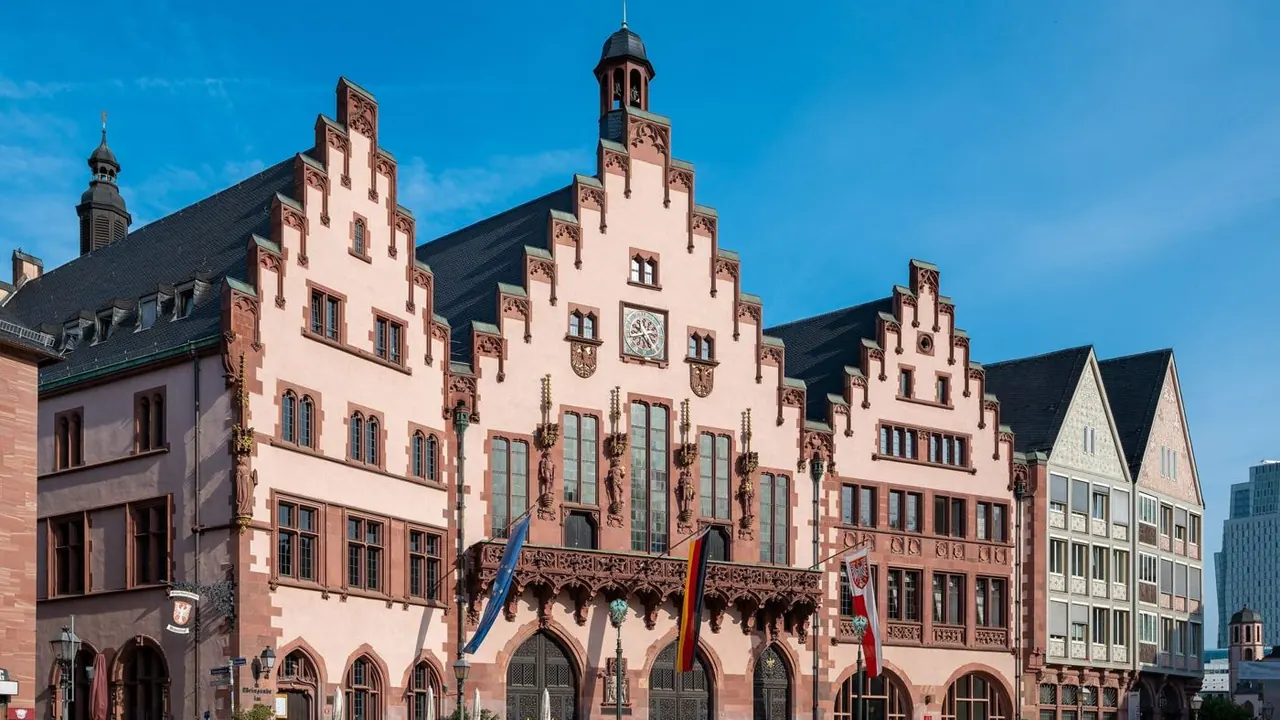
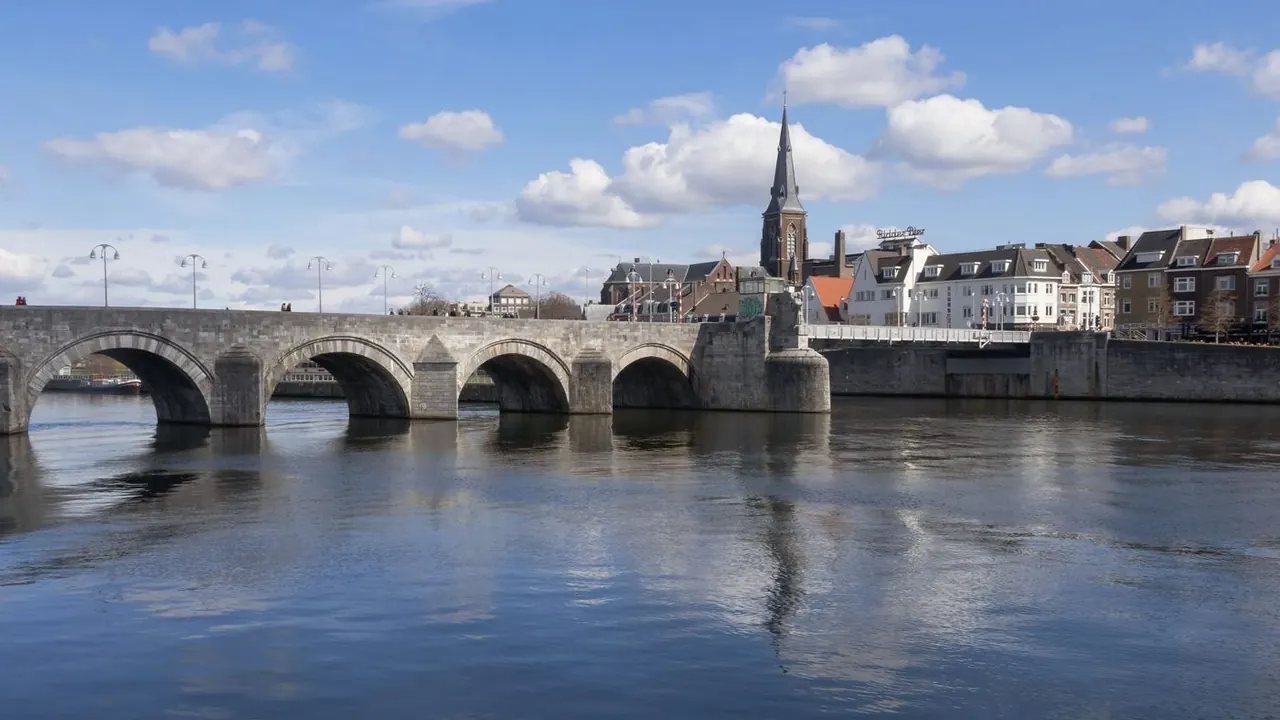
Photos: Frankfurt by Thomas Wolf, CC BY-SA 3.0 DE, cropped; Maastricht by Michielverbeek, CC BY-SA 4.0, cropped.
Frankfurt or Maastricht?
Our verdict in twelve categories, each scored against the same fixed benchmark cities, and the climate month by month, so you can choose for your trip.
Choose Frankfurt for
- live music and the arts
- nightlife
- day trips
Frankfurt suits travellers who want a proper city with a full cultural calendar. Its opera company and concert hall are of national standing, the Museumsufer gives you more than a dozen museums along one river, and the weekend techno clubs carry real musical history. It is also the stronger base: high-speed trains put Heidelberg, the Rhine Gorge and Cologne within easy reach, and children have more to do in town.
Choose Maastricht for
- food and drink
- shopping
Maastricht is the better choice for a slower, smaller trip built around eating, browsing and wandering. The medieval walls, Romanesque basilicas and boutique streets are the real thing rather than a rebuilt old town, and the squares are given over to long lunches on terraces. Germany and Belgium are both close enough for half-day hops, and the whole place keeps an unhurried pace that Frankfurt, a working city, does not.
Scoreboard
Twelve categories on one fixed scale from 0 to 100. The shaded stretch is the gap between the two.
Your match
Pick a travel style or drag the sliders, and both match scores follow your weighting.
Wins on live music and the arts and nightlife with your weighting.
Wins on food and drink and shopping with your weighting.
What matters to you?
Category by category
What the scores mean for a trip.
Beaches & swimming
Neither city is anywhere near the sea, so neither one works for a beach trip. On a hot day, Frankfurt's best option is the Langener Waldsee, a forest lake with sandy shores south of the city. Maastricht has old gravel-pit lakes along the Maas on both sides of the Belgian border, some with lifeguards. Each is fine for an afternoon in July or August, and that is all.
Food & drink
Maastricht has the slight edge for eating well, mainly because of how it eats. You get Limburg cooking such as zuurvlees and vlaai, Belgian beer in brown cafés, and a fine-dining tier that is strong for a small city, much of it served on terraces on the Vrijthof and in Wyck.
Frankfurt's own cooking is narrower and heavier: Grüne Soße, Handkäs and tart Apfelwein at the shared tables of Sachsenhausen's taverns. It makes up for that with range. The Kleinmarkthalle, Turkish and Asian kitchens and the cheap global food of the Bahnhofsviertel give it an international depth that Maastricht lacks.
Culture & sights
Both reward two days of sightseeing, but in different ways. Frankfurt's strength is its museums: the Städel has international standing, and the Schirn, the Senckenberg and the rest of the Museumsufer back it up. Its old town, though, is largely a reconstruction after 1944, set against a skyline of towers.
Maastricht is the reverse. Its museum offer is modest, with the Bonnefanten as the highlight, but the historic fabric is real: the Basilica of Saint Servatius, the Helpoort, medieval walls along the Jeker, a 13th-century bridge and the tunnels dug into the Sint-Pietersberg.
Nightlife
Frankfurt is clearly the place for a night out. Together with Offenbach it has a club scene rooted in techno and house history, the Bahnhofsviertel has the city's most characterful bars, and Berger Straße and the summer riverbanks add more relaxed evenings. Expect it to be properly busy only at weekends.
In Maastricht, evenings mostly mean beer in brown cafés around the Markt and the Vrijthof, kept lively by students during term. The club scene is small. The exception is carnival, when the whole city parties in the streets for days.
Nature & outdoors
Both offer gentle, green countryside rather than drama, but the landscapes differ. From Frankfurt you can ride the S-Bahn into the beech forests of the Taunus and climb the Großer Feldberg, cycle the flat Main paths, or walk among the vineyards of the Rheingau.
Maastricht's walking starts at the edge of town, on the marl cliffs of the Sint-Pietersberg. Further out are the Heuvelland's sunken lanes, orchards and steep cycling climbs, plus heath and forest across the Belgian border in the Hoge Kempen.
Day trips
Both make good bases, but Frankfurt has more famous places within easy reach because it sits on Germany's high-speed rail network. Heidelberg, the castle-lined Rhine Gorge and Cologne's cathedral are each about an hour away. Würzburg, Mainz, Wiesbaden and the imperial cathedrals of Speyer and Worms can fill a full week.
Maastricht's strength is variety rather than speed. Aachen and Liège are about half an hour away in two different countries, Tongeren and Valkenburg are nearer still, and Brussels and Leuven take a longer day.
Good for families
Frankfurt gives children more to do within the city itself. There are dinosaur skeletons at the Senckenberg, a walkable central zoo, the Palmengarten's glasshouses and boat trips on the Main, and the Taunus wildlife park is an easy extra.
Maastricht is calm, safe and easy with a buggy. Inside the city, though, the main outing for children is the tunnel tour. For show caves, the cable car and the fairy-tale park you have to go out to Valkenburg.
Getting around
Frankfurt runs on rails, while Maastricht gets by on foot and by bike. In Frankfurt, U-Bahn, S-Bahn, trams and buses form one network that reaches well into the region. The airport is about a quarter of an hour from the centre by train, and the main station connects straight to the high-speed lines, though the lines and zones take a little learning.
Maastricht hardly needs public transport at all. Its flat, largely pedestrianised centre on both banks of the Maas is easy to walk, with cobbles the only nuisance, and the station in Wyck is just over the bridge. For the hill villages, a bike or a car beats the regional buses.
Shopping & style
Maastricht is the nicer place to browse. Weekend visitors from three countries come for the designer boutiques in the restored houses of the Stokstraat quarter and the independent shops of Wyck. Frankfurt is more practical: department stores and malls on the Zeil, luxury houses around Goethestraße, and independent shops on Berger Straße and Schweizer Straße.
Affordability
The two get cheaper on opposite days of the week. Frankfurt's hotels are priced for business travellers and get expensive and scarce during the big trade fairs, so weekends and summer, when the business crowd stays away, are the time to book.
Maastricht is a favourite for weekend breaks, so a Sunday to Thursday stay saves the most there. Day to day, both are kind to a careful budget: Frankfurt has its cider taverns, Turkish grills and the Museumsufer pass, while Maastricht's bakeries and brown cafés are cheap and a walkable centre means you spend almost nothing on transport.
Live music & performing arts
Frankfurt is far ahead here. It has one of Germany's most respected opera companies, the Alte Oper as its main concert hall, serious drama at the Schauspiel, contemporary dance at Mousonturm and jazz cellars dating back to the post-war years. Its season runs from autumn to early summer.
Maastricht's scene centres on the theatre on the Vrijthof, plus conservatory recitals and organ concerts in its churches. Its liveliest moments come at times when Frankfurt is quieter: the big open-air summer concerts on the Vrijthof and the brass bands of carnival.
Wellness & relaxation
For proper spa days the two are on a par, and in both cases the baths are outside town. From Frankfurt you can go to Wiesbaden's Art Nouveau Kaiser-Friedrich-Therme or the thermal complex in Bad Homburg. From Maastricht there are the hillside pools above Valkenburg, Aachen's Roman-era baths and the Belgian town of Spa itself.
The difference is the city in between. Frankfurt keeps a working pace, so the Palmengarten is your escape. Maastricht's long lunches and riverside walks are restful in themselves.
When should you go?
Pick your month. The climate figures are measured averages, not a forecast.
Frankfurt in July
Maastricht in July
Daytime high, °C
Rainfall in the month, mm
Temperature and rainfall are climate normals, averaged over the years shown. Frankfurt: 1991-2020 normals, Frankfurt Westend (2 km from centre). Maastricht: 1991-2020 normals, Maastricht Airport Zuid Limburg (10 km from centre).
The two share a central European climate, with grey, cold winters around 6°C and the best weather from May to September. Frankfurt gets a little warmer and sunnier in high summer, reaching about 26°C in July and August, and those months are warm enough for an afternoon at a forest lake. Maastricht peaks a couple of degrees lower and stays damper, with August its wettest month at around 84mm, so pack for showers even in summer.
For walking the streets, late spring and September are pleasant in both, never too hot. Maastricht's countryside is at its best in spring and early autumn. From November to February, short dark days favour Frankfurt's museums and concert halls over Maastricht's terrace life.
Which traveller are you?
For a culture and arts trip, Frankfurt is the better pick. The Städel and the Museumsufer give it real gallery depth, and its opera company, the Alte Oper and serious drama fill evenings that Maastricht's theatre on the Vrijthof cannot match.
On a family trip with young children, Frankfurt is easier. Its main draws, the Senckenberg dinosaurs, the zoo and the Palmengarten, are in the city, and trams take pushchairs. In Maastricht, most children's outings mean a trip out to Valkenburg.
For a short city break, Maastricht is the more satisfying choice. Medieval lanes, boutique quarters and good restaurants sit within an easy stroll of one another, and the unhurried pace on its squares makes two days feel like a proper rest.
Before you go
| Measure | Frankfurt | Maastricht |
|---|---|---|
| Official language | German | Dutch |
| Currency | Euro (EUR) | Euro (EUR) |
| Sockets | CF230 V, 50 Hz | CF230 V, 50 Hz |
| Driving side | Right | Right |
| Time zone | UTC+1, UTC+2 in summer | UTC+1, UTC+2 in summer |
| Emergency number | 112 | 112 |
| Elevation | 101 m | 49 m |
| Main airport | Frankfurt Main Airport (FRA)13 km from centre281 non-stop destinations | Maastricht Aachen Airport (MST)9 km from centre5 non-stop destinations |
| Public holidays this year | 10 days | 11 days |
By the numbers
| Measure | Frankfurt | Maastricht |
|---|---|---|
| City population | 760,656 | 120,227 |
| People per km² | 3,063 | 2,000 |
| Museums within 10 km | 53 | 21 |
| UNESCO World Heritage sites within 50 km | 4 | 5 |
Where else could you go?
Every comparison below shares a destination with this one, so you can follow Frankfurt or Maastricht somewhere new.