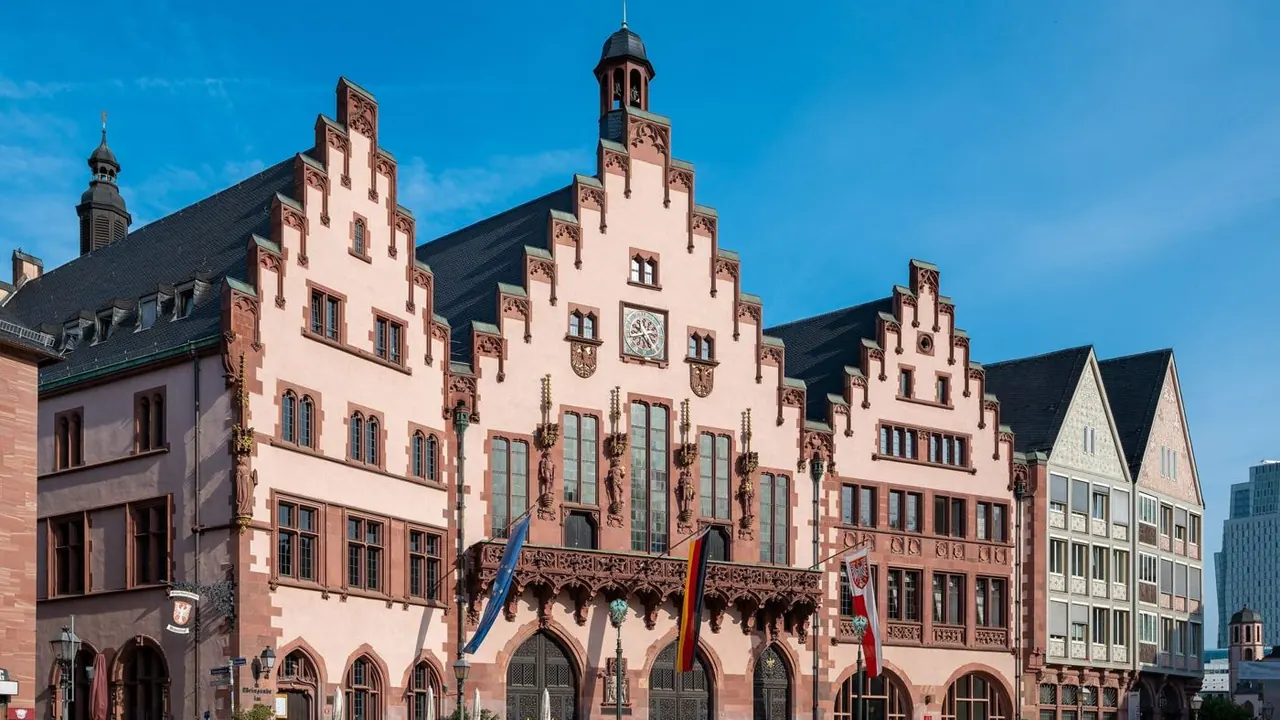
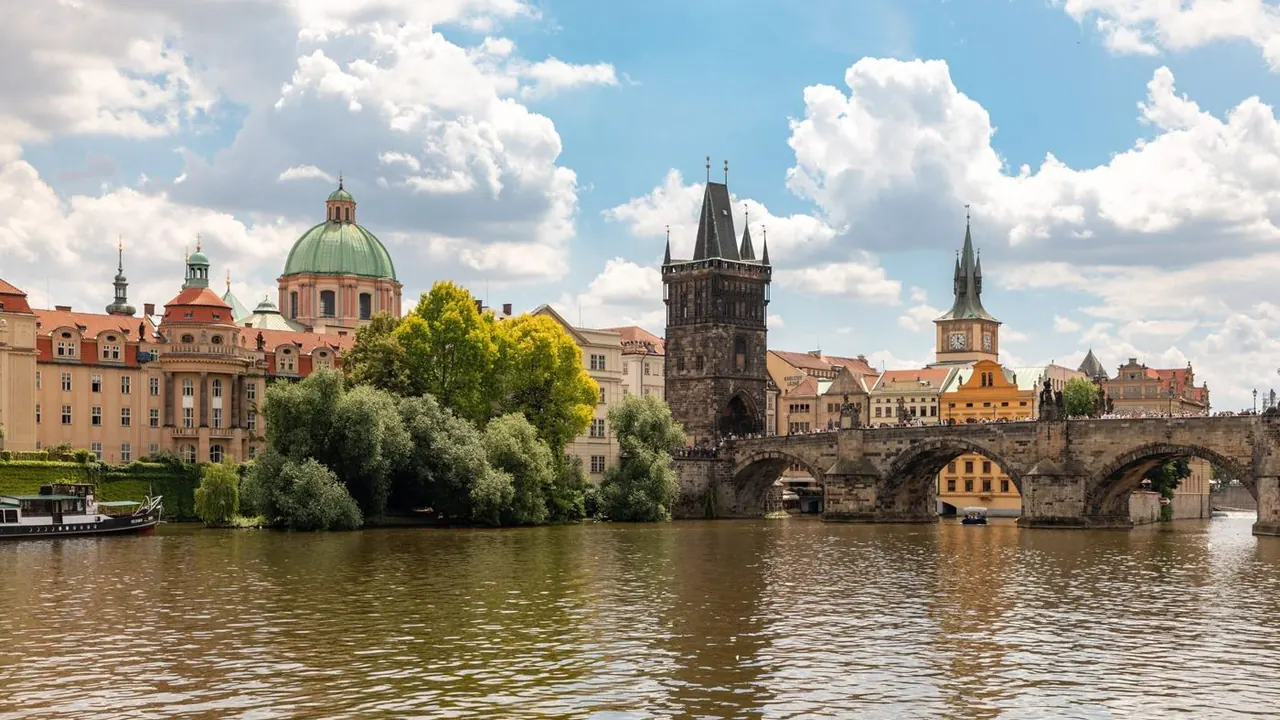
Photos: Frankfurt by Thomas Wolf, CC BY-SA 3.0 DE, cropped; Prague by Dietmar Rabich, CC BY-SA 4.0, cropped.
Frankfurt or Prague?
Our verdict in twelve categories, each scored against the same fixed benchmark cities, and the climate month by month, so you can choose for your trip.
Choose Frankfurt for
- families
- wellness
- day trips
Frankfurt suits travellers who want a well-run base for seeing a wide stretch of Germany. Its rail hub puts Heidelberg, the Rhine Gorge, Cologne and the spa towns within easy reach, and families get a compact centre, a dinosaur museum and pushchair-friendly transport. Pick it for a week of day trips, a museum weekend on the Museumsufer, or a trip that ends with a soak in Wiesbaden.
Choose Prague for
- prices
- culture and sights
- nightlife
Prague is the better choice when the city itself is the reason for the trip. Its centre survived largely intact, so the walk from the Castle across the Charles Bridge into the Old Town beats anything Frankfurt's rebuilt Römer can offer, and its opera houses and concert halls set a higher standard. It also costs less, and the evenings are livelier, as long as you eat and drink in Vinohrady, Zizkov or Karlin rather than around Old Town Square.
Scoreboard
Twelve categories on one fixed scale from 0 to 100. The shaded stretch is the gap between the two.
Your match
Pick a travel style or drag the sliders, and both match scores follow your weighting.
Wins on families and wellness with your weighting.
Wins on prices and culture and sights with your weighting.
What matters to you?
Category by category
What the scores mean for a trip.
Beaches & swimming
Neither city is anywhere near the sea, so this is no reason to choose either. Both have the same kind of summer swimming: Frankfurt has the sandy-shored Langener Waldsee in the southern forest, and Prague has the Dzban reservoir in the Sarka valley and the wooded banks of Slapy, about an hour up the Vltava, which feels more like a lakeside getaway.
Food & drink
The two cities eat at a similar level, and each cooks hearty food from a short local repertoire. What changes is the drink at the centre of the table. In Frankfurt it is tart Apfelwein in Sachsenhausen taverns, served with Grüne Soße or Handkäs, and the Kleinmarkthalle and the global kitchens of the Bahnhofsviertel widen the choice.
Prague is built around carefully poured lager, with svickova, dumplings and pickled beer snacks to go with it. Its old centre is a trap for indifferent menus, so the good eating is out in Vinohrady, Letna and Karlin. A beer lover will be happier in Prague, while a traveller who wants more international variety will do better in Frankfurt.
Culture & sights
This is where Prague pulls well ahead. Its centre came through the centuries largely intact: the Castle with St Vitus Cathedral, the Baroque palaces of Mala Strana, the statue-lined Charles Bridge, the Gothic Old Town and the synagogues of Josefov, with Art Nouveau and rare Cubist buildings on top. The museums are the weaker part.
Frankfurt is the other way round. Bombing in 1944 took most of the old city, so the Römer and the lanes up to the cathedral are reconstructions, though the Paulskirche and Goethe's birthplace carry real history. Its strength is the Museumsufer, where the Städel holds a collection that Prague's National Gallery cannot match. Go to Frankfurt for the paintings and to Prague for the streets themselves.
Nightlife
Prague makes the livelier night out, mostly thanks to its pubs. Cheap, excellent beer fills the long tables in Zizkov until late, Vinohrady adds wine and cocktail bars, and Letna's beer garden fills on summer evenings. Clubbing splits between the big tourist venues near Wenceslas Square and a better techno circuit in Holesovice.
Frankfurt is quieter, and busy only at weekends. What it does have is a serious techno and house heritage shared with Offenbach, the gritty bars of the Bahnhofsviertel and the cider taverns of Alt-Sachsenhausen. Clubbers who know the scene may find it rewarding, but for a casual evening of drinking Prague wins easily.
Nature & outdoors
Both offer gentle green country rather than drama, and neither has real mountains nearby. In Frankfurt, the outdoors means forest and river: the Stadtwald on the city's edge, long flat cycle paths along the Main, and the beech-wooded Taunus, where Roman frontier trails climb the Großer Feldberg less than an hour out. Further afield, the vineyard paths of the Rheingau and the Rhine Gorge give the region its best views.
Prague's landscape is steeper and rockier inside the city itself. Petrin Hill climbs from Mala Strana through orchards and woodland, and Divoka Sarka is a wooded gorge with rock walls that feels far from town. Beyond the city, the limestone gorges around Karlstejn and the sandstone towers of Bohemian Switzerland suit walkers who like rock formations, though the sandstone country is about two hours away.
Day trips
Frankfurt has the edge thanks to Germany's high-speed rail. Heidelberg, the castle-lined Rhine Gorge and Cologne Cathedral are each about an hour away, and Mainz, Wiesbaden, Würzburg and the imperial cathedrals of Speyer and Worms fill out a week of outings.
Prague's day trips are excellent but fewer and slower to reach. Kutna Hora and Karlstejn are close, and Terezin is a sobering visit, but Dresden and Karlovy Vary take about two hours, and Cesky Krumlov really needs an overnight stay.
Good for families
Frankfurt is the easier city with children. The Senckenberg's dinosaur hall, a central zoo, the Palmengarten glasshouses and flat riverside paths for scooters sit close together, and trams and the S-Bahn take pushchairs without trouble.
Prague has the more magical look, with knights, the castle and the astronomical clock, and the Troja zoo is one of Europe's best. Beyond that the choice thins out, and the cobbles, steep lanes and long castle stairs make it hard work with a pushchair.
Getting around
Both are easy without a car, with a walkable core and an integrated transport network, but they work differently. Frankfurt's system reaches far into the region, putting Wiesbaden, Mainz and the Taunus on the same network, and the airport is about a quarter of an hour from the centre by train. The zones take some learning.
Prague's network is simpler: three metro lines, a dense tram grid that runs all night, and a funicular up Petrin. Its cobbles are tiring underfoot, and pickpockets work the trams through Mala Strana.
Shopping & style
Frankfurt is slightly better for practical shopping: department stores and malls on the Zeil, luxury houses on Goethestraße, and independent shops on Berger Straße and Schweizer Straße. Prague has the more distinctive things to take home, such as Bohemian crystal, garnet jewellery and marionettes, but its old centre is crowded with identical souvenir stalls, so the better finds are in the design and vintage shops of Vinohrady and Holesovice.
Affordability
Prague is clearly the cheaper trip. Beer, pub lunches and trams cost little, and staying a few stops out of the centre keeps a whole stay affordable, as long as you avoid the Old Town's view restaurants and its exchange booths.
Frankfurt's problem is hotels, which are priced for bankers and soar during trade fairs. Eating in cider taverns and at Turkish grills stays reasonable, and a weekend or summer visit away from the fair dates makes the city more manageable.
Live music & performing arts
Prague leads, especially for classical music. It has three opera stages, including the Estates Theatre where Don Giovanni premiered, the Czech Philharmonic at the Rudolfinum and the Prague Spring festival. Black-light theatre and marionette shows need no Czech.
Frankfurt answers with a highly respected opera company known for bold productions, concerts at the rebuilt Alte Oper, contemporary dance at Mousonturm and cellar jazz clubs. Its stages also offer more for non-German speakers through an English-language theatre.
Wellness & relaxation
Neither city has a bathing tradition of its own, but Frankfurt has real spas close by. Bad Homburg's thermal baths and Wiesbaden's Art Nouveau Kaiser-Friedrich-Therme are both under an hour away.
Prague's great spa towns are far off in western Bohemia, which leaves hotel spas and novelty beer baths. Rest there means a grand coffee house, the Baroque gardens below the castle or a bench on Kampa island.
When should you go?
Pick your month. The climate figures are measured averages, not a forecast.
Frankfurt in July
Prague in July
Daytime high, °C
Rainfall in the month, mm
Temperature and rainfall are climate normals, averaged over the years shown. Frankfurt: 1991-2020 normals, Frankfurt Westend (2 km from centre). Prague: 1991-2020 normals, Praha-Libus (8.1 km from centre).
Both cities have the same central European pattern: cold, dark winters, warm summers and pleasant spring and autumn shoulders. July and August peak at about 26°C in Frankfurt and a degree cooler in Prague, warm enough for a lake or reservoir swim but rarely too hot for a day on foot. May, June and September are the most comfortable months for walking the streets and the countryside in either city, and the sunshine follows almost the same curve in both.
The differences show at the two ends of the year and in the rain. Prague's winters are noticeably colder, with January highs of around 2°C against Frankfurt's 5°C, though they are also drier. In summer it flips: Prague gets its heaviest rain in June, around 80mm, mostly in short showers and thunderstorms, while Frankfurt spreads its rain more evenly across the year. For a winter city break Frankfurt is the milder of the two. Prague is at its best in late spring and early autumn.
Which traveller are you?
On a culture and arts trip, Prague is the clear pick. Its whole historic centre survived, from the Castle and Mala Strana to Josefov, and an evening at the National Theatre or the Rudolfinum beats Frankfurt's rebuilt old town and its smaller opera scene.
For a family trip with children, Frankfurt is easier. The Senckenberg dinosaurs, a central zoo, the Palmengarten and flat river paths are all close together, and the trams handle pushchairs without fuss, whereas Prague's cobbles, castle stairs and summer crowds wear families down.
On a tight budget, Prague goes further. Beer, pub lunches and trams stay cheap, and neighbourhood eating in Zizkov or Karlin costs little, while Frankfurt's hotels are priced for business travellers and become scarce and expensive during the trade fairs.
Before you go
| Measure | Frankfurt | Prague |
|---|---|---|
| Official language | German | Czech |
| Currency | Euro (EUR) | Czech Koruna (CZK) |
| Sockets | CF230 V, 50 Hz | CE230 V, 50 Hz |
| Driving side | Right | Right |
| Time zone | UTC+1, UTC+2 in summer | UTC+1, UTC+2 in summer |
| Emergency number | 112 | 112 |
| Elevation | 101 m | 235 m |
| Main airport | Frankfurt Main Airport (FRA)13 km from centre281 non-stop destinations | Václav Havel Airport Prague (PRG)12 km from centre178 non-stop destinations |
| Public holidays this year | 10 days | 13 days |
By the numbers
| Measure | Frankfurt | Prague |
|---|---|---|
| City population | 760,656 | 1,397,880 |
| People per km² | 3,063 | 2,817 |
| Museums within 10 km | 53 | 88 |
| UNESCO World Heritage sites within 50 km | 4 | 1 |
Where else could you go?
Every comparison below shares a destination with this one, so you can follow Frankfurt or Prague somewhere new.